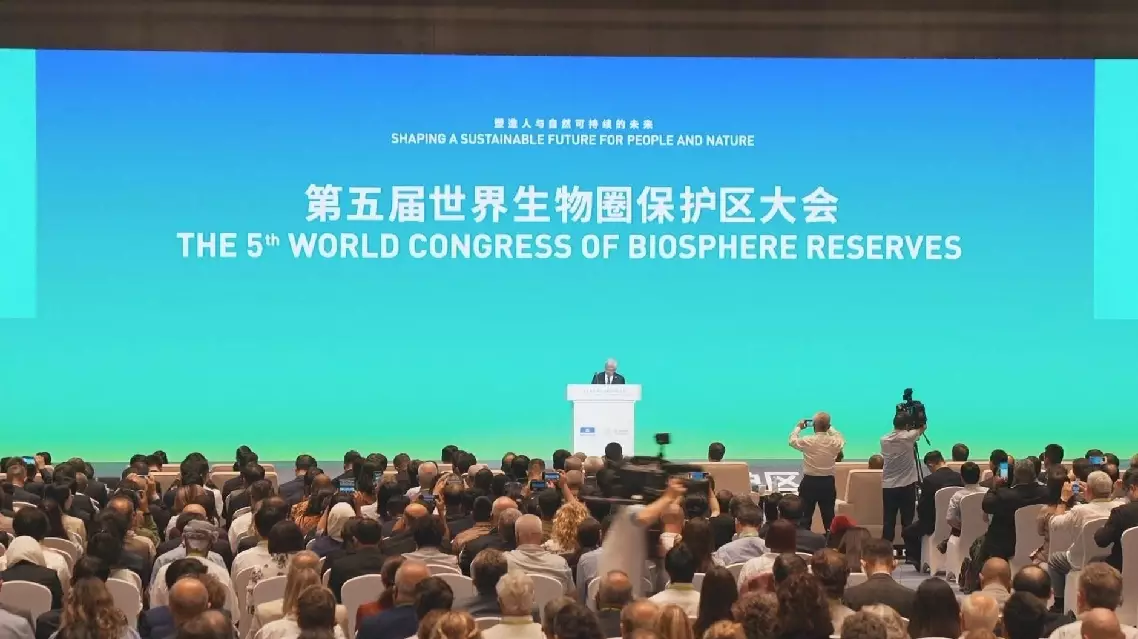
The 5th World Congress of Biosphere Reserves (WCBR), the premier global conference under the UNESCO Man and the Biosphere (MAB) program, opened on Monday in east China's Hangzhou City, aiming to promote the sustainable development of humans and nature.
The five-day conference marked the first time the event had been staged in Asia and the largest in its history, bringing together approximately 4,000 delegates from more than 150 countries and regions.
The congress will release two key documents: the Hangzhou Strategic Action Plan for UNESCO's Man and the Biosphere Programme and its World Network of Biosphere Reserves (2026-2035), a landmark ten-year blueprint for the World Network of Biosphere Reserves, and the Hangzhou Declaration, which affirms China's commitment to working with the international community to address ecological challenges and to build "a shared future for humans and nature."
"This conference has received considerable international attention. In addition to the conference itself, there are over 70 side events and parallel forums. For example, a side event will be held during this conference, focusing on the Yangtze finless porpoises, with which I am currently involved. I will share China's progress and experience in protecting the Yangtze finless porpoises. We hope more people can join us to promote research and conservation efforts for other small endangered cetaceans worldwide and finally achieve the United Nations' 17 Sustainable Development Goals by 2030," said Wang Ding, secretary-general of the Chinese MAB National Committee.
The UNESCO launched the Man and the Biosphere program in 1971. Today, 759 biosphere reserves have been established across 136 countries and regions, roughly 5 percent of the Earth's land surface. China, which joined the MAB program in 1973, now boasts 34 UNESCO biosphere reserves, the most in Asia.
"We are very glad to be in China and see all the progress here. And also we would like to see all the networks of biosphere reserves are becoming more active in sustainable development," said Michael Scoullos, director of the UNESCO Chair and Network on Sustainable Development Management and Education in the Mediterranean.
Every 10 years or so, UNESCO convenes the WCBR to evaluate progress, share experience, and set future directions for the MAB program. The last WCBR was held in 2016 in Lima, Peru, where the Lima Action Plan (2016-2025) was adopted.
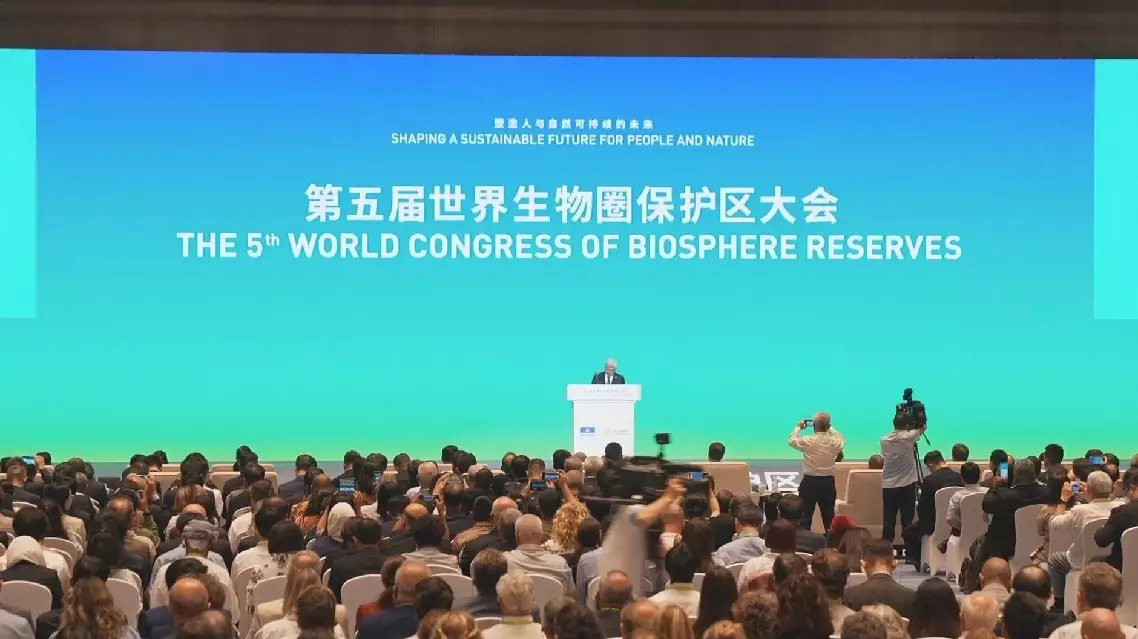
World's largest Biosphere Reserve Summit in Hangzhou aims for sustainable human-nature development
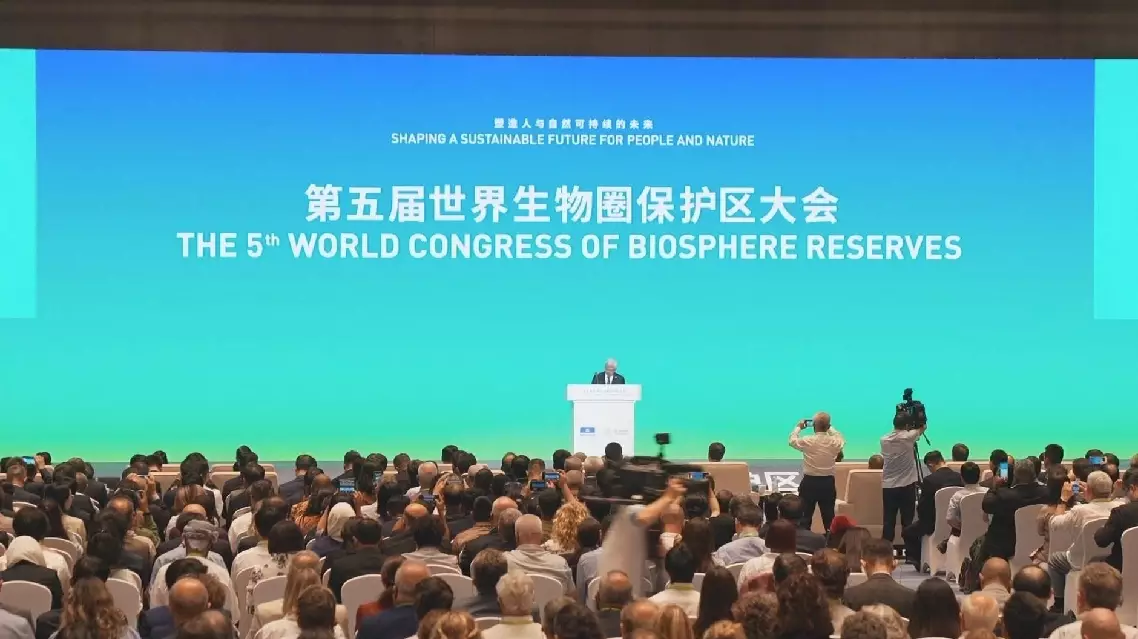
World's largest Biosphere Reserve Summit in Hangzhou aims for sustainable human-nature development
World's largest Biosphere Reserve Summit in Hangzhou aims for sustainable human-nature development