MEXICO CITY (AP) — Mexico activated emergency controls Monday after detecting a new case of New World screwworm in cattle in the northern border state of Nuevo Leon state, the closest case to the U.S. border since the outbreak began last year.
The animal, found in the town of Sabinas Hidalgo, came from the Gulf state of Veracruz, Mexico's National Health for Food Safety and Food Quality Service said. The last case was reported July 9 in Veracruz, prompting Washington to suspend imports of live Mexican cattle.
The parasite, a larva of the Cochliomyia hominivorax fly, attacks warm-blooded animals, including humans. Mexico has reported more than 500 active cases in cattle across southern states.
The block on cattle imports has spelled trouble for Mexico's government, which has already been busy trying to offset the brunt of U.S. President Donald Trump's tariff threats this year.
The government and ranchers have sought to get the ban lifted. If it stays in place through the year, Mexico's ranching federation estimates losses up to $400 million.
Mexico's Agriculture Secretary Julio Berdegué said in a post on X that Mexico is "controlling the isolated case of screwworm in Nuevo Leon,” under measures to fight the pest agreed with the U.S. in August.
U.S. Agriculture Secretary Brooke Rollins said Washington will take “decisive measures to protect our borders, even in the absence of cooperation" and said imports on Mexican cattle, bison and horses will remain suspended.
“We will not rely on Mexico to defend our industry, our food supply or our way of life,” she said.

FILE - Cattle feed at a ranch that exports livestock to the U.S., in Zamora, northern Mexico, July 29, 2025, with the U.S. border closed to Mexican cattle imports over screwworm concerns. (AP Photo/Fernando Llano, File)
DUBAI, United Arab Emirates (AP) — Kuwait briefly shut its main airport Wednesday after Iranian drones heavily damaged a passenger terminal, killed one person and wounded dozens — the latest in back-and-forth attacks by Iran and the U.S. that test a fragile ceasefire.
The strike reinforced the risks to residents and travelers in Gulf countries that had considered themselves relative havens before the war, now in its fourth month.
Talks have dragged on for weeks as mediators seek a more enduring truce in the U.S.-Israeli war with Iran. They are increasingly strained by Israel’s broadening war with Iran-backed Hezbollah militants in Lebanon.
A regional official said Iran wanted a separate ceasefire in Lebanon enforced before returning to talks. U.S. President Donald Trump said negotiations continue.
The fighting in Lebanon has also exposed a rift between Israel and the U.S., which is pushing its ally for restraint. In a measure of the friction, Trump acknowledged that he'd called Israeli Prime Minister Benjamin Netanyahu “crazy” during a phone call earlier this week. Nonetheless, both men say their rapport is solid.
Iran maintains its hold on the Strait of Hormuz — a crucial waterway for the world’s oil and natural gas and related products like fertilizer — and the U.S. continues its blockade of Iranian ports. Global fuel prices remain high, and the effects of the conflict are felt well beyond the region.
In Washington, House Speaker Mike Johnson said he, Trump, Vice President JD Vance, and Secretary of State Marco Rubio huddled for three hours at the White House Monday as Trump worked on “that final piece” of getting commerce flowing. Rubio, meanwhile, faced grilling in Congress over the war and its economic fallout.
A spokesperson for Kuwait's Defense Ministry, Brig. Gen. Saud Abdulaziz Al-Otaibi, said “a number of hostile drones” targeted a passenger building at Kuwait International Airport. It had opened only Monday after a months-long closure because of the war, which began Feb. 28 with U.S. and Israeli strikes on Iran.
India’s embassy said the person killed was an Indian national. Authorities said 63 were wounded, including passengers and workers, and some suffered serious injuries.
Kuwait's Defense Ministry said it destroyed over a dozen missiles and a similar number of drones from Iran.
The airport partially reopened later, with Kuwait Airways flights resuming at a different terminal, according to civil aviation authorities. No other flights were operating.
The Foreign Ministry said Kuwait will “neither accept nor tolerate” the attacks and was kicking out two Iranian diplomats. Such expulsions are an established means of communicating international ire.
The U.S. military said two Iranian missiles fell apart en route to Kuwait and that it “downed multiple drones” targeting American forces in the country.
The military also said U.S. and Bahraini forces intercepted missiles aimed at the Gulf kingdom, home to the U.S. Navy’s 5th fleet. Bahrain’s Defense Ministry said its military intercepted and destroyed three missiles and a number of drones fired by Iran.
Iran’s paramilitary Revolutionary Guard acknowledged that it targeted the headquarters of the 5th Fleet and U.S. military facilities in another country, but did not name Kuwait.
Both the U.S. and Iran said they were retaliating for earlier attacks or attempted ones.
Netanyahu told the American business-news channel CNBC that Iran was “playing with fire,” but he said any decision about whether to scale up a military response would rest with Trump. Iranian Foreign Minister Abbas Araghchi declared on X that “any hostile act will be met with an immediate, decisive response.”
The U.S. military said it launched strikes on an Iranian military ground control station on Qeshm Island in the Strait of Hormuz.
Iran's Foreign Ministry condemned the U.S. strikes on the island, where it said a telecommunications tower was struck, and other previous strikes. It called them “acts of aggression” that it said violated the ceasefire.
Israeli forces have moved deeper into Lebanon than at any time in over a quarter-century, while Hezbollah has launched rocket and drone attacks. The declared ceasefire in Lebanon is officially in place, and no side has formally withdrawn or declared it over even as attacks continue.
Iran insists that any larger potential truce must quell the fighting in Lebanon. Netanyahu wants to keep the issues separate and is under domestic pressure to strike Hezbollah as he prepares for elections this fall.
In a podcast interview released Wednesday, Trump confirmed a report that he had called Netanyahu “crazy” Monday in a phone conversation peppered with an expletive. Trump told The New York Post’s “Pod Force One” that he was “a little bit perturbed” that Israel’s fight with Hezbollah was holding back talks with Iran.
Still, Trump said his relationship with Netanyahu was good, and “we’ve worked very well together.”
Netanyahu responded that he and Trump sometimes have “tactical disagreements” but have “common goals” and “agree on the main things.”
“He respects me. I respect him. We always find a way to work out our differences,” the prime minister said on CNBC.
Magdy reported from Cairo. Associated Press writers Elena Becatoros in Athens, Greece, Sheikh Saaliq in New Delhi, Sam Mednick in Jerusalem, Jennifer Peltz in New York and Lisa Mascaro and Konstantin Toropin in Washington contributed to this report.
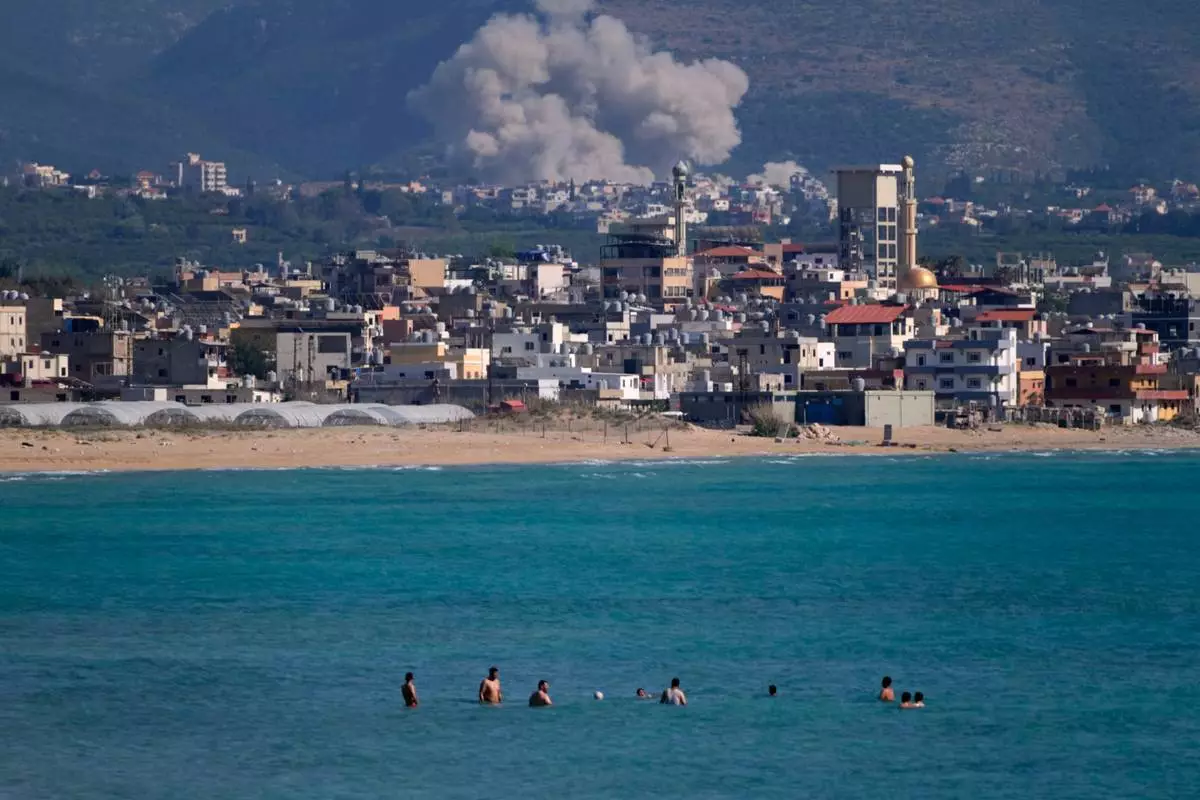
People swim on a public beach as smoke, background, rises from an Israeli airstrike that hit the Qlaileh village, seen from the southern port city of Tyre, Lebanon, Tuesday, June 2, 2026. (AP Photo/Mohammed Zaatari)
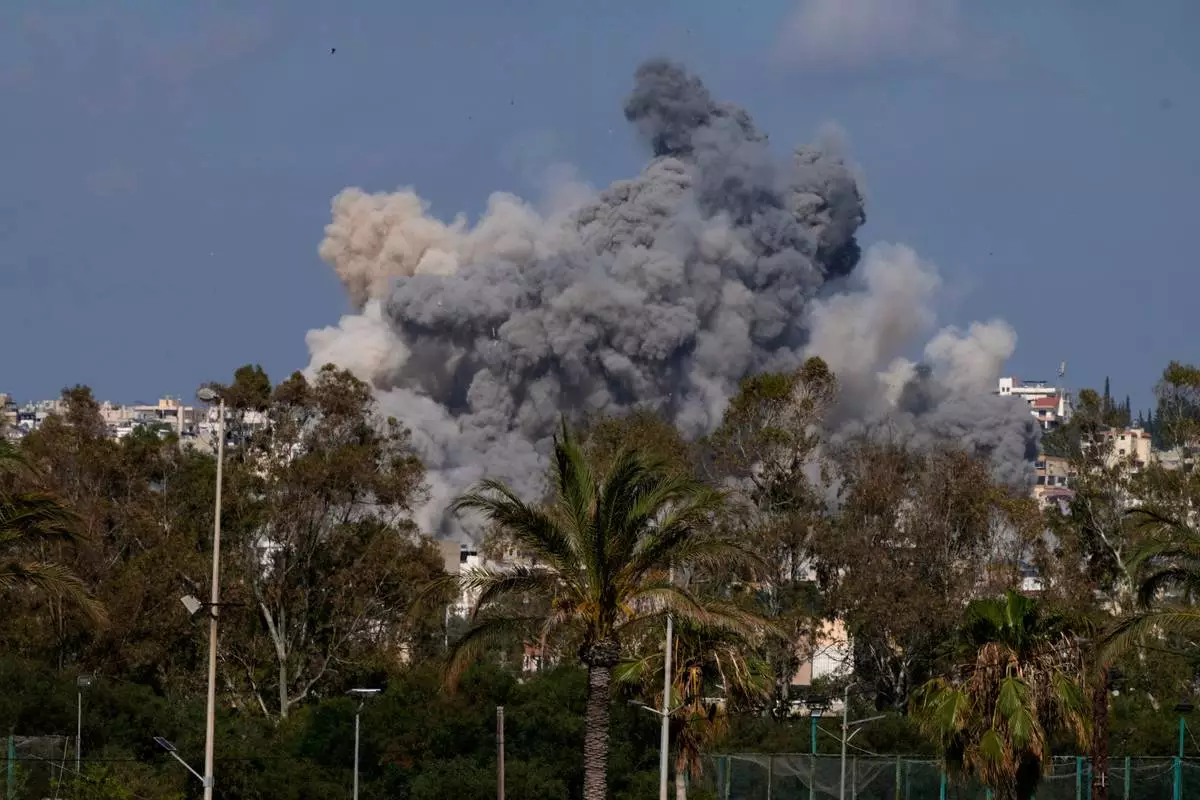
Smoke rises from an Israeli airstrike that hit Burj al-Shamali village near the southern port city of Tyre, Lebanon, Tuesday, June 2, 2026. (AP Photo/Mohammed Zaatari)
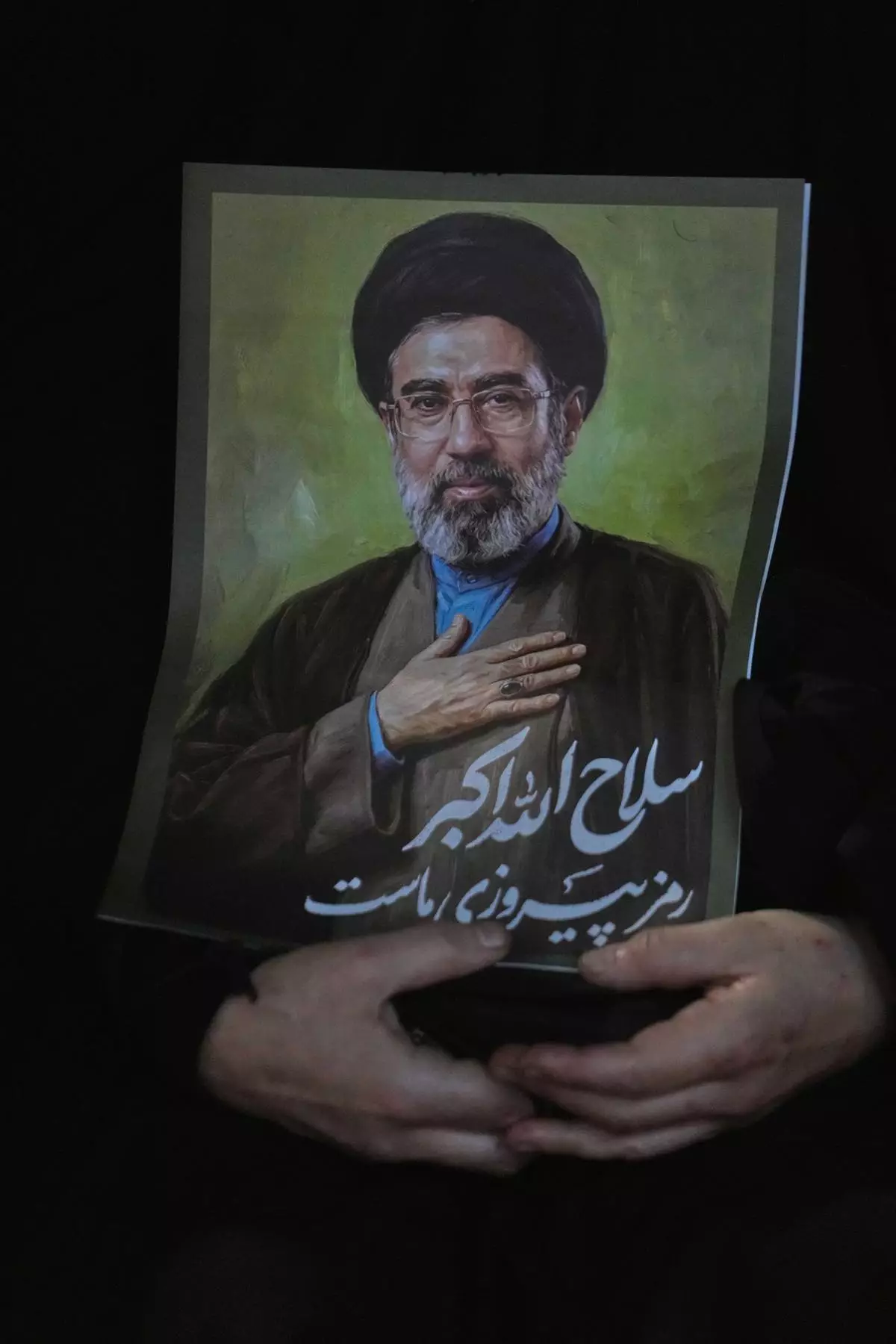
A woman holds a poster of the Iranian Supreme Leader Ayatollah Mojtaba Khamenei during a pro-government gathering at Islamic Revolution Square in Tehran, Iran, Saturday, May 30, 2026. (AP Photo/Vahid Salemi)

People gather on paddleboards in shallow water as cargo and service vessels are anchored in the Strait of Hormuz off Bandar Abbas, Iran, Monday, June 1, 2026. (Amirhosein Khorgooi/ISNA via AP)