Skip to Content Facebook Feature Image

Japan's most sacred Shinto shrine has been rebuilt every 20 years for more than a millennium

News

Japan's most sacred Shinto shrine has been rebuilt every 20 years for more than a millennium
News

News

Japan's most sacred Shinto shrine has been rebuilt every 20 years for more than a millennium

2025-09-23 12:02 Last Updated At:12:21

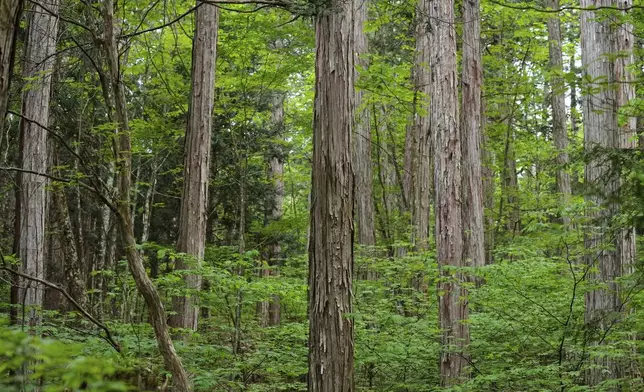
ISE, Japan (AP) — Deep in the forests of the Japanese Alps, Shinto priests keep watch as woodsmen dressed in ceremonial white chop their axes into two ancient cypress trees, timing their swings so that they strike from three directions.

An hour later, the head woodcutter shouts, “A tree is falling!” as one of the 300-year-old trees crashes down, the forest echoing with a deep crack. A moment after, the other cypress topples over.

More Images
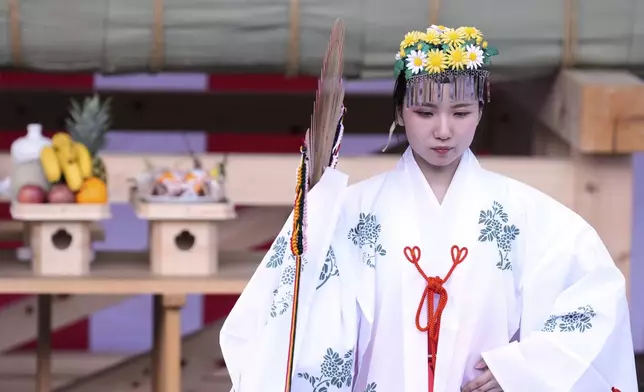
Shinto's "miko" dancer performs after sacred timbers were pulled through streets in a local celebratory procession in Agematsu, central Japan, Wednesday, June 4, 2025, as part of Shikinen Sengu, a ritual to rebuild the main structures of Ise Jingu for transfering its enshrined deities. (AP Photo/Hiro Komae)
Shinto's "miko" dancer performs after sacred timbers were pulled through streets in a local celebratory procession in Agematsu, central Japan, Wednesday, June 4, 2025, as part of Shikinen Sengu, a ritual to rebuild the main structures of Ise Jingu for transfering its enshrined deities. (AP Photo/Hiro Komae)

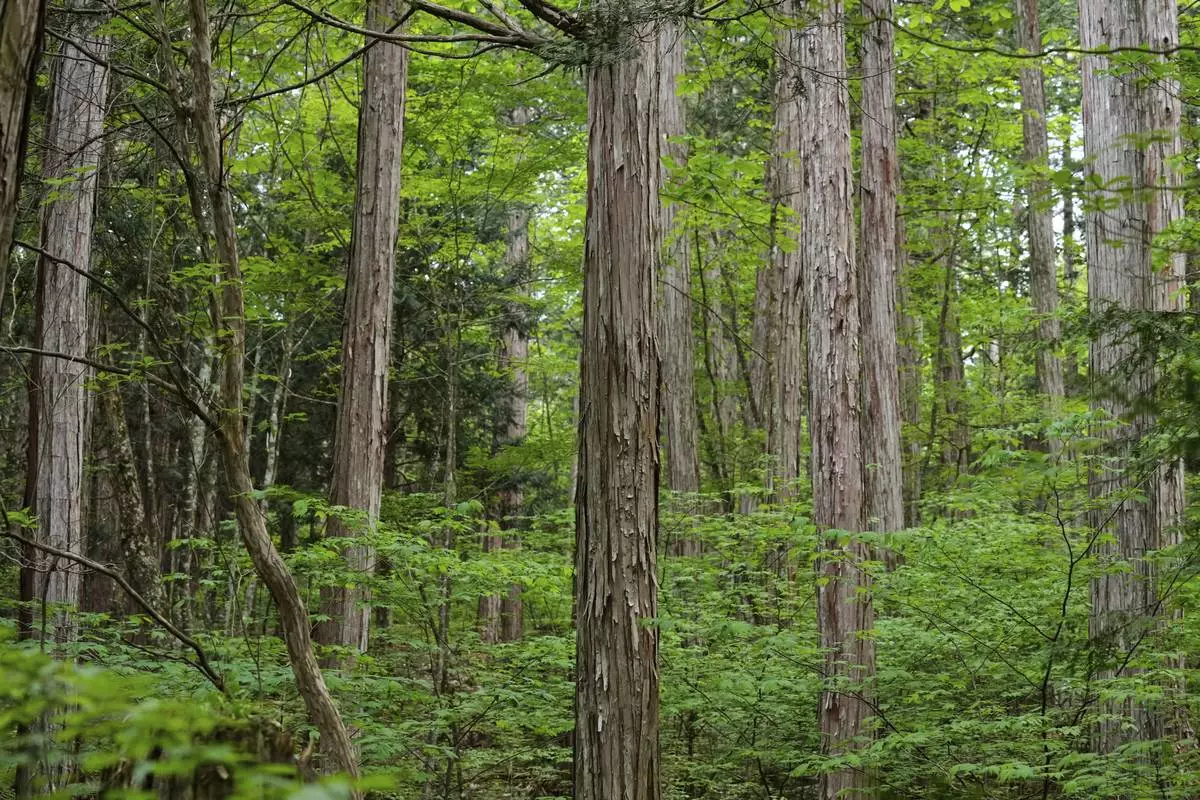
Cypress trees stand at the Akasawa national forest, where cypress trees are felled for a Shinto ritual, in Agematsu, central Japan, Monday, June 2, 2025 (AP Photo/Hiro Komae)
Cypress trees stand at the Akasawa national forest, where cypress trees are felled for a Shinto ritual, in Agematsu, central Japan, Monday, June 2, 2025 (AP Photo/Hiro Komae)

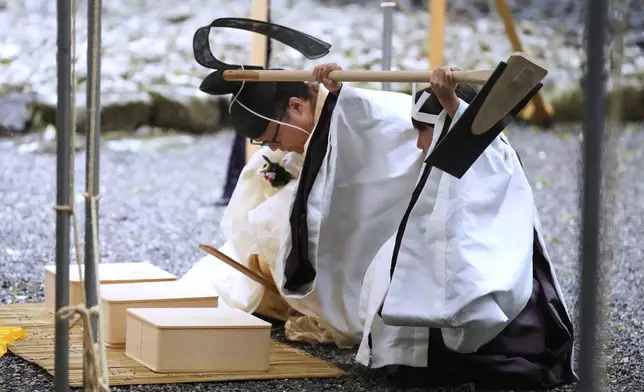
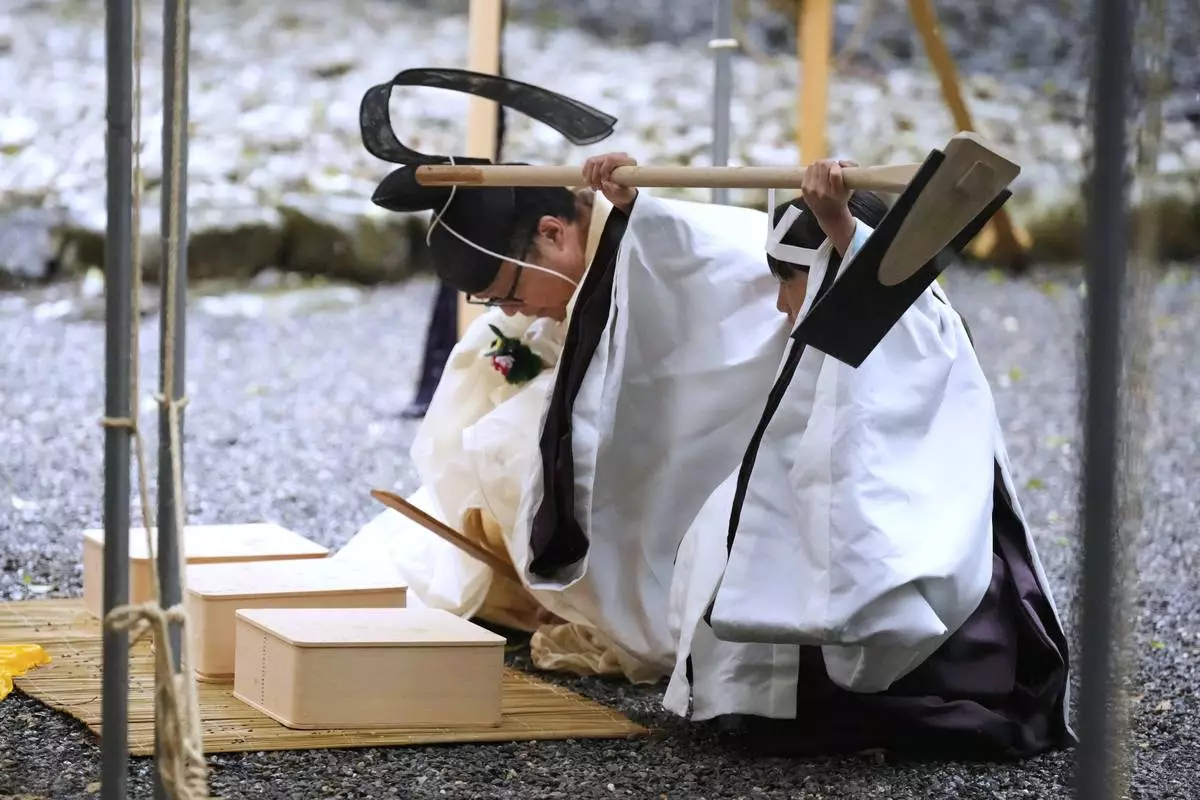
A Shinto priest and a girl called "monoimi" participate in Yamaguchisai, a kickoff ceremony of Shikinen Sengu, concluding in 2033, at Toyoukedaijingu, also known as Geku, or the outer sanctuary, of the Jingu shrine complex in Ise, central Japan, Friday, May 2, 2025. (AP Photo/Hiro Komae)
A Shinto priest and a girl called "monoimi" participate in Yamaguchisai, a kickoff ceremony of Shikinen Sengu, concluding in 2033, at Toyoukedaijingu, also known as Geku, or the outer sanctuary, of the Jingu shrine complex in Ise, central Japan, Friday, May 2, 2025. (AP Photo/Hiro Komae)

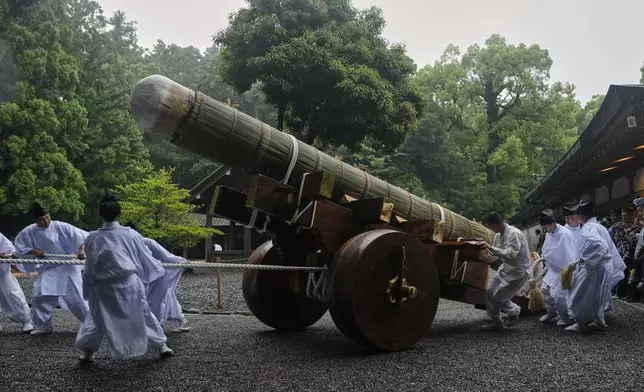
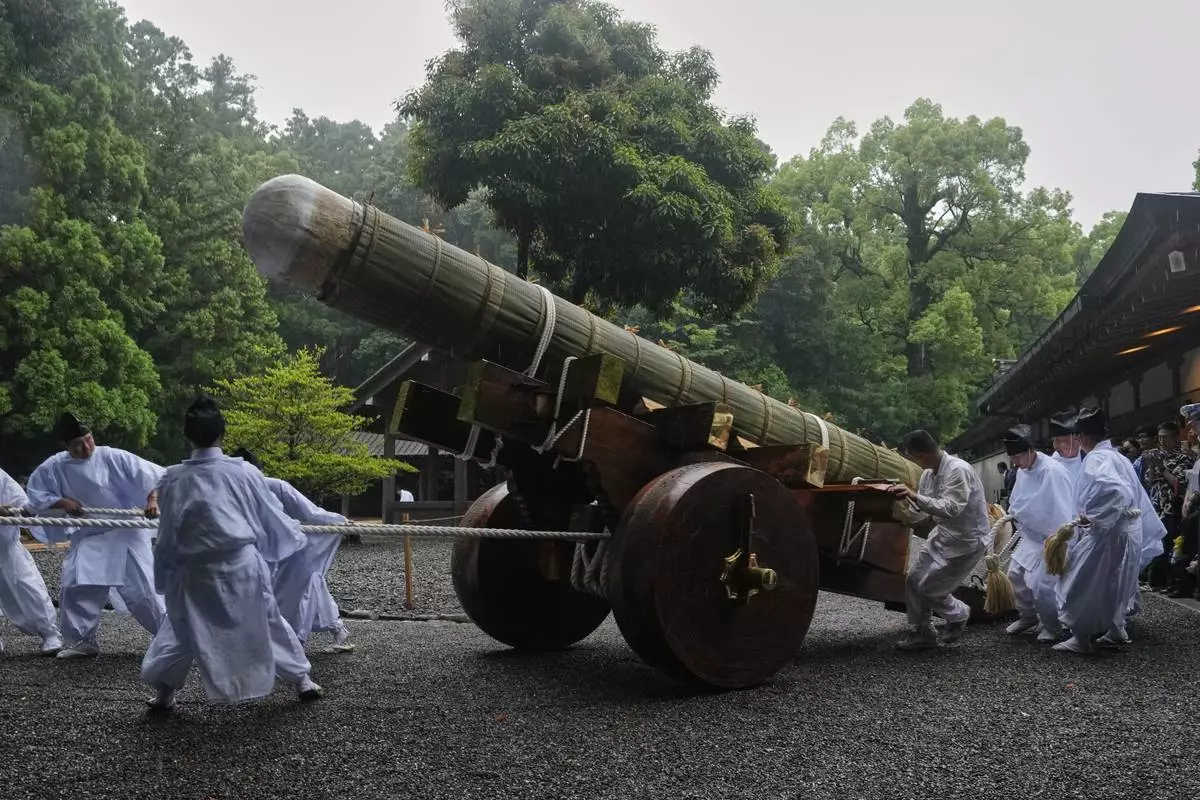
Shinto officials in the priesthood pull a sacred timber on a wheeled platform into a position before unloading and moving it under the roof at the end of Mihishirogi Hoeishiki, a ceremony of the Shikinen Sengu ritual to rebuild main structures of the Jingu shrine complex for Shinto deities, at Toyoukedaijingu, also known as Geku, or the outer sanctuary of Jingu, in Ise, central Japan, Tuesday, June 10, 2025, after the cypress timbers were transported from Nagano prefecture's Kiso region to the city. (AP Photo/Hiro Komae)
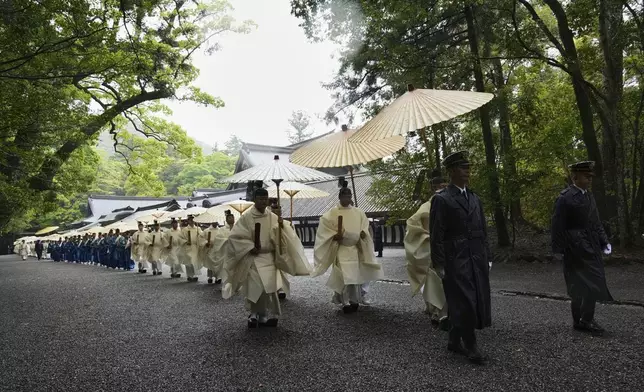
Shinto officials in the priesthood pull a sacred timber on a wheeled platform into a position before unloading and moving it under the roof at the end of Mihishirogi Hoeishiki, a ceremony of the Shikinen Sengu ritual to rebuild main structures of the Jingu shrine complex for Shinto deities, at Toyoukedaijingu, also known as Geku, or the outer sanctuary of Jingu, in Ise, central Japan, Tuesday, June 10, 2025, after the cypress timbers were transported from Nagano prefecture's Kiso region to the city. (AP Photo/Hiro Komae)

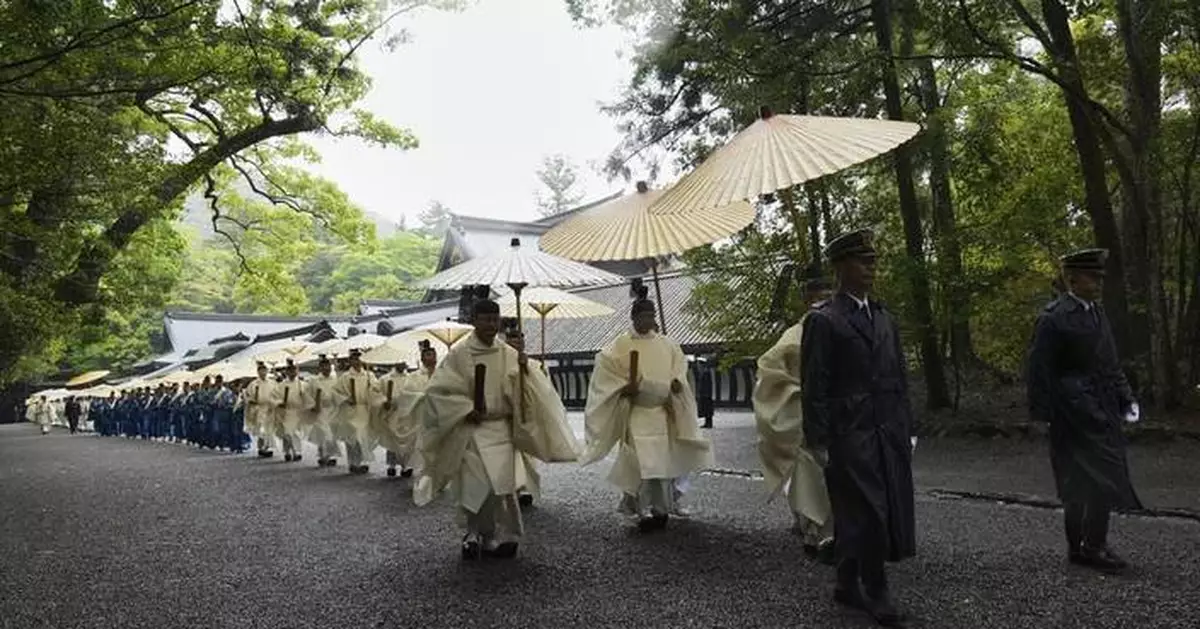
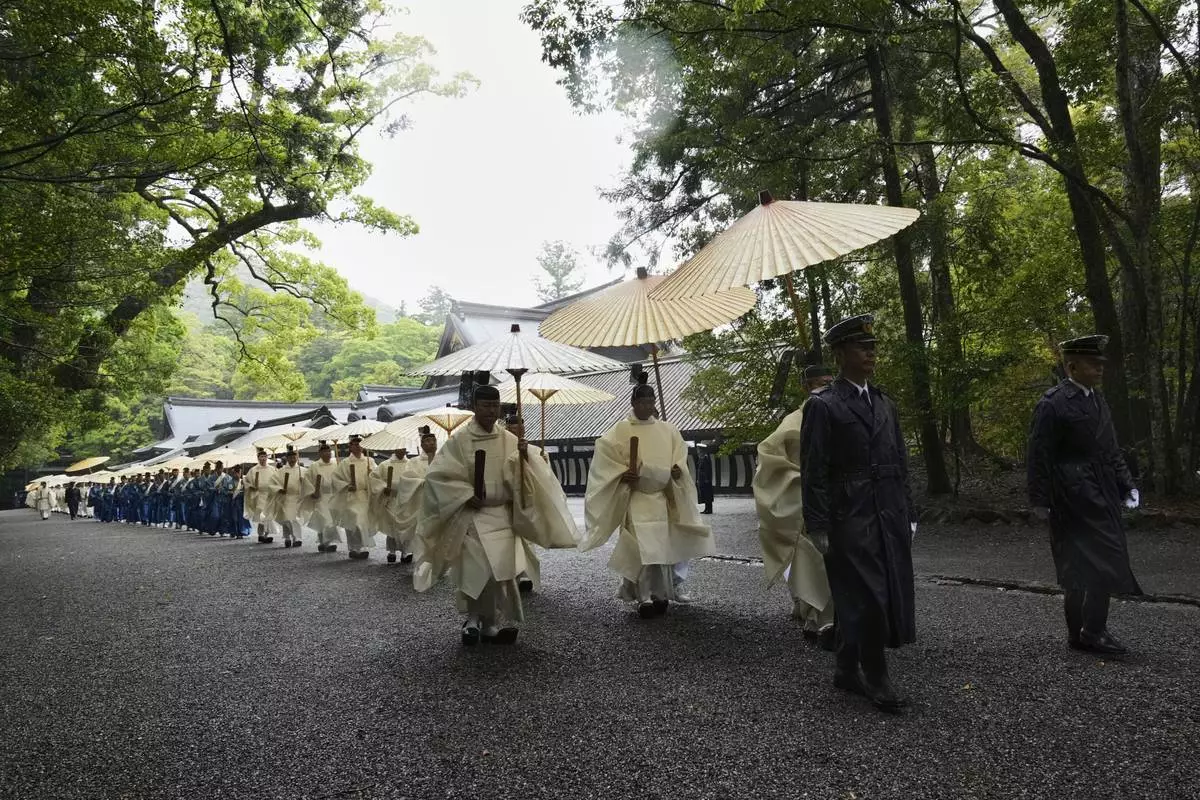
Priests and officials in the Shinto priesthood march during Yamaguchisai, a kickoff ceremony of the Shikinen Sengu ritual, which concludes in 2033, at Kotaijingu, also known as Naiku, or the inner sanctuary, of the Jingu shrine complex in Ise, central Japan, Friday, May 2, 2025. (AP Photo/Hiro Komae)

Priests and officials in the Shinto priesthood march during Yamaguchisai, a kickoff ceremony of the Shikinen Sengu ritual, which concludes in 2033, at Kotaijingu, also known as Naiku, or the inner sanctuary, of the Jingu shrine complex in Ise, central Japan, Friday, May 2, 2025. (AP Photo/Hiro Komae)

The ritualistic harvesting of this sacred timber is part of a remarkable process that has happened every two decades for the last 1,300 years at Ise Jingu, Japan’s most revered Shinto shrine.

Each generation, the Ise complex is knocked down and rebuilt from scratch, a massive, $390 million demolition and construction job that takes about nine years. It requires the country's finest carpenters, woodcutters, builders and artisans to pour their hearts into the smallest details of structures that are doomed from the moment the work begins.

The buildings at Ise will only stand for about a decade before the project starts all over again, but as the priests consecrate the construction, the workers shout: “A building for a thousand years! Ten thousand years! A million years and forever!”

Those close to the shrine often recognize a deep poignancy about the way the never-ending rebuilding intertwines with their lives.

“Twenty years from now, the older generation — our grandfathers — will likely no longer be here. And those of us who are still young now will then see our grandchildren involved in the next” version of Ise, said Yosuke Kawanishi, a Shinto priest whose family company crafts miniature replicas of the shrine. “After 20 years, the shrine we are building will have deteriorated quite a bit. But instead of thinking, ‘It’s a shame to tear down something we worked so hard to build,’ we think, ‘It’s been 20 years, so we want the deity to move into a beautiful, fresh, new shrine.’”

Journalists for The Associated Press are documenting the latest version of this ancient cyclical process, which publicly began this year.

This is the 63rd cycle of reconstruction. The first was documented in 690, during Empress Jitō’s reign, said Noboru Okada, professor emeritus at Kogakkan University and a specialist in Japanese history and archeology.

All 125 shrine buildings will be knocked down and identical structures — as well as more than 1,500 garments and other ritual objects used in the shrine — will be rebuilt using techniques that have been painstakingly passed down over generations. There are 33 accompanying festivals and ceremonies, cumulating in a 2033 ritual that sees the presiding deity transferred to the new shrine.

Ise's inner shrine is dedicated to the sun goddess Amaterasu who has been enshrined for two millennia among the mountains of Mie prefecture, on the banks of the Isuzu River.

Miori Inata, in a book based on a decade photographing Ise's reconstruction, offers some theories about the constant rebuilding, including that the 20-year-cycle matches the shelf-life of stored rice or the traditional two-decade phases that make up a human lifespan — birth to adulthood, adulthood to middle age, middle age to death.

Inata writes of the culminating rites marking a new shrine: “I was greatly moved by the realization that what was transpiring before my eyes were precisely the same ceremonies that were performed 1,300 years ago, every 20 years since, and will continue to unfold again and again in the future."

The rebuilding was stopped only twice, during the civil wars of the 15th and 16th centuries, and after World War II, according to Yukio Lippit, a professor of art history and architecture at Harvard.

“Ise is unique because of attrition — renewal cycles are difficult to maintain — and because of the vagaries of history; many other shrines that once underwent regular rebuilding have stopped doing so,” Lippit said.

During a recent downpour, priests in starched robes banged drums and marched to Ise's inner shrines for prayers marking the beginning of the age-old rebuilding process.

“The world where we live and the mountain realm are separate, distinct worlds. Therefore, when people go onto the mountain to cut trees or gather plants, they must first receive permission from the mountain deities," according to Okada, the historian.

Thousands gather to see the rebuilding ceremonies, part of about 7 million pilgrims a year who converge on the shrine, which has long been the polestar for Shinto devotees. Japan’s indigenous Shinto faith, which also acts as a cultural connection for family and community, is largely rooted in animism. In Shinto there are thousands of “kami,” or spirits, that inhabit the world. While Ise thrives, the number of Shinto shrines has plummeted in recent decades as Japan’s population shrinks and young people increasingly move from the countryside to megacities.

“You can count with one hand the number of times you’ll witness something like this in your lifetime, so I really felt it was a rare and precious sight,” said Yuto Nakase, who was viewing the ceremonies for the first time.

At night the priests assemble with lanterns and march to the mountains for a secret purification rite for a sacred pillar that will be enshrined beneath the floor of the main sanctuary.

The ceremony is off-limits to spectators, but shrine officials say that after the tree is cut down with a special axe, it is wrapped in white cloth, straw mats and reed mats.

Visitors often mention Ise’s deep sense of mystery.

“It doesn’t say much, doesn’t show much and doesn’t offer much explanation. It’s something you feel,” Kawanishi, the Shinto priest, said of the shrine.

Yoriko Maeda, who owns a local sake shop, recognizes a transformation the moment she crosses a bridge into the shrine grounds.

“My breathing changes,” she said. “It really feels different. What I sense also changes. The sounds, the wind or nature, seem to release my stress. … There’s a kind of depth there that, for me, makes it a very comforting and pleasant space.”

In the forests of Nagano prefecture, a woodcutter takes the tip of a freshly felled tree and inserts it into the stump of another tree that has just been cut down. The assembled woodcutters then pray and bow together in front of the stump, commemorating these special cypresses that will be used to rebuild Ise.

“It honors the continuity of a tree’s life and is a prayer for the regeneration of the forest,” explains Soju Ikeda, who operates a local lumber company and manages a society for the preservation of traditional tree-felling skills. “You take a moment to appreciate that trees are living beings and engrave that feeling into your heart.”

Over the following days, dozens of men dressed in traditional clothing drag the two-ton logs through the Isuzu River to the shrine, chanting rhythmically as they pull, knee-deep in the water.

At Ise there are ten carpenters’ studios in permanent residence, plus others who are brought in, Lippit, the Harvard professor, said. The miscanthus reed thatch for the shrine's roofs is specially grown to a length of over 2 meters; this takes about eight years and is timed for the rebuilding.

Cypress groves are specially planted at Ise for the constant construction, and their cultivation often exceeds individual human lifespans, with responsibilities for the trees passed from generation to generation.

Asked about his relationship to the cypress trees that are cultivated for the shrine, Ikeda, the lumber expert, had a one-word answer: “Deep.”

Forty years ago, when he was 24, he drove his grandfather to participate in the tree-felling ceremony. “He said to me, ‘Do you know that the trees cry?’

"I answered, ‘No way, how could a tree cry?’"

But as they watched woodsmen chop down the cypress, “the sound of the axes echoed across the mountains, and after about an hour, when the axe struck the core of the tree, the scent of the cypress filled the air, flowing like blood,” he said.

At the final axe stroke, as the wood snapped, “the sound it made was like a shriek, a high-pitched ‘keee’ sound, and then the tree fell with a thunderous thud. In that moment, I thought, ‘Ah... it really cried.’ I felt as if the tree wept, mourning its own life, as if it knew its life was precious.”

AP photographer Hiro Komae contributed to this report.

Associated Press religion coverage receives support through the AP’s collaboration with The Conversation US, with funding from Lilly Endowment Inc. The AP is solely responsible for this content.

Shinto's "miko" dancer performs after sacred timbers were pulled through streets in a local celebratory procession in Agematsu, central Japan, Wednesday, June 4, 2025, as part of Shikinen Sengu, a ritual to rebuild the main structures of Ise Jingu for transfering its enshrined deities. (AP Photo/Hiro Komae)
Shinto's "miko" dancer performs after sacred timbers were pulled through streets in a local celebratory procession in Agematsu, central Japan, Wednesday, June 4, 2025, as part of Shikinen Sengu, a ritual to rebuild the main structures of Ise Jingu for transfering its enshrined deities. (AP Photo/Hiro Komae)

Cypress trees stand at the Akasawa national forest, where cypress trees are felled for a Shinto ritual, in Agematsu, central Japan, Monday, June 2, 2025 (AP Photo/Hiro Komae)
Cypress trees stand at the Akasawa national forest, where cypress trees are felled for a Shinto ritual, in Agematsu, central Japan, Monday, June 2, 2025 (AP Photo/Hiro Komae)

A Shinto priest and a girl called "monoimi" participate in Yamaguchisai, a kickoff ceremony of Shikinen Sengu, concluding in 2033, at Toyoukedaijingu, also known as Geku, or the outer sanctuary, of the Jingu shrine complex in Ise, central Japan, Friday, May 2, 2025. (AP Photo/Hiro Komae)
A Shinto priest and a girl called "monoimi" participate in Yamaguchisai, a kickoff ceremony of Shikinen Sengu, concluding in 2033, at Toyoukedaijingu, also known as Geku, or the outer sanctuary, of the Jingu shrine complex in Ise, central Japan, Friday, May 2, 2025. (AP Photo/Hiro Komae)

Shinto officials in the priesthood pull a sacred timber on a wheeled platform into a position before unloading and moving it under the roof at the end of Mihishirogi Hoeishiki, a ceremony of the Shikinen Sengu ritual to rebuild main structures of the Jingu shrine complex for Shinto deities, at Toyoukedaijingu, also known as Geku, or the outer sanctuary of Jingu, in Ise, central Japan, Tuesday, June 10, 2025, after the cypress timbers were transported from Nagano prefecture's Kiso region to the city. (AP Photo/Hiro Komae)
Shinto officials in the priesthood pull a sacred timber on a wheeled platform into a position before unloading and moving it under the roof at the end of Mihishirogi Hoeishiki, a ceremony of the Shikinen Sengu ritual to rebuild main structures of the Jingu shrine complex for Shinto deities, at Toyoukedaijingu, also known as Geku, or the outer sanctuary of Jingu, in Ise, central Japan, Tuesday, June 10, 2025, after the cypress timbers were transported from Nagano prefecture's Kiso region to the city. (AP Photo/Hiro Komae)

Priests and officials in the Shinto priesthood march during Yamaguchisai, a kickoff ceremony of the Shikinen Sengu ritual, which concludes in 2033, at Kotaijingu, also known as Naiku, or the inner sanctuary, of the Jingu shrine complex in Ise, central Japan, Friday, May 2, 2025. (AP Photo/Hiro Komae)


Priests and officials in the Shinto priesthood march during Yamaguchisai, a kickoff ceremony of the Shikinen Sengu ritual, which concludes in 2033, at Kotaijingu, also known as Naiku, or the inner sanctuary, of the Jingu shrine complex in Ise, central Japan, Friday, May 2, 2025. (AP Photo/Hiro Komae)

PALM BEACH, Fla. (AP) — President Donald Trump warned Iran on Monday that the U.S. could carry out further military strikes if the country attempts to reconstitute its nuclear program as he held wide-ranging talks with Israeli Prime Minister Benjamin Netanyahu at his home in Florida.

Trump had previously insisted that Tehran's nuclear capabilities were “completely and fully obliterated” by U.S. strikes on key nuclear enrichment sites in June. But with Netanyahu by his side, Trump raised the possibility that suspected activity could be taking place outside those sites. Israeli officials, meanwhile, have been quoted in local media expressing concern about Iran rebuilding its supply of long-range missiles capable of striking Israel.

“Now I hear that Iran is trying to build up again,” Trump told reporters gathered at his Mar-a-Lago estate. “And if they are, we’re going to have to knock them down. We'll knock them down. We'll knock the hell out of them. But hopefully that’s not happening.”

Trump’s warning to Iran comes as his administration has committed significant resources to targeting drug trafficking in South America and the president looks to create fresh momentum for the U.S.-brokered Israel-Hamas ceasefire. The Gaza deal is in danger of stalling before reaching its complicated second phase that would involve naming an international governing body and rebuilding the devastated Palestinian territory.

At a news conference with Netanyahu after their meeting, Trump suggested that he could order another U.S. strike.

“If it’s confirmed, they know the consequences, and the consequences will be very powerful, maybe more powerful than the last time,” Trump said.

Iran has insisted that it is no longer enriching uranium at any site in the country, trying to signal to the West that it remains open to potential negotiations over its atomic program. The two leaders discussed the possibility of taking new military action against Tehran just months after June’s 12-day war.

The Iranian mission to the United Nations did not immediately respond to a request for comment on Trump’s warning.

Trump, with Netanyahu by his side, said he wants to get to the second phase of the Gaza deal “as quickly as we can.”

“But there has to be a disarming of Hamas,” Trump added.

The ceasefire between Israel and Hamas that Trump championed has mostly held, but progress has slowed recently. Both sides accuse each other of violations, and divisions have emerged among the U.S., Israel and Arab countries about the path forward.

The truce's first phase began in October, days after the two-year anniversary of the initial Hamas-led attack on Israel that killed about 1,200 people. All but one of the 251 hostages taken then have been released, alive or dead.

The Israeli leader, who also met separately with Secretary of State Marco Rubio and Defense Secretary Pete Hegseth, has signaled he is in no rush to move forward with the next phase as long as the remains of Ran Gvili are still in Gaza.

Gvili’s parents met with Netanyahu as well as Rubio, U.S. envoy Steve Witkoff and the president's son-in-law, Jared Kushner, in Florida on Monday.

“They’re waiting for their son to come home," Trump said of the family of the young police officer known affectionately as “Rani."

The path to implementing Trump's peace plan is certainly complicated.

If successful, the second phase would see the rebuilding of a demilitarized Gaza under international supervision by a group chaired by Trump and known as the Board of Peace. The Palestinians would form a “technocratic, apolitical” committee to run daily affairs in Gaza, under Board of Peace supervision.

It further calls for normalized relations between Israel and the Arab world and a possible pathway to Palestinian independence. Then there are thorny logistical and humanitarian questions, including rebuilding war-ravaged Gaza, disarming Hamas and creating a security apparatus called the International Stabilization Force.

Two main challenges have complicated moving to the second phase, according to an official who was briefed on those meetings. Israeli officials have been taking a lot of time to vet and approve members of the Palestinian technocratic committee from a list given to them by the mediators, and Israel continues its military strikes.

Trump’s plan also calls for the stabilization force, proposed as a multinational body, to maintain security. But it, too, has yet to be formed. Whether details will be forthcoming after Monday's meeting is unclear.

A Western diplomat said there is a “huge gulf” between the U.S.-Israeli understanding of the force's mandate and that of other major countries in the region, as well as European governments.

All spoke on the condition of anonymity to provide details that haven't been made public.

The U.S. and Israel want the force to have a “commanding role” in security duties, including disarming Hamas and other militant groups. But countries being courted to contribute troops fear that mandate will make it an “occupation force,” the diplomat said.

Hamas has said it is ready to discuss “freezing or storing” its arsenal of weapons but insists it has a right to armed resistance as long as Israel occupies Palestinian territory. One U.S. official said a potential plan might be to offer cash incentives in exchange for weapons, echoing a “buyback” program Witkoff has previously floated.

The two leaders, who have a long and close relationship, heaped praise on each other. Trump also tweaked the Israeli leader, who at moments during the war has raised Trump's ire, for being “very difficult on occasion.”

Netanyahu said Trump during the lunch was formally told that his country's education ministry will award him the Israel Prize, breaking the long-held convention of bestowing the honor on an Israeli citizen or resident.

“President Trump has broken so many conventions to the surprise of people,” Netanyahu said. He added, “So we decided to break a convention too, or create a new one."

Trump also renewed his call on Israeli President Isaac Herzog to grant Netanyahu, who is in the midst of a corruption trial, a pardon.

Netanyahu is the only sitting prime minister in Israeli history to stand trial, after being charged with fraud, breach of trust and accepting bribes in three separate cases accusing him of exchanging favors with wealthy political supporters.

Trump has previously written to Herzog to urge a pardon and advocated for one during his October speech before the Knesset. He said Monday that Herzog has told him “it’s on its way" without offering further details.

“He’s a wartime prime minister who’s a hero. How do you not give a pardon?" Trump said.

Herzog's office said in a statement that the Israeli president and Trump have not spoken since the pardon request was submitted, but that Herzog has spoken with a Trump representative about the U.S. president's letter advocating for Netanyahu's pardon.

“During that conversation, an explanation was provided regarding the stage of the process in which the request currently stands, and that any decision on the matter will be made in accordance with the established procedures,” the Israeli president's office said.

Mednick reported from Jerusalem and Magdy from Cairo. Associated Press writers Darlene Superville in Washington, Farnoush Amiri at the United Nations, and Lee Keath and Fatma Khaled in Cairo contributed to this report.

President Donald Trump speaks as Israel's Prime Minister Benjamin Netanyahu listens during a news conference at Mar-a-Lago, Monday, Dec. 29, 2025, in Palm Beach, Fla. (AP Photo/Alex Brandon)

President Donald Trump speaks as Israel's Prime Minister Benjamin Netanyahu listens during a news conference at Mar-a-Lago, Monday, Dec. 29, 2025, in Palm Beach, Fla. (AP Photo/Alex Brandon)

President Donald Trump greets Israel's Prime Minister Benjamin Netanyahu at his Mar-a-Lago club, Monday, Dec. 29, 2025, in Palm Beach, Fla. (AP Photo/Alex Brandon)

President Donald Trump greets Israel's Prime Minister Benjamin Netanyahu at his Mar-a-Lago club, Monday, Dec. 29, 2025, in Palm Beach, Fla. (AP Photo/Alex Brandon)

President Donald Trump speaks before a luncheon with Israel's Prime Minister Benjamin Netanyahu at his Mar-a-Lago club, Monday, Dec. 29, 2025, in Palm Beach, Fla. (AP Photo/Alex Brandon)

President Donald Trump speaks before a luncheon with Israel's Prime Minister Benjamin Netanyahu at his Mar-a-Lago club, Monday, Dec. 29, 2025, in Palm Beach, Fla. (AP Photo/Alex Brandon)

Israel's Prime Minister Benjamin Netanyahu listens as President Donald Trump speaks before a luncheon at his Mar-a-Lago club, Monday, Dec. 29, 2025, in Palm Beach, Fla. (AP Photo/Alex Brandon)

Israel's Prime Minister Benjamin Netanyahu listens as President Donald Trump speaks before a luncheon at his Mar-a-Lago club, Monday, Dec. 29, 2025, in Palm Beach, Fla. (AP Photo/Alex Brandon)

President Donald Trump and Israel's Prime Minister Benjamin Netanyahu are seated before a luncheon at his Mar-a-Lago club, Monday, Dec. 29, 2025, in Palm Beach, Fla. (AP Photo/Alex Brandon)

President Donald Trump and Israel's Prime Minister Benjamin Netanyahu are seated before a luncheon at his Mar-a-Lago club, Monday, Dec. 29, 2025, in Palm Beach, Fla. (AP Photo/Alex Brandon)

President Donald Trump listens as Israel's Prime Minister Benjamin Netanyahu speaks during an arrival at his Mar-a-Lago club, Monday, Dec. 29, 2025, in Palm Beach, Fla. (AP Photo/Alex Brandon)

President Donald Trump listens as Israel's Prime Minister Benjamin Netanyahu speaks during an arrival at his Mar-a-Lago club, Monday, Dec. 29, 2025, in Palm Beach, Fla. (AP Photo/Alex Brandon)

President Donald Trump speaks during a NORAD, North American Aerospace Defense Command, Tracks Santa Operation call at his Mar-a-Lago club, Wednesday, Dec. 24, 2025, in Palm Beach, Fla. (AP Photo/Alex Brandon)

President Donald Trump speaks during a NORAD, North American Aerospace Defense Command, Tracks Santa Operation call at his Mar-a-Lago club, Wednesday, Dec. 24, 2025, in Palm Beach, Fla. (AP Photo/Alex Brandon)

Israeli Prime Minister Benjamin Netanyahu speaks during a joint press conference after a trilateral meeting with Cyprus President Nikos Christodoulides and Greek Prime Minister Kyriakos Mitsotakis at the Citadel of David Hotel in Jerusalem, Monday Dec. 22, 2025. (Abir Sultan/Pool Photo via AP)

Israeli Prime Minister Benjamin Netanyahu speaks during a joint press conference after a trilateral meeting with Cyprus President Nikos Christodoulides and Greek Prime Minister Kyriakos Mitsotakis at the Citadel of David Hotel in Jerusalem, Monday Dec. 22, 2025. (Abir Sultan/Pool Photo via AP)

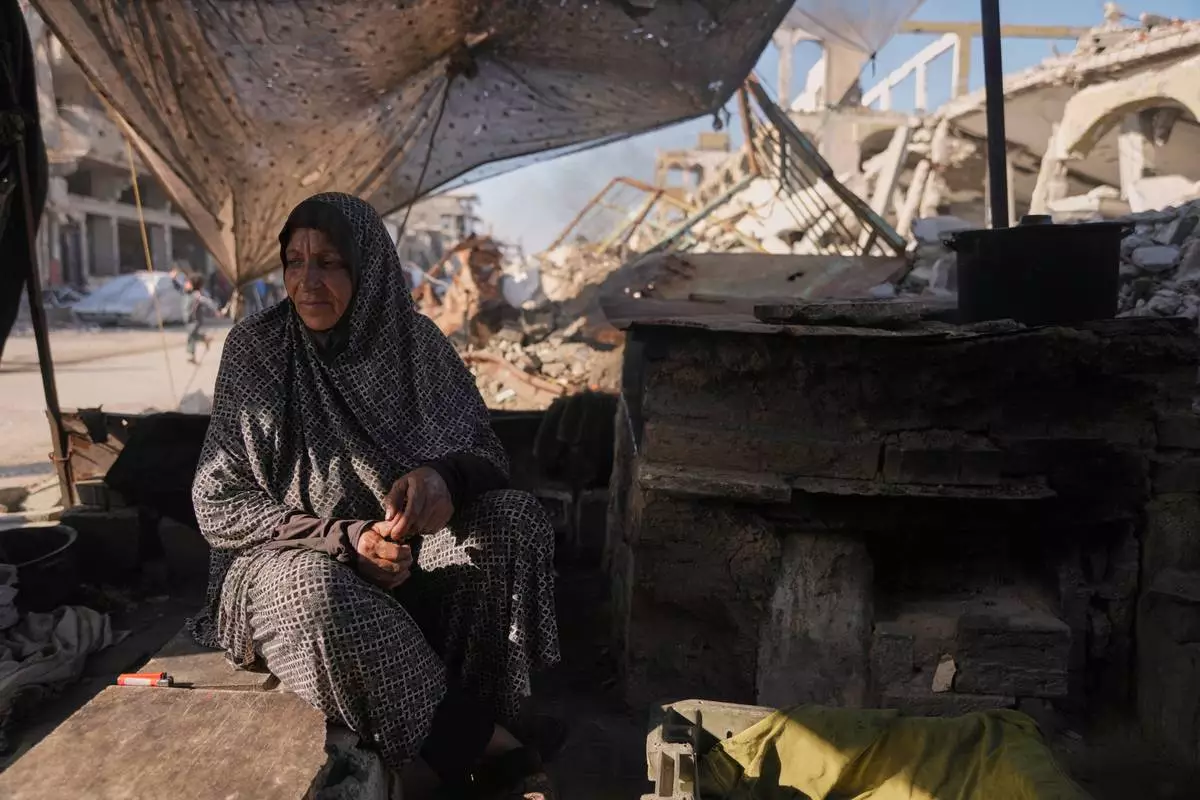
Amal Matar, 65, sits next to the oven as she cooks for her family in the Al-Shati camp, northern Gaza Strip, Thursday, Dec. 25, 2025. (AP Photo/Jehad Alshrafi)

Amal Matar, 65, sits next to the oven as she cooks for her family in the Al-Shati camp, northern Gaza Strip, Thursday, Dec. 25, 2025. (AP Photo/Jehad Alshrafi)

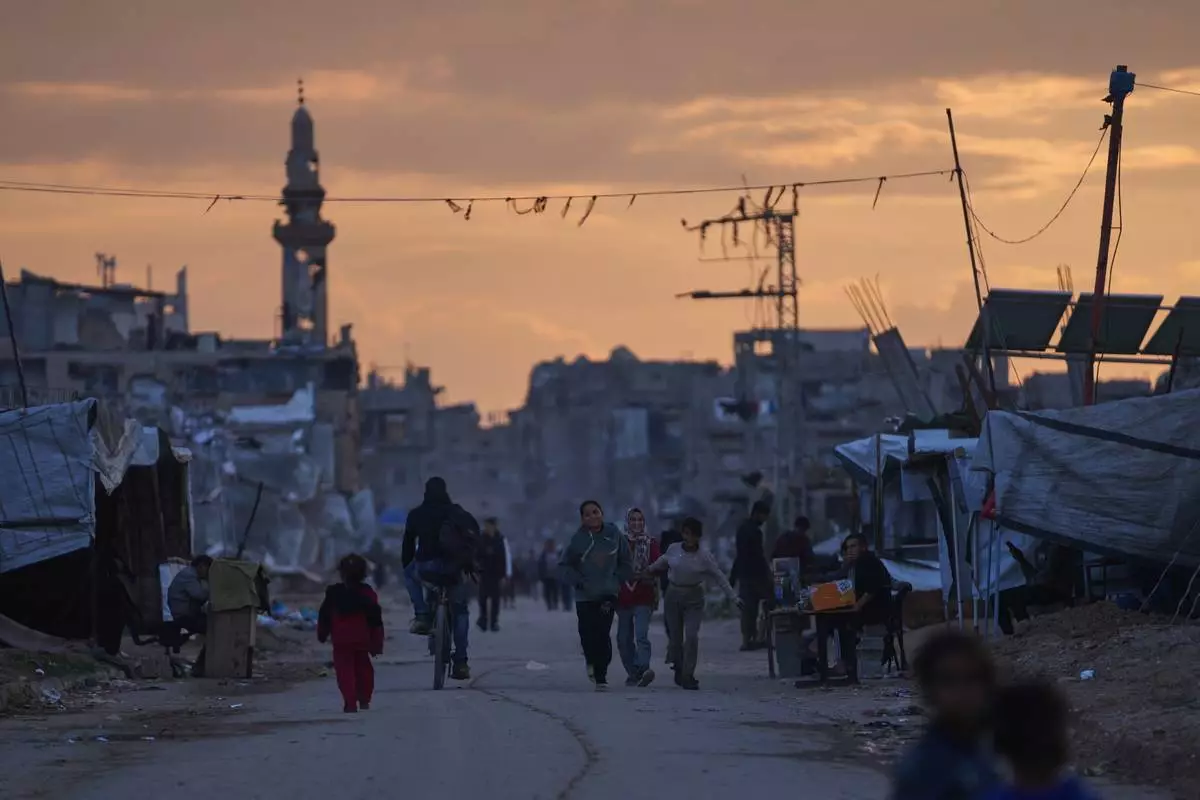
Palestinian youth walk along a tent camp for displaced people as the sun sets in Nuseirat, central Gaza Strip, Friday, Dec. 26, 2025. (AP Photo/Abdel Kareem Hana)

Palestinian youth walk along a tent camp for displaced people as the sun sets in Nuseirat, central Gaza Strip, Friday, Dec. 26, 2025. (AP Photo/Abdel Kareem Hana)

Recommended Articles