SLOVIANSK, Ukraine (AP) — Fall is expected to bring another grueling test for Ukraine’s armed forces as Russia intensifies its campaign to seize an eastern region, once Ukraine’s industrial heartland and a territory it has long sought to conquer.
Russia now controls about 70% of the Donetsk region. Ukraine's forces have been pushed back to a string of four cities that analysts have dubbed its “fortress belt,” where they've repelled Moscow's efforts to seize the region for years.
Click to Gallery
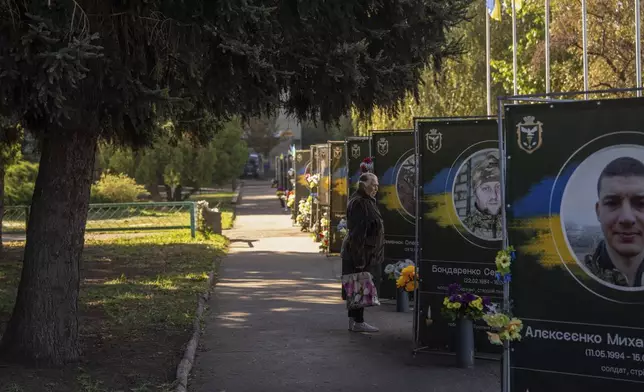
A woman cries while she looks at portraits of fallen servicemen in Sloviansk central square, Donetsk region, Ukraine, Friday, Sept. 12, 2025. (AP Photo/Alex Babenko)
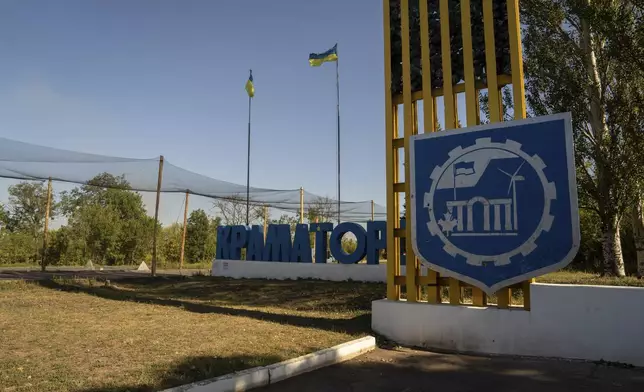
The Kramatorsk city sign and Ukrainian flags are seen next to the road covered with nets to protect cars from the enemy drones, Kramatorsk, Donetsk region, Ukraine, Friday, Sept.12, 2025. (AP Photo/Alex Babenko)
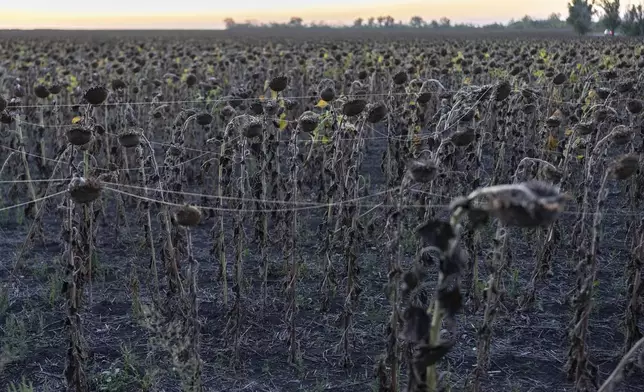
Sunflowers covered with optic fiber are seen near Sloviansk, Donetsk region, Ukraine, Thursday, Sept.11, 2025. (AP Photo/Alex Babenko)
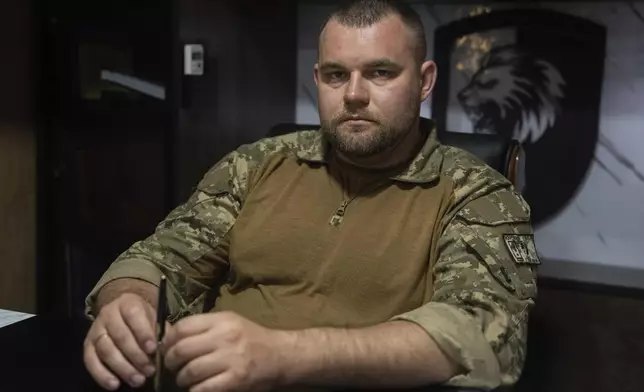
Pavlo Yurchuk, commander of the 63rd Mechanized Brigade, poses for a portrait in his cabinet in Donetsk region, Ukraine, Thursday, Sept.11, 2025. (AP Photo/Alex Babenko)
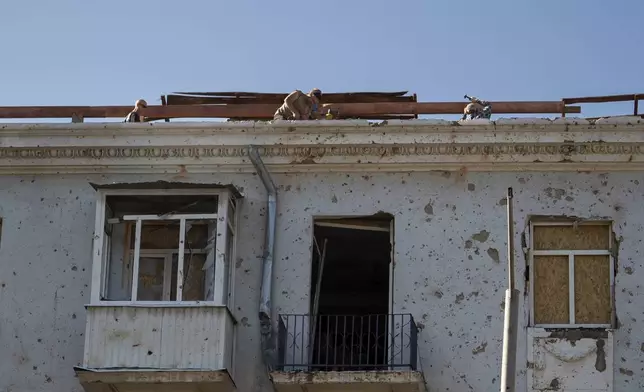
Men repair the roof of a multistory building damaged after a Russian missile hit the city center in Kramatorsk, Donetsk region, Ukraine, Friday, Sept. 12, 2025. (AP Photo/Alex Babenko)
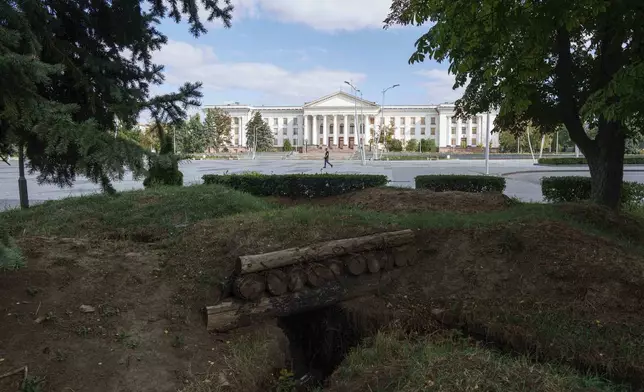
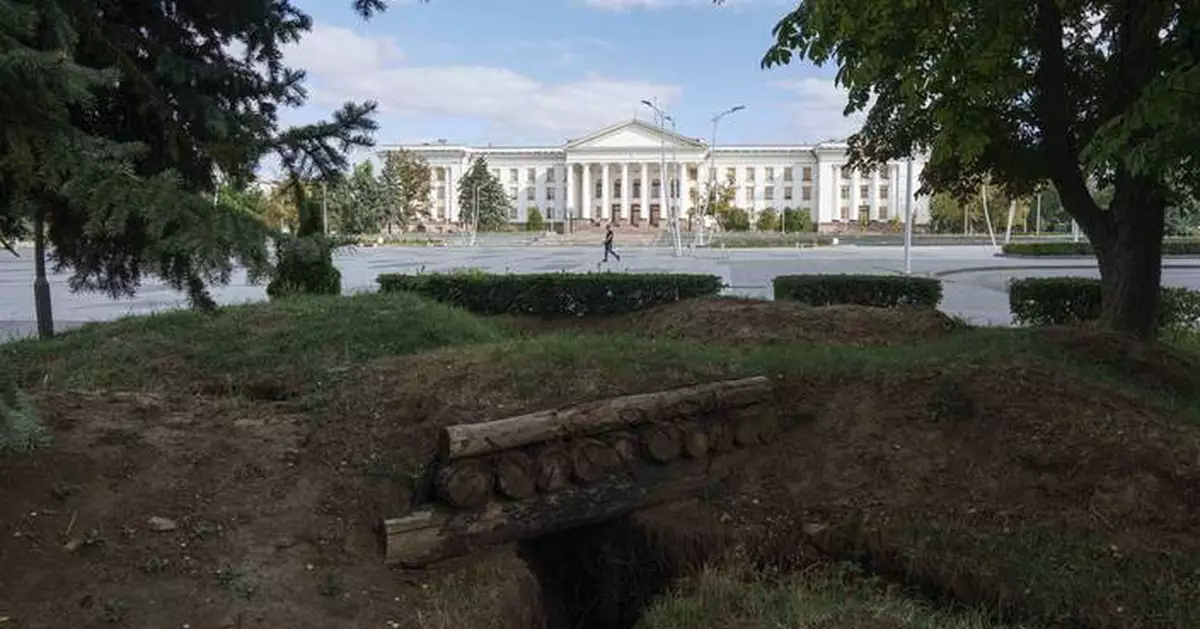
A man walks past a central square in Kramatorsk, Ukraine, Friday, Sept. 5, 2025. (AP Photo/Evgeniy Maloletka)
But shortages of troops, supplies and chaotic management are making it increasingly hard to resist Russia's relentless pressure in the region.
As the more-than-3-year-old invasion continues despite months of U.S.-led peace efforts, analysts and the military say the country could struggle to resist an intensified push to seize the last cities in the region under Ukrainian control.
Analysts and Ukrainian officers say that Russia is unlikely to engage in protracted urban battles and avoid costly fights like the storming of Bakhmut, which dragged on for months with staggering losses on both sides.
“After Bakhmut and Chasiv Yar, the Russians clearly understood that large cities turn into vast cemeteries for their army, where they lose thousands upon thousands,” said Col. Pavlo Yurchuk, whose troops are defending a small city at the northern end of the fortress belt.
To skirt the cities, Russian forces are pushing on the flanks and increasingly using infiltration tactics, sending small groups of soldiers through gaps between Ukrainian units.
Some of these groups have achieved tactical gains, slipping behind the front line to hide in tree lines or basements, occasionally occupying abandoned positions or cutting off supply routes. But the human cost is heavy: of a five-man unit, Ukrainian commanders estimate, two are usually killed, one is wounded, one goes missing, and only one survives to call for a drone to drop water or medicine.
“These are tactical successes, not strategic ones,” Yurchuk said. “This tactic is very slow and does not solve the tasks of encirclement or control of large settlements.”
Drones and glide bombs are also playing a crucial role, allowing Russia to hit troops and supplies headed for the front and to weaken Ukraine's strongholds without head-on fighting.
This summer, Russian forces stepped up attacks at the northern and southern ends of the Donetsk belt. Their strategy, Ukrainian officers say, is to sever supply lines and surround the region’s cities rather than storming them directly.
The region — one of four that Russia illegally annexed in 2022, though it did not control any of them — became the epicenter of the fighting since the start of the full-scale invasion.
In northern Donestk, Yurchuk's 63rd Brigade is fighting to hold the town of Lyman, a key logistics hub on the way to Sloviansk.
With a prewar population of 20,000, Lyman has rail connections, dozens of basements and bomb shelters, solid infrastructure and strong buildings where command posts or supply depots could be set up. It was occupied during part of the first year of the full-scale invasion but liberated in Ukraine’s autumn 2022 lightning counteroffensive.
If Russian forces manage to take Lyman, Yurchuk said, they could use it to build up troops and attempt to cross the Siverskyi Donets River, a natural obstacle that helps protect Sloviansk.
But the commander says he's confident Russia's latest offensive won't work.
“From a military point of view it looks correct — on the map it looks neat — but after nearly three and a half years of war we all know that such deep maneuvers and wide flanking operations are not Russia’s forte,” said Yurchuk. “They simply won’t be able to control and supply those penetrations, so I’m sure that they will fail.”
In southern Donetsk, Russia has made advances near Pokrovsk, taking them further around the fortress belt's southern stronghold of Kostiantynivka, once home to 67,000 people but today all but deserted.
It’s hard to predict how the fighting will unfold: Russia's advances could turn into a breakthrough that allows it to seize much of the region, or the battles could drag on for months or years.
While Russia achieves tactical gains without sparing sentiment for human life, Ukraine faces the grinding reality of troop shortages.
Exhaustion and a lack of regular rotations could also weaken Ukraine’s defenses.
“People are obviously one of the key problems,” said Taras Chmut, director of the Come Back Alive Foundation, which has raised more than $388 million over the past decade to equip Ukraine’s forces. “Not only the quantity, but their dispersion on the battlefield, the inefficiency of command, and the shortcomings in training and management.”
On paper, he said, some brigades list thousands of soldiers but can only field hundreds in combat, a gap he attributed not to Russian superiority but to mismanagement. He said the chaos means too many soldiers are sometimes doubled up on the same tasks and targets while others are left uncovered.
“It’s a systemic flaw we can neither admit nor fix," he said. "Until we do, we have to make up for it with technology, with manpower, with the enemy’s weaknesses on the battlefield, and with the courage of people and volunteers who step in where they can.”
But he and others warned that these measures are temporary stopgaps unless broader changes come.
“The overall trend, measured over years, looks unfavorable for Ukraine,” Chmut said, adding that unless changes are made in the rear — such as fixing management failures in the army — and no new technology or geopolitical shift emerges, the outlook will remain grim. “The longer this drags on, the worse it will get — and without fresh resources the Russians will simply outmatch us in quantity and means.”
“Just because the Russians moved slowly in the past doesn’t mean they won’t accelerate,” warned Nick Reynolds, a research fellow in land warfare at the Royal United Services Institute. “Sadly, the Ukrainian Armed Forces have been under enormous pressure for a very long time.”
The fall of the fortress belt, he cautioned, would displace thousands of civilians and cause further economic damage. And even after capturing the whole region, the invasion is unlikely to end.
“I see absolutely no reason, no indication why the Russian Federation or the Russian Armed Forces would stop" with the Donetsk region Reynolds said.
Associated Press journalists Vasilisa Stepanenko and Yehor Konovalov contributed to this report.
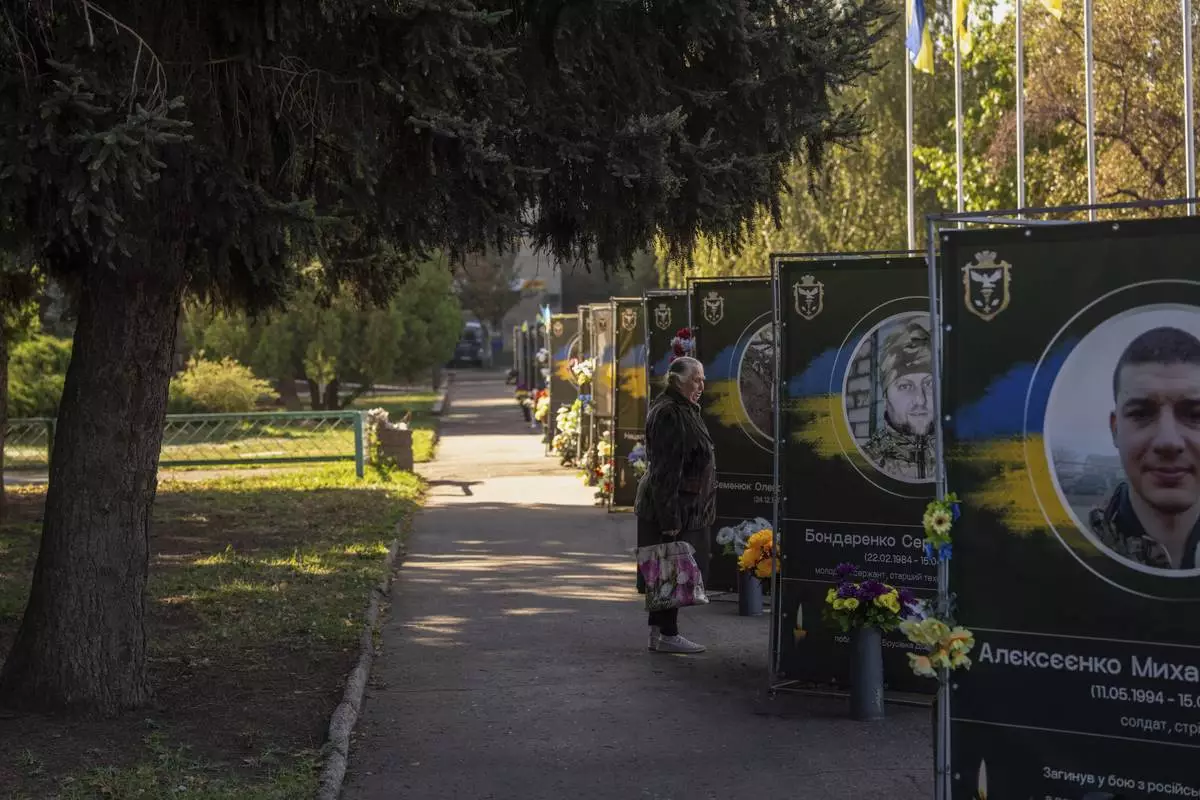
A woman cries while she looks at portraits of fallen servicemen in Sloviansk central square, Donetsk region, Ukraine, Friday, Sept. 12, 2025. (AP Photo/Alex Babenko)
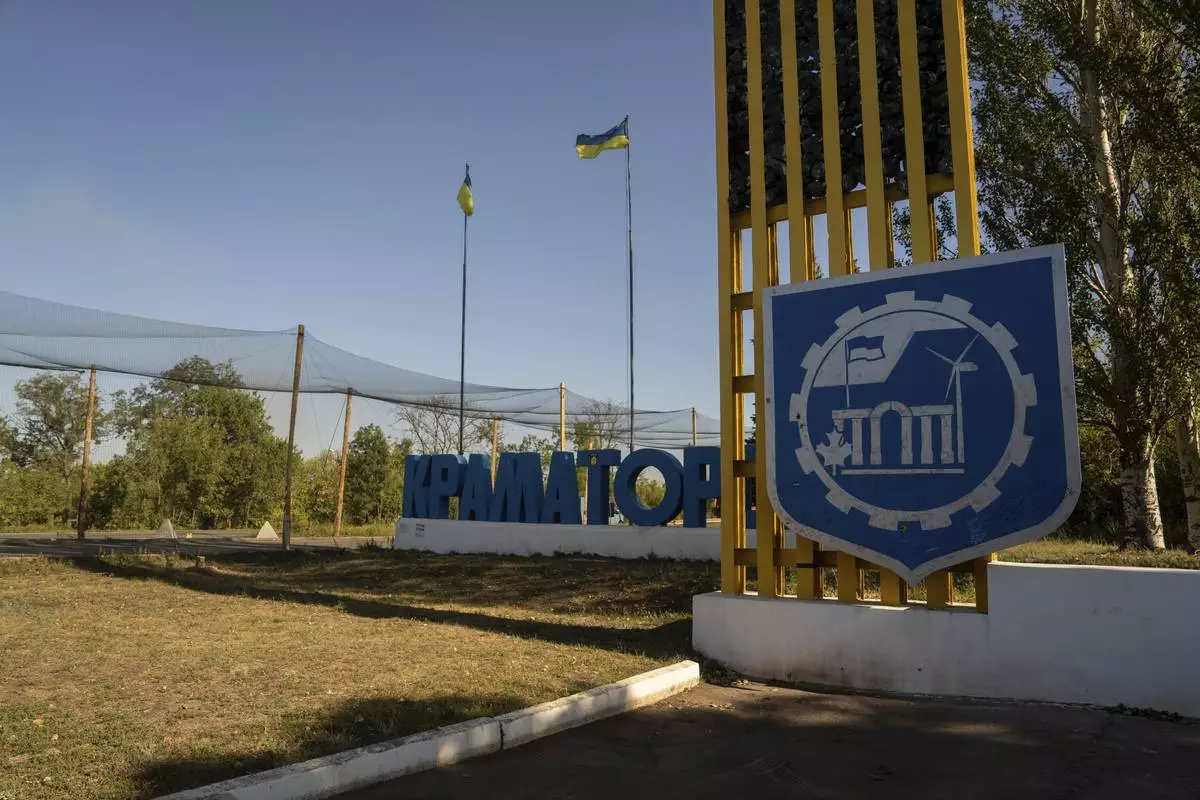
The Kramatorsk city sign and Ukrainian flags are seen next to the road covered with nets to protect cars from the enemy drones, Kramatorsk, Donetsk region, Ukraine, Friday, Sept.12, 2025. (AP Photo/Alex Babenko)
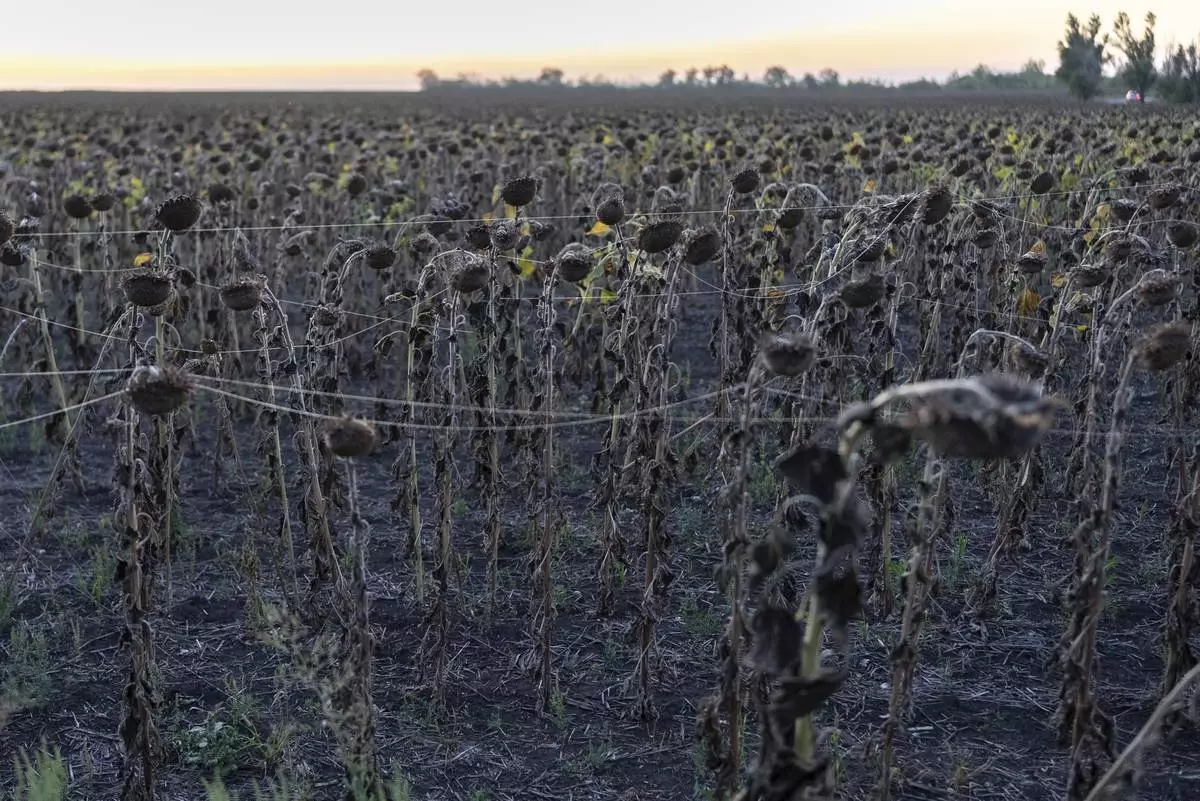
Sunflowers covered with optic fiber are seen near Sloviansk, Donetsk region, Ukraine, Thursday, Sept.11, 2025. (AP Photo/Alex Babenko)
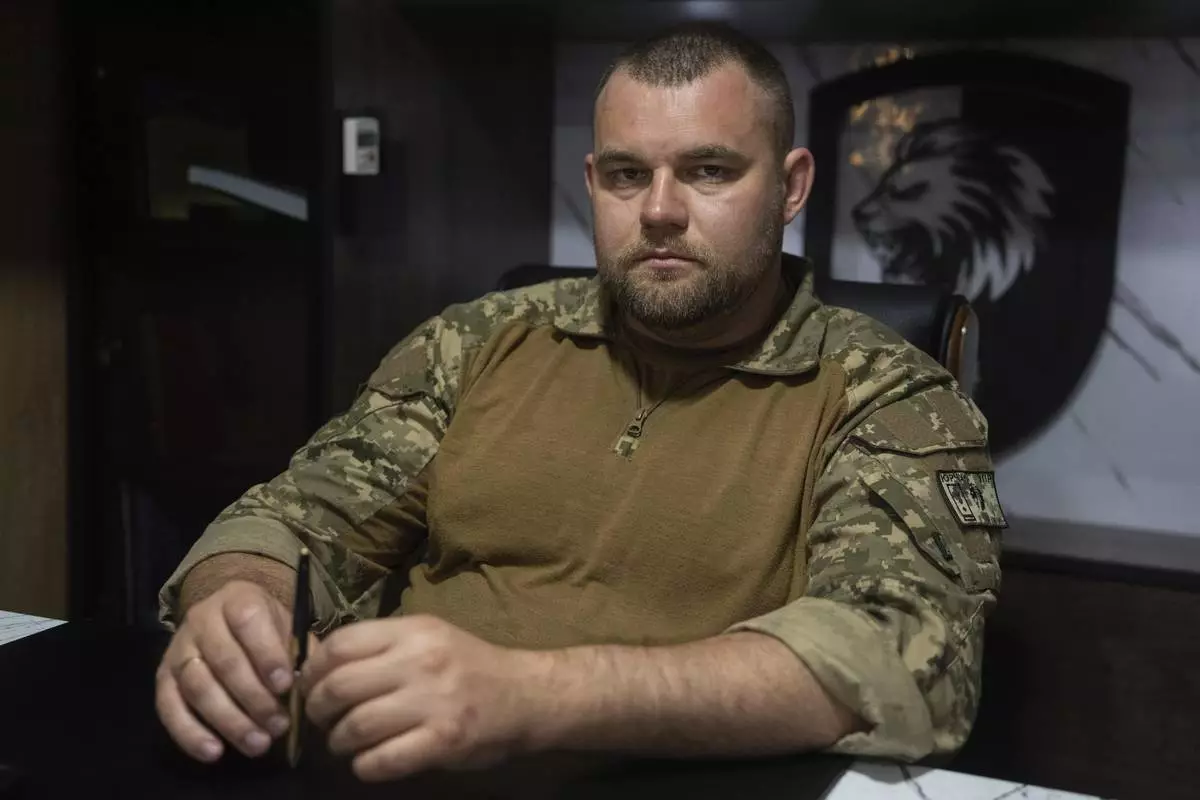
Pavlo Yurchuk, commander of the 63rd Mechanized Brigade, poses for a portrait in his cabinet in Donetsk region, Ukraine, Thursday, Sept.11, 2025. (AP Photo/Alex Babenko)
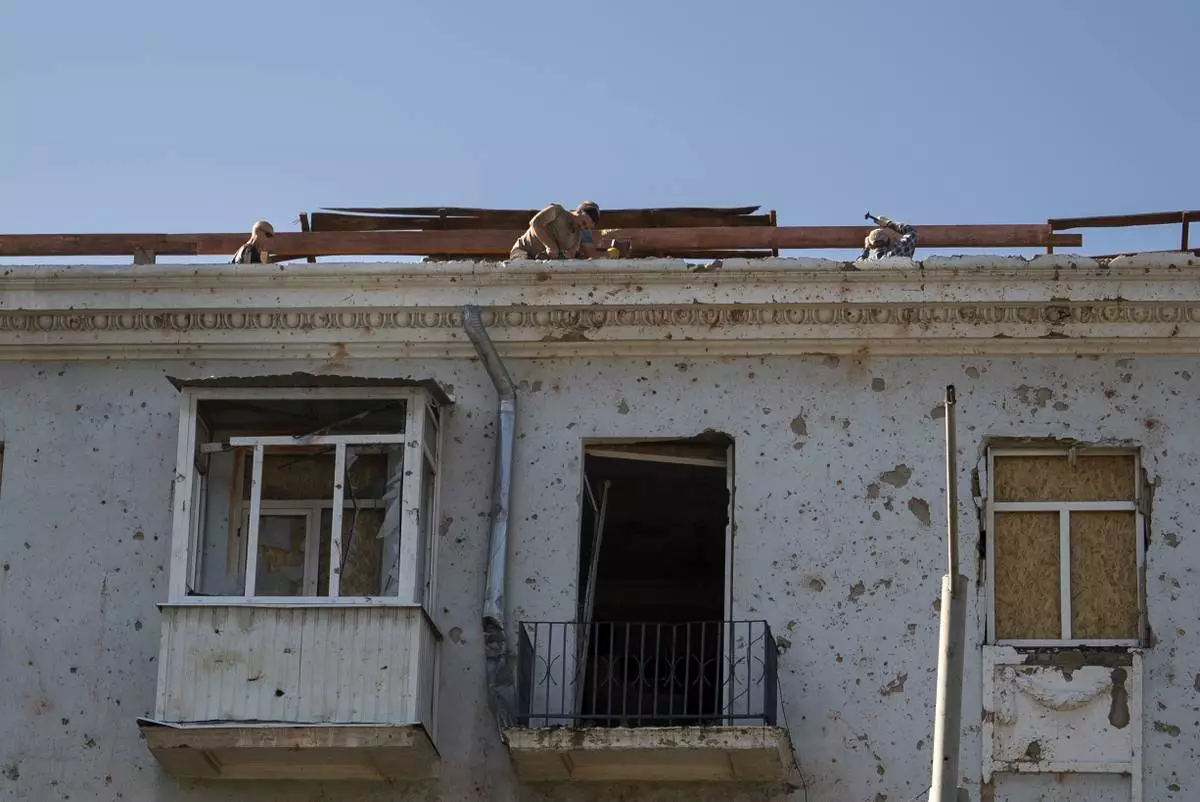
Men repair the roof of a multistory building damaged after a Russian missile hit the city center in Kramatorsk, Donetsk region, Ukraine, Friday, Sept. 12, 2025. (AP Photo/Alex Babenko)
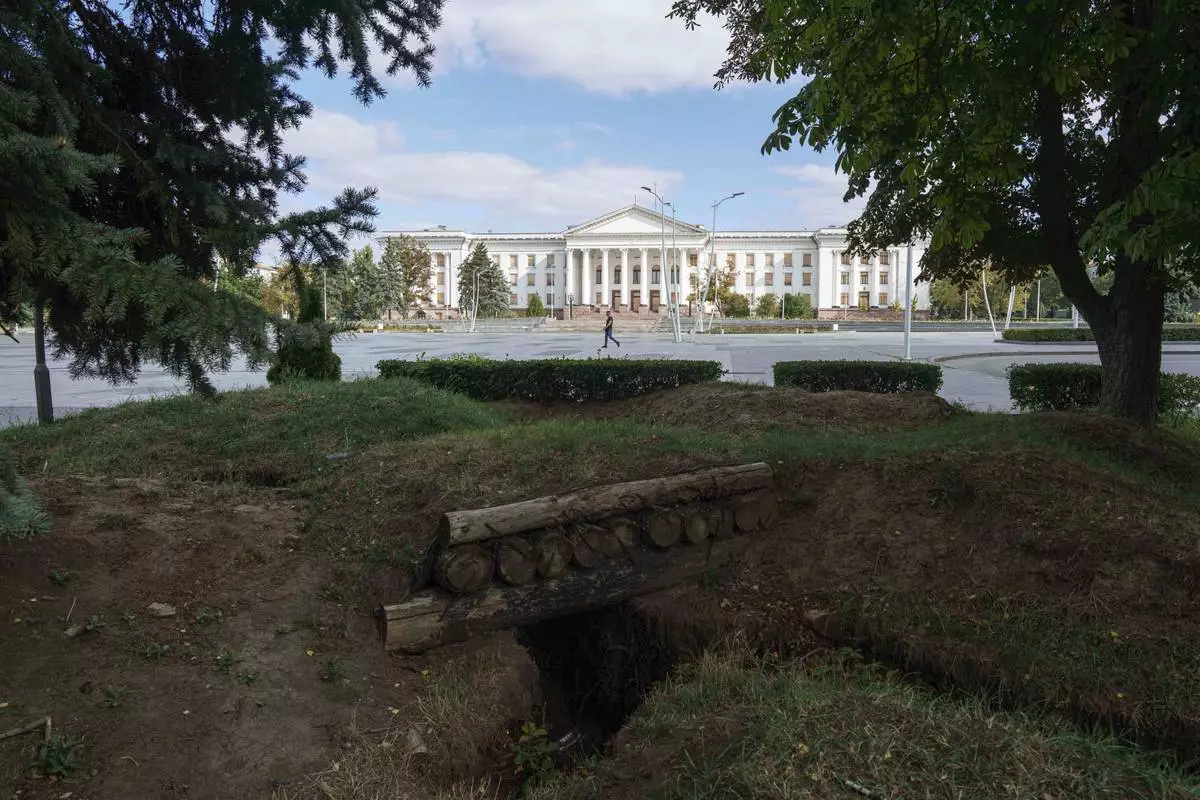
A man walks past a central square in Kramatorsk, Ukraine, Friday, Sept. 5, 2025. (AP Photo/Evgeniy Maloletka)