LONDON--(BUSINESS WIRE)--Sep 23, 2025--
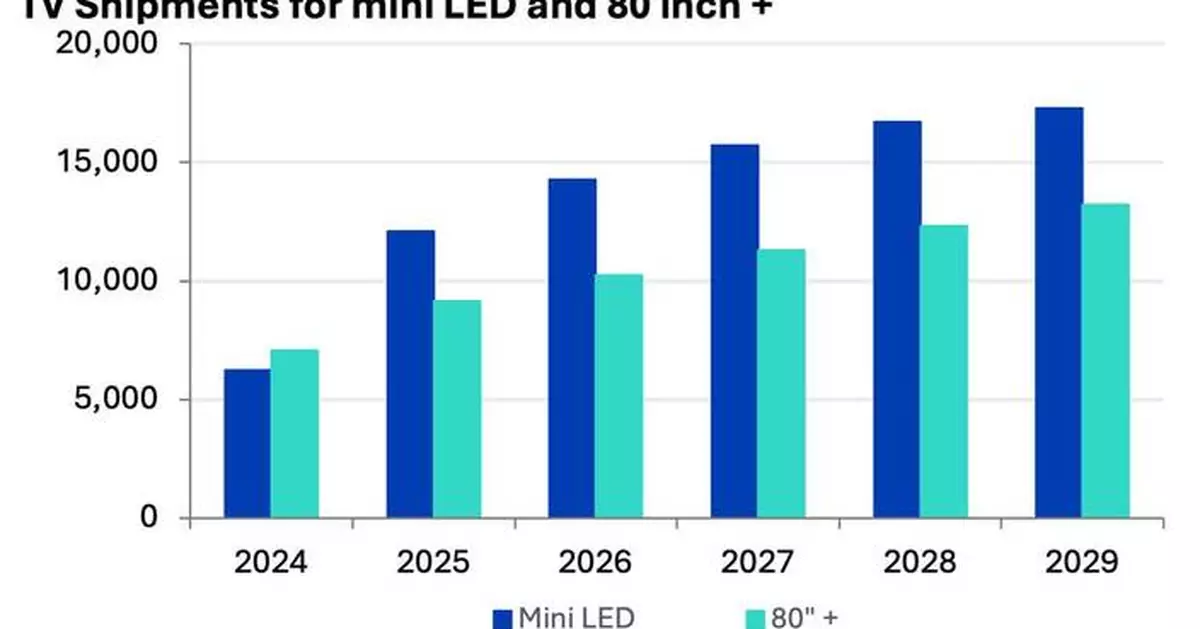
Global annual TV shipments are projected to see minimal growth over the next five years, but the ultra-large segment (80 inches and above) is expected to increase by 44% from 2025 to 2029, representing a CAGR of 10%, according to new analysis from Omdia’s quarterly TV Sets Market Tracker. Falling prices of ultra-large LCD TVs combined with advances in backlight technology are set to drive this expansion.
This press release features multimedia. View the full release here: https://www.businesswire.com/news/home/20250922661474/en/
Omdia’s latest TV Sets (Emerging Technologies) Market Tracker: Forecast – 2Q25, projects overall global annual TV shipments to edge up from 209 million units in 2025 to 211 million in 2029, a modest CAGR of just 0.4%. Despite this slowdown in the broader market, several key segments and technologies are on track for rapid growth.
Shipments of TVs 80 inches and larger are forecast to rise from 9 million units in 2025 to over 13 million by 2029. China and North America will continue to dominate demand for ultra-large sizes accounting for 54% and 28% of volume, respectively, in 2029. Western Europe, where smaller screen sizes have traditionally dominated due to limited living space, is also set for growth, climbing from 503,000 units in 2025 to 643,000 in 2029.
“Considerably lower prices for ultra-large TVs are making this premium category accessible to many more consumers,” said Matthew Rubin, Principal Analyst, TV Set Research, Omdia. “This stark change in pricing dynamics is being driven by a combination of manufacturing efficiencies and Chinese brands prioritizing market share and brand visibility over profitability in the $1000-plus premium segment.”
Another core growth area through 2029 will be mini LED, particularly the premium RGB mini LED subsegment. Annual shipments of mini LED TVs are forecast to increase from 12 million in 2025 to 17 million in 2029, a CAGR of 9%. White light mini LED is expected to dominate the mass market, while RGB mini LED, introduced in 2025 by Hisense and Samsung, will expand as more brands adopt the technology from 2026 onward.
Although RGB based technology is initially more expensive to manufacture – with Hisense’ first 116” RGB TV in Europe priced at €24,999 – costs are expected to decline quickly. The technology could follow a trajectory similar to the wider mini LED market, which began as a premium feature but rapidly migrated into mid-range TV sets. RGB technology offers several advantages, including up to 100% color coverage of BT.2020, and avoids the cost-scaling issues for larger screen sizes that OLED face.
ABOUT OMDIA
Omdia, part of Informa TechTarget, Inc. (Nasdaq: TTGT), is a technology research and advisory group. Our deep knowledge of tech markets combined with our actionable insights empower organizations to make smart growth decisions.

TV shipments for mini LED and 80 inch+
RAMALLAH, West Bank (AP) — President Mahmoud Abbas postponed what would have been the first Palestinian elections in nearly 20 years, issuing a decree on Friday to further delay voting for the Palestinian Legislative Council almost another year.
Rather than take place as scheduled next month, the decree pushes the elections back to Sept. 11, 2027, according to WAFA, the official Palestinian news agency. Presidential elections, which have not taken place for more than two decades, are scheduled for the same day.
The postponement leaves entrenched Palestinian leaders unchallenged and threatens to further erode the Palestinian Authority’s credibility among ordinary Palestinians and donor countries who fund it.
The internationally backed body is dominated by Abbas' party, Fatah, and has administered semiautonomous parts of the Israeli-occupied West Bank since agreements reached in the 1990s. It has grown increasingly unpopular throughout Abbas’ presidency. Many Palestinians view it as corrupt and criticize its security cooperation with Israel.
The decree came after a committee of top Palestinian officials met Saturday morning to discuss postponing the vote. The Palestine Liberation Organization’s Executive Committee, which Abbas heads, said in a statement that conditions in east Jerusalem, the West Bank and the Gaza Strip were not conducive to holding elections, noting that Israel had not allowed election materials or international observers to enter Gaza.
Israeli Foreign Minister Gideon Saar on X said that Abbas' “attempt to drag Israel into this, falsely claiming that Israel imposed obstacles to holding elections, is yet another ridiculous lie designed to evade responsibility and accountability.”
The move was expected after Palestinian factions across the political spectrum met in Cairo for discussions on delaying the vote, Islamic Jihad deputy secretary-general Mohammed al-Hindi told The Associated Press earlier this week.
Hamas called the postponement “a step in the right direction” and said further talks should focus on rebuilding Palestinian institutions and holding elections at a later date.
Palestinians have not held a legislative election since 2006, when Hamas won a majority of seats. Israel and Western countries then boycotted its government, fueling months of unrest that led to the Hamas takeover of Gaza the following year. Power has been divided between Gaza and the West Bank in the two decades since, with Hamas in control of Gaza and Abbas’ Palestinian Authority in power in the West Bank.
The West Bank has grown increasingly violent in recent years as Israel has expanded settlements and outposts. Settler attacks on Palestinians and Israeli army raids on cities under the authority’s control are both regularly reported.
Though the U.S.-brokered ceasefire plan reached last year outlined a future role for the authority in Gaza, its immediate role was left mostly undefined as Hamas has continued to govern the territory and the technocrats under the Board of Peace remain in Cairo awaiting permission to enter the territory to oversee a transition of power.
Before the postponement, leading factions had not registered slates to contest the election. But behind the scenes, veteran officials had been in talks to join forces and take aim at Abbas. An unlikely alliance had emerged between Hamas, Islamic Jihad and a bloc led by former Fatah security chief Mohammed Dahlan. Dahlan had previously been driven from Gaza by Hamas and was exiled in 2010 after a falling-out with Abbas.
“Abbas is terrified by the electoral alliance bringing our faction together with opposition factions and forces within Fatah that reject his leadership," Dimitri Dilliani, a spokesperson for Dahlan's faction, said in a statement.
Abbas has served as president since 2005 and delayed several presidential and legislative elections throughout his tenure.
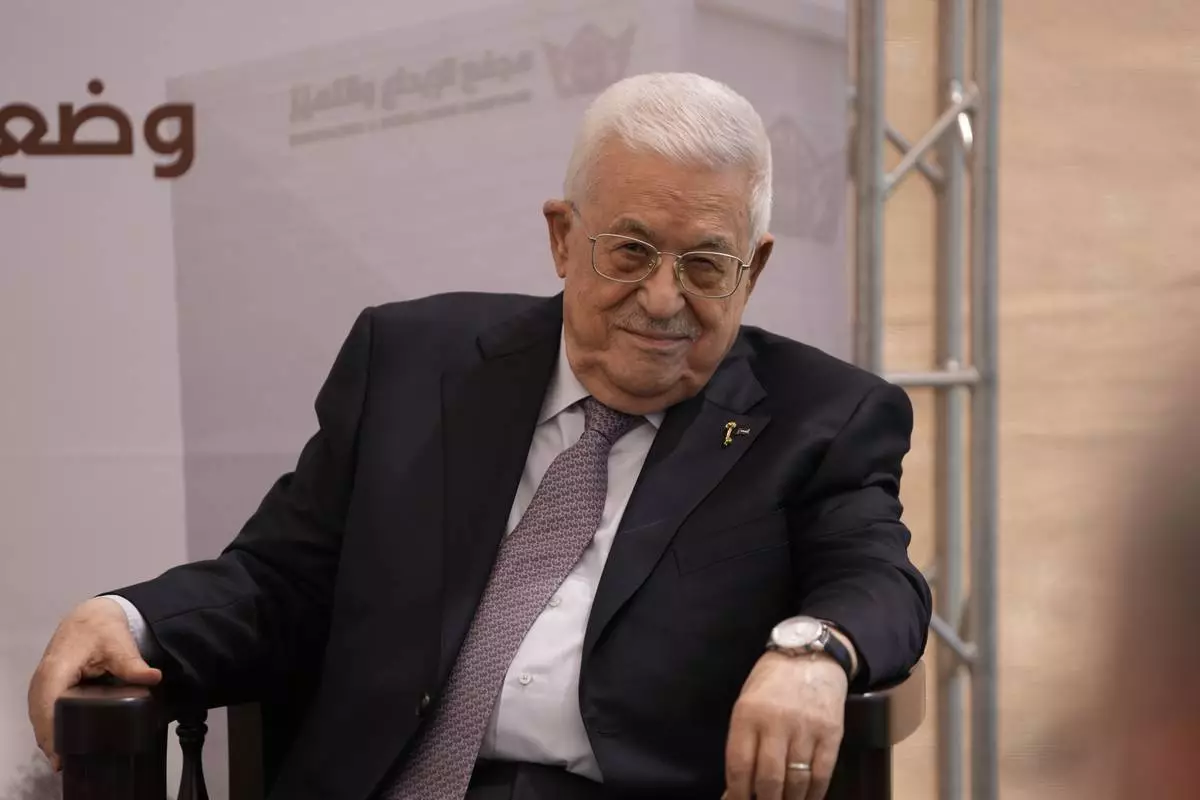
Palestinian President Mahmoud Abbas attends the inauguration ceremony of the Innovation and Excellence Compound in the West Bank city of Ramallah, Wednesday, Sept. 9, 2026. (AP Photo/Mahmoud Illean)