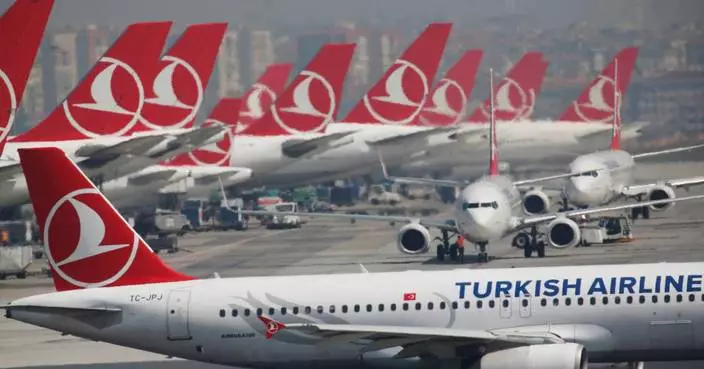
SAO PAULO (AP) — Gunmen in a car opened fire last November at Sao Paulo's airport and killed a cryptocurrency entrepreneur in a daytime hit that was one of Brazil's most shocking recent crimes.
Police at the scene recovered three semiautomatic rifles that are restricted for civilian use.
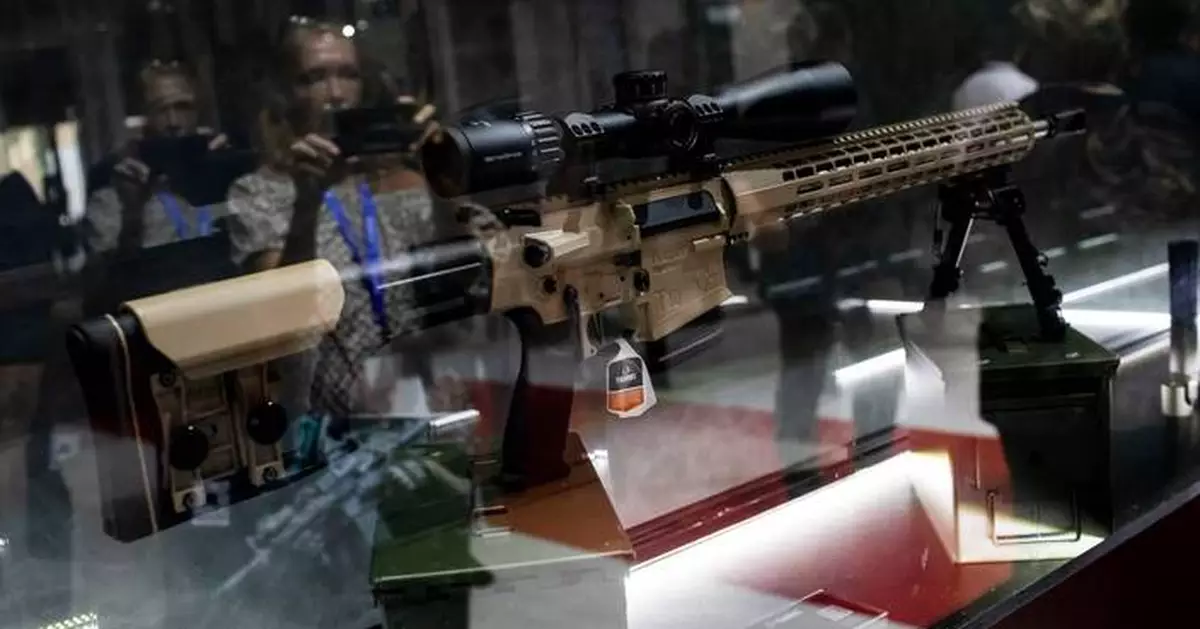
The case highlighted a growing trend: Restricted-use, military-style firearms are increasingly ending up in the hands of Brazilian criminal organizations, according to a study published Tuesday by the Sou da Paz Institute, a Brazilian nonprofit that tracks gun violence. Most of the guns are made in Brazil, but in second place are those that come from the United States.
The victim, Antônio Vinícius Lopes Gritzbach, had received death threats from a powerful international criminal group called First Command of the Capital, or PCC, after he agreed to a plea bargain to testify about his ties to the organization.
Found at the scene were a Smith & Wesson semiautomatic rifle bought by a U.S. citizen 15 years before at a gun shop in Winchester, Virginia and abandoned in a backpack near Sao Paulo’s international airport, according to police records reviewed by The Associated Press.
The other two were Romanian-made weapons, also purchased in the United States. Authorities have not determined how the guns entered Brazil.
The study by Sou da Paz Institute analyzed restricted firearm seizures from 2019 to 2023 in Brazil’s southeast, the country’s largest region and home to both Sao Paulo’s PCC and a group based in Rio de Janeiro called Red Command.
Researchers reviewed records of nearly 7,000 seized guns, combining data obtained through freedom of information requests with police records from the region’s four states. The data included seizure dates, locations, crime types and weapon details.
It showed an 11.4% increase in the seizures of restricted, military-style guns over the five-year period.
The study attributes at least part of the rise in heavy weaponry in criminal hands to looser gun regulations in Brazil under former President Jair Bolsonaro, who authorized many kinds of weapons once restricted to military and police use for civilians, including 9 mm pistols and some semiautomatic rifles.
The number of privately owned firearms nearly doubled, from 1.3 million at the end of 2018 to 2.9 million in 2022, according to the study. Some of these guns were diverted to the illegal market, after an increase of reported stolen guns from sport shooters and collectors.
“It’s clear that weaker gun controls during the Bolsonaro administration opened a new pathway for organized crime: cheaper, with a veneer of legality and enabled by straw buyers of rifles,” said Carolina Ricardo, executive director of Sou da Paz.
In July 2023, President Luiz Inácio Lula da Silva signed a decree tightening restrictions on civilian access to guns, reversing the pro-firearms policies of his right-wing predecessor.
The decree restored restrictions on semiautomatic weapons, reduced the number of guns civilians can possess for personal safety from four to two and required documentation proving the need to hold the weapons. Lula also tightened weapon registration requirements.
While the majority of seized firearms were Brazil-made, U.S.-origin weapons ranked second. The U.S. was the main foreign source of both complete firearms and unmarked components feeding Brazil’s illegal market, the study showed.
Natalia Pollachi, one of the authors of the study, said there is a well-documented smuggling route from the U.S. to Brazil through Paraguay, Peru and Bolivia. The study found that not only complete firearms but also separate components for restricted-use weapons from the U.S. are illegally entering Brazil and being assembled locally.
“The United States plays a key role because parts and components are sold there with far less regulation. Police reports often show these items being smuggled into Brazil,” Pollachi added.
Ricardo, of Sou da Paz, said that if the U.S. government believes the growth of organized crime threatens its interests— as it has with Mexico and Canada — it must also recognize that weak gun controls in the U.S. directly fuel organized crime in Brazil.
“It’s fair for the U.S. to demand action from Brazil,” the executive director of Sou da Paz said, “but it must first admit it is part of the problem.”
Follow the AP’s coverage of Latin America and the Caribbean at https://apnews.com/hub/latin-america
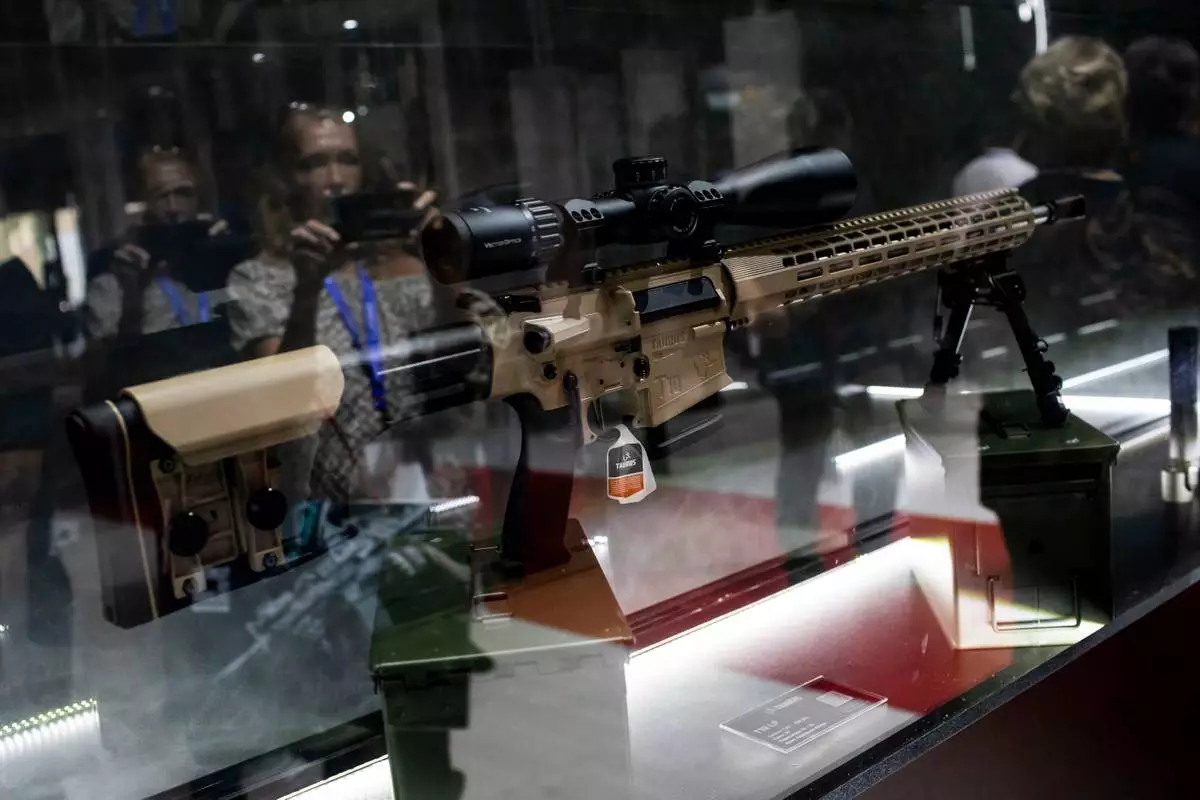
FILE - Reflected in glass, a visitor takes pictures of a T10 LP rifle displayed at the LAAD Defense and Security International Exhibition in Rio de Janeiro, April 11, 2023. The largest defense and security exhibit in Latin America features weapons, security cameras, bullet proof vehicles and accessories. (AP Photo/Bruna Prado, File)
MINNEAPOLIS (AP) — President Donald Trump on Thursday threatened to invoke the Insurrection Act and deploy troops to quell persistent protests against the federal officers sent to Minneapolis to enforce his administration's massive immigration crackdown.
The president's threat comes a day after a federal immigration officer shot and wounded a Minneapolis man who had attacked the officer with a shovel and broom handle. That shooting further heightened the fear and anger radiating across the Minnesota city since an Immigration and Customs Enforcement agent fatally shot a Renee Good in the head.
Trump has repeatedly threatened to invoke the rarely used federal law to deploy the U.S. military or federalize the National Guard for domestic law enforcement, over the objections of state governors.
“If the corrupt politicians of Minnesota don’t obey the law and stop the professional agitators and insurrectionists from attacking the Patriots of I.C.E., who are only trying to do their job, I will institute the INSURRECTION ACT, which many Presidents have done before me, and quickly put an end to the travesty that is taking place in that once great State,” Trump said in social media post.
The Associated Press has reached out to the offices of Gov. Tim Walz and Minneapolis Mayor Jacob Frey for comment.
The Department of Homeland Security says it has made more than 2,000 arrests in the state since early December and is vowing to not back down. ICE is a DHS agency.
In Minneapolis, smoke filled the streets Wednesday night near the site of the latest shooting as federal officers wearing gas masks and helmets fired tear gas into a small crowd. Protesters responded by throwing rocks and shooting fireworks.
Police Chief Brian O’Hara said during a news conference that the gathering was an unlawful assembly and “people need to leave.”
Things later quietened down and by early Thursday only a few demonstrators and law enforcement officers remained at the scene.
Demonstrations have become common on the streets of Minneapolis since the ICE agent fatally shot 37-year-old Good on Jan. 7. Agents have yanked people from their cars and homes, and have been confronted by angry bystanders demanding that the officers pack up and leave.
Minneapolis Mayor Jacob Frey described the situation as not “sustainable.”
“This is an impossible situation that our city is presently being put in and at the same time we are trying to find a way forward to keep people safe, to protect our neighbors, to maintain order,” he said.
Frey said the federal force — five times the size of the city’s 600-officer police force — has “invaded” Minneapolis, scaring and angering residents.
In a statement describing the events that led to Wednesday's shooting, Homeland Security said federal law enforcement officers stopped a driver from Venezuela who is in the U.S. illegally. The person drove away and crashed into a parked car before taking off on foot, DHS said.
After officers reached the person, two other people arrived from a nearby apartment and all three started attacking the officer, according to DHS.
“Fearing for his life and safety as he was being ambushed by three individuals, the officer fired a defensive shot to defend his life,” DHS said.
The two people who came out of the apartment are in custody, it said.
O’Hara said the man shot was in the hospital with a non-life-threatening injury.
The shooting took place about 4.5 miles (7.2 kilometers) north of where Good was killed. O’Hara's account of what happened largely echoed that of Homeland Security.
During a speech before the latest shooting, Walz described Minnesota as being in chaos, saying what's happening in the state “defies belief.”
“Let’s be very, very clear, this long ago stopped being a matter of immigration enforcement,” he said. “Instead, it’s a campaign of organized brutality against the people of Minnesota by our own federal government.”
Jonathan Ross, the Immigration and Customs Enforcement officer who killed Good, suffered internal bleeding to his torso during the encounter, a Homeland Security official told The Associated Press.
The official spoke to AP on condition of anonymity in order to discuss Ross’ medical condition. The official did not provide details about the severity of the injuries, and the agency did not respond to questions about the extent of the bleeding, exactly how he suffered the injury, when it was diagnosed or his medical treatment.
Good was killed after three ICE officers surrounded her SUV on a snowy street a few blocks from her home.
Bystander video shows one officer ordering Good to open the door and grabbing the handle. As the vehicle begins to move forward, Ross, standing in front, raises his weapon and fires at least three shots at close range. He steps back as the SUV advances and turns.
Homeland Security Secretary Kristi Noem has said Ross was struck by the vehicle and that Good was using her SUV as a weapon — a self-defense claim that has been criticized by Minnesota officials.
Chris Madel, an attorney for Ross, declined to comment.
Good’s family has hired the same law firm that represented George Floyd’s family in a $27 million settlement with Minneapolis. Floyd, who was Black, died after a white police officer pinned his neck to the ground in the street in May 2020.
Madhani reported from Washington, D.C. Associated Press reporters Julie Watson in San Diego; Rebecca Santana in Washington; Ed White in Detroit and Giovanna Dell’Orto in Minneapolis contributed.
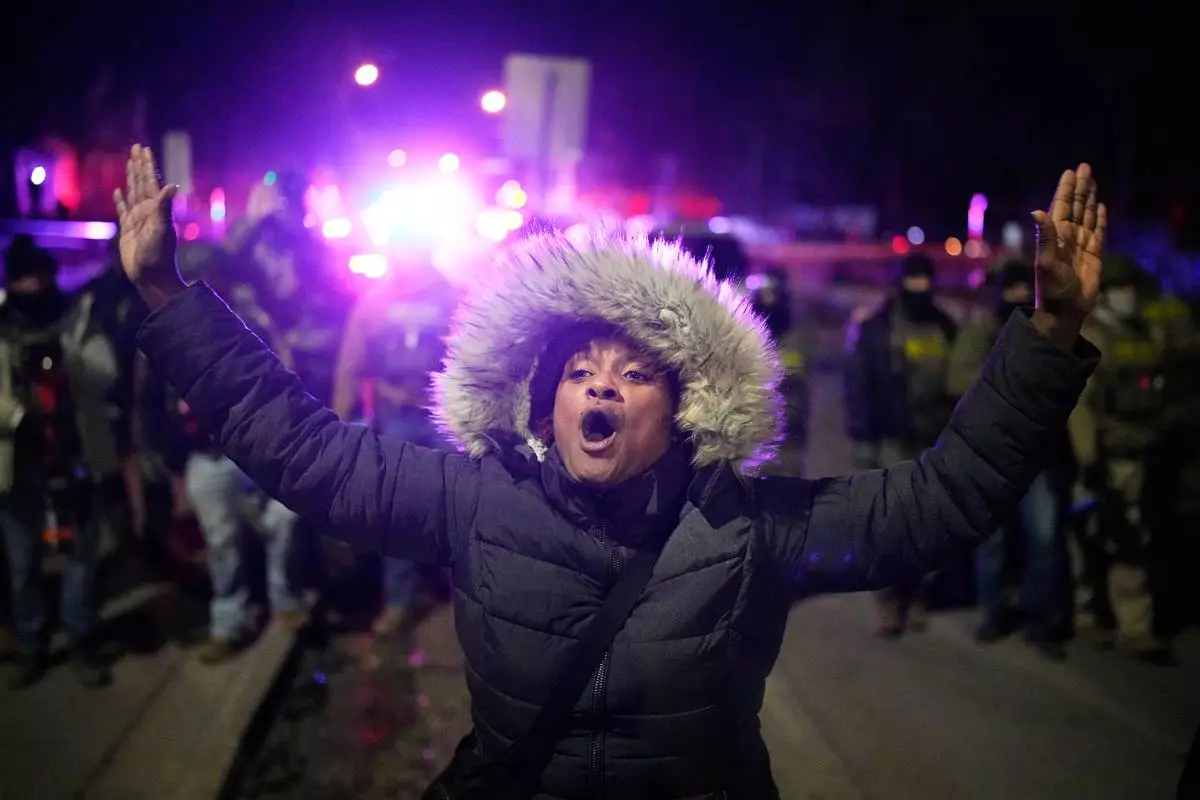
A protester yells in front of law enforcement after a shooting on Wednesday, Jan. 14, 2026, in Minneapolis. (AP Photo/John Locher)
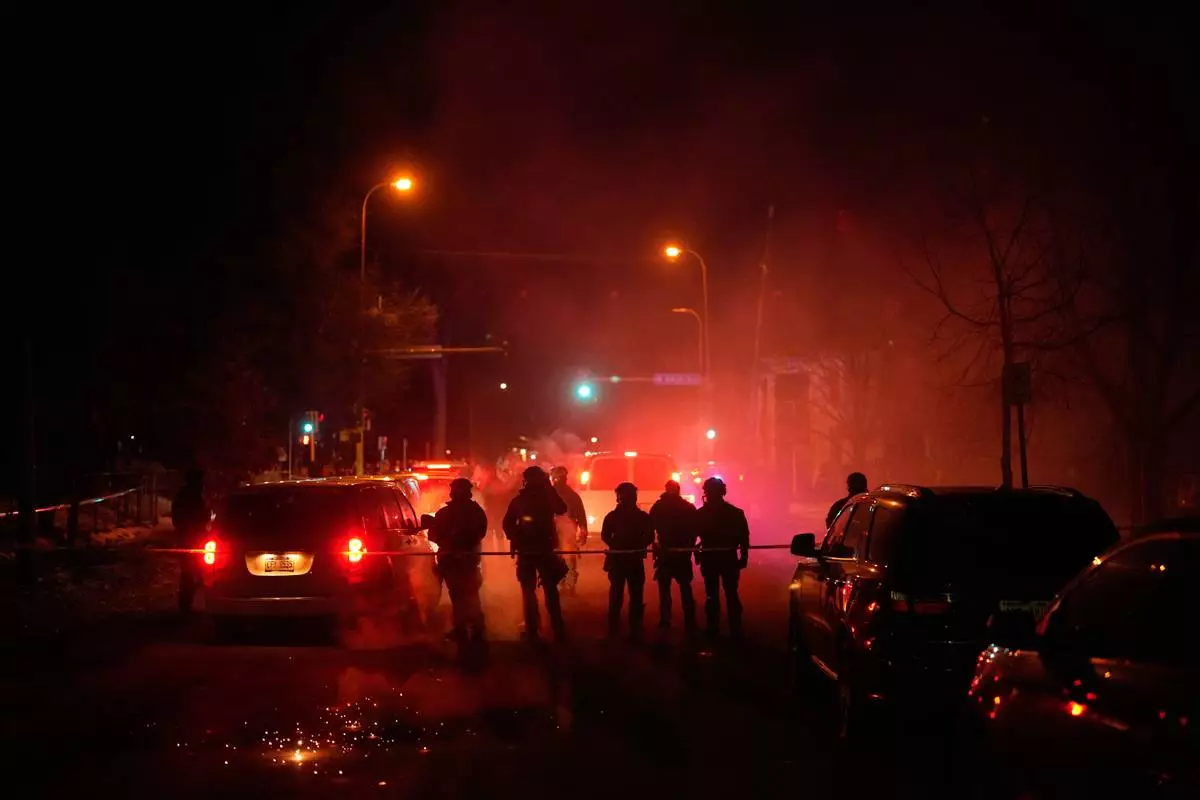
Tear gas surrounds federal law enforcement officers as they leave a scene after a shooting on Wednesday, Jan. 14, 2026, in Minneapolis. (AP Photo/John Locher)
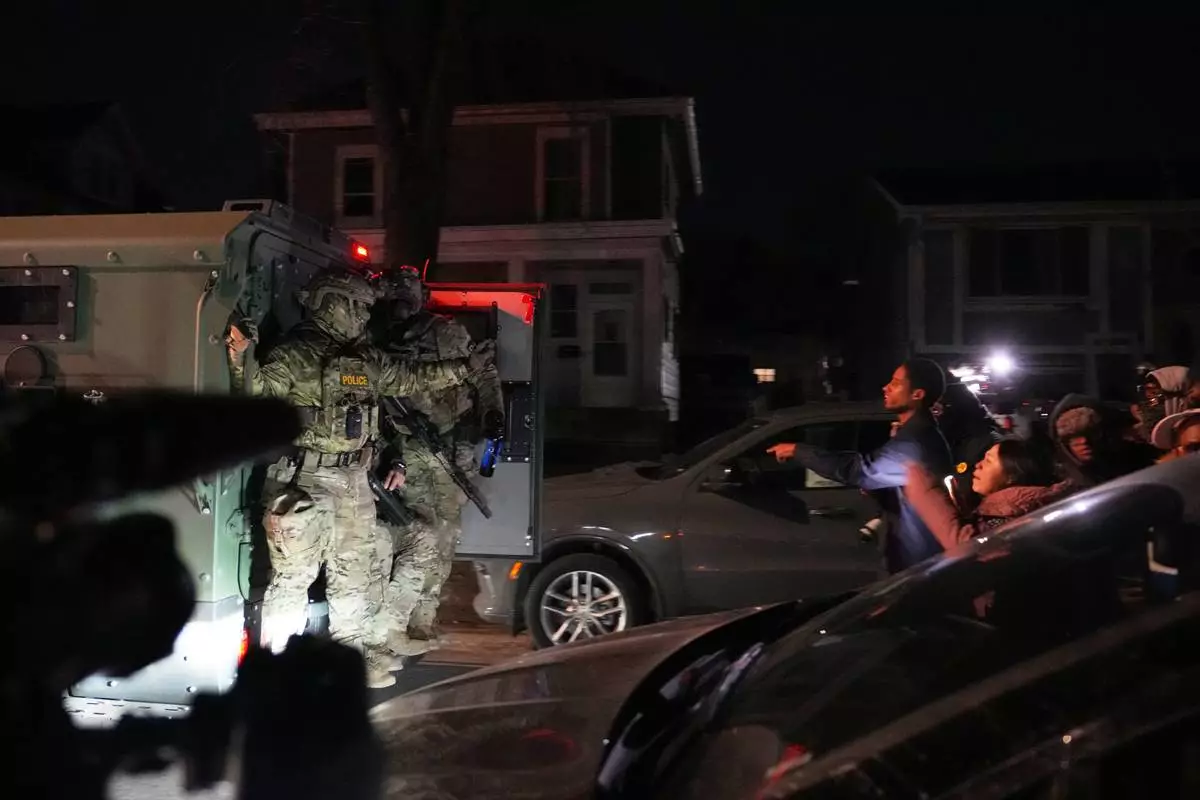
Protesters shout at law enforcement officers after a shooting on Wednesday, Jan. 14, 2026, in Minneapolis. (AP Photo/Abbie Parr)
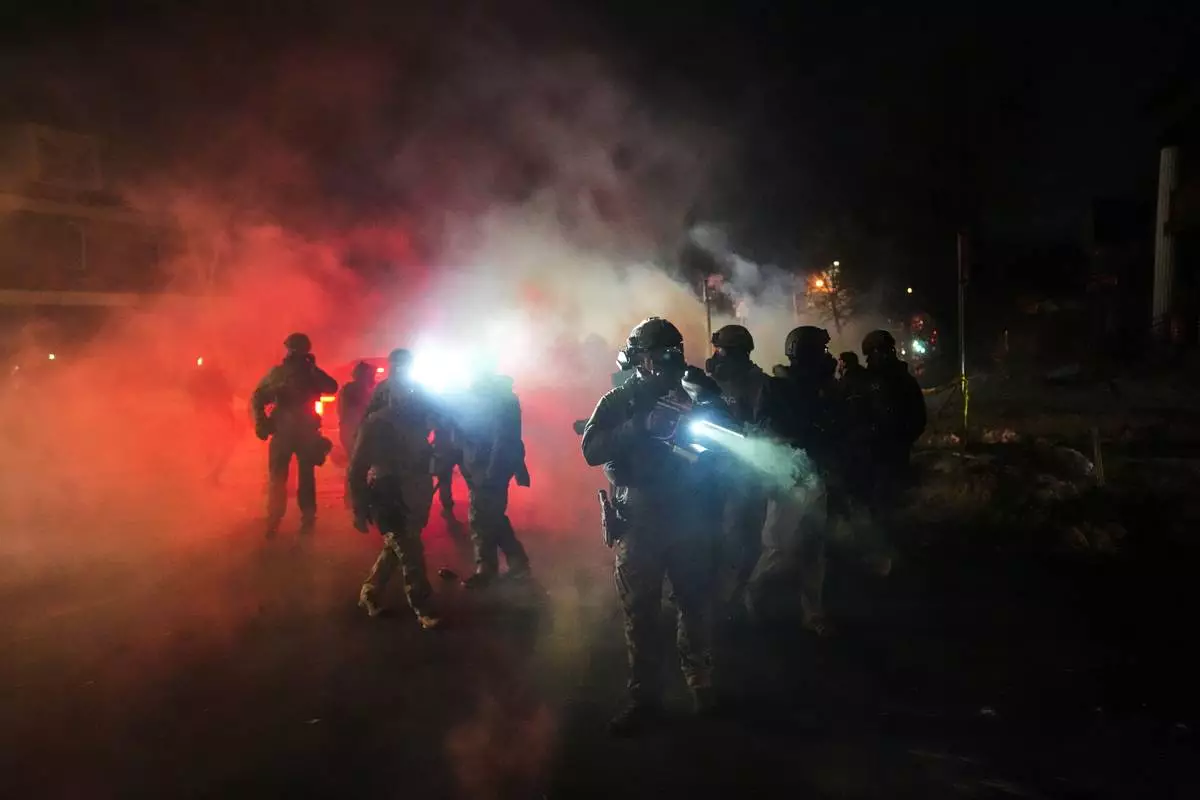
Law enforcement officers stand amid tear gas at the scene of a reported shooting Wednesday, Jan. 14, 2026, in Minneapolis. (AP Photo/Adam Gray)