DUBAI, UAE, Sept. 24, 2025 /PRNewswire/ -- Bybit, the world's second-largest cryptocurrency exchange by trading volume, has released its latest Bybit Crypto Insights report, analyzing the growth of decentralized perpetual exchanges and how Aster has emerged as a competitor to Hyperliquid.
Bybit has entered the onchain DEX race with Byreal, a Solana-based decentralized exchange now in beta and set for mainnet in early October. According to DefiLlama, Byreal has recorded more than $335.41M in cumulative trading volume since its beta launch, with daily volume peaking at $28.15M. TVL reached a high of $14.22M. Byreal uses hybrid liquidity models, including RFQ and CLMM mechanisms, to reduce slippage and curb MEV.
The Rise of Aster
Aster was formed from the merger of Astherus and ApolloX and launched in September with a token that surged more than 300 percent in hours. The ASTER token reached a $1.33 billion market cap within two days. Aster's features include MEV-free execution, hidden orders and dual trading interfaces designed for both retail and professional users. Plans for a zero-knowledge-powered chain and integration with the Binance ecosystem have strengthened its early positioning.
How Aster stacks up against Hyperliquid
Hyperliquid remains the leading decentralized perp DEX, recording about $200 billion in September trading volume compared with Aster's $20 billion. Its market capitalization is estimated at $13.2 billion, while Aster's is about $2.5 billion.
The two platforms reflect contrasting strategies. Hyperliquid built its own Layer 1 infrastructure with HyperBFT consensus and sub-second finality, delivering centralized exchange-like execution entirely on chain. Aster was mainly launched on BNB Chain with a modular design and emphasizes ecosystem integration, branding and token-driven growth.
How is Hyperliquid different from dYdX/GMX?
Legacy platforms such as dYdX and GMX emphasize decentralization as a core principle. By comparison, newer players like Hyperliquid and Aster prioritize speed, liquidity and user experience. Both sacrifice a degree of decentralization in favor of performance.
Hyperliquid and beyond
Bybit's report notes that ideals such as trustlessness and community governance are taking a back seat to execution and user experience. Hyperliquid has long been the sector's benchmark, having developed a blockchain optimized for trading, with fully on-chain matching and sub-second settlement.
Aster, however, has gained visibility not by building new infrastructure but by capturing attention through narrative, exchange backing and incentives. Its rapid rise illustrates how token launches, partnerships and endorsements can shift market dynamics.
The road ahead
The report concludes that decentralized perpetual DEXs are evolving into a model where decentralization is treated as a feature rather than a foundation. With centralized exchanges capable of launching their own versions, competition is expected to increase.
Hyperliquid, once seen as untouchable, now faces an existential challenge. Its infrastructure remains strong, but the market increasingly rewards storytelling, ecosystem incentives and cultural resonance alongside technical performance.
Read more about Aster's emergence, Hyperliquid's position and the evolving landscape of decentralized perpetual exchanges in the Bybit Crypto Insights Report: The rise of decentralized perp DEXs: How Aster matches Hyperliquid.
#Bybit / #TheCryptoArk /#BybitResearch
About Bybit
Bybit is the world's second-largest cryptocurrency exchange by trading volume, serving a global community of over 70 million users. Founded in 2018, Bybit is redefining openness in the decentralized world by creating a simpler, open and equal ecosystem for everyone. With a strong focus on Web3, Bybit partners strategically with leading blockchain protocols to provide robust infrastructure and drive on-chain innovation. Renowned for its secure custody, diverse marketplaces, intuitive user experience, and advanced blockchain tools, Bybit bridges the gap between TradFi and DeFi, empowering builders, creators, and enthusiasts to unlock the full potential of Web3. Discover the future of decentralized finance at Bybit.com.
For more details about Bybit, please visit Bybit Press
For media inquiries, please contact: media@bybit.com
For updates, please follow: Bybit's Communities and Social Media
Discord | Facebook | Instagram | LinkedIn | Reddit | Telegram | TikTok | X | Youtube
** The press release content is from PR Newswire. Bastille Post is not involved in its creation. **

Bybit Crypto Insights Report: Aster Takes on Hyperliquid in the Perp DEX Boom
- Mass production began in 2017, with cumulative investment reaching approximately USD 1.9 billion and cumulative revenue reaching approximately USD 25 billion, helping strengthen Vietnam's industrial competitiveness
- A decade of growth alongside Vietnamese talent, helping cultivate Vietnam's high-tech manufacturing workforce
- Expanding from Optical Solutions to Semiconductor Substrates, Becoming LG Innotek's Largest Global Production Hub
- CEO Moon Hyuksoo: "We will strengthen our High Performance Portfolio with our Vietnam production subsidiary at the center and accelerate our transformation into a global solutions company."
HAI PHONG, Vietnam and SEOUL, South Korea, Oct. 5, 2026 /PRNewswire/ -- LG Innotek's production subsidiary in Hai Phong, Vietnam, has marked its 10th anniversary.
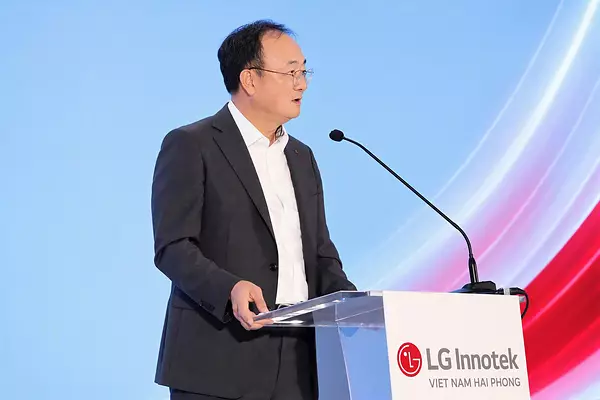
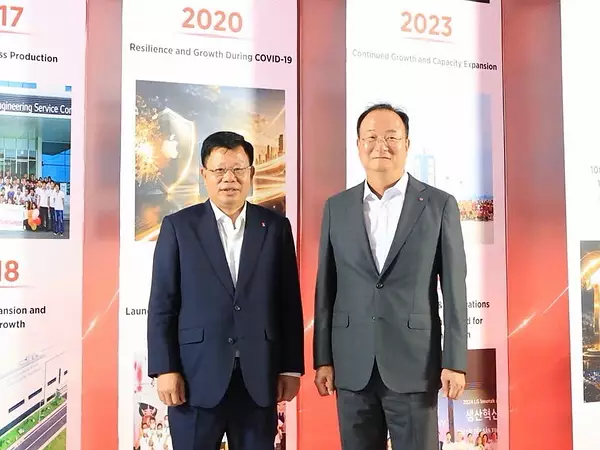
LG Innotek (CEO Moon Hyuksoo, 011070) announced on the 5th that its production subsidiary in Hai Phong, Vietnam, held a commemorative event at its local facility to mark the 10th anniversary of its establishment.
The event was attended by CEO Moon Hyuksoo and other executives of LG Innotek, as well as key officials from Hai Phong City, including the Hai Phong Party Secretary, mayor and deputy mayor of Hai Phong, and chairman of the Hai Phong Economic Zone Authority (HEZA).
Held under the theme "10 Years Built Together, Shaping the Future Together," the event was organized to reflect on the growth and achievements of LG Innotek's Vietnam production subsidiary over the past decade and reaffirm its commitment to becoming the largest production hub driving the company's future core businesses.
LG Innotek's Vietnam subsidiary was established in September 2016. Over the past 10 years, it has grown into a core production hub for the company's optical solutions camera module business through continuous investment, production capacity expansion, and local talent cultivation.
Currently, the Vietnam subsidiary recorded approximately USD 4.1 billion in revenue in 2025. As LG Innotek's largest overseas production subsidiary, it is contributing to the company's efforts to solidify its position as a global leader in materials and components while also contributing to the development of Vietnam's electronic components industry and the local economy.
- Mass production began in 2017, with cumulative investment having since reached approximately USD 1.9 billion and cumulative revenue reaching approximately USD 25 billion, helping strengthen Vietnam's industrial competitiveness
Since 2016, LG Innotek has been actively expanding its overseas production bases to diversify its global supply chain and establish a stable camera module supply system. After carefully comparing and evaluating several candidate locations, the company ultimately selected Hai Phong, Vietnam, as the location for its new optical solutions plant. This decision was based on Vietnam's high-quality workforce, flexible industrial environment, competitiveness of its special economic zones, and potential business synergy with nearby LG Group affiliates.
Immediately after the establishment of its subsidiary in 2016, LG Innotek began construction of a new factory. In particular, the company introduced northern Vietnam's first highly advanced cleanroom capable of ultra-precision manufacturing, elevating the manufacturing competitiveness of its production subsidiary to the global level. As a result, the company quickly obtained customer approval in September 2017 and began full-scale mass production of camera modules for new mobile models.
Since then, the Vietnam subsidiary has continued to expand its facilities and production capacity in response to growing global customer demand, evolving into a core production hub for LG Innotek's optical solutions business. In particular, by establishing stable supply capabilities based on a high-quality, high-efficiency production system, it has established itself as a key pillar of the global electronic components supply chain.
Since starting with a workforce of 800 employees, the Vietnam subsidiary has grown into LG Innotek's largest global production base, with a total floor area of 242,600 square meters and 6,500 employees. Over the past 10 years, cumulative investment has reached approximately USD 1.9 billion, and cumulative revenue has reached approximately USD 25 billion.
- A decade of growth alongside Vietnamese talent, helping cultivate Vietnam's high-tech manufacturing workforce
The passion and expertise of local employees have played a pivotal role in the growth of LG Innotek's Vietnam production subsidiary.
Over the past 10 years, LG Innotek has continuously invested in recruiting and developing local talent, alongside expanding its production capacity. The company has actively cultivated specialized personnel in core areas such as development, production technology, manufacturing, and quality control. Today, local employees account for 99 percent of the approximately 6,500 employees at its Vietnam subsidiary.
In particular, leadership in key organizations has been rapidly localized, with local leaders such as office managers and on-site supervisors taking the lead in organizational operations. Reflecting this, the proportion of local leaders in key positions has reached 87 percent.
In addition, LG Innotek has remained dedicated to cultivating talent in Vietnam's high-tech manufacturing sector by operating industry-academia collaboration initiatives, internships, practical training, and recruitment programs in partnership with local universities.
LG Innotek's Vietnam subsidiary has signed memorandums of understanding (MOUs) with major local universities, including Hanoi University of Science and Technology, Vietnam National University (Hanoi), and Da Nang University of Science and Technology. Through these partnerships, the company is actively investing in the development of talent who will lead future high-tech industries by offering various recruitment-linked programs, including contract degree programs, internships, and career guidance.
- Expanding from Optical Solutions to Semiconductor Substrates, Becoming LG Innotek's Largest Global Production Hub
Leveraging the manufacturing competitiveness it has accumulated over the past decade and Vietnam's skilled local workforce, LG Innotek plans to actively expand its Vietnam production subsidiary into a global manufacturing hub that drives the company's core businesses.
Currently, the Vietnam subsidiary serves as a leading global production hub for LG Innotek's optical solutions business, supporting supply to the global market. LG Innotek intends to continuously strengthen its local R&D capabilities in an effort to simultaneously enhance both production and technological competitiveness, all while expanding its role as a strategic production base for future growth businesses.
Furthermore, LG Innotek is developing its semiconductor substrate business as a core future growth engine, leveraging the high-density, ultra-precision substrate technology it has accumulated over the past 50 years. In particular, the company is strengthening its business competitiveness by focusing on high-value-added semiconductor substrates, including FC-CSP, FC-BGA, and RF-SiP, and aims to grow its package solutions business into a business generating USD 740 million in operating profit by 2031.
To this end, LG Innotek selected Hai Phong, Vietnam, as a hub for expanding semiconductor substrate production last June and began construction of a new factory. The initial investment is approximately USD 1 billion, and the facility is scheduled for completion in May 2027. The company also plans to continue expanding investments to strengthen production capacity in line with market demand and business growth. The new factory will produce high-value semiconductor substrates, including FC-CSP, FC-BGA, and RF-SiP.
In particular, Korean production lines are operating near full capacity due to an increase in new orders for semiconductor substrates from global customers, driven by the recent boom in the semiconductor market. LG Innotek plans to use the new factory in Vietnam as a springboard to expand its production capacity, proactively meet demand from its domestic and international customers, and further strengthen its global business competitiveness.
Moving forward, LG Innotek will expand its Vietnam production subsidiary into a global hub for cutting-edge electronic components, encompassing both optical solutions and semiconductor substrates, through close cooperation with Hai Phong City.
Hai Phong Deputy Mayor Le Trung Kien said, "LG Innotek has been operating in Hai Phong for the past 10 years and has contributed significantly to the region's industrial development and economic growth," adding, "In particular, we highly commend the company for providing new growth momentum for Hai Phong by developing high-tech manufacturing and creating quality jobs." He continued, "On behalf of Hai Phong City, I would like to express my deep gratitude to LG Group and all LG Innotek executives and employees."
CEO Moon Hyuksoo remarked, "The growth of our Vietnam production subsidiary into a core production base for LG Innotek was made possible by the trust and support of the Vietnamese government, Hai Phong City, our customers, and all our employees." He continued, "Going forward, we will further strengthen our competitiveness in future growth businesses, including optical solutions and semiconductor substrates, centered on our Vietnam subsidiary, and further accelerate our transformation into a solutions company driven by our High Performance Portfolio."
** This press release is distributed by PR Newswire through automated distribution system, for which the client assumes full responsibility. **
LG Innotek's Vietnam Production Subsidiary Marks Its 10th Anniversary, Emerges as LG Innotek's Largest Global Manufacturing Hub
LG Innotek's Vietnam Production Subsidiary Marks Its 10th Anniversary, Emerges as LG Innotek's Largest Global Manufacturing Hub