VICTORIA, Seychelles (AP) — A drug crisis, environmental challenges and questions about sovereignty are among key issues for voters heading to the polls in Seychelles, a tourist haven and Africa's smallest nation, both in land area and population, but richest by domestic income.
Between September 25 and 27, voters will choose a president, with Wavel Ramkalawan hoping to hold on to the top post, and a new parliament.
Click to Gallery
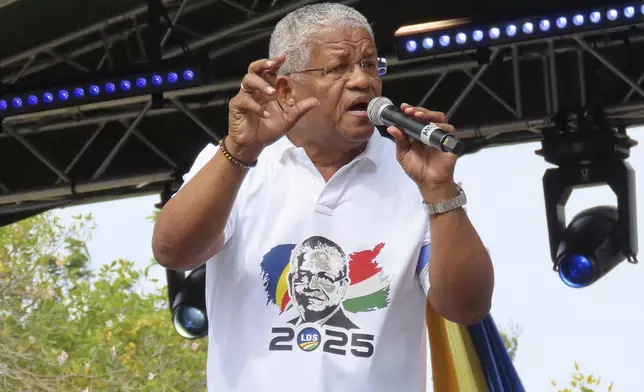
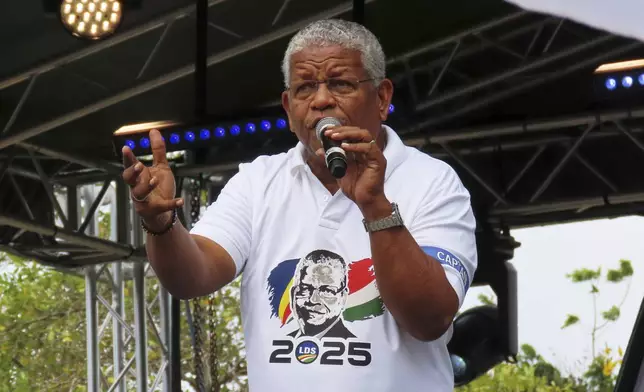
President Wavel Ramkalawan of the Republic of Seychelles and presidential candidate for Linyon Demokratik Seselwa delivers a speech at a campaign rally at Freedom Square in Victoria, Seychelles, Sunday, Sep. 21, 2025. (AP Photo/Emilie Chetty)
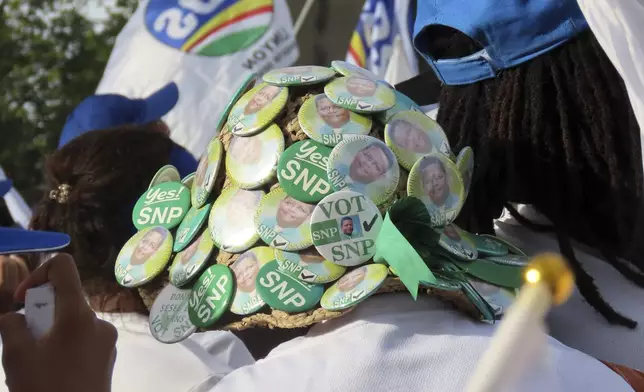
A supporter wears a hat pinned with the symbols of the Seychelles National Party, a former opposition political party, during a campaign rally at Freedom Square in Victoria, Seychelles, Sunday, Sep. 21, 2025. (AP Photo/Emilie Chetty)
President Wavel Ramkalawan of the Republic of Seychelles and presidential candidate for Linyon Demokratik Seselwa delivers a speech at a campaign rally at Freedom Square in Victoria, Seychelles, Sunday, Sep. 21, 2025. (AP Photo/Emilie Chetty)
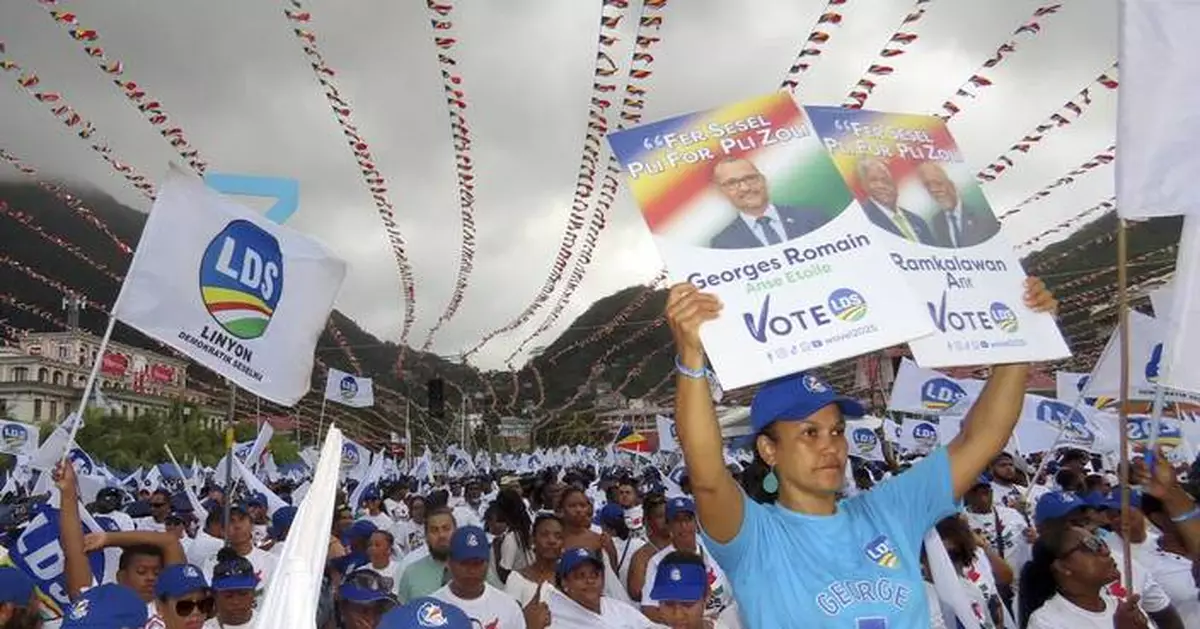
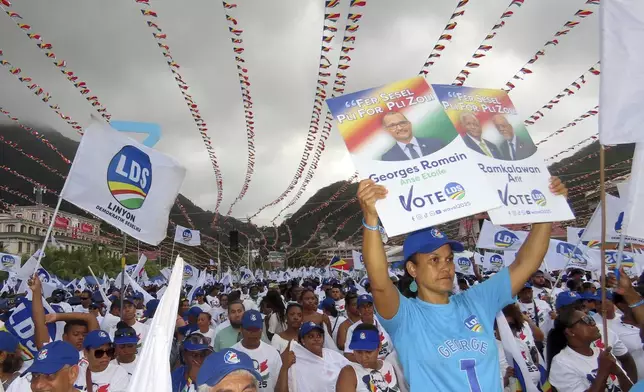
Supporters of Linyon Demokratik Seselwa's party attend a campaign rally at Freedom Square in Victoria, Seychelles, Sunday, Sep. 21, 2025. (AP Photo/Emilie Chetty)
Ramkalawan, an Anglican priest who turned politician, became the first opposition leader since 1976 to defeat the ruling party when he made his sixth bid for the presidency in 2020. He and his Linyon Demokratik Seselwa (LDS) party have campaigned on ongoing efforts of economic recovery, social development, and environmental sustainability.
His chief political rival is Patrick Herminie of the United Seychelles Party (US). Herminie is a veteran parliamentarian from the longstanding ruling party and Speaker of the National Assembly from 2007 to 2016.
The president is elected for a five-year term. If no contender gets 50% + 1 vote, a runoff follows between the two top winners of the first round.
Seychelles, which a 2017 United Nations report called a major drug transshipment point, has struggled with a growing crisis from narcotics trafficking in recent years. The Global Organized Crime Index stated in 2023 that the island nation has one of the world’s highest rates of heroin addiction.
APDAR estimates that 6,000 people out of the country’s 120,000 population use the drug, while independent analysts say addiction rates approach 10%.
Critics say Ramkalawan has largely failed in his bid to stop the spread of addiction, while Herminie’s record as chairman of the Agency for the Prevention of Drug Abuse and Rehabilitation (APDAR), from 2017 until 2020, has come under particular scrutiny following the drug pandemic that has gripped the country for the last 27 years, and addiction rates that have remained unchanged during his tenure.
“APDAR was simply a political tool. (Herminie) had no prior knowledge of drug addiction when appointed,” said Gerald Edwin Julie, former program manager at the agency.
The 115-island archipelago, spread in the Indian Ocean roughly between East Africa, India, and Madagascar, has become synonymous with luxury and environmental travel, helping bump Seychelles to the top of the list of Africa's richest countries by gross domestic product (GDP) per capita, according to the World Bank Group, and fueling a growing middle class despite some persistent issues with poverty.
However, a week before the highly anticipated elections, activists filed a constitutional case against the current government, challenging its recent decision to the long-term lease part of Assomption Island, which lies about 28 kilometers (17 miles) from Aldabara Atoll, a marine reserve and a UNESCO heritage site, to a Qatari company for the development of a luxury hotel.
The lease, which includes the reconstruction of an airstrip to facilitate access for international flights, has ignited widespread criticism that the agreement may favor foreign interests over Seychelles’ long-term welfare and sovereignty over its land, as environmental groups demanded increased oversight and called for greater transparency.
Most of the population lives on the island of Mahe, home to the capital, Victoria, but its territory is spread across almost 390,000 square kilometers (about 150,579 square miles) and is one of the most vulnerable countries to climate change, including rising sea levels, according to the World Bank and the UN Sustainable Development Group.
“The hotel development on Assomption has (been) clouded with controversy,” said Victoria Duthil, a local and scientist who filed the case against the government. “Recent images of an injured tortoise and dredging that have emerged have highlighted how urgent the situation is.”
While Seychelles leads Africa in development metrics and has the lowest ranking in Sub-Saharan Africa in the latest Corruption Perceptions Index, the country’s history with rampant corruption during the three-decade presidency of France-Albert Rene, which ended in 2004, remains fresh in the minds of residents.
Tensions around transparency have reemerged during the current election campaign, with a presidential candidate, Kisna Louise, under scrutiny amid a legal investigation, while another, Maarco Francis, faces allegations of a forged university degree.
“Most (politicians) have a past of helping their friends and family,” said Jean Paul Morel, a local businessman. “There are no good candidates.”
Associated Press writer Jack Denton in Nairobi, Kenya, contributed to this report.
For more on Africa and development: https://apnews.com/hub/africa-pulse
The Associated Press receives financial support for global health and development coverage in Africa from the Gates Foundation. The AP is solely responsible for all content. Find AP’s standards for working with philanthropies, a list of supporters and funded coverage areas at AP.org.
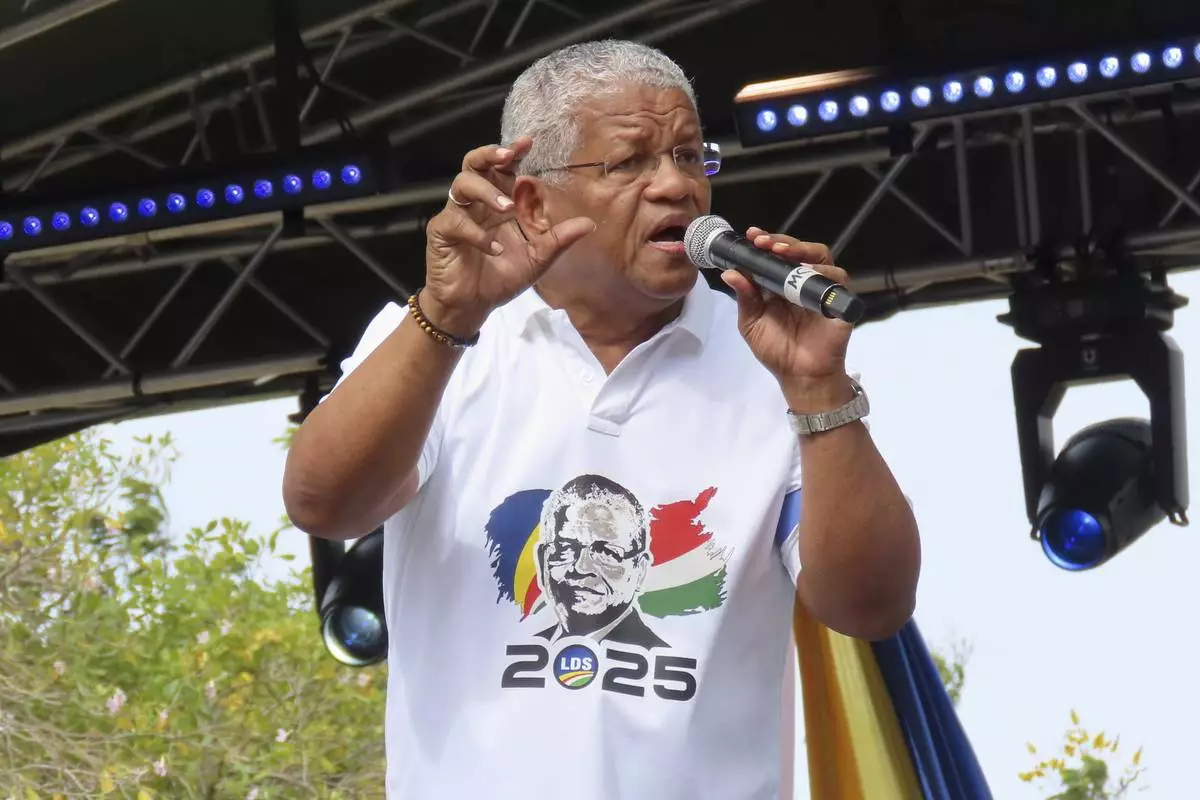
President Wavel Ramkalawan of the Republic of Seychelles and presidential candidate for Linyon Demokratik Seselwa delivers a speech at a campaign rally at Freedom Square in Victoria, Seychelles, Sunday, Sep. 21, 2025. (AP Photo/Emilie Chetty)
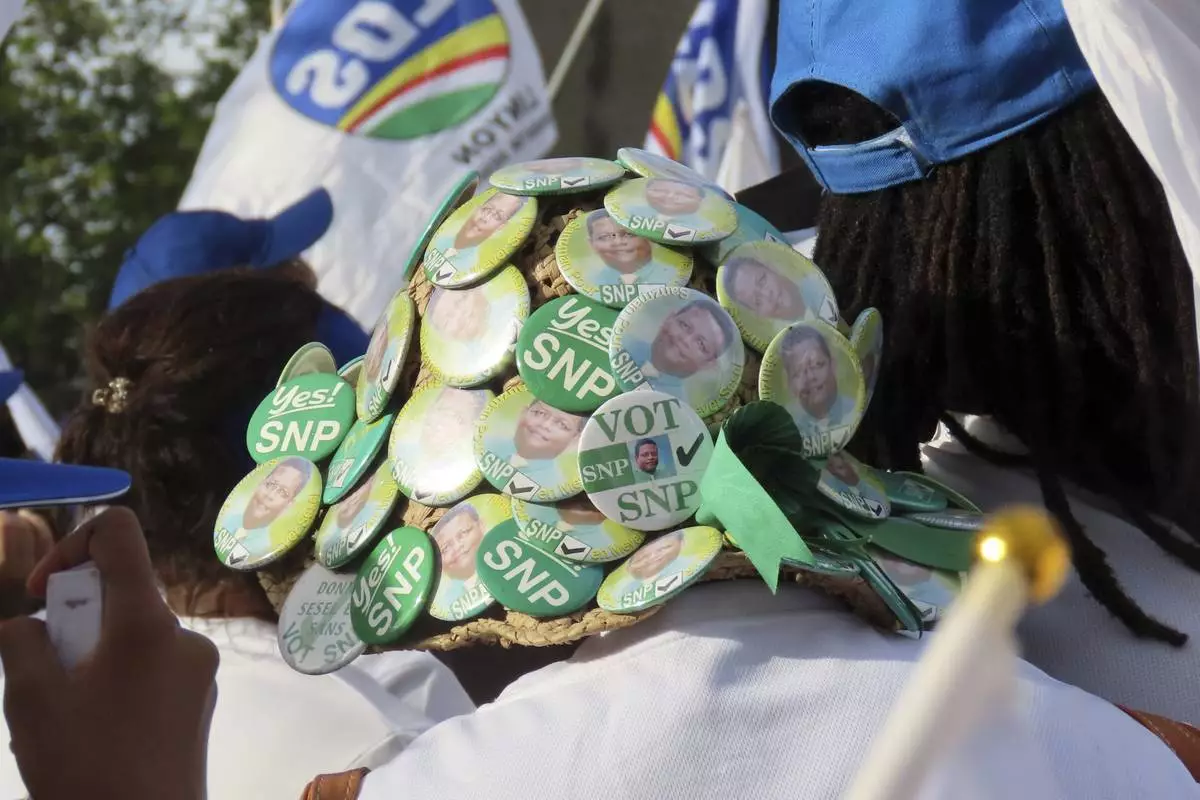
A supporter wears a hat pinned with the symbols of the Seychelles National Party, a former opposition political party, during a campaign rally at Freedom Square in Victoria, Seychelles, Sunday, Sep. 21, 2025. (AP Photo/Emilie Chetty)
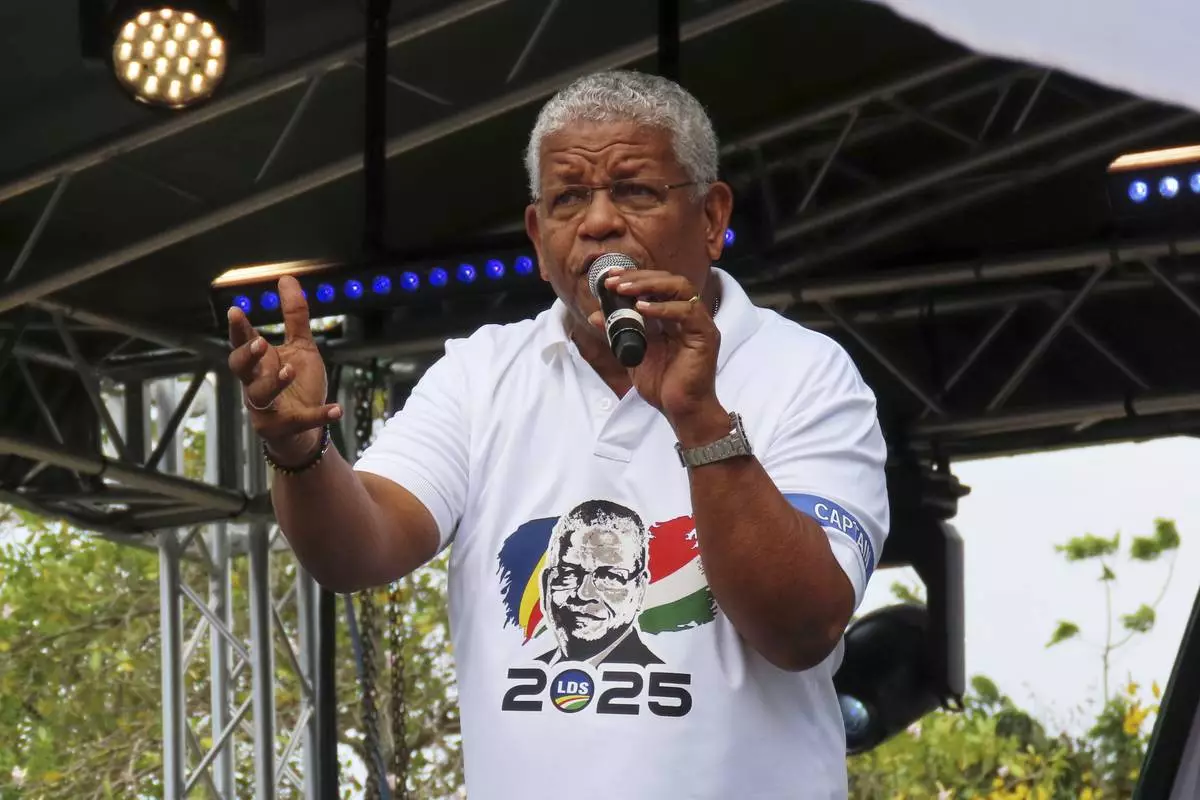
President Wavel Ramkalawan of the Republic of Seychelles and presidential candidate for Linyon Demokratik Seselwa delivers a speech at a campaign rally at Freedom Square in Victoria, Seychelles, Sunday, Sep. 21, 2025. (AP Photo/Emilie Chetty)
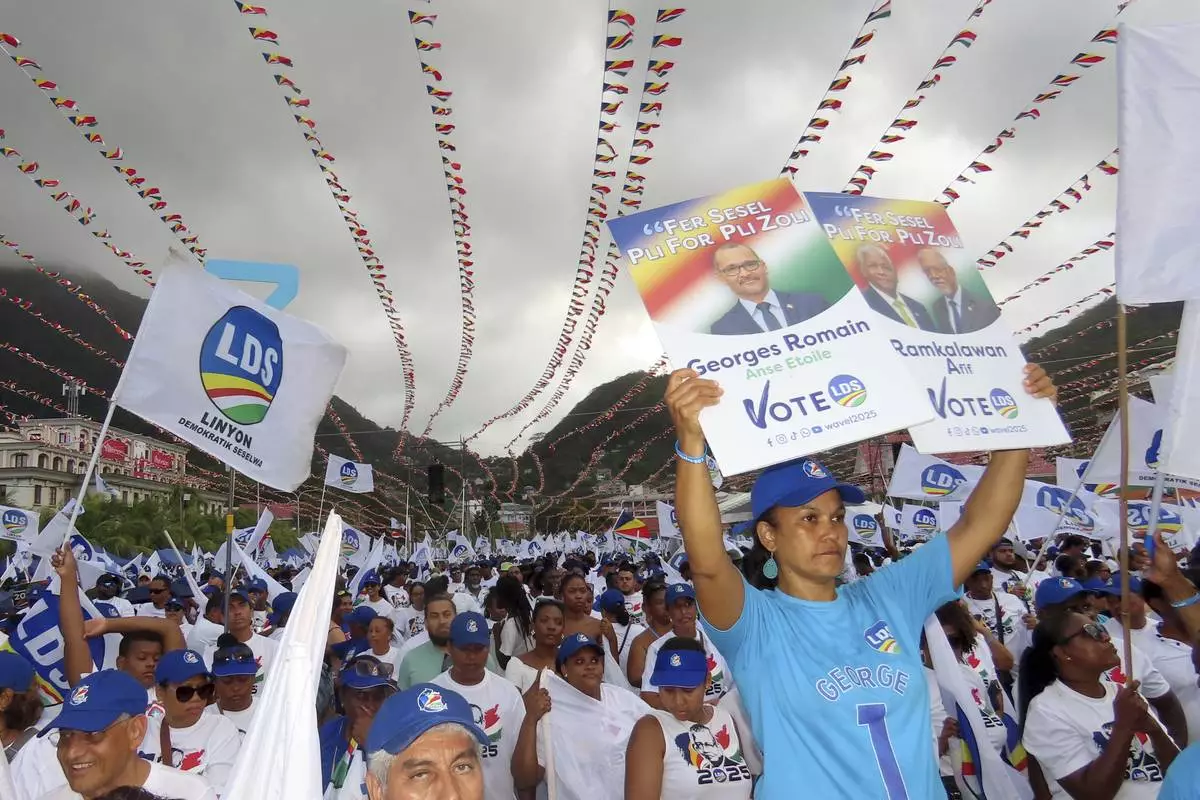
Supporters of Linyon Demokratik Seselwa's party attend a campaign rally at Freedom Square in Victoria, Seychelles, Sunday, Sep. 21, 2025. (AP Photo/Emilie Chetty)
WASHINGTON (AP) — Venezuelan opposition leader María Corina Machado said she presented her Nobel Peace Prize medal to President Donald Trump at the White House on Thursday even as he has questioned her credibility to take over her country after the U.S. ousted then-President Nicolás Maduro.
The Nobel Institute has said Machado could not give her prize to Trump, an honor that he has coveted. Even if it the gesture proves to be purely symbolic, it was extraordinary given that Trump has effectively sidelined Machado, who has long been the face of resistance in Venezuela. He has signaled his willingness to work with acting President Delcy Rodríguez, who had been Maduro’s second in command.
“I presented the president of the United States the medal, the Nobel Peace Prize," Machado told reporters after leaving the White House and heading to Capitol Hill. She said she had done so "as a recognition for his unique commitment with our freedom.”
Trump has raised doubts about his stated commitment to backing democratic rule in Venezuela, giving no timetable on when elections might be held. Machado indicated that he had provided few specifics on that front during their discussion.
She did not provide more information on what was said, and the White House did not say if Trump accepted the medal or offer other details of its own.
After a closed-door meeting with Trump, Machado greeted dozens of cheering supporters waiting for her near the White House gates, stopping to hug many.
“We can count on President Trump,” she told them without elaborating, prompting some to briefly chant, “Thank you, Trump.”
Before her visit to Washington, Machado had not been seen in public since she traveled last month to Norway, where her daughter received the peace prize on her behalf. She had spent 11 months in hiding in Venezuela before she appeared in Norway after the ceremony.
The jubilant scene after her meeting with Trump stood in contrast to political realities in Venezuela. Rodríguez remains in charge of day-to-day government operations, along with others in Maduro’s inner circle. In her first state of the union speech Thursday, the interim president promoted the resumption of diplomatic ties between the historic adversaries and advocated for opening the state-run oil industry to more foreign investment after Trump pledged to seize control of Venezuelan crude sales.
Trump has said it would be difficult for Machado to lead because she “doesn’t have the support within or the respect within the country.” Her party is widely believed to have won 2024 elections rejected by Maduro.
White House press secretary Karoline Leavitt called Machado “a remarkable and brave voice” but also said the meeting didn’t mean Trump’s opinion of her changed, calling it “a realistic assessment.”
Leavitt told reporters that Trump supported new Venezuelan elections “when the time is right” but did not say when he thought that might be.
Leavitt said Machado had sought the face-to-face meeting without setting expectations for what would occur. She spent about two and a half hours at the White House.
“I don’t think he needs to hear anything from Ms. Machado," the press secretary said while the meeting was still going on, other than to have a ”frank and positive discussion about what’s taking place in Venezuela.”
After leaving the White House, Machado went on to a closed-door meeting with a bipartisan group of senators.
Sen. Chris Murphy, D-Conn., said Machado told them that “if there’s not some progress, real progress towards a transition in power, and/or elections in the next several months, we should all be worried.”
“She reminded us that Delcy Rodríguez is, in many ways, worse than Maduro,” he added.
Asked if Machado had heard any commitment from the White House on holding elections in Venezuela, Murphy said, “No, I don’t think she got any commitment from them."
Sen. Bernie Moreno, an Ohio Republican, was exultant following the meeting, saying Machado "delivered a message that loud and clear: What President Trump did was the most important, significant event in Latin America. That getting rid of Maduro was absolutely essential.”
Machado's Washington stop coincided with U.S. forces in the Caribbean Sea seizing another sanctioned oil tanker that the Trump administration says had ties to Venezuela. It is part of a broader U.S. effort to take control of the South American country’s oil after U.S. forces captured Maduro and his wife less than two weeks ago at a heavily guarded compound in the Venezuelan capital of Caracas and brought them to New York to stand trial on drug trafficking charges.
Leavitt said Venezuela's interim authorities have been fully cooperating with the Trump administration and noted that Rodríguez's government said it planned to release more prisoners detained under Maduro. Among those released were five Americans this week.
Trump said Wednesday that he had a “great conversation” with Rodríguez, their first since Maduro was ousted.
Just hours after Maduro's capture, Trump said of Machado that “it would be very tough for her to be the leader.” Machado had steered a careful course to avoid offending Trump, notably after winning the peace prize, and had sought to cultivate relationships with him and key administration voices like Secretary of State Marco Rubio.
The industrial engineer and daughter of a steel magnate, Machado began challenging the ruling party in 2004, when the nongovernmental organization she co-founded, Súmate, promoted a referendum to recall then-President Hugo Chávez. The initiative failed, and Machado and other Súmate executives were charged with conspiracy.
A year later, she drew the anger of Chávez and his allies again for traveling to Washington to meet President George W. Bush, whom Chávez considered an adversary.
Almost two decades later, she marshaled millions of Venezuelans to reject Chávez’s successor, Maduro, for another term in the 2024 election. But ruling party-loyal electoral authorities declared him the winner despite ample credible evidence to the contrary. Ensuing anti-government protests ended in a brutal crackdown.
Garcia Cano reported from Caracas, Venezuela. Associated Press writers Lisa Mascaro, Stephen Groves, Michelle L. Price and Matthew Lee in Washington, and Megan Janetsky in Mexico City contributed to this report.
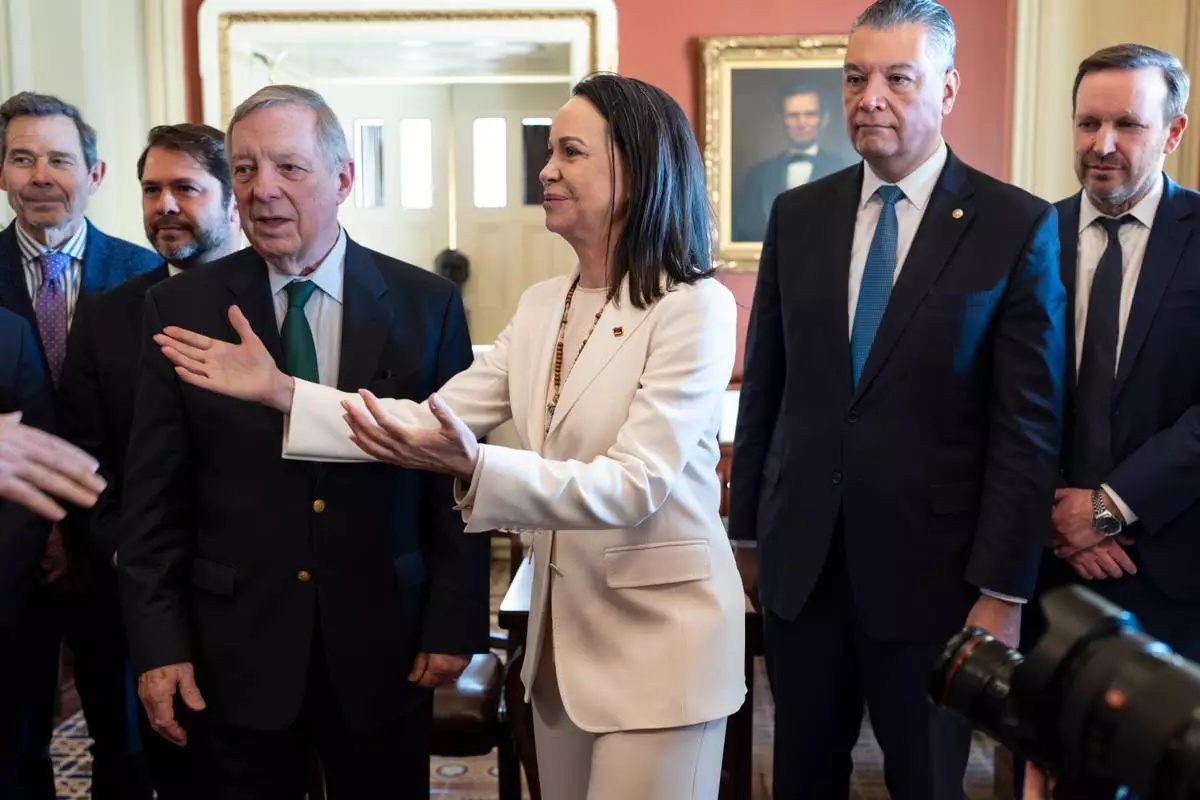
Venezuelan opposition leader Maria Corina Machado is welcomed at the Capitol before a meeting with senators, from left, Sen. John Curtis, R-Utah, Sen. Ruben Gallego, D-Ariz., Sen. Dick Durbin, D-Ill., Sen. Alex Padilla, D-Calif., and Sen. Chris Murphy, D-Conn., as the Nobel Peace Prize recipient visits American leaders two weeks after President Donald Trump toppled Venezuelan president Nicolas Maduro in a stunning military raid, at the Capitol in Washington, Thursday, Jan. 15, 2026. (AP Photo/J. Scott Applewhite)
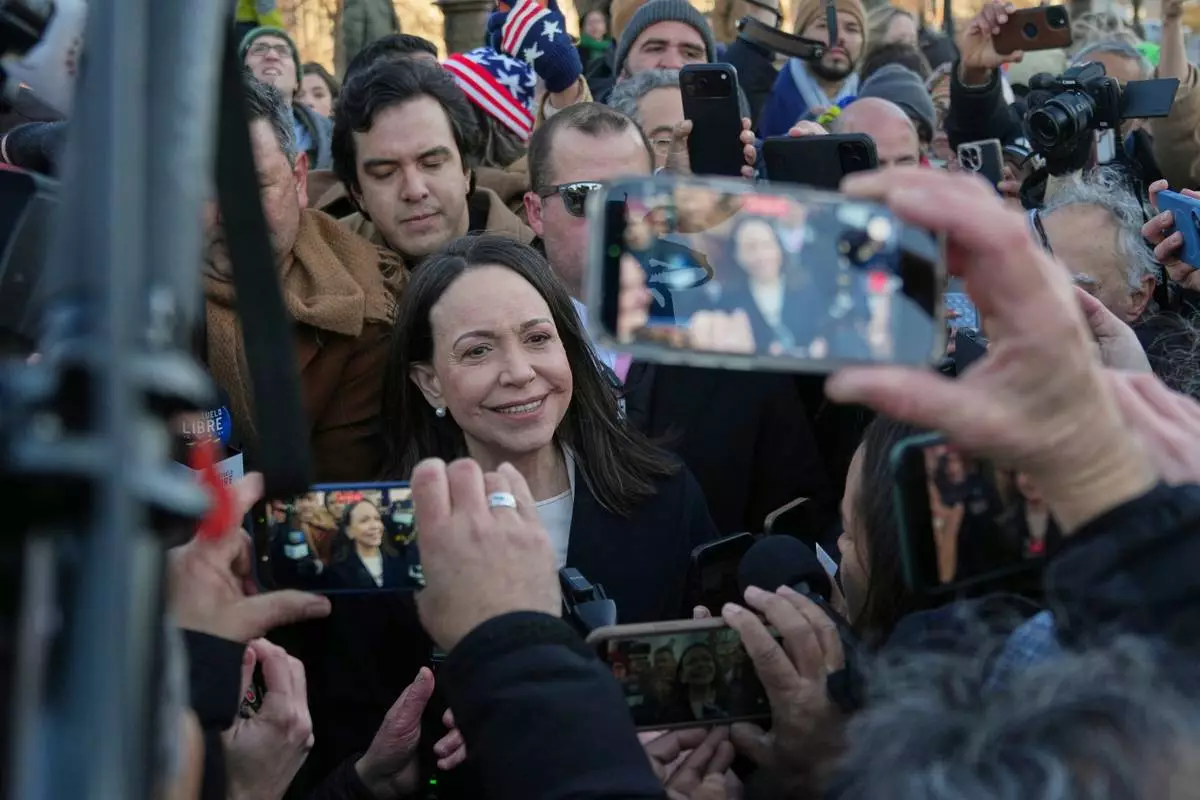
Venezuelan opposition leader María Corina Machado, center, leaves the Capitol, Thursday, Jan. 15, 2026, in Washington. (AP Photo/Allison Robbert)
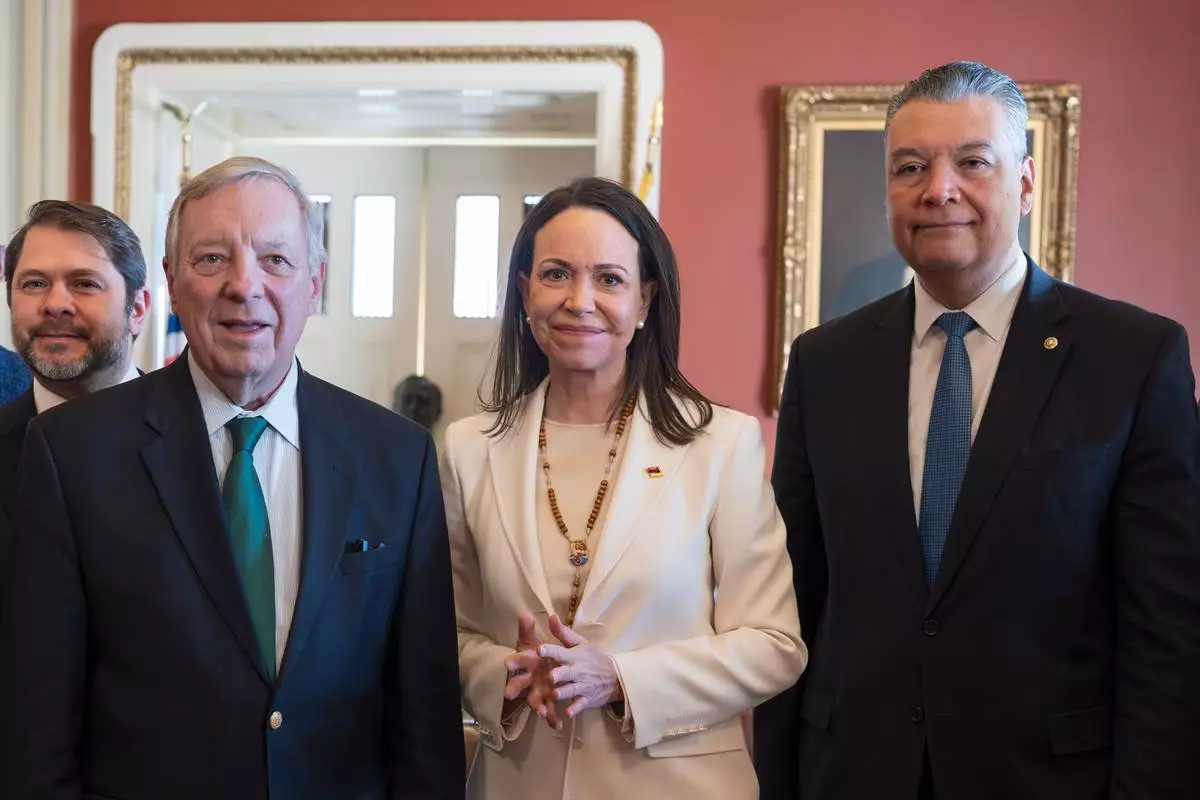
Venezuelan opposition leader Maria Corina Machado, center, is welcomed by Sen. Dick Durbin, D-Ill., left, Sen. Ruben Gallego, D-Ariz., far left, and Sen. Alex Padilla, D-Calif., right, as the Nobel Peace Prize recipient visits American leaders at the Capitol in Washington, Thursday, Jan. 15, 2026. (AP Photo/J. Scott Applewhite)
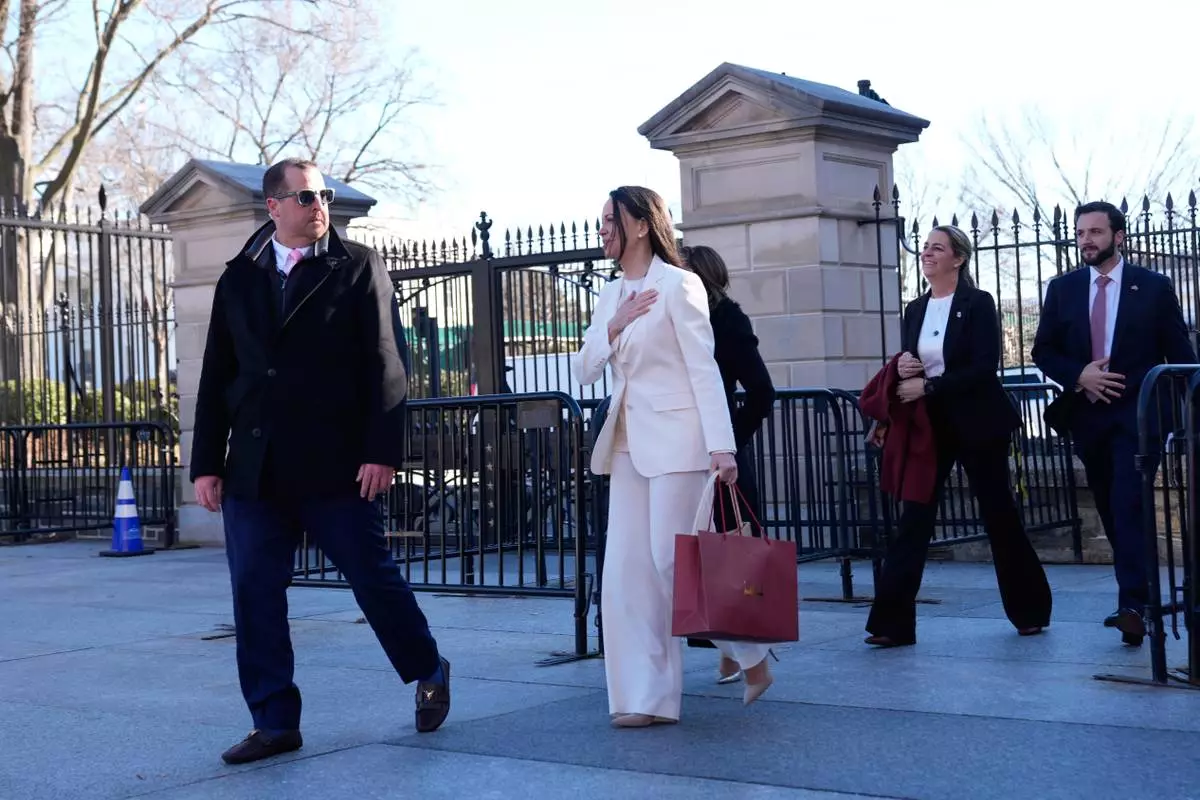
Venezuelan opposition leader María Corina Machado gestures to supporters on Pennsylvania Avenue as she leaves the White House after meeting with President Donald Trump Thursday, Jan. 15, 2026, in Washington. (AP Photo/Pablo Martinez Monsivais)
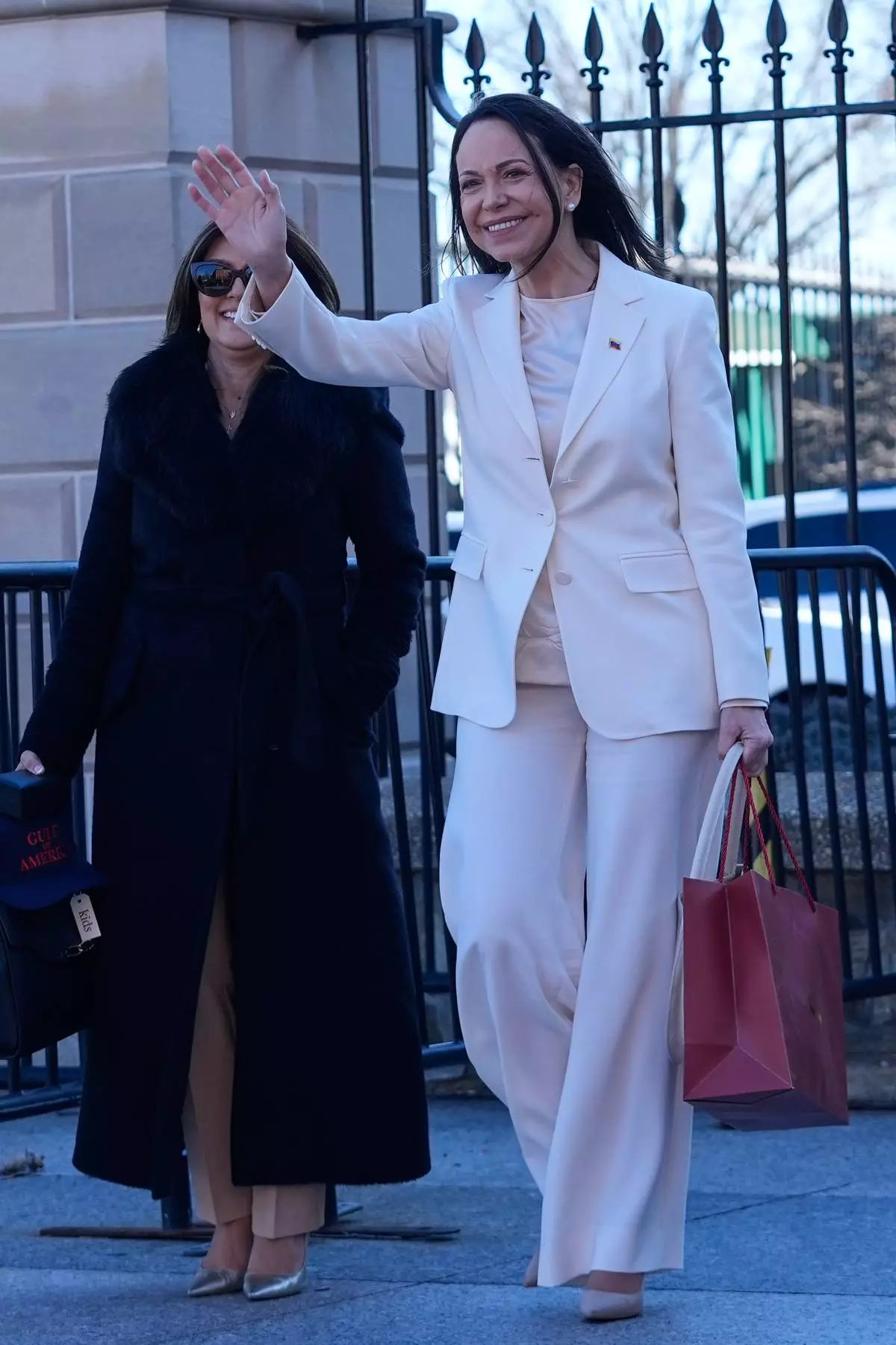
Venezuelan opposition leader María Corina Machado waves to supporters on Pennsylvania Avenue as she leaves the White House after meeting with President Donald Trump Thursday, Jan. 15, 2026, in Washington. (AP Photo/Pablo Martinez Monsivais)
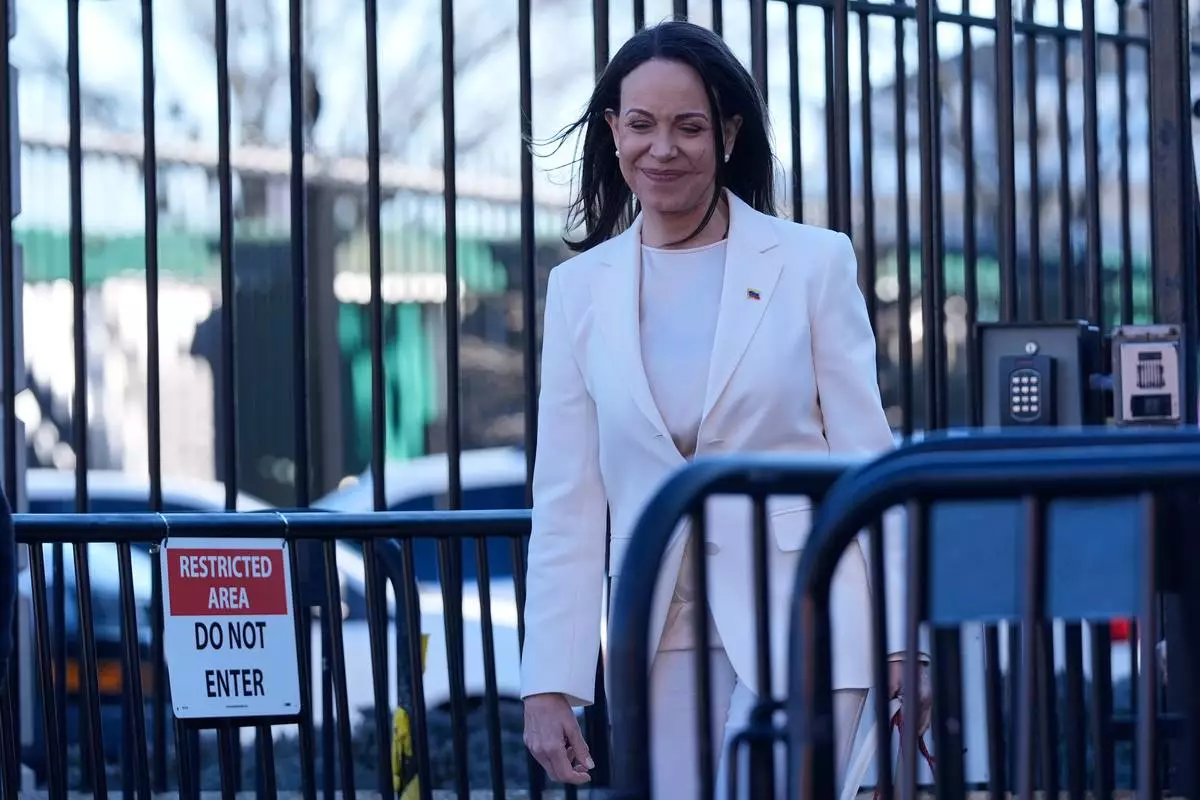
Venezuelan opposition leader María Corina Machado smiles on Pennsylvania Avenue as she leaves the White House after meeting with President Donald Trump Thursday, Jan. 15, 2026, in Washington. (AP Photo/Pablo Martinez Monsivais)
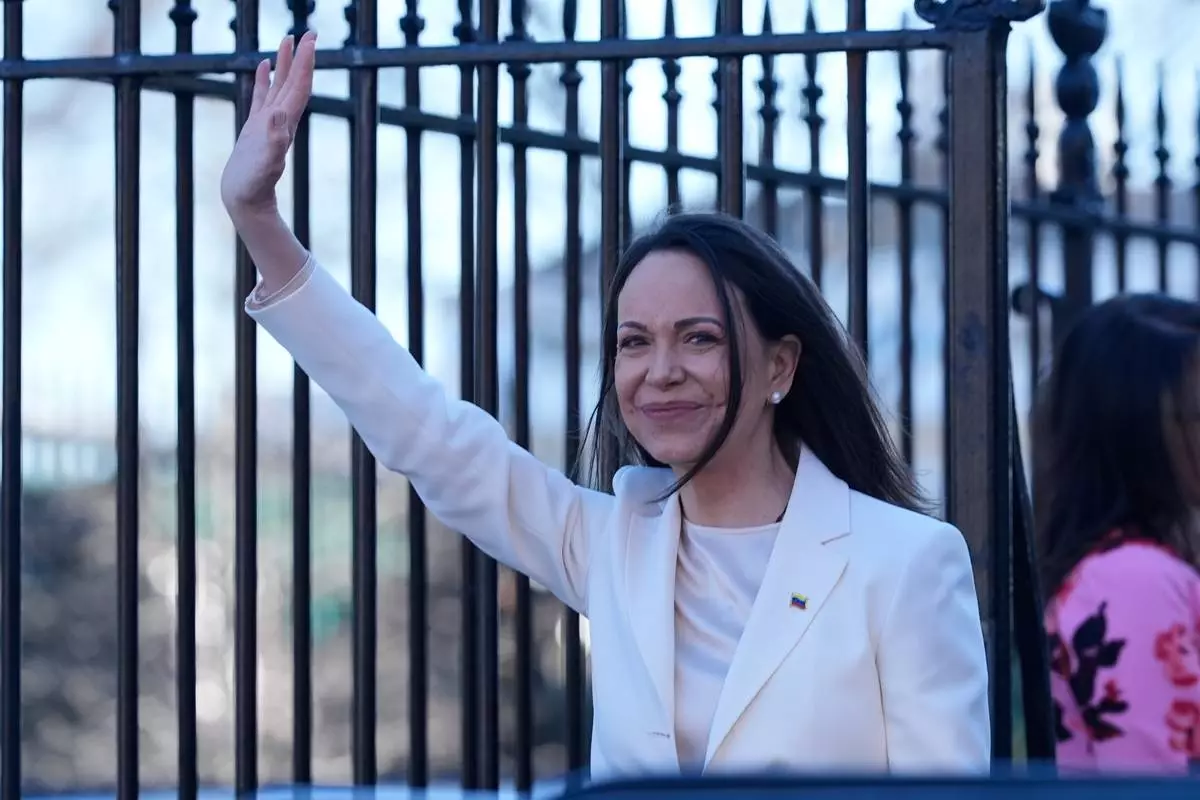
Venezuelan opposition leader María Corina Machado waves to supporters on Pennsylvania Avenue as she leaves the White House after meeting with President Donald Trump Thursday, Jan. 15, 2026, in Washington. (AP Photo/Pablo Martinez Monsivais)
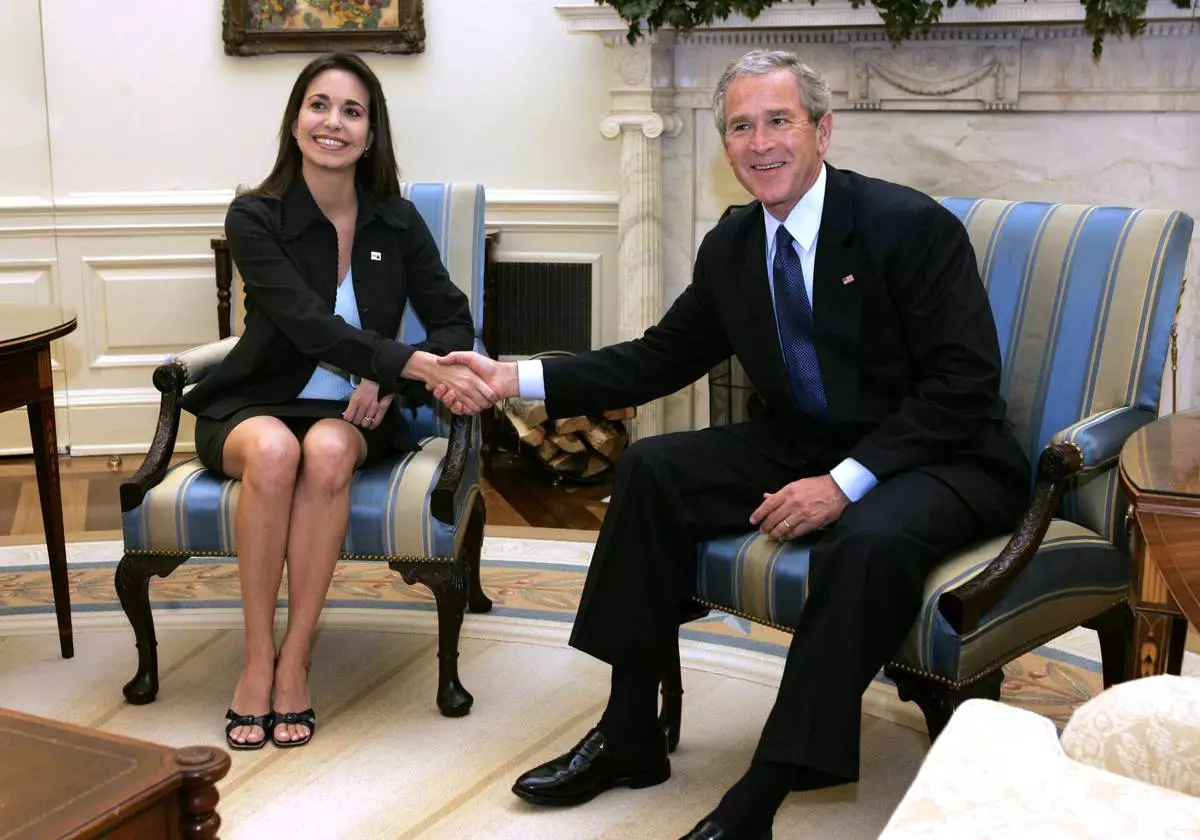
FILE - U.S. President George Bush, right, meets with Maria Corina Machado, executive director of Sumate, a non-governmental organization that defends Venezuelan citizens' political rights, in the Oval Office of the White House, Washington, May 31, 2005. (AP Photo/Charles Dharapak, File)
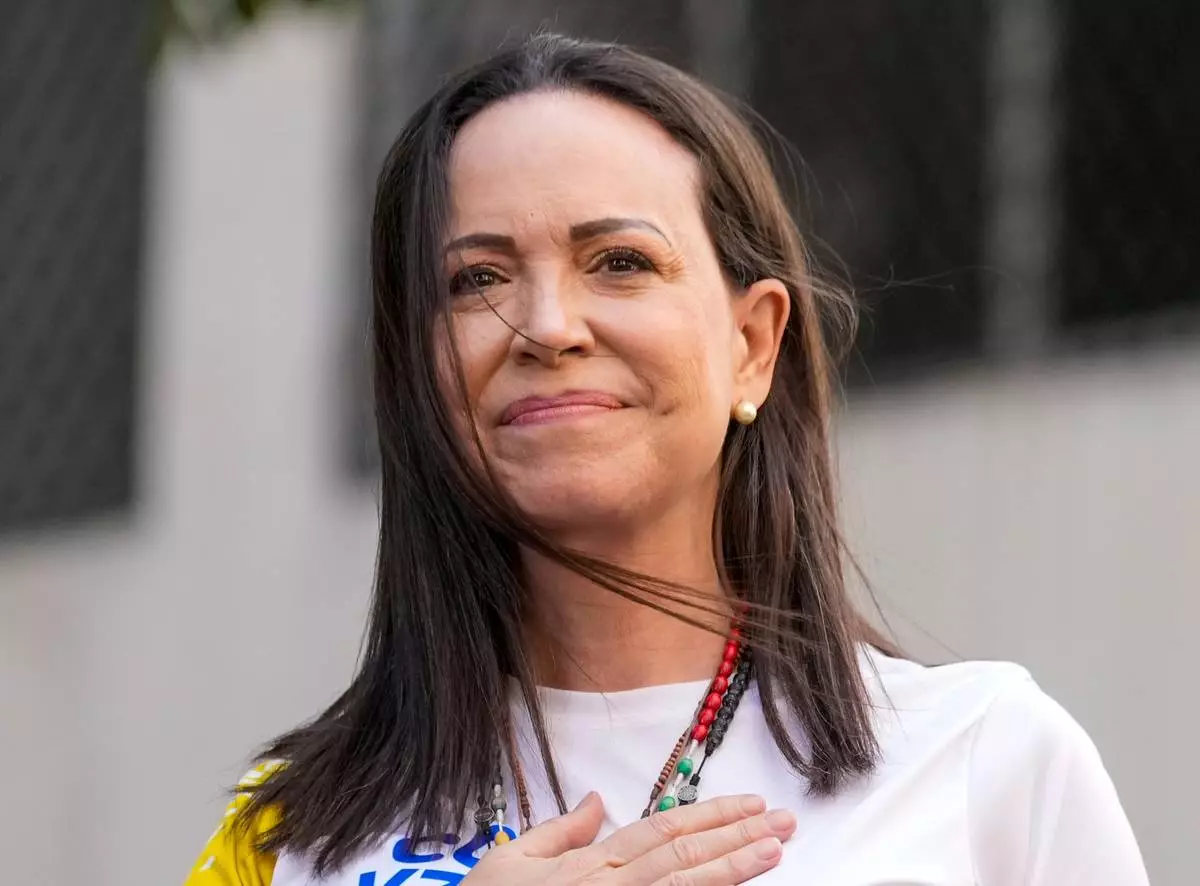
FILE - Opposition leader Maria Corina Machado gestures to supporters during a protest against President Nicolas Maduro the day before his inauguration for a third term, in Caracas, Venezuela, Thursday, Jan. 9, 2025. (AP Photo/Ariana Cubillos, file)