Northwest China's Xinjiang Uygur Autonomous Region has positioned itself as a strategic trade hub, with foreign trade exceeding 400 billion yuan (over 56 billion U.S. dollars) in 2024.
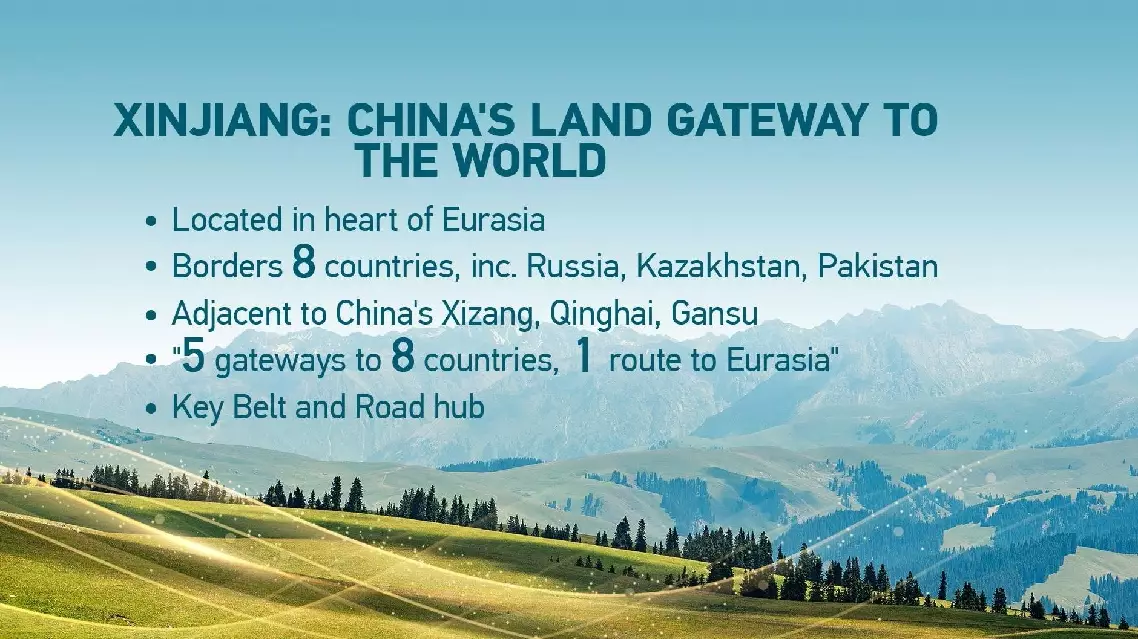
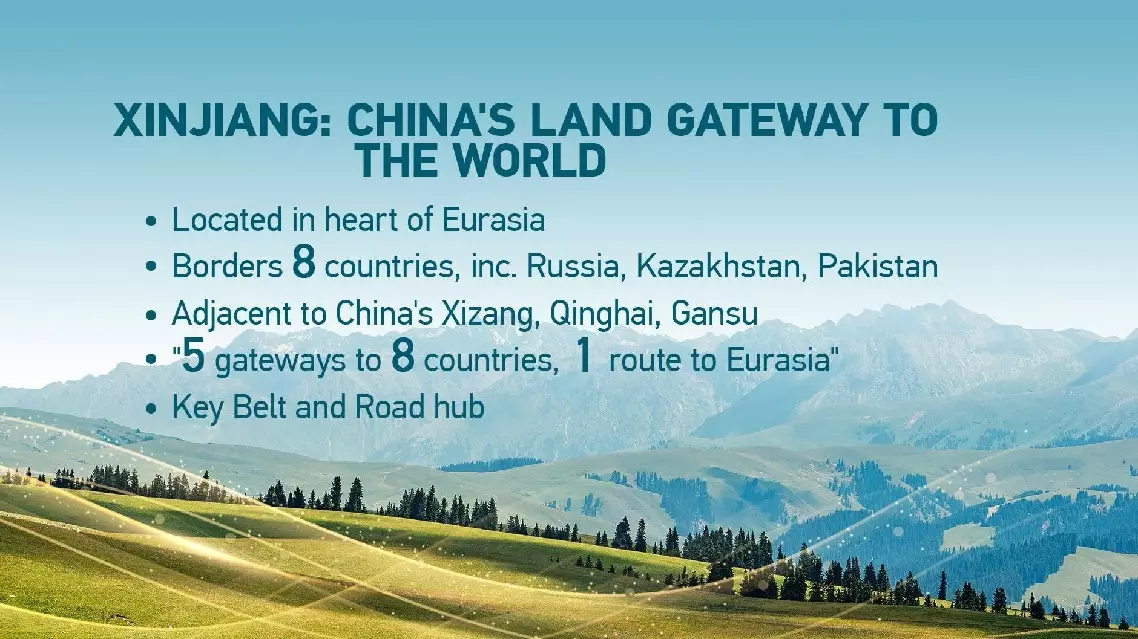
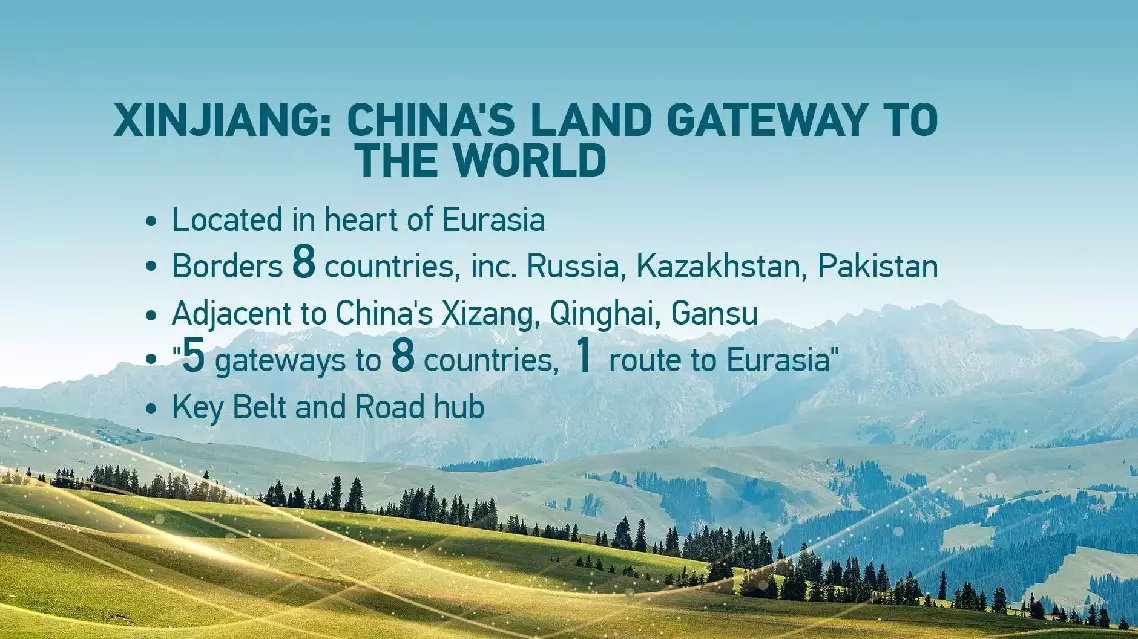
Nestled in the heart of Eurasia and bordering eight countries including Russia, Kazakhstan, and Pakistan, Xinjiang offers unmatched strategic access and has become the one of the fastest-growing regions nationwide.
Branded as "five gateways connecting eight countries, one route linking Eurasia," the region plays a vital role in China's Belt and Road Initiative.
Xinjiang now hosts 19 approved open ports and 56 national-level open platforms, including the Kashi and Khorgos Economic Zones.
In 2023, China launched the Xinjiang Free Trade Zone, spanning nearly 180 square kilometers across Urumqi, Kashi, and Khorgos.
By 2024, Xinjiang's foreign trade had surged nearly 22 percent year-on-year, with over 90 percent tied to Belt and Road countries, ranking third nationwide for growth.
Its vast transport network, including more than 12,000 kilometers of high-grade roads, 9,000 kilometers of rail and 27 airports continues to power the region's rise in China's global trade strategy.
Xinjiang thrives as one of China's gateways to global trade
Xinjiang thrives as one of China's gateways to global trade
Xinjiang thrives as one of China's gateways to global trade