UNITED NATIONS (AP) — Every year, tons of heroin, cocaine, methamphetamine and other drugs flow around the world, an underground river that crisscrosses borders and continents and spills over into violence, addiction and suffering. Yet when nations' leaders give the U.N. their annual take on big issues, drugs don't usually get much of the spotlight.
But this was no usual year.
Click to Gallery
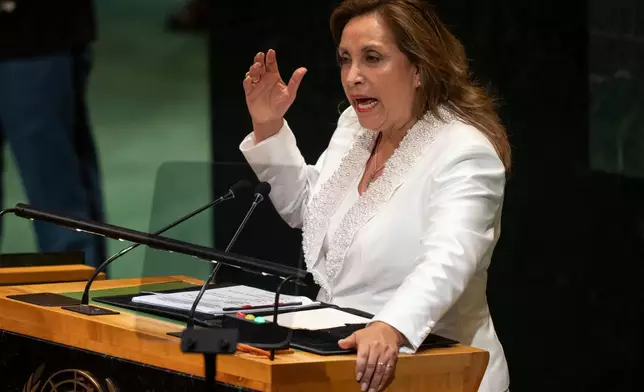
Peru President Dina Boluarte addresses the 80th session of the United Nations General Assembly, Tuesday, Sept. 23, 2025, at U.N. headquarters. (AP Photo/Yuki Iwamura)
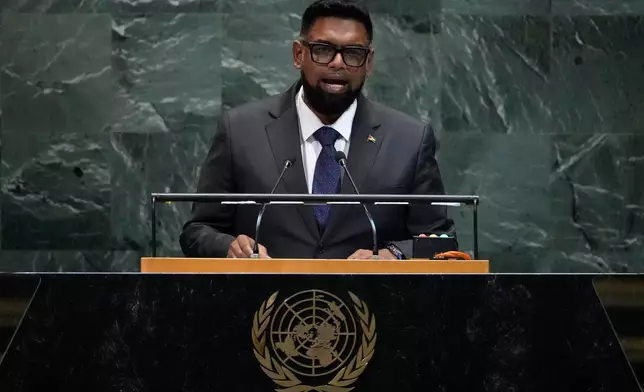
President of Guyana Mohamed Irfaan Ali addresses the 80th session of the United Nations General Assembly, Wednesday, Sept. 24, 2025, at U.N. headquarters. (AP Photo/Pamela Smith)
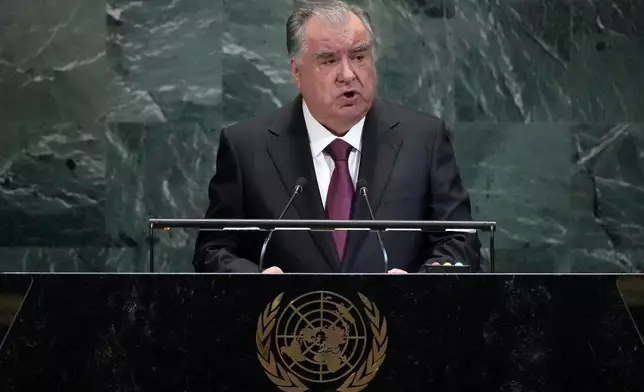
President of Tajikistan, Emomali Rahmon, addresses the 80th session of the United Nations General Assembly, Tuesday, Sept. 23, 2025, at U.N. headquarters. (AP Photo/Pamela Smith)
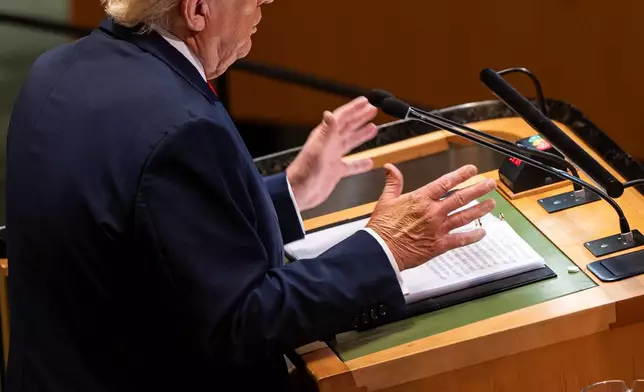
President Donald Trump gestures with his hands as he addresses the 80th session of the United Nations General Assembly, Tuesday, Sept. 23, 2025, at U.N. headquarters. (AP Photo/Angelina Katsanis)
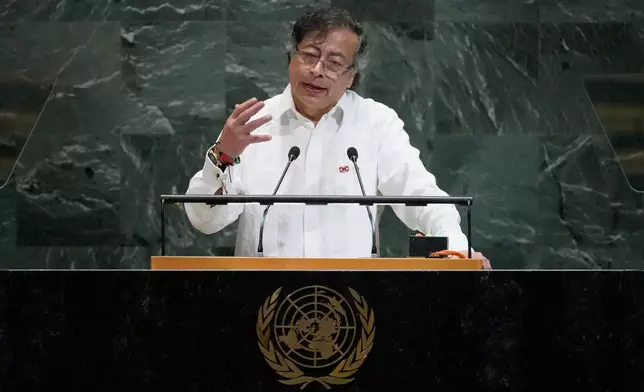
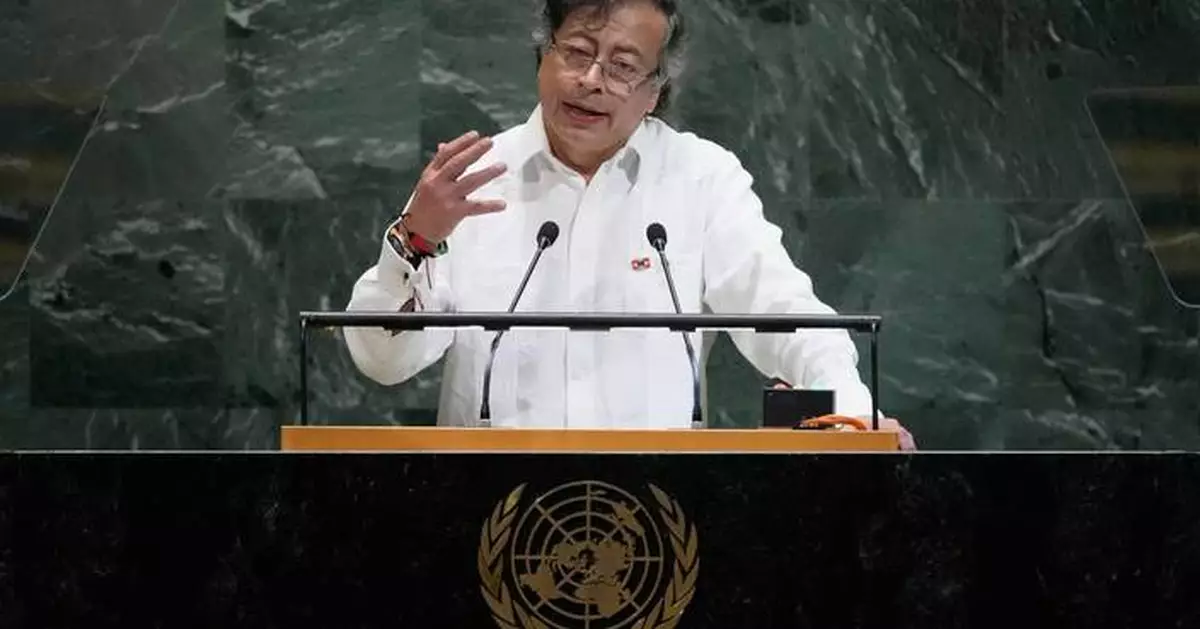
President of Colombia Gustavo Petro Urrego addresses the 80th session of the United Nations General Assembly, Tuesday, Sept. 23, 2025, at U.N. headquarters. (AP Photo/Pamela Smith)
First, U.S. President Donald Trump touted his aggressive approach to drug enforcement, including decisions to designate some Latin American cartels as foreign terrorist organizations and to carry out deadly military strikes on speedboats that he says said were carrying drugs in the southern Caribbean.
“To every terrorist thug smuggling poisonous drugs into the United States of America: Please be warned that we will blow you out of existence,” he boasted at the U.N. General Assembly on Tuesday.
Hours later, his Colombian counterpart fired back that Trump should face criminal charges for allowing an attack on unarmed "young people who were simply trying to escape poverty.”
The U.S. “anti-drug policy is not aimed at the public health of a society, but rather to prop up a policy of domination,” Colombia's Gustavo Petro bristled, accusing Washington of ignoring domestic drug dealing and production while demonizing his own country. The U.S. recently listed Colombia, for the first time in decades, as a nation falling short of its international drug control obligations.
The barbs laid bare, on global diplomacy's biggest stage, the world's wide and pointed differences over how to deal with drugs.
“The international system is extremely divided on drug policy,” said Vanda Felbab-Brown, who has followed the topic as a senior fellow at the Washington-based Brookings Institution think tank. “This is not new, but it’s really just very intense at this UNGA.”
While the wars in Gaza and Ukraine, climate change and other crises got much of the focus in the U.N.'s marathon week of speeches and meetings, the topic of drugs turned up from Trump's and Petro's tough talk to side events on such themes as gender-inclusive drug policy and international cooperation to fight organized crime.
Some 316 million people worldwide used marijuana, opioids and/or other drugs in 2023, a 28% rise in a decade, according to the most recent statistics available from the U.N. Office on Drugs and Crime. The figures don’t count alcohol or tobacco use.
The specifics vary by region, with cocaine use growing in Europe, methamphetamine on the rise in Southeast Asia, and synthetic opioids making new inroads in West and Central Africa and continuing to trouble North America, though opioid-related deaths have been falling.
The U.N. drug office says trafficking is increasingly dominated by organized crime groups with tentacles and partnerships around the world, and nations need to think just as broadly about trying to tackle the syndicates.
“Governments are increasingly seeing organized crime and drug trafficking as threats to national and regional security and stability, and some are coming around to the fact that they need to join up diplomatic, intelligence, law enforcement and central-bank efforts to push back,” agency chief of staff Jeremy Douglas said by email.
Although organized crime hasn't featured very prominently in top-level discussions at the General Assembly to date, he said, “we’re at a point where this needs to, and hopefully will, change.”
Nations pair up in various joint counternarcotics operations and working groups and sometimes form regional coalitions, but some experts and leaders see a need to go global.
Countries need to “pool resources in a fight that must be a common cause among all nations,” Panamanian President José Raúl Mulino told the assembly. He said his nation had seized a “historic and alarming” total of 150 tons of cocaine and other drugs this year alone.
To be sure, there is already some global-scale collaboration on drug control. The U.N. Commission on Narcotic Drugs decides what substances are supposed to be internationally regulated under decades-old treaties, and it can make policy recommendations to the U.N.'s member countries. The International Narcotics Control Board monitors treaty compliance.
But the U.N. is big-tent politics at its biggest, so even as some components of the world body deal with drug enforcement, others emphasize public health programs — substance abuse treatment, overdose prevention and other services — over prohibition and punishments.
The U.N. High Commissioner for Human Rights, Volker Türk, has advocated for decriminalizing at least some drug use while clamping down on illegal markets. Given that policing hasn't reduced substance use or crime, “the so-called war on drugs has failed, completely and utterly,” he said last year.
Separately, a U.N. Development Programme report last week said punitive drug control had led to deaths and disease among users who shied from seeking help, racial disparities in enforcement, and other societal downsides.
At a gathering marking the report's release, former Mexican President Ernesto Zedillo deplored that “the global drug control regime has become a substantial part of the problem.”
“The question is: Do governments have the wisdom and courage to act?” asked Zedillo, now a Yale professor and a commissioner of the Global Commission on Drug Policy, a Geneva-based anti-drug-war advocacy group.
The other question is whether they could ever agree on what action to take.
Even if countries agree — or say they do — with ending the drug trade and resulting ills, “the objectives might be different, and certain means, tools, resources they're willing to devote to them, are different,” Felbab-Brown said.
Nations' own drug laws vary widely. Some impose the death penalty for certain drug crimes. Others have legalized or decriminalized marijuana. At least one — Thailand — legalized it only to have second thoughts and tighten the rules. Countries' openness to needle exchange programs, safe injection sites and other “harm reduction” strategies is similarly all over the map.
As leaders took their turns at the assembly rostrum this week, observers got occasional glimpses of the world's different views of its drug problem.
Tajikistan's president, Emomali Rahmon, called drug trafficking “a serious threat to global security.” Guyanese President Irfaan Ali endorsed international efforts to address drug trafficking, which he counted among the ”crimes that are destroying the lives of our people, especially young people.”
Syria's new president, Ahmad al-Sharaa, noted that his administration closed factories that produced the amphetamine-like stimulant Captagon, also known as fenethylline, during his now-ousted predecessor's time. Costa Rican Foreign Minister Arnoldo André Tinoco said drug smuggling networks are exploiting routes traveled by migrants and “taking advantage of the vulnerability of those seeking international protection.”
“Isolated responses are insufficient,” as the traffickers just go elsewhere and create new hotspots of crime, Tinoco said.
Reviewing the challenges facing Peru, President Dina Boluarte listed transnational organized crime and drug trafficking alongside political polarization and climate change.
“None of these problems is merely national, but rather global,” she said. “This is why we need the United Nations to once again be a forum for dialogue and cooperation.”
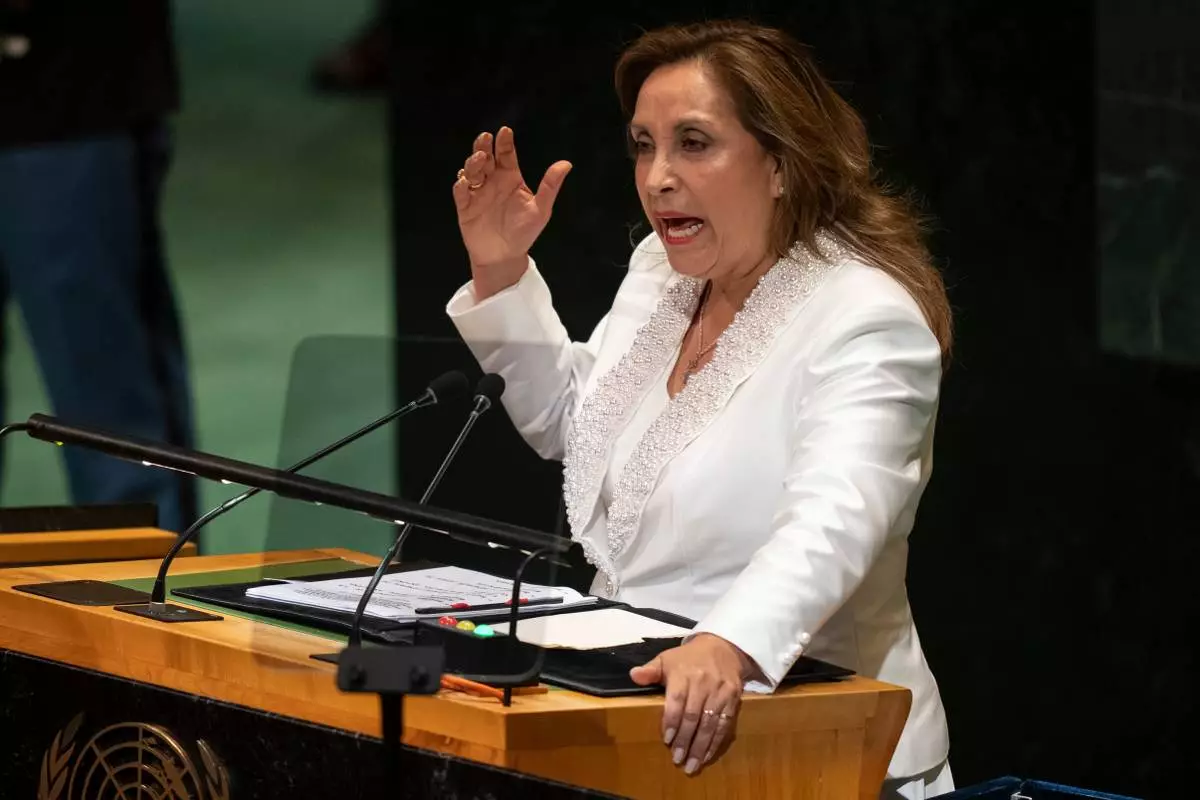
Peru President Dina Boluarte addresses the 80th session of the United Nations General Assembly, Tuesday, Sept. 23, 2025, at U.N. headquarters. (AP Photo/Yuki Iwamura)
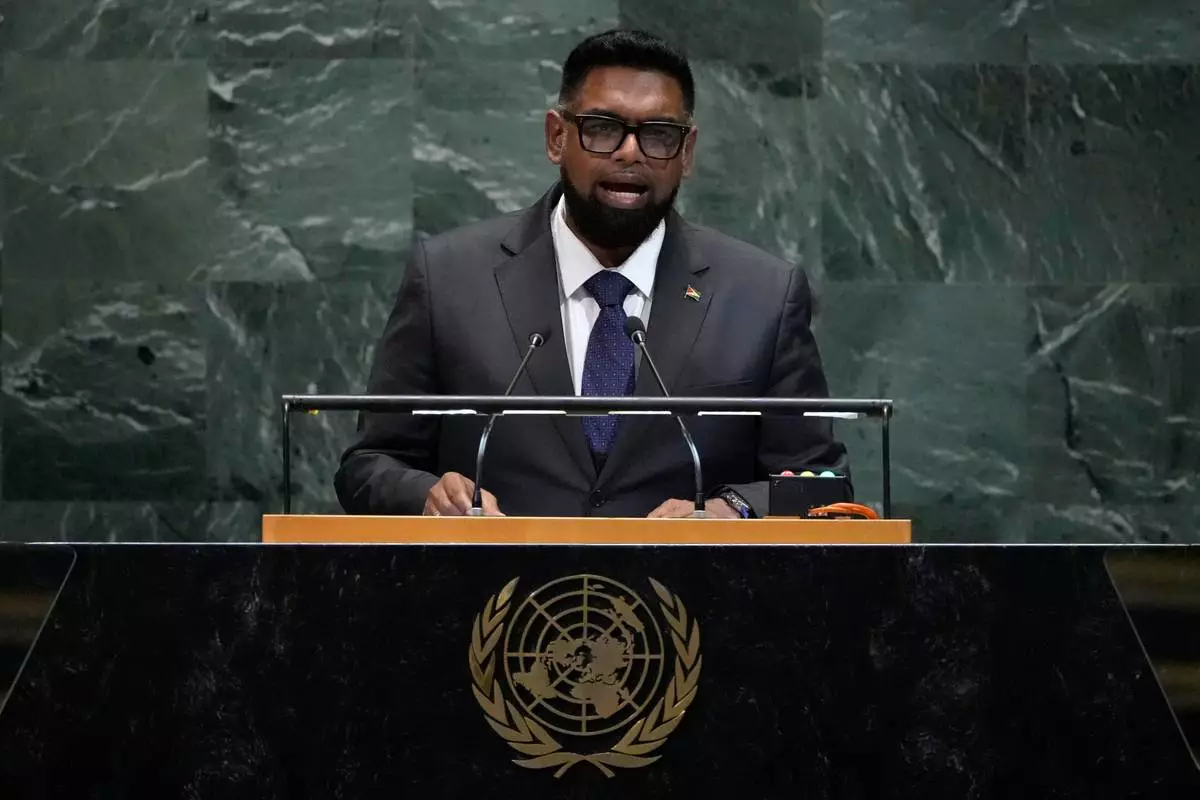
President of Guyana Mohamed Irfaan Ali addresses the 80th session of the United Nations General Assembly, Wednesday, Sept. 24, 2025, at U.N. headquarters. (AP Photo/Pamela Smith)
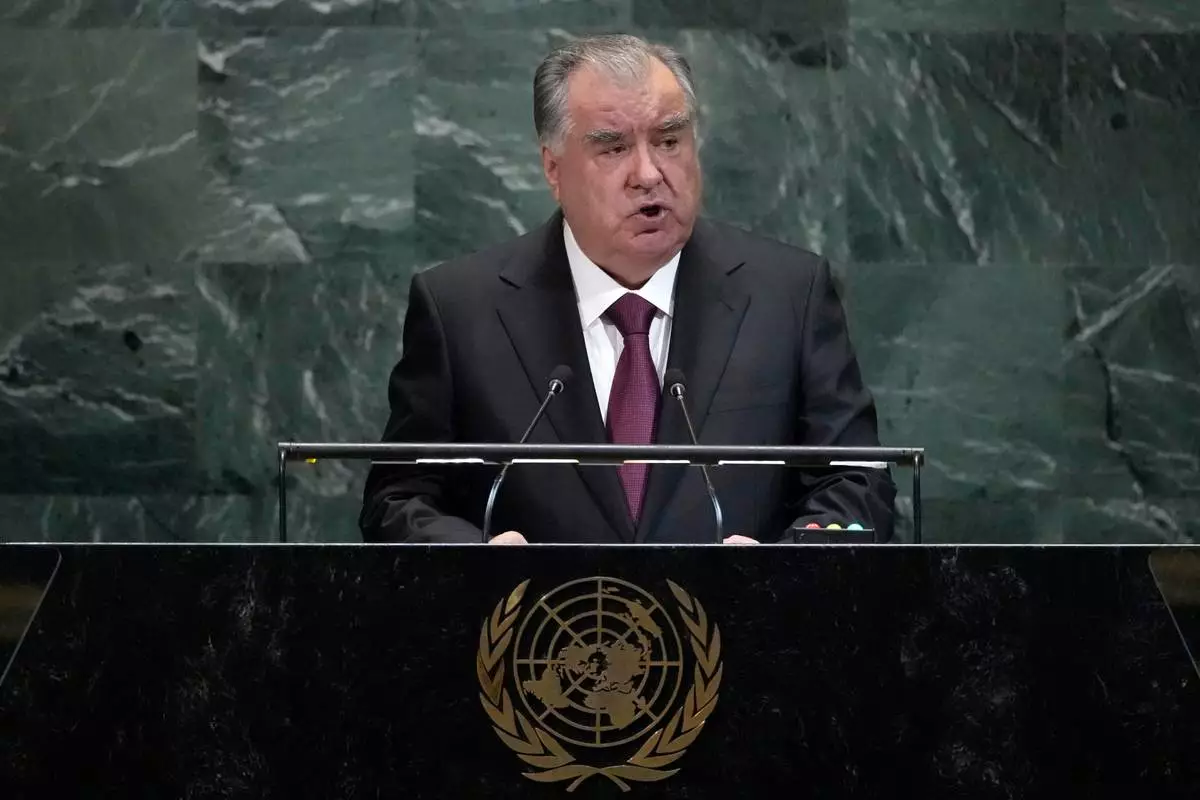
President of Tajikistan, Emomali Rahmon, addresses the 80th session of the United Nations General Assembly, Tuesday, Sept. 23, 2025, at U.N. headquarters. (AP Photo/Pamela Smith)
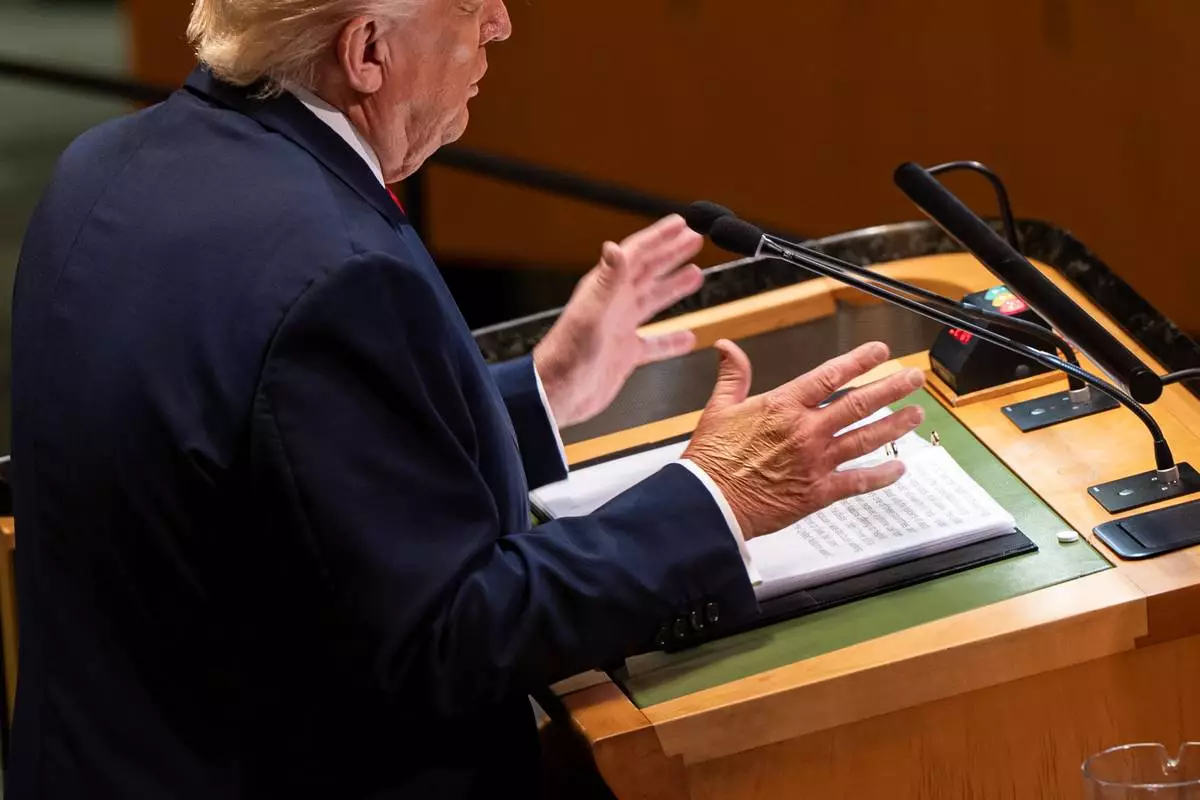
President Donald Trump gestures with his hands as he addresses the 80th session of the United Nations General Assembly, Tuesday, Sept. 23, 2025, at U.N. headquarters. (AP Photo/Angelina Katsanis)
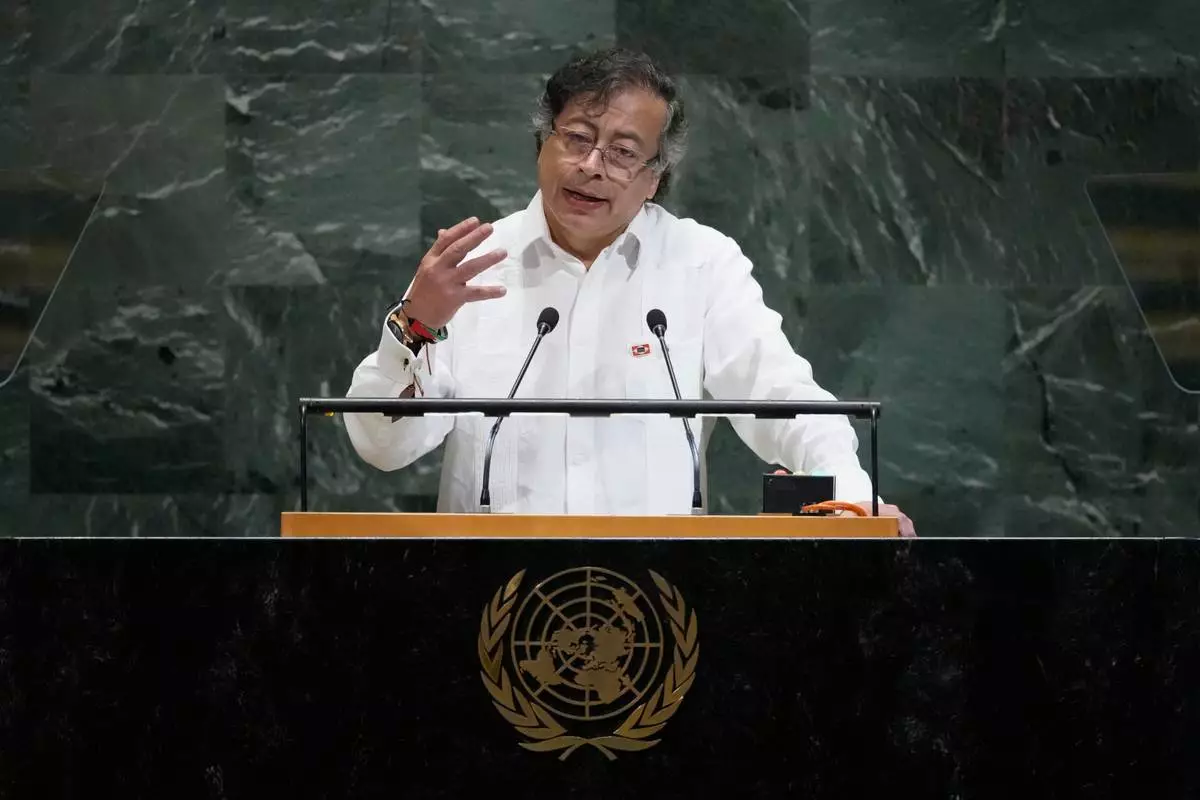
President of Colombia Gustavo Petro Urrego addresses the 80th session of the United Nations General Assembly, Tuesday, Sept. 23, 2025, at U.N. headquarters. (AP Photo/Pamela Smith)