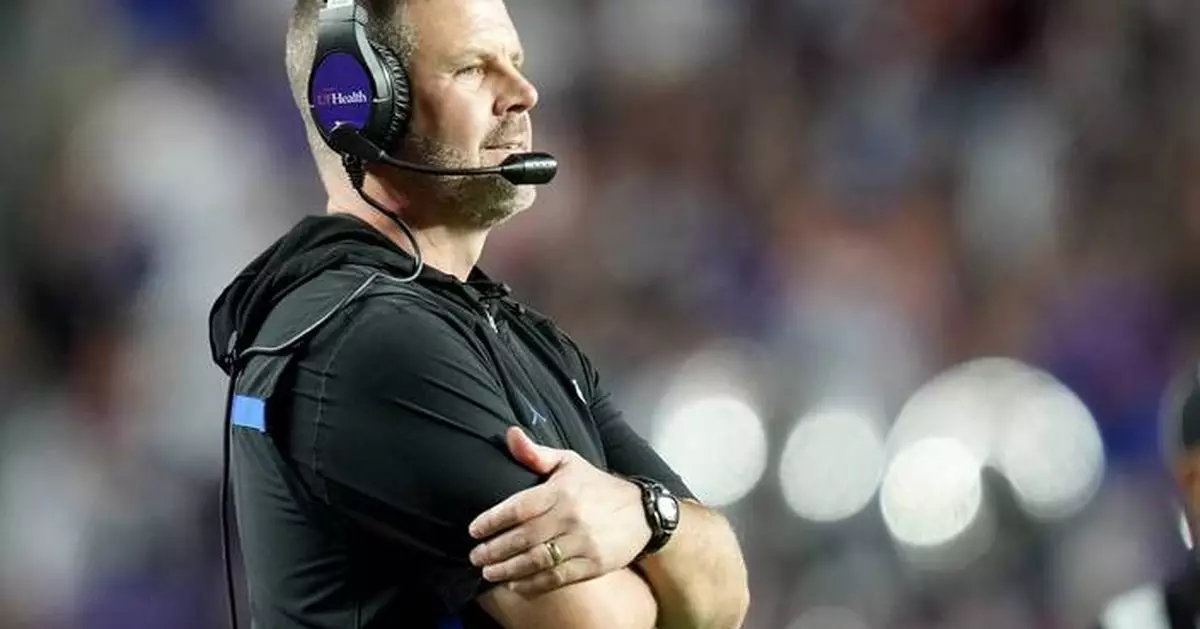
HARRISONBURG, Va. (AP) — Four years ago, Billy Napier walked away from a Sun Belt Conference powerhouse he had built at Louisiana-Lafayette. It was, in part, because he wasn’t sure how that program would handle the financial challenges of new rules allowing college athletes to profit from their name, image and likeness.
Four years later, Napier is returning to the league with James Madison. And the Dukes’ ability to compete financially was one of the main drivers behind his decision to become the successor to UCLA-bound Bob Chesney.
“This place has what it takes to dominate the competition for sure,” Napier said of a program ranked No. 19 in the AP Top 25 and headed to the College Football Playoff.
Napier went 40-12 in four seasons at Louisiana-Lafayette, dominating Sun Belt competition. His Ragin’ Cajuns won the Western Division all four years he was there and claimed league championships in his final two seasons. He was twice named the league's coach of the year.
But after posting a 12-1 record and his second Sun Belt title in 2021, Napier left for Florida.
“I stayed at Louisiana after Year 2 when we had opportunities, after Year 3 when we had opportunities,” Napier said. “And we probably, truth be known, would have stayed longer if it wasn’t for NIL. Because we know that was coming. We knew that roster was going to be tough to keep together.”
Napier went 22-23 at Florida, starting this season 3-4 when he was fired in his fourth year leading the Gators.
As he surveyed the landscape, considering his future, he thought a lot about how college football had changed since he first took over at Louisiana-Lafayette in 2018. The NIL rules allowing college athletes to cash in on their fame went live in summer 2021, while this year marked the arrival of revenue sharing following the $2.8 billion House antitrust settlement.
“It’s very different,” Napier said. “Obviously (revenue sharing) is ultimately a huge difference maker at the Group of Six level. Now, you evaluate jobs relative to alignment, resources — which basically means building infrastructure and hiring a great staff — and then the rev share that allows you to compensate really good players.”
Napier said that, the transfer portal and roster limits following the House settlement have changed the game since he last coached in the Sun Belt.
“But ultimately, football’s football,” Napier said. “We’re going to need to evaluate well. Basically going to recruit a high school cycle each year. Then you’re going to recruit a portal cycle each year. Then start over.”
Those changes aren’t something Napier is thinking about in the abstract.
He jumps right into one of the most awkward positions in the country — seeking to retain players of a CFP-bound team while their current coach presumably is hoping to take some of the Dukes’ top talent with him west to UCLA. (No. 12 seed JMU faces No. 5 Oregon on Saturday night.)
“I’m for transparency,” Napier said. “Let’s rip the Band-Aid off. Who are you taking? And who wants to go?”
When Curt Cignetti left JMU for Indiana, he took 13 of the program’s top players with him. That group includes the Hoosiers’ leader in rushing touchdowns (Kaelon Black), its leader in receiving scores (Elijah Sarratt), its leader in pass breakups (D’Angelo Ponds) and its second-leading tackler (Aiden Fisher).
Nine former JMU players started multiple games this season for top-ranked Indiana, which beat then-No. 2 Ohio State for the Big Ten Conference title and is the top seed in the 12-team playoff.
Chesney had to rebuild JMU almost entirely from scratch. He brought in 58 new players his first season.
Athletic director Matt Roan said he and Chesney navigated the entire season with openness and honesty, starting with UCLA’s first inquiries about Chesney after Week 3. That gives him confidence that Chesney and Napier will be able to work simultaneously and professionally toward the future of both coaches’ programs.
“We were very transparent throughout,” Roan said. “The day that UCLA announced that DeShaun Foster was being removed as the head coach, they started calling. And every program in America started calling. And we would have those open, honest conversations about where things could go. We’ve been the adults in the room.”
JMU president Jim Schmidt expressed confidence the Dukes will remain successful under Napier no matter how the fight over players turns out.
“I have no doubt that we may lose some talented players to UCLA,” Schmidt said. “We certainly lost some talented players to Indiana. I believe that we will retain the right players and I believe Coach Billy will bring some great players to round that out.”
Get poll alerts and updates on the AP Top 25 throughout the season. Sign up here and here (AP News mobile app). AP college football: https://apnews.com/hub/ap-top-25-college-football-poll and https://apnews.com/hub/college-football
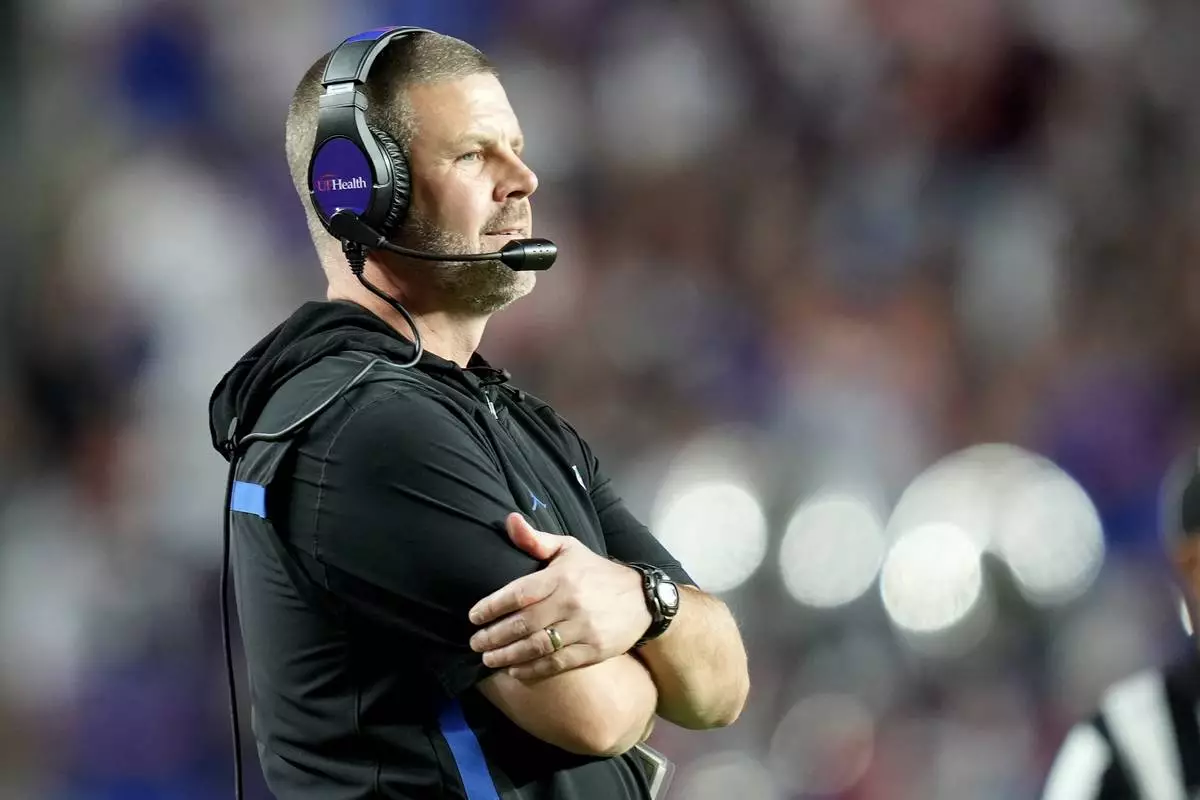
FILE - Florida head coach Billy Napier watches his team line up against Texas A&M during the first half of an NCAA college football game Saturday, Oct. 11, 2025, in College Station, Texas. (AP Photo/Sam Craft, File)
WASHINGTON (AP) — President Donald Trump said Thursday he will soon sign an order to pay all Department of Homeland Security employees who have gone without paychecks during the record-long partial government shutdown that has reached 48 days.
Despite that unilateral move announced in a social media post, the funding lapse for some DHS needs is likely to stretch into next week as the House contemplates passing a Senate plan it had previously rejected to fund the bulk of the agency, though not its immigration enforcement operations.
Trump used a similar maneuver to resume pay for the Transportation Security Administration after many employees had called out from work, resulting in long delays at airport security lines for travelers. Trump's latest intervention is expected to apply to other non-law enforcement employees at the department, including many employees at the Federal Emergency Management Agency, U.S. Coast Guard and the agency responsible for coordinating federal cybersecurity efforts.
Trump said their families “have suffered far too long.”
“Nevertheless, help is on the way for our Brave and Patriotic Public Servants who have continued to work hard, and do their part to protect and defend our Country,” Trump said.
There was no legislative resolution Thursday after both the House and Senate met for just a few minutes in pro forma sessions. Nonetheless, the Republican leadership and Trump have coalesced around a plan to fully fund DHS as part of a two-step process. The agreement puts the congressional leaders on the same page for ending the impasse after they had pursued separate paths that resulted in Congress leaving Washington last week for its spring recess without a fix.
During the brief sessions, Senate Majority Leader John Thune, R-S.D., put aside the House plan to fund the entire department for 60 days. Then the House met briefly without taking up the bipartisan Senate plan that had been worked out with Democrats, though Thune is looking toward eventual passage.
“I don’t know the particulars around what the House will do with it,” Thune told reporters. “My assumption is, at some point, hopefully, they’ll move it.”
Speaker Mike Johnson, R-La., and Thune, announced Wednesday that they would return to the Senate measure, which funds most of DHS with the exception of U.S. Immigration and Customs Enforcement and U.S. Border Patrol. Republicans will try later to fund those agencies through party-line spending legislation that could take months to finish.
Neither outcome is guaranteed, and the strategy could potentially still face opposition from the GOP’s own ranks even though Trump has given his support.
Johnson’s embrace of the two-track plan marks a sharp reversal from less than a week ago, when he derided it as a “joke” and said he was “quite convinced that it can’t be that every Senate Republican read the language of this bill.”
Public backlash was swift after lawmakers left Washington last week without a resolution, with the tabloid website TMZ posting paparazzi-style photos of members at airports and out of town. The regularly scheduled break, while drawing criticism, is typically used by lawmakers to reconnect with constituents and travel abroad.
Johnson now appears to be on board. But securing support from his own conference could prove more difficult after a sizable group of House Republicans blasted the Senate-passed bill last week.
House Republicans held a conference call later Thursday to discuss the next steps. The GOP leadership indicated to lawmakers that it does no expect to recall them to Washington from the spring recess; they are due back April 14.
Lawmakers also heard from White House budget director Russ Vought. The White House is expected to release Trump’s 2027 budget proposal on Friday.
Democrats in both chambers were aligned last week with the Senate's plan, and Senate Democratic leader Chuck Schumer of New York blamed House Republicans on Thursday for taking no action on it during the brief morning session.
“The deep division and dysfunction among House Republicans is needlessly extending the DHS shutdown and hurting federal workers who are missing another paycheck,” Schumer said.
Johnson will look to persuade the most conservative lawmakers within his conference to go along with the two-step approach agreed upon with the president, and Trump's latest social media post could help. The president thanked Thune and Johnson for their work, and sought to project Republican unity.
“Republicans are UNIFIED, and moving forward on a plan that will reload funding for our FANTASTIC Border Patrol and Immigration Enforcement Officers,” Trump wrote.
Many in the GOP conference have taken the stand that ICE and the Border Patrol need to be included as part of any funding agreement.
“Let’s make this simple: caving to Democrats and not paying CBP and ICE is agreeing to defund Law Enforcement and leaving our borders wide open again,” Rep. Scott Perry, R-Pa., posted on X. “If that’s the vote, I’m a NO.”
Meanwhile, the budget package that Trump wants voted on by June 1 is expected to fund ICE and Border Patrol through the remainder of Trump’s term, as a way to try to ensure those agencies are no longer at risk from Democrats objecting to his immigration enforcement agenda.
Thune acknowledged the potential hurdles to that route, such as efforts to expand the scope of the bill. He said the goal is to keep it “as narrow and focused as possible” in order to pass it “with haste.”
The vast majority of DHS employees have reported to work during the shutdown, but many thousands have gone without pay. As more Transportation Security Administration agents called out from work, there was increasing frustration for air travelers confronted by long waits at some airport security lines. Those bottlenecks appeared to be clearing this week as agents began receiving backpay after Trump signed an executive order.
About 10,000 FEMA workers are being paid because their wages come out of the non-lapsing Disaster Relief Fund. At least 4,000 FEMA employees are furloughed or currently working without pay.
AP Congressional Correspondent Lisa Mascaro contributed to this report.
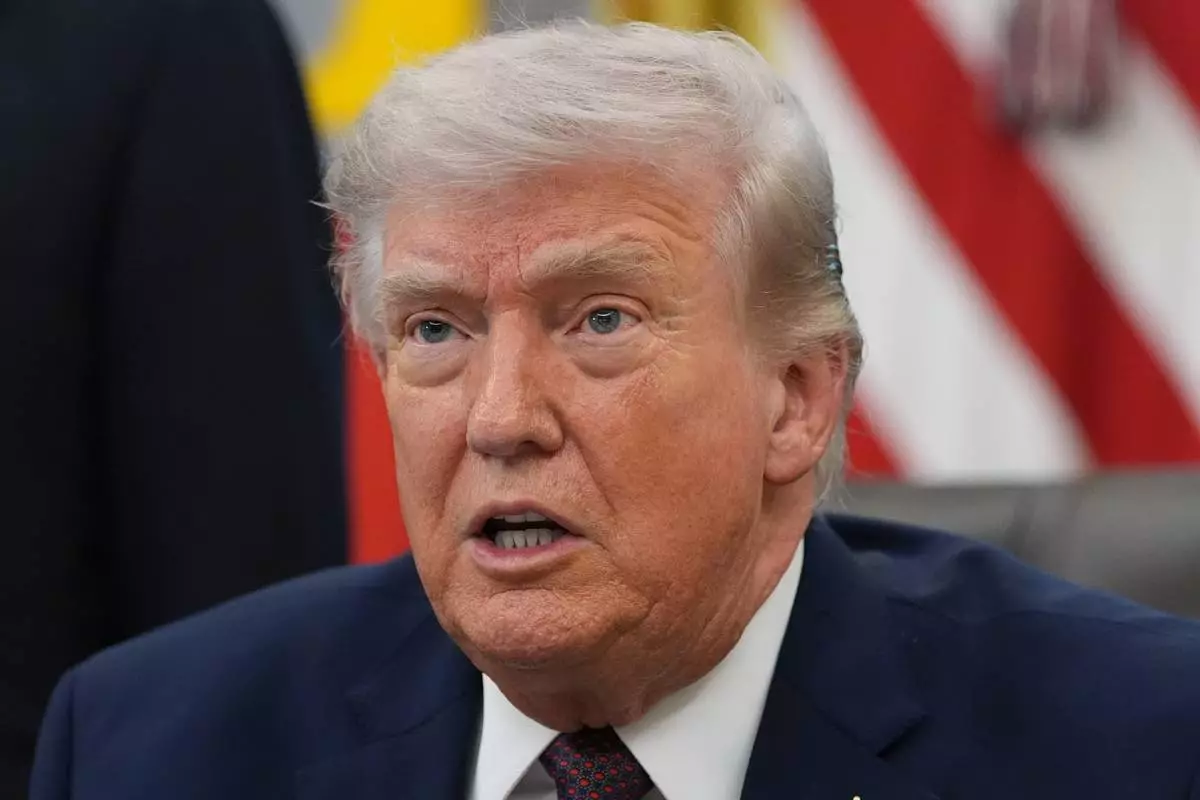
President Donald Trump answers questions from reporters after signing an executive order in the Oval Office of the White House Tuesday, March 31, 2026, in Washington. (AP Photo/Alex Brandon)
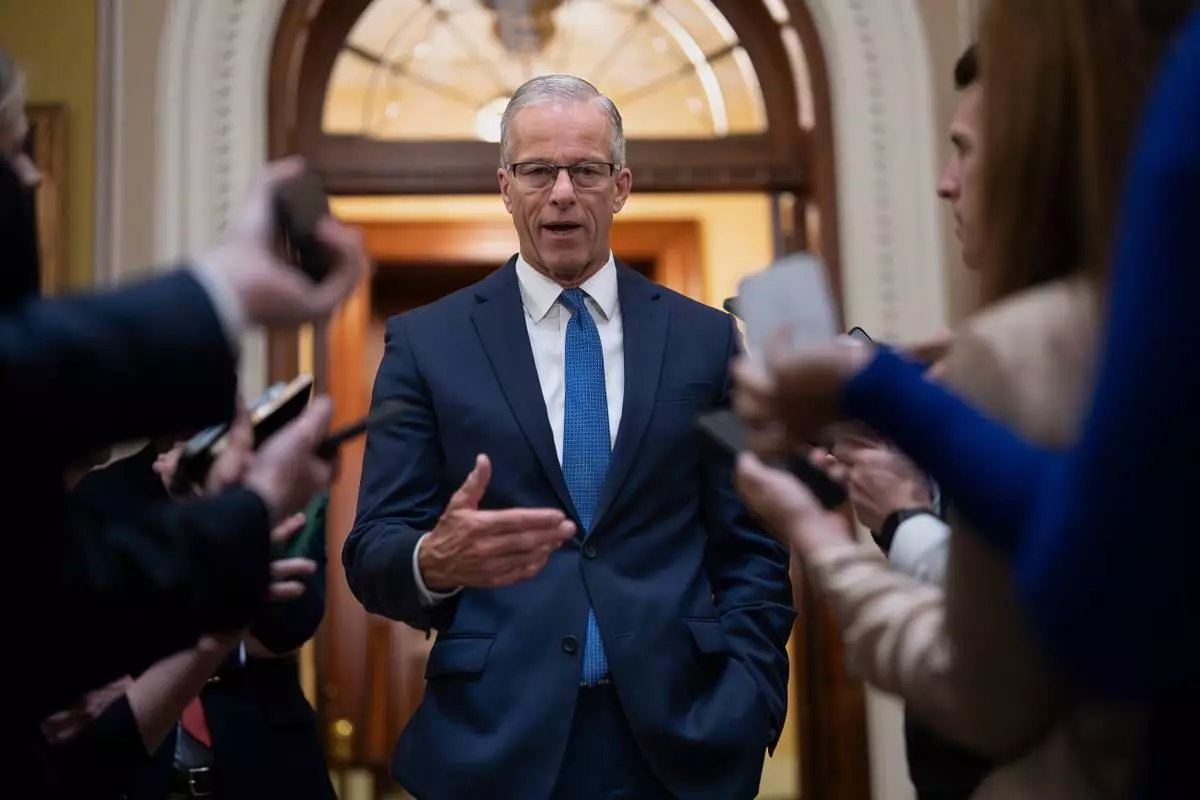
Senate Majority Leader John Thune, R-S.D., speaks to reporters outside the chamber after passing a measure by unanimous consent that would fund most of the Department of Homeland Security, if the House agrees, at the Capitol in Washington, Thursday, April 2, 2026. (AP Photo/J. Scott Applewhite)
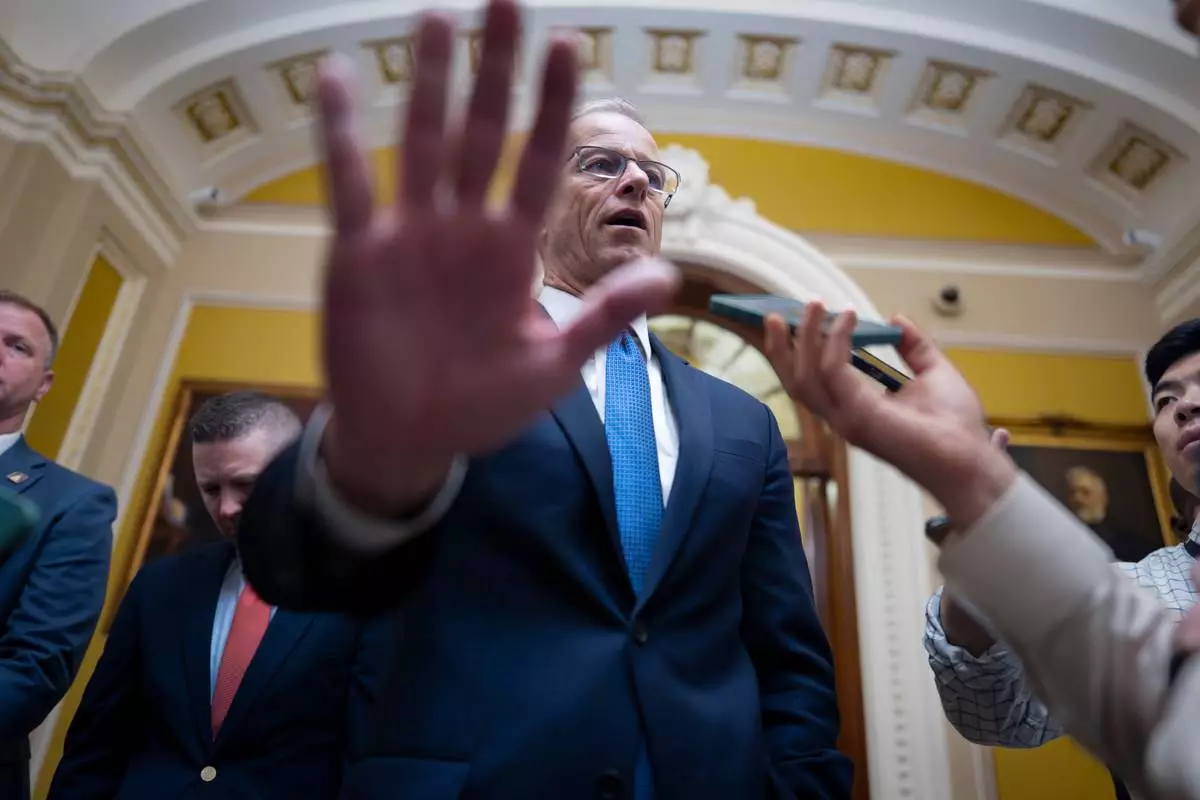
Senate Majority Leader John Thune, R-S.D., gestures as he speaks to reporters outside the chamber after passing a a measure by unanimous consent that would fund most of the Department of Homeland Security if the House agrees, at the Capitol in Washington, Thursday, April 2, 2026. (AP Photo/J. Scott Applewhite)
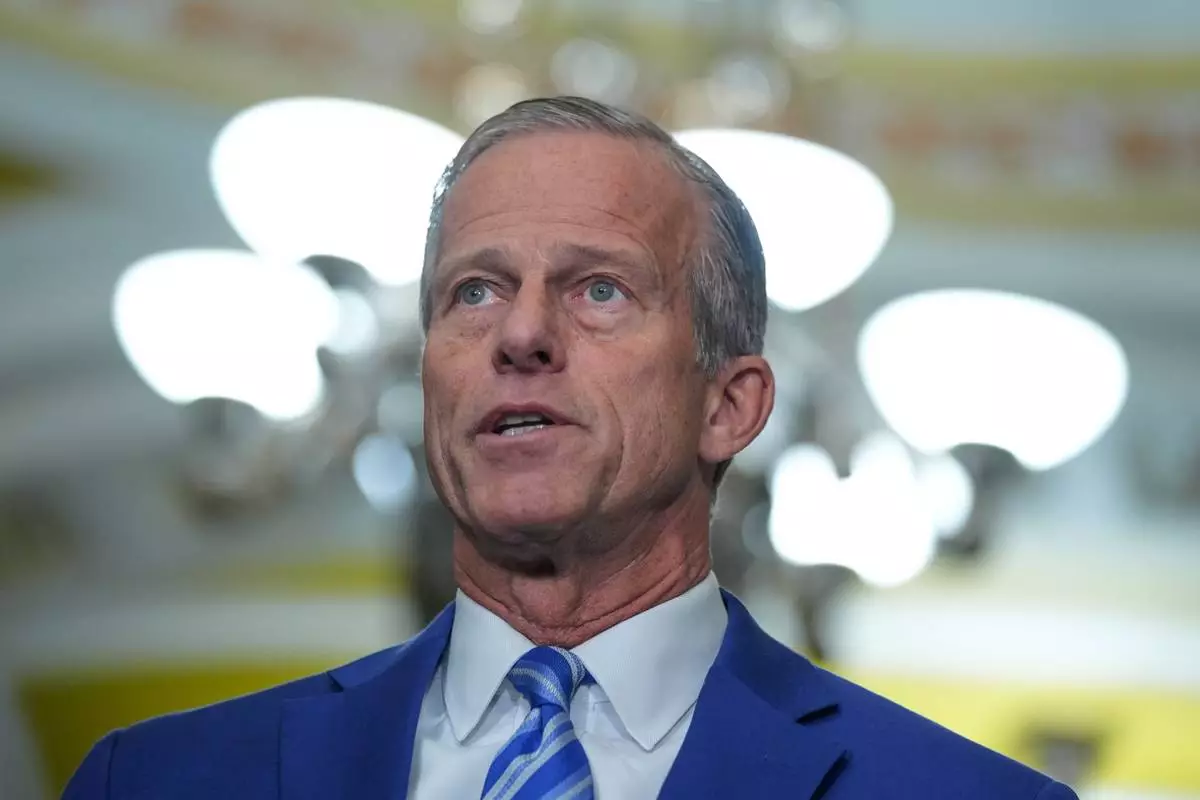
Sen. Majority Leader John Thune, R-S.D., speaks during a news conference after a policy luncheon on Capitol Hill,Tuesday, March 24, 2026, in Washington. (AP Photo/Mariam Zuhaib)
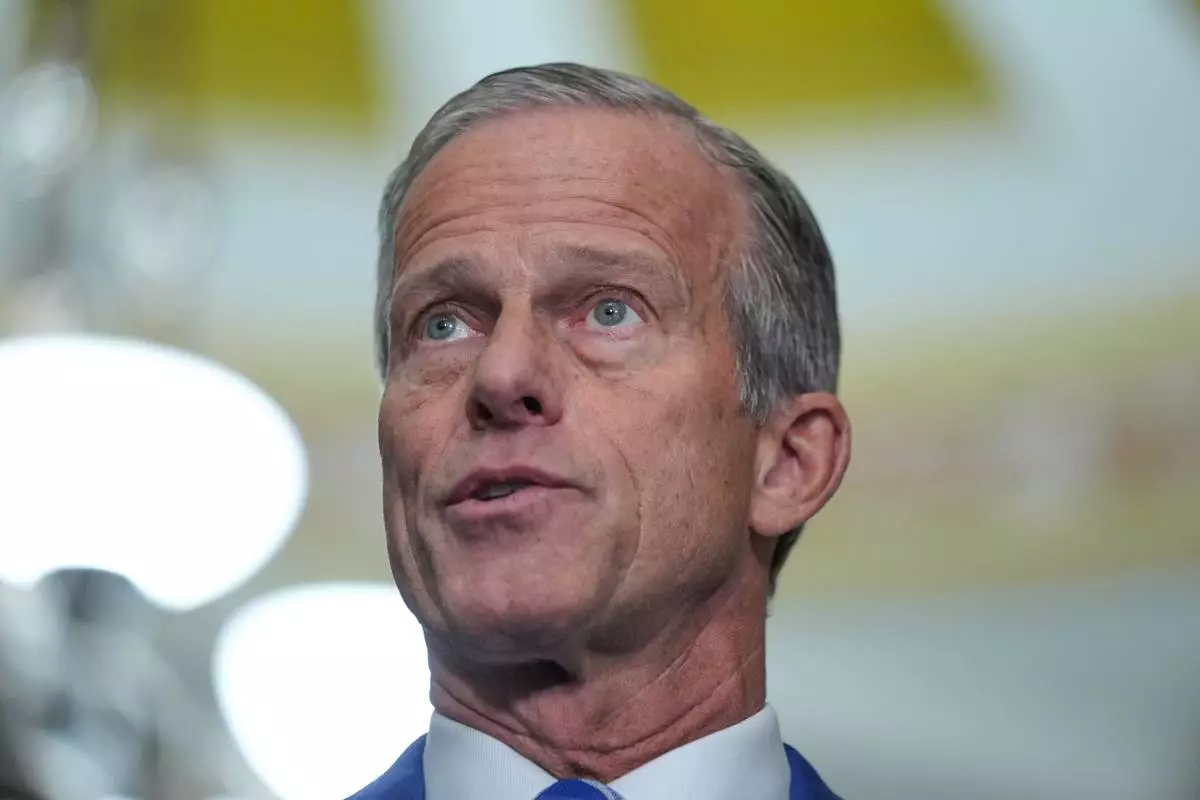
Sen. Majority Leader John Thune, R-S.D., speaks during a news conference after a policy luncheon on Capitol Hill, Tuesday, March 24, 2026, in Washington. (AP Photo/Mariam Zuhaib)
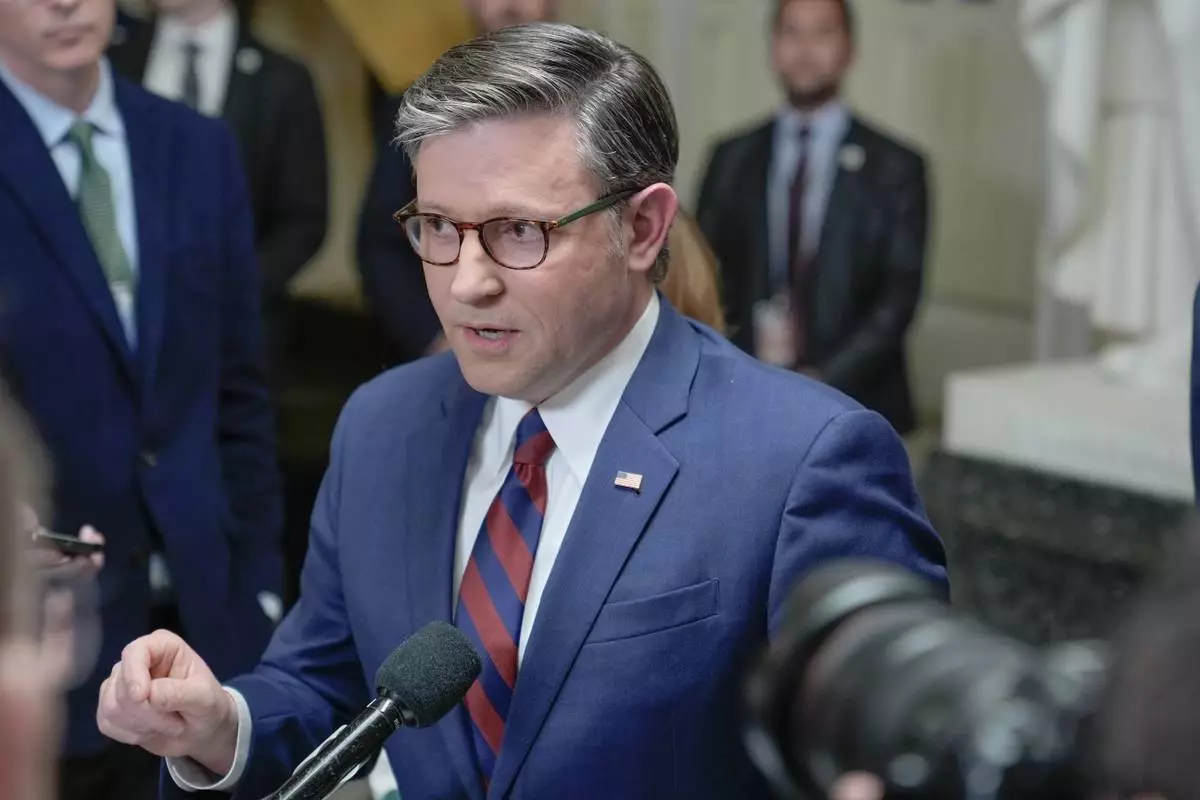
Speaker of the House Mike Johnson, R-La., speaks during a news conference on Capitol Hill, Friday, March 27, 2026, in Washington. (AP Photo/Mariam Zuhaib)