Skip to Content Facebook Feature Image

Fast visa-free access, duty free trade transform Horgos port in Xinjiang into gateway to West

China

China

China

Fast visa-free access, duty free trade transform Horgos port in Xinjiang into gateway to West

2025-09-25 20:09 Last Updated At:23:27

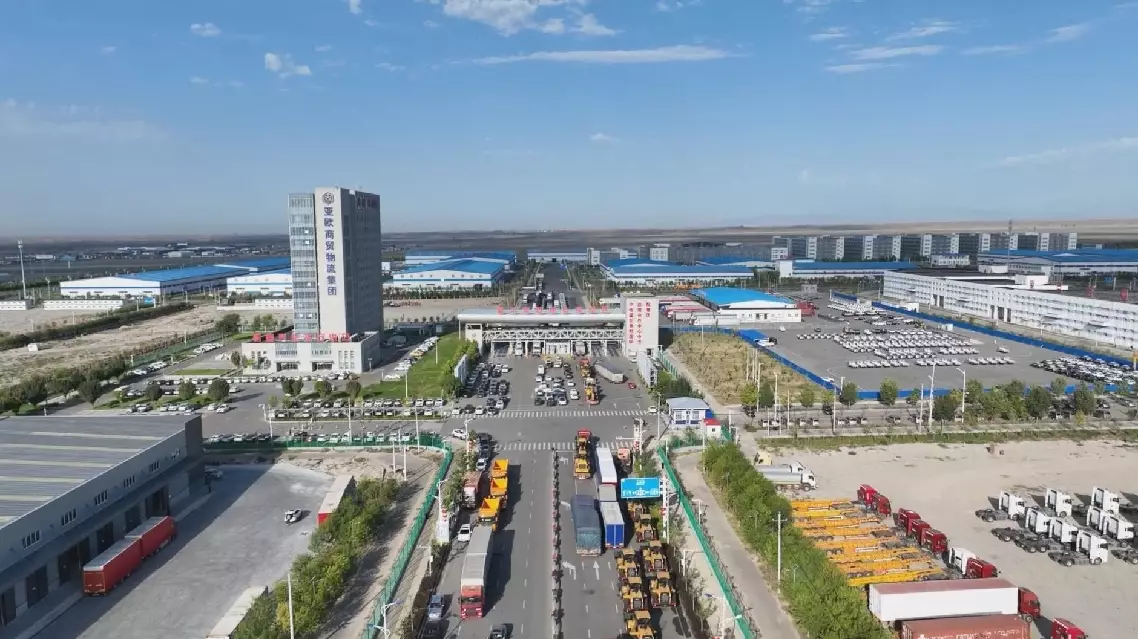
The Horgos International Border Cooperation Center, located on the China-Kazakhstan border in northwest China's Xinjiang Uygur Autonomous Region, is boosting trade efficiency and transforming the Horgos border port into a growing hub for commerce and tourism.

Designed for seamless cross-border movement, the center allows Chinese and Kazakh citizens to cross visa-free within minutes, with dedicated entry and exit lanes for each country.

Home to more than 5,000 shops and 1,200 merchants, the center offers over 1,000 products from more than 40 countries, making it the largest cross-border shopping zone in northwest China.

"These are traditional Princess hats from Kazakhstan, the feathers are from owls, symbolizing good luck. We designed our store in Kazakh style to attract more Kazakh customers," said a saleswoman at the center.

In recent years, an increasing number of customers from Kazakhstan have been visiting to shop and source products.

"The supply chain and logistics in our country are more advanced, so we have a price advantage. They come here to buy duty-free, high-end imported items," the saleswoman explained.

Products made in China - ranging from home appliances to furniture and clothing - are shipped from Horgos to Central Asia, West Asia, and Europe. So far this year, over six million people have passed through the cooperation center, marking a 66 percent increase from last year.

"Before, our goods were shipped from Guangzhou or Yiwu. It would take three days to reach Horgos, then another four or five days to clear customs. Now, after goods arrive in Horgos, we can ship directly to customers, saving three to four days," said Zhang Dongqing, business manager of the Xinjiang Sanshuntong International Trade.

Under the Belt and Road Initiative, this century-old border port is becoming China's gateway to the west and is also the country’s first cross-border economic cooperation zone with another country.
Fast visa-free access, duty free trade transform Horgos port in Xinjiang into gateway to West
Fast visa-free access, duty free trade transform Horgos port in Xinjiang into gateway to West

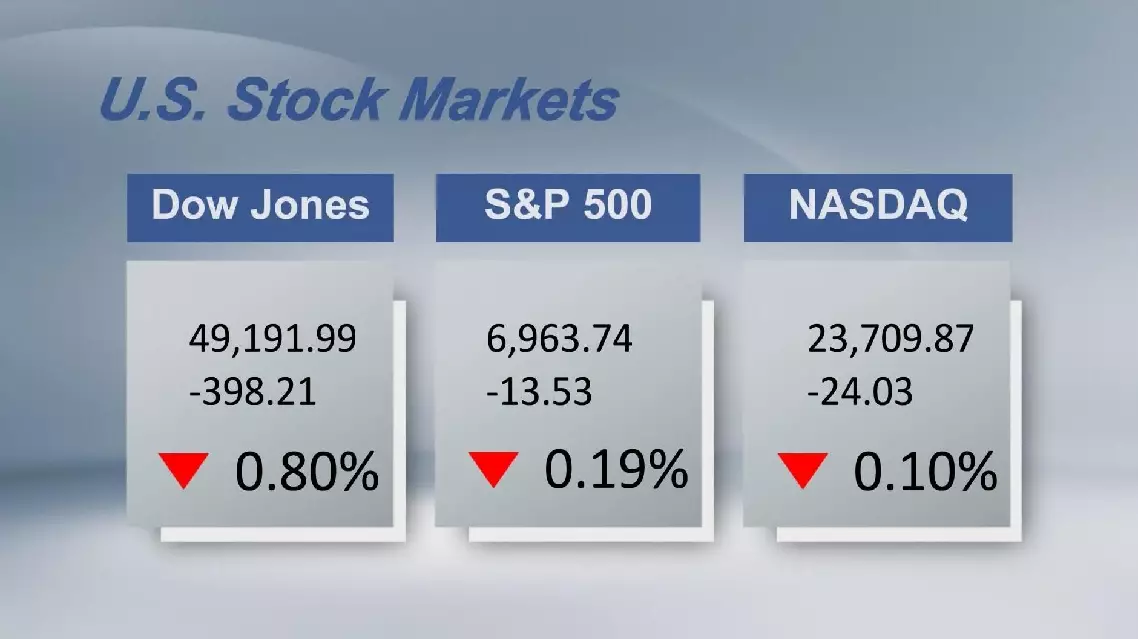
U.S. equities retreated on Tuesday as the fourth-quarter earnings season commenced with disappointing results from a major banking institution, overshadowed by ongoing policy debates and fresh inflation data.

The Dow Jones Industrial Average dropped 398.21 points, or 0.8 percent, to 49,191.99. The Standard and Poor's 500 fell 13.53 points, or 0.19 percent, to 6,963.74, and the Nasdaq Composite Index lost 24.03 points, or 0.1 percent, to 23,709.87.

The financial sector led the session's decline. JPMorgan Chase, the nation's largest lender, reported quarterly earnings that fell short of expectations, impacted by a 2.2 billion U.S. dollar hit related to its Apple Card partnership. Shares of JPMorgan plummeted 4.19 percent, while Goldman Sachs followed with a 1.2 percent decline.

The banking industry's performance faced further pressure from continued scrutiny of U.S. President Donald Trump's proposal to cap credit card interest rates at 10 percent. JPMorgan CFO Jeremy Barnum signaled potential industry resistance to the plan, which was put forward late last week.

Conversely, the energy and consumer staples sectors bucked the downward trend, gaining 1.53 percent and 1.08 percent, respectively. Seven of the 11 primary Standard and Poor's 500 sectors ended the day in positive territory despite the losses in the major indices.

On the economic front, the Bureau of Labor Statistics' consumer price index report showed that inflation in the United States remained steady in December 2025. The headline annual rate remained at 2.7 percent, while core inflation, which excludes volatile food and energy costs, rose 2.6 percent over the previous year. This core figure represents the lowest annual increase since early 2021.

According to the CME FedWatch Tool, the steady inflation and cooling labor market have led traders to expect the Federal Reserve to maintain interest rates at its upcoming meeting at the end of January, with the first of two projected rate cuts anticipated in June.

U.S. stocks close lower as earnings season kicks off

U.S. stocks close lower as earnings season kicks off

Recommended Articles