Once a relentless "sea of death," the Taklamakan Desert in northwest China's Xinjiang Uygur Autonomous Region is witnessing a remarkable transformation. After years of unyielding effort, a sand-control barrier stretching thousands of kilometers has been completed, turning the dream of a greener Taklamakan into reality.
The Taklamakan, located in the heart of the Tarim Basin, is China's largest desert and the world's second-largest shifting desert, spanning more than 330,000 square kilometers - nearly one-fifth of Xinjiang's total land area.
For generations, it posed a formidable challenge to survival and development. In recent decades, Xinjiang has mobilized joint efforts across multiple regions to build a protective green shield around the desert.
Qiemo County, situated on the desert's southern edge, has played a crucial role in the campaign. From restoring reed wetlands to drilling wells, planting trees, installing irrigation systems, and constructing infrastructure, local workers have labored tirelessly to curb desertification and restore vitality to the land.
Local resident Patigul Yasin recalled her childhood experience before the desert was turned into an oasis.
"When I was a child, sandstorms were frequent. And whenever one came, the sky would turn completely dark. Nearly 200 days a year, we had this kind of sandy weather," she noted.
Patigul Yasin became a sand-control worker at the Windbreak and Sand Control Workstation in 2005, driven by a curiosity for the vast desert. Yet, the work soon proved far from what she expected.
"We were taken to the wetlands where the desert meets the Qarqan River. Reeds naturally grew there, and a thin layer of ice had formed on top, with some parts thicker than others. We were each handed a sickle and sent down to cut the reeds. We laughed, thinking, 'what are we doing?' Because this wasn't at all what I had imagined sand control work to be," she said.
Though hardship once made her consider quitting, Patigul said her father's encouragement inspired her to persevere.
Over the past two decades, she has planted tens of thousands of trees and devoted herself to fighting desertification.
"Before the spring tree planting season, we would work on road construction, well drilling, and high-voltage power line installation. Female workers would lay irrigation pipes. After the tree planting, we would shift to routine summer forest maintenance. The annual precipitation here is only about 20 millimeters, while the evaporation rate exceeds 2,000 millimeters. All trees rely on groundwater for irrigation. Whether it's a forest planted 20 years ago or saplings planted this year, they all require long-term care," she said.
By the end of 2023, a sand-blocking barrier of 2,761 kilometers had encircled the Taklamakan, with the final 285 kilometers of the gap area successfully closed.
"I was overjoyed to hear that the final 285-kilometer gap in the barrier had been closed. Looking up at the vast blue sky, I saw the lush green spreading across the desert, and I felt that all these years of afforestation and desertification control efforts had finally borne fruit. I felt a deep sense of accomplishment. My biggest hope is that desert control will never stop, never stay still, but keep moving forward," she said.
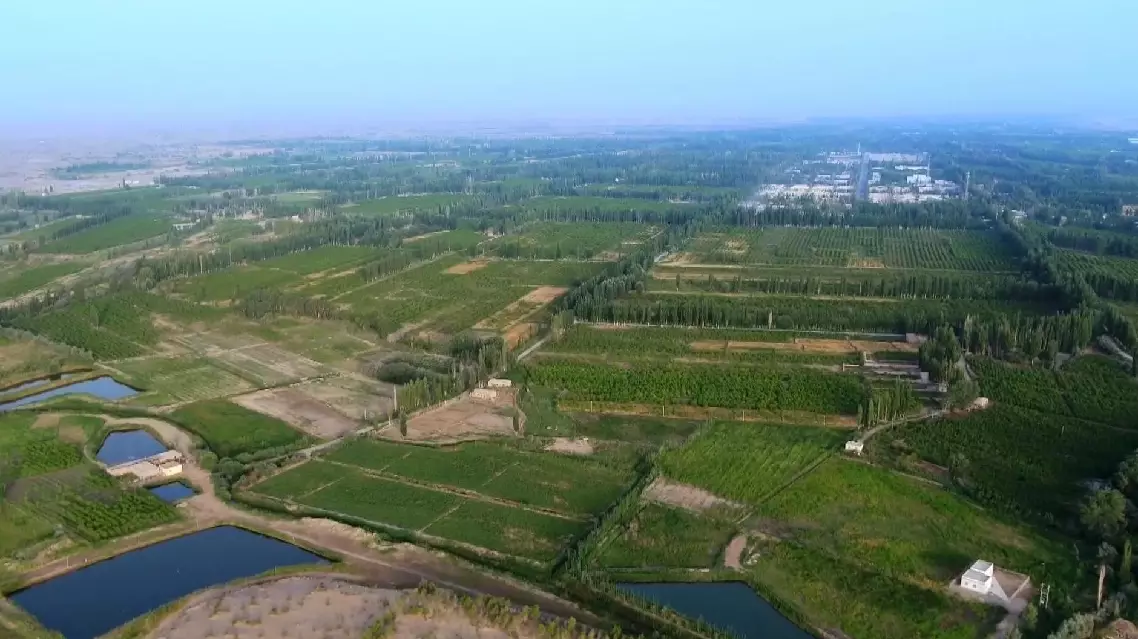
China's Taklamakan Desert transformed as sand-control barrier construction completed
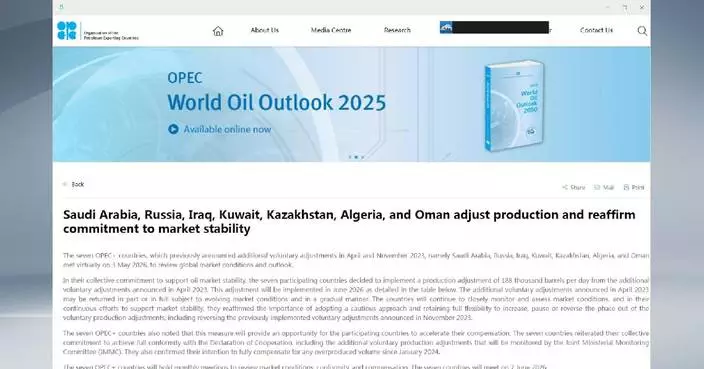
The United Arab Emirates' (UAE) exit from the Organization of the Petroleum Exporting Countries (OPEC) and the broader OPEC+ is unlikely to jolt oil markets in the short term, but sets the stage for lower prices once the Iran conflict ends and Gulf exports resume, experts said.
Effective Friday, the UAE formally withdrew from OPEC in a move poised to reshape global oil markets. The decision came amid heightened geopolitical tensions driven by the ongoing Iran conflict.
The UAE Energy Minister Suhail Al Mazrouei said the timing was chosen to cause the least market disruption. But analysts say the exit reflects the UAE's long-simmering frustrations over production quotas that no longer align with its capacity.
"It gives the UAE flexibility to move from a quota within OPEC of 3.3 million barrels a day to 5 million barrels a day in 2027. It won't radically change the pricing. It will make more energy available. So, it will take some of the price pressures off," said John Defterios, senior advisor for APCO Worldwide, a global advisory firm, and also senior fellow at the Center for Energy and Materials of the World Economic Forum.
While immediate market impact remains muted amid wartime volatility, experts anticipate meaningful shifts once regional stability returns.
"It has no impact right now, because obviously oil prices right now depend on the state of the war and whether exports can start freely through the Gulf and so on. But assume, once the war is over and a normal transit resumes, I would expect the UAE will move quickly to increase production and try to refill some of that storage that was drained. And that should mean, in general, lower prices for oil importers, for oil consumers. In the longer term, yes, I think also probably it means lower prices," said Robin Mills, CEO of Qamar Energy, a Dubai-based independent consultancy company.
The UAE's departure highlights structural tensions within OPEC+. As a low-cost producer with billions invested in upstream expansion, Abu Dhabi increasingly chafed against collective quotas.
However, other members, including Iraq and Kazakhstan, also sought higher production allowances.
"This pressure has been building up for some time. But Saudi Arabia was also in a difficult position. If it agreed to grant higher production levels to the UAE, then it would have to grant them to Iraq as well. Kazakhstan wanted more [allowance as well]. Everybody wants special treatment," said Mills.
Strategically, the move aligns with the UAE's broader vision to diversify its economy.
"They made this announcement ahead of a very important forum, Make It In the Emirates, which displays what the UAE is doing in terms of diversification outside of oil and gas. So, they want that revenue from oil and gas -- the extra 50 billion dollars a year to go into greater diversification. It's advanced manufacturing, it's artificial intelligence, it's the next wave of financial services, and it is trade," said Defterios.
The exit also signals a broader recalibration of legacy energy institutions in a world confronting new climate imperatives, geopolitical fragmentation, and energy transition pressures.
"I do think it shows definitely a world in which there's a new energy reality, there's a new climate reality, there's a new geopolitical reality. And these legacy institutions have to adapt. And if they don't, then of course, their members will either leave or at least won't take them seriously," said Mills.
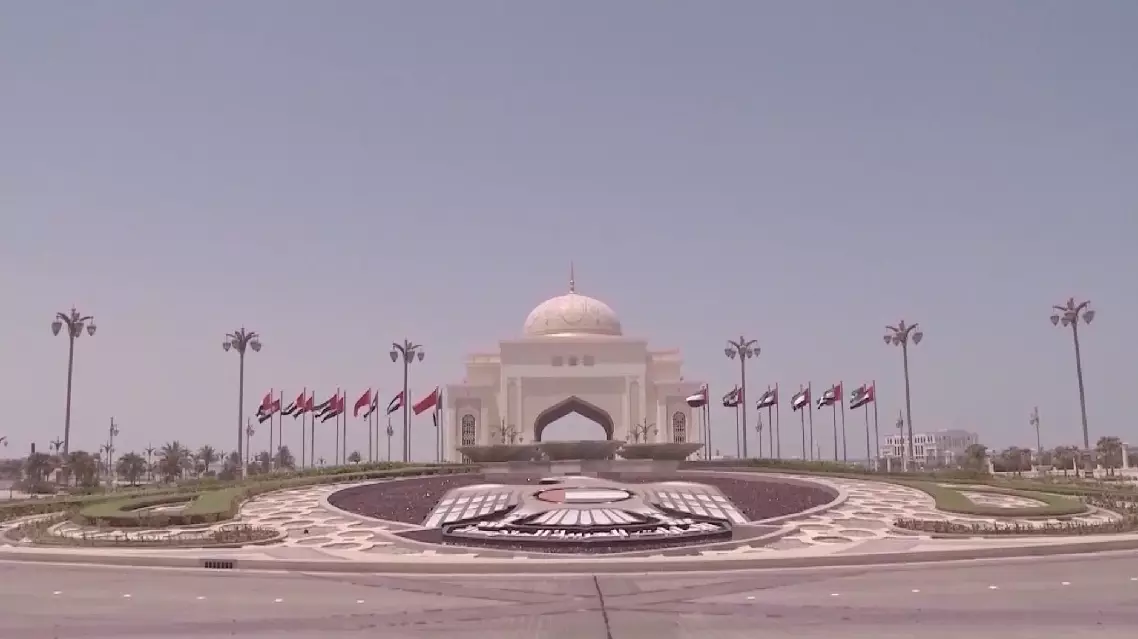
UAE's OPEC exit long expected, may ease oil prices after Iran war ends: experts