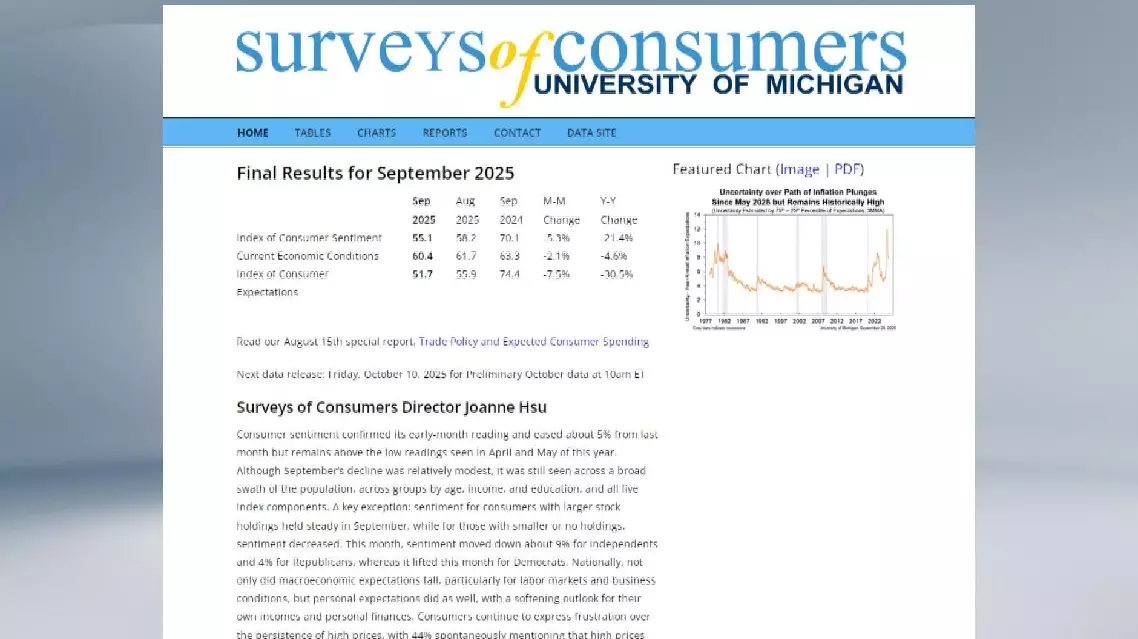
The U.S. Consumer Sentiment Index released Friday by the University of Michigan Surveys of Consumers fell to 55.1 in the September 2025 survey, down from 58.2 in August and below last September's 70.3.
The Current Economic Conditions Index fell to 60.4, down from 61.7 in August and below last September's 63.8. The Index of Consumer Expectations fell to 51.7, down from 55.9 in August and below last September's 74.5.
Consumers continue to express frustration over the persistence of high prices, as 44 percent of consumers mentioned that high prices are eroding their personal finances, the highest reading since November 2024, the survey showed.
Tariffs are still highly relevant to consumers. About 60 percent of consumers provided comments about tariffs, compared with 65 percent in May and 28 percent in January. Nearly 70 percent of consumers expect inflation to exceed any income gains in the year ahead, up from less than 60 percent in September 2024.
About 65 percent of consumers expect unemployment to rise in the year ahead, up from 57 percent in July and 35 percent a year ago. Consumers' expected probability of personal job loss ticked up in September to its highest reading since March, suggesting that consumers are indeed concerned that they may be personally affected by any negative developments in labor markets.
The U.S. Federal Reserve's preferred inflation gauge rose in August from a year earlier, while consumer spending increased slightly more than expected, the Bureau of Economic Analysis (BEA) of the Commerce Department said Friday.
A BEA report suggested that Americans ramped up their spending in August. Personal Consumption Expenditures (PCE) price index grew 2.7 percent year on year in August, higher than a 2.6 percent growth in July.
However, their costs of living were on the rise as food and other goods became even more expensive last month and service prices remained stubbornly high. Core PCE price index, excluding volatile food and energy prices, grew 2.9 percent year on year in August, equal to the growth in the prior month. This so-called core inflation index is still higher than the 2 percent target set by the Federal Reserve.
The BEA said that PCE increased 0.6 percent in August, following an unrevised 0.5 percent advance in July. Personal income rose 0.4 percent, with a similar gain in July.
U.S. consumer sentiment falls in September on inflation, unemployment worries