China's recently released standard for brain-computer interface (BCI )medical devices will help the nation gain a competitive edge in global BCI technology and international standardization efforts, industry insiders have said.
The National Medical Products Administration released China's first standard for BCI medical devices last Monday, paving the way for high-quality growth of the industry.
The standard establishes a systematic terminology framework for medical equipment based on BCI technology. It defines core terms and concepts related to fundamental principles, paradigm types, signal forms, signal processing and applications.
The release and implementation of this standard will help address fundamental challenges hindering industry development, such as inconsistent terminology and non-standardized concepts, the Administration said.
The standard provides an authoritative and unified language system as well as key technical references for the research, development, production and scientific regulation of BCI medical devices and will play a significant role in regulating industry practices and promoting its healthy growth, it added.
"For this basic concept, we have conducted repeated discussions and finally determined that this is a medical device that can decode and interpret the neural signals generated by the central nervous system in real time, and help patients achieve real-time, two-way information interaction or closed-loop feedback with external auxiliary or diagnostic equipment, thereby improving, repairing or replacing some of their physiological functions," said Hu Sheng, a researcher from the Shanghai Testing and Inspection Institute for Medical Devices, who drafted the standard.
The administration said that it will continue to fully support major innovations in the sector, accelerate formulating related standards and establish a comprehensive standard system covering the entire product life cycle to position China as a global leader in this cutting-edge field.
"At present, international standardization organizations for medical devices have yet to formulate relevant standards. Even developed countries such as Europe and the United States and international organizations are still working on relevant standards. We are currently applying for the foreign language version of the national standard for brain-computer interface medical devices to expand the influence of China's standard," said Zheng Jia, deputy head of division at the National Institutes for Food and Drug Control, who reviewed the standard.
Data predicts that China's BCI market will exceed 6 billion yuan (about 840 million U.S. dollars ) by 2028 with a compound annual growth rate of 17.7 percent from 2024 to 2028. The global BCI medical application market will reach 40 billion U.S. dollars by 2030 and 145 billion U.S. dollars by 2040.
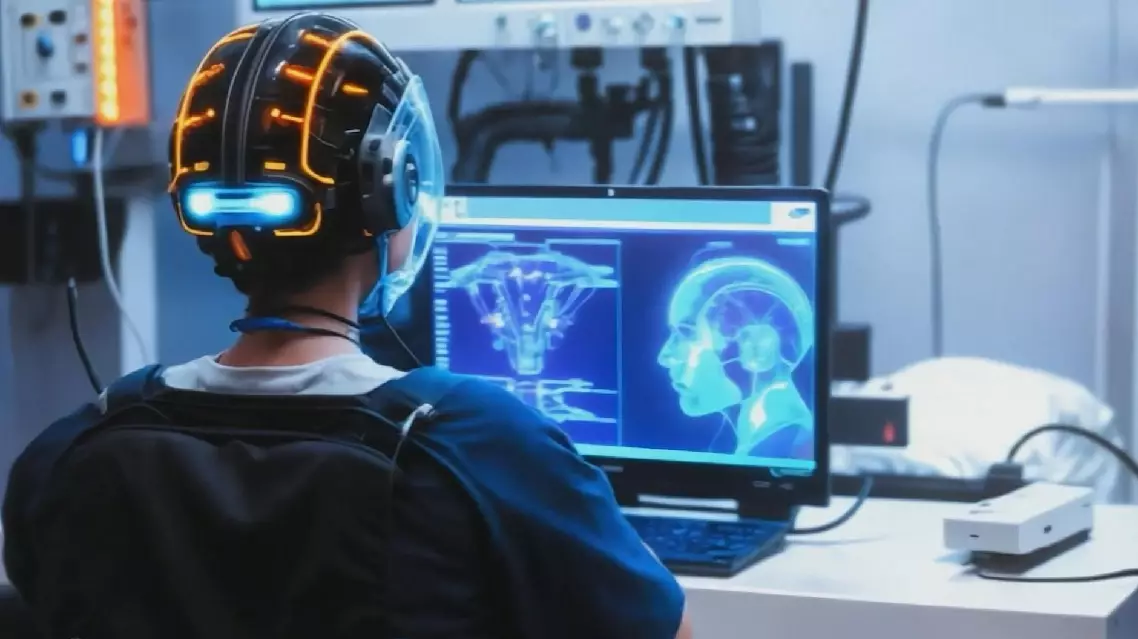
China releases 1st industry standard for brain-computer interface medical devices