NEW ORLEANS (AP) — Louisiana's Republican governor asked for National Guard deployments to New Orleans and other cities, saying Monday that his state needs help fighting crime and praising President Donald Trump's decision to send troops to Washington and Memphis, Tennessee.
Gov. Jeff Landry, a Trump ally, asked for up to 1,000 troops through fiscal year 2026 in a letter sent to Defense Secretary Pete Hegseth. It comes weeks after Trump suggested New Orleans could be one of his next targets for deploying the National Guard to fight crime.
Trump also sent troops in recent months to Los Angeles. His administration has announced plans for similar actions in other major cities, including Chicago and Portland, Oregon.
Landry said his request “builds on the proven success” of deployments to Washington and Memphis. While Trump has ordered troops into Memphis with the backing of Tennessee's Republican governor, as of Monday night there had yet to be a large-scale operation in the city.
“Federal partnerships in our toughest cities have worked, and now, with the support of President Trump and Secretary Hegseth, we are taking the next step by bringing in the National Guard,” Landry said.
Leaders in Democratic-controlled states have criticized the planned deployments. In Oregon, elected officials have said troops in Portland are not needed.
In his request, Landry said there has been “elevated violent crime rates” in Shreveport, Baton Rouge and New Orleans as well as shortages in local law enforcement. He said the state’s vulnerability to natural disasters made the issue more challenging and that extra support would be especially helpful for major events, including Mardi Gras and college football bowl games.
But crime in some of the state's biggest cities has actually decreased recently, with New Orleans, seeing a particularly steep drop in 2025 that has put it on pace to have its lowest number of killings in more than five decades.
Preliminary data from the city police department shows that in 2025 there have been 84 homicides as of Sept 27. That count includes the 14 revelers who were killed on New Year’s Day during a truck attack on Bourbon Street. Last year, there were 124 homicides. In 2023 there were 193.
In Baton Rouge, the state capital, has also seen a decrease in homicides compared to last year, according to police department figures. Data also shows, however, that robberies and assaults are on pace to surpass last year’s numbers.
Associated Press writer Sara Cline contributed to this report.
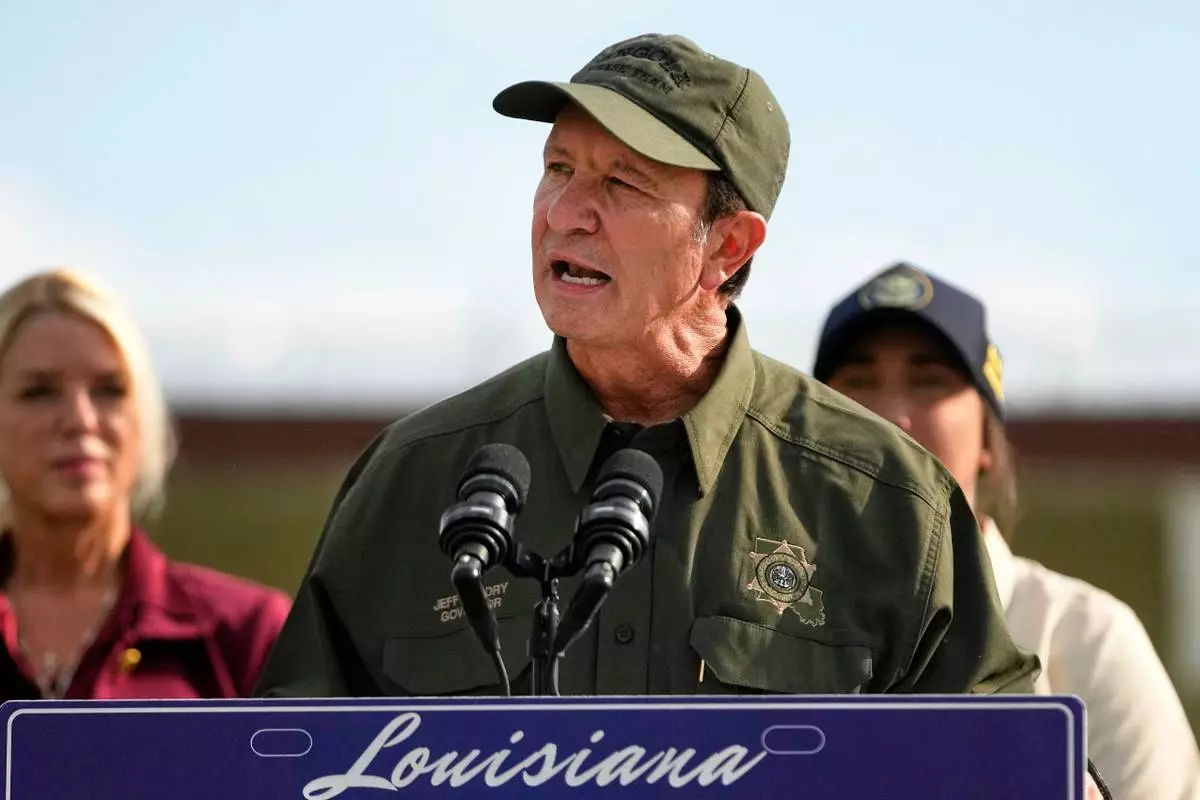
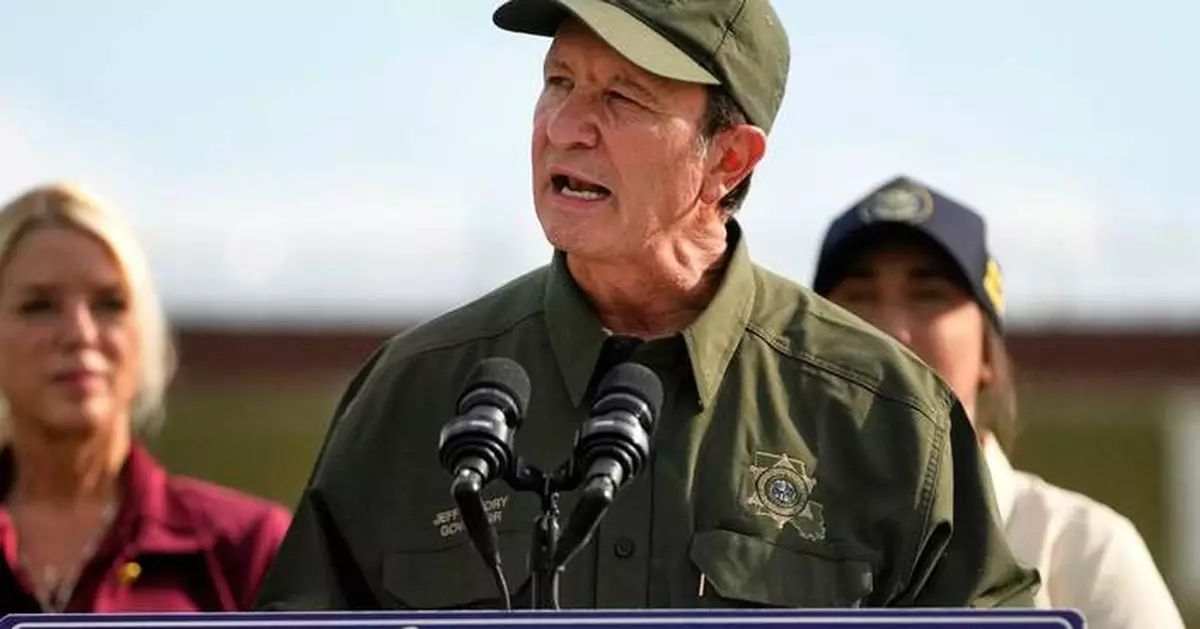
FILE - Louisiana Gov. Jeff Landry speaks to reporters outside "Camp 57," a facility to house immigration detainees at the Louisiana State Penitentiary in Angola, La., Wednesday, Sept. 3, 2025. (AP Photo/Gerald Herbert, File)
ANAHEIM, Calif. (AP) — Travis d'Arnaud hit a three-run homer, Walbert Ureña threw six innings of two-hit ball, and the Los Angeles Angels defeated the Chicago White Sox 8-2 on Wednesday.
Los Angeles won a series for the first time since April 10-12 at Cincinnati. The Angels are 2-7-2 in series this season.
D'Arnaud's 396-foot shot off Noah Schultz (2-2), the backup catcher's first homer of the season, kicked off a five-run second inning for the Halos. After Bryce Teodosio doubled on a ball that got past right fielder Jarred Kelenic, Zach Neto hit a stand-up RBI triple.
Mike Trout brought one more across with an infield popup that second baseman Chase Meidroth lost in the afternoon sun for a single.
Jorge Soler and Jo Adell were hit by back-to-back pitches from reliever Osvaldo Bido with the bases loaded to bring in two runs in the fourth.
In the seventh, Angels reliever Drew Pomeranz hit Sam Antonacci with a pitch with the bases loaded to force in the second White Sox run. It was the first game in at least the last 70 seasons in which three batters were hit by pitches with the bases full, according to the Elias Sports Bureau.
Ureña (1-3) allowed one run, struck out five and walked three in his second quality start of the season. Brent Suter, Pomeranz and Chase Silseth completed a four-hitter.
Meidroth had two hits for Chicago. Standout rookie Munetaka Murakami, who is tied for the major league lead with 14 home runs, struck out four times for the second time this season.
Schultz allowed seven hits and seven runs in 3 2/3 innings. He had allowed a total of six earned runs in four previous starts this year.
Chicago returns home to face Seattle starting Friday, when RHP Sean Burke (2-2, 2.72) is scheduled to start opposite Mariners RHP Emerson Hancock (2-1, 2.59).
Los Angeles begins a series at Toronto on Friday with LHP Reid Detmers (1-2, 4.28) facing Blue Jays RHP Dylan Cease (2-1, 3.05).
AP MLB: https://apnews.com/hub/mlb
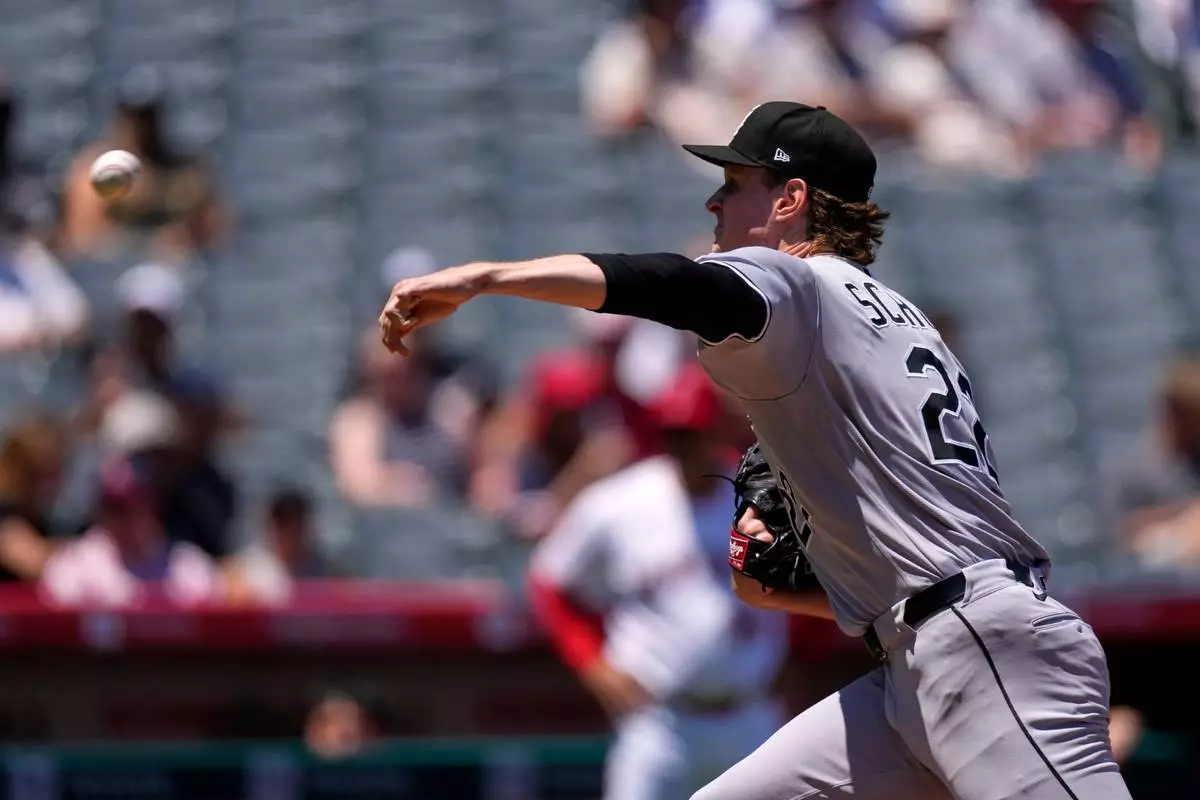
Chicago White Sox pitcher Noah Schultz throws to the plate during the first inning of a baseball game against the Los Angeles Angels, Wednesday, May 6, 2026, in Anaheim, Calif. (AP Photo/Mark J. Terrill)
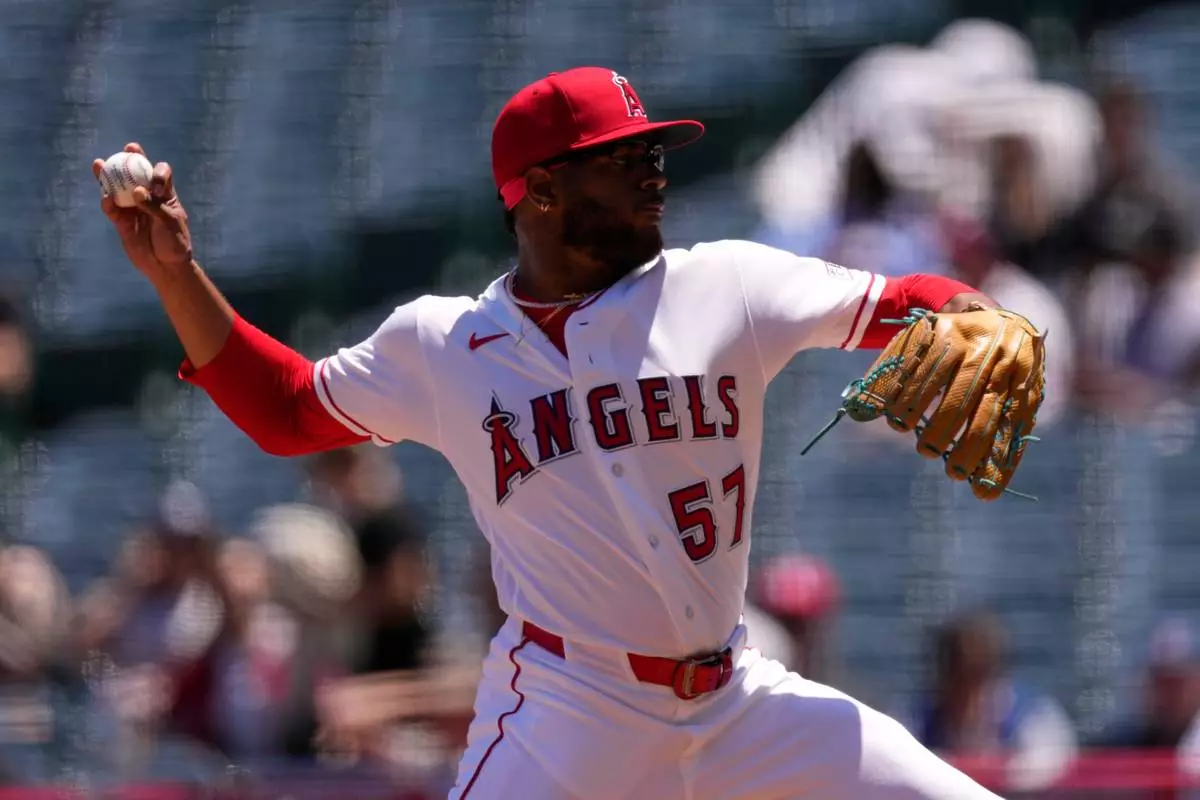
Los Angeles Angels pitcher Walbert Ureña throws to the plate during the first inning of a baseball game against the Chicago White Sox, Wednesday, May 6, 2026, in Anaheim, Calif. (AP Photo/Mark J. Terrill)
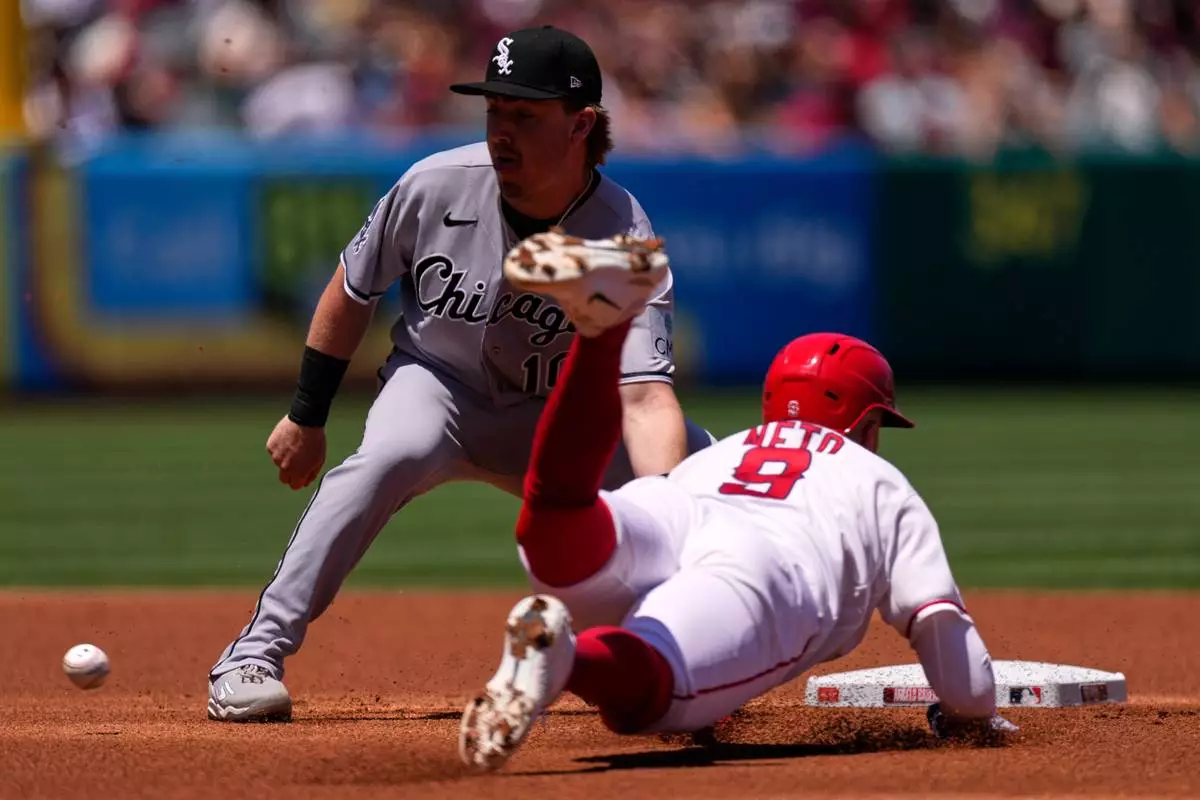
Los Angeles Angels' Zach Neto, right, tries to steal second as Chicago White Sox second baseman Chase Meidroth waits for the ball before tagging him out during the first inning of a baseball game Wednesday, May 6, 2026, in Anaheim, Calif. (AP Photo/Mark J. Terrill)
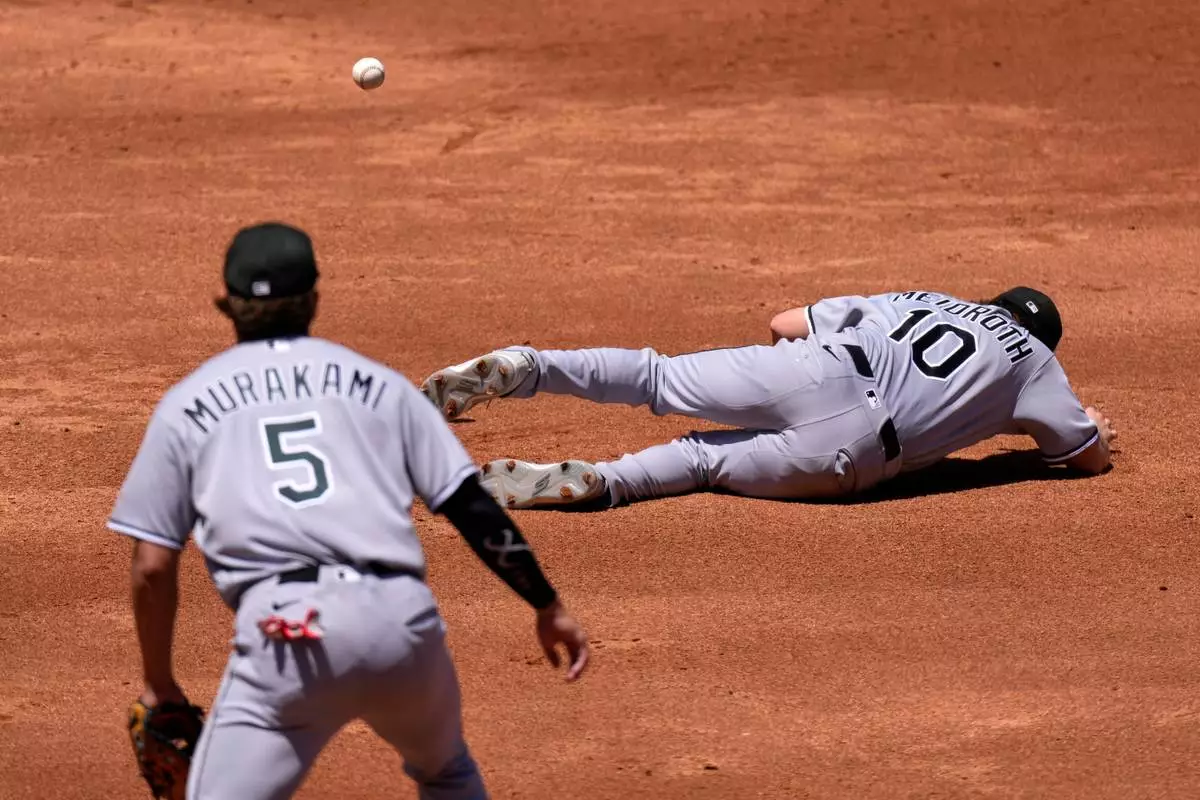
Chicago White Sox second baseman Chase Meidroth, right, falls while trying to catch a pop fly hit by Los Angeles Angels' Mike Trout as second baseman Vaughn Grissom watches during the second inning of a baseball game Wednesday, May 6, 2026, in Anaheim, Calif. (AP Photo/Mark J. Terrill)
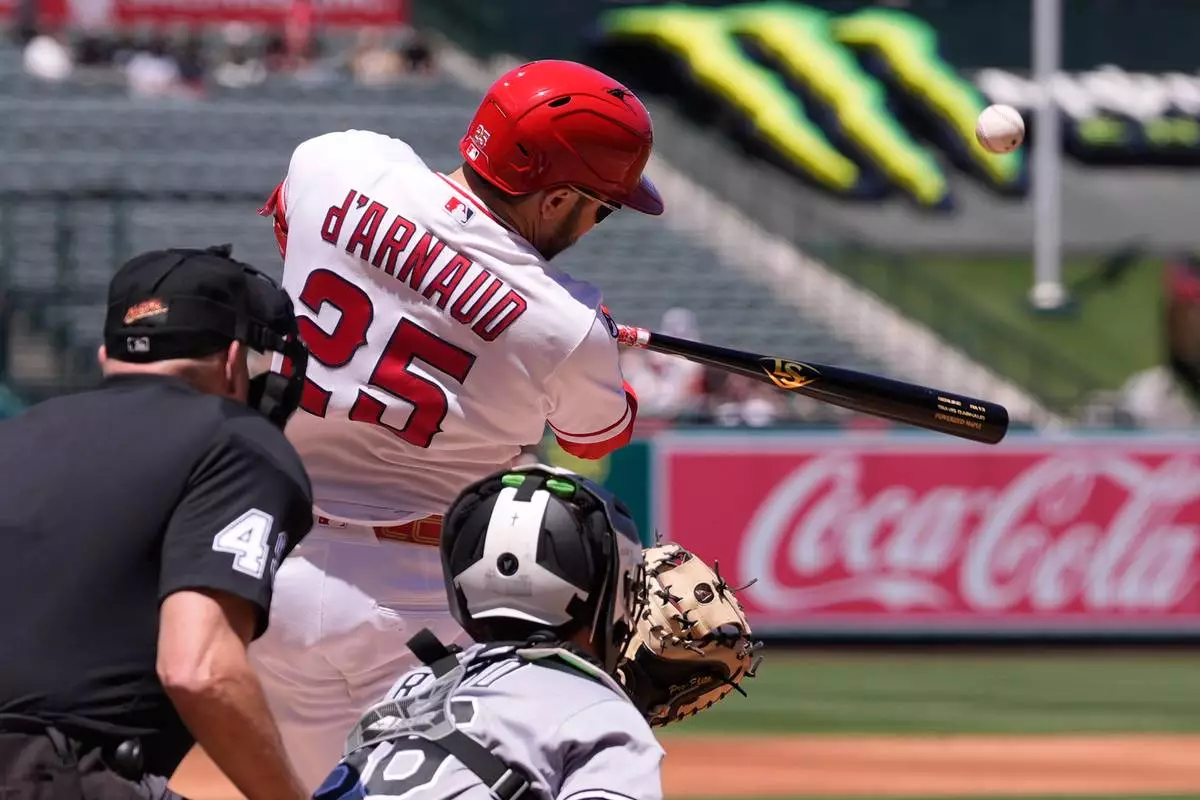
Los Angeles Angels' Travis D'Arnaud, center, hits a three-run home run as Chicago White Sox catcher Drew Romo, right, and home plate umpire Andy Fletcher watch during the second inning of a baseball game Wednesday, May 6, 2026, in Anaheim, Calif. (AP Photo/Mark J. Terrill)