China launched a national initiative to promote science education through cinema on Tuesday.
The launch event, held at the China Science and Technology Museum in Beijing, featured a series of immersive products and interactive activities aimed at deepening the integration of film and science education.
At the heart of the initiative is "Blue Planet Outside the Window", an 8K documentary chronicling the Shenzhou-13 manned spaceflight mission that depicts the first-ever six-month stay by a Chinese crew aboard the country's space station and a historic spacewalk by a Chinese female astronaut.
As part of the rollout, China Media Group (CMG) will release dome and giant screen versions of the film "Space Travel and Wondrous Space Station", providing planetariums and science museums nationwide with high-quality educational content. The documentary is also set for global release in over ten languages, positioning it as a flagship example of how cinematic storytelling can empower science education.
The twin formats are designed to offer immersive, visually striking experiences that blend narrative depth with scientific exploration. Produced by CMG, "Blue Planet Outside the Window" reflects China's growing commitment to combining technological innovation with public science literacy.
"By leveraging the creative philosophy and innovative spirit of CMG's film and television creation center in creating major production, we adopted a storytelling approach which resonates emotionally with the audience. The film effectively conveys aerospace science knowledge and the spirit of space exploration to every viewer. With outstanding box office performance and positive audience reception, it stands as a vivid example of the successful integration of film and science education," said Liang Hong, director of the Film, Television, and Documentary Center at CMG.
"This initiative represents an innovative practice that combines film, a widely appreciated art form, with the national strategy for science education. The goal is to use vivid storytelling and striking visual effects of films to create emotional resonance, allowing audience to receive science education while enjoying art. At the same time, it promotes mutual empowerment between film and science education," said Yang Yufei, deputy director of the film digital program management center of Publicity Department of the Communist Party of China Central Committee.
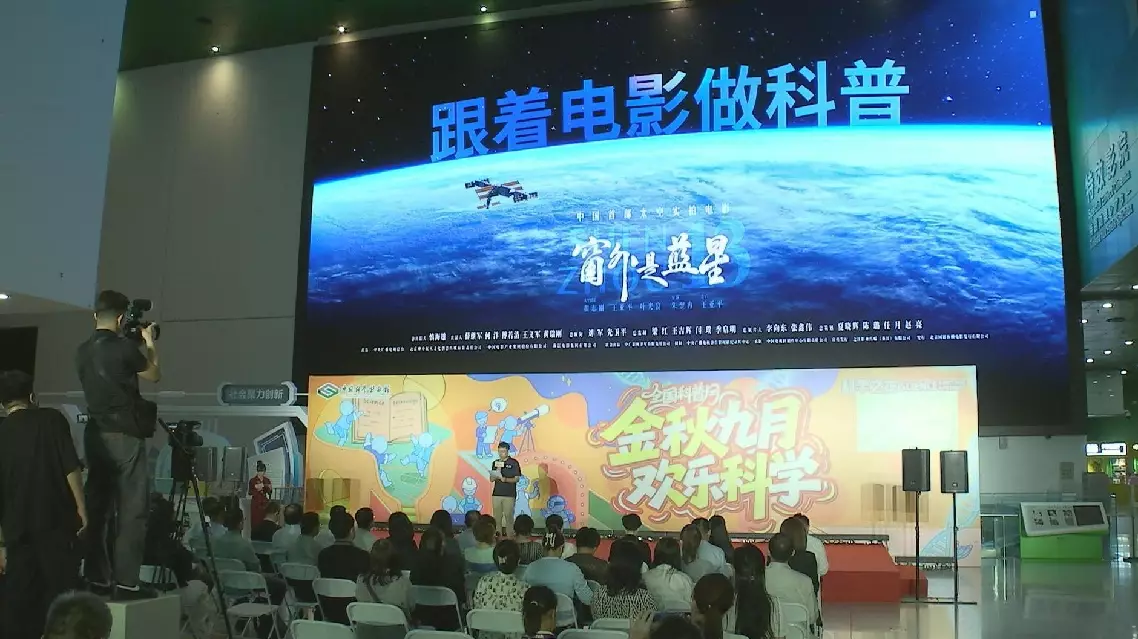
National initiative launched to promote science education through cinema