The 76th International Astronautical Congress (IAC 2025), which opened in Sydney on Monday, is showcasing the latest breakthroughs in aerospace technology and innovation, highlighting global collaboration and cutting-edge research across the space sector.
The five-day event, organized by the International Astronautical Federation (IAF), has drawn thousands of space professionals, decision-makers, academics, industry leaders, astronauts, and students from around the world.
According to IAF's President Clay Mowry, IAC 2025 features more than 40 panel sessions on topics, around 200 technical sessions, and around 200 booths in the exhibition hall.
At the China Space Booth, visitors can find the model of the Chang'e-6 lunar probe, the Macao scientific satellite, and the Chang'e-7 and Chang'e-8 missions, and much more.
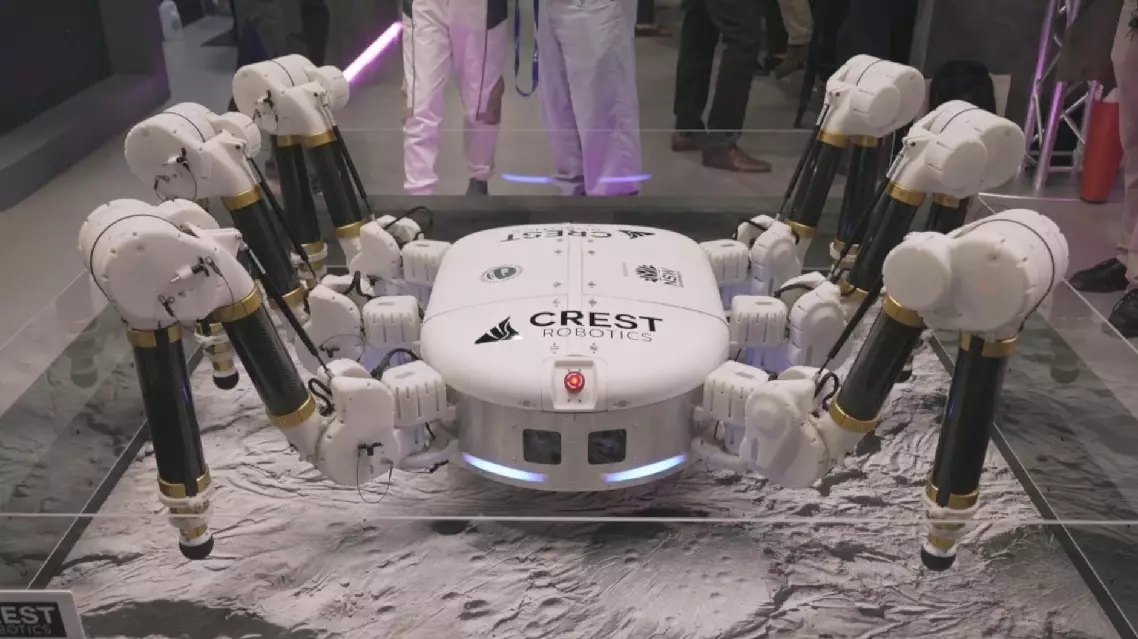
The global space community is exploring how to build sustainable lunar bases, with innovative technologies like the space spider bot, a six-legged, autonomous robot developed by Sydney-based Crest Robotics in partnership with Earthbuilt Technology, offering a revolutionary approach to construction on the Moon.
"The most important thing that you should know about this robot is that it was designed for construction here on Earth. Because it uses materials which are already on site or nearby, it makes it perfect for building on other rocky planets, too," said Jan Golembiewski, CEO of Earthbuilt Technology.
CAS Space, a Chinese commercial space launch provider, has brought its space tourism vehicles to the event, showing visitors the possibility of traveling to the edge of space in the near future.
"As the leading commercial operator in China, we are proudly announcing that we'll provide commercial service of our space tourism vehicles by 2028. The cabin will hold seven people.The entire flight will be 10 minutes. But for the crew, they will experience no less than three minutes of weightlessness. So basically, during the three minutes they will be floating around," said Yang Sihan, head of International Business at CAS Space.
As to the ticket, Yang said that they will try to make it as affordable as they can because they are aiming for a global audience. "We hope everyone, if they can get the chance, can go to the outer space. But safety first, reliability first," he said.
Space enthusiasts are also given the chance to experience a launch simulation at the exhibition, thanks to the innovative haptic subwoofer vest.
"This is a haptic subwoofer vest. You've got little tiny speakers that make it so you can feel a rocket launch. We had some astronauts come in here today and they tell me it felt exactly like a launch except their feet stayed on the ground," said Amy Featherston, general manager of Sales and Marketing at Southern Launch, an Australian aerospace company and launch service provider.
"These vets are a great example of emerging technologies. I grew up in the space shuttle era and we haven't done as much since so I'm incredibly excited to see the future things. It's going to change how we live here on Earth and I'm so excited for that to happen," said Featherston.
76th Int'l Astronautical Congress spotlights latest aerospace breakthroughs