ORLANDO, Fla. (AP) — After Paola Freites was allowed into the U.S. in 2024, she and her husband settled in Florida, drawn by warm temperatures, a large Latino community and the ease of finding employment and housing.
They were among hundreds of thousands of immigrants who came to the state in recent years as immigration surged under former President Joe Biden.
Click to Gallery
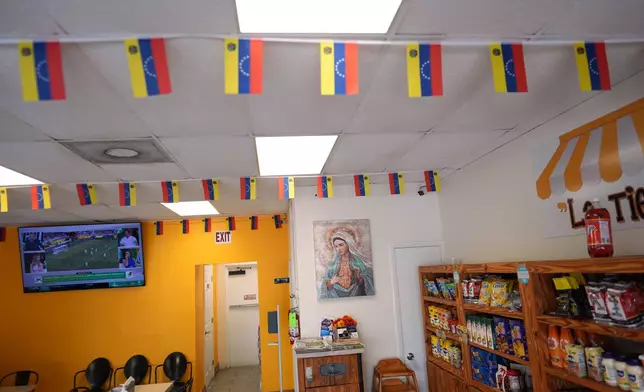
Venezuelan flags hang inside TeqaBite, a restaurant co-owned by two U.S. citizens born in Venezuela, in Kissimmee, Fla., Thursday, Aug. 21, 2025. (AP Photo/Rebecca Blackwell)

Mexican asylum-seeker Blanca's three young children play inside the family's rented duplex in Apopka, Fla., Wednesday, Aug. 20, 2025. (AP Photo/Rebecca Blackwell)
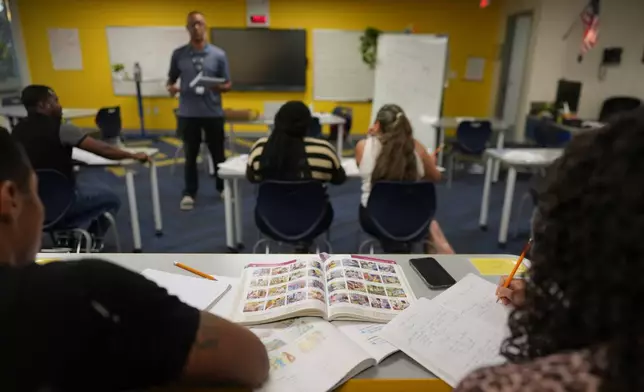
Immigrants trying to learn the English language take notes as Eliezer Guerrero of Catholic Charities of Central Florida teaches an ESOL class, Tuesday, Aug. 19, 2025, in Orlando, Fla. (AP Photo/Rebecca Blackwell)
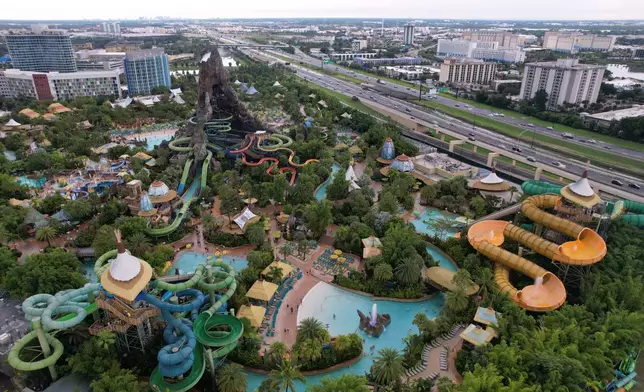
Hotels and highways are seen around Universal Volcano Bay water park, Friday, Aug. 22, 2025, in Orlando, Fla., which saw an influx of migrants in recent years drawn by warm temperatures, a vibrant migrant community, and plentiful job opportunities. (AP Photo/Rebecca Blackwell)
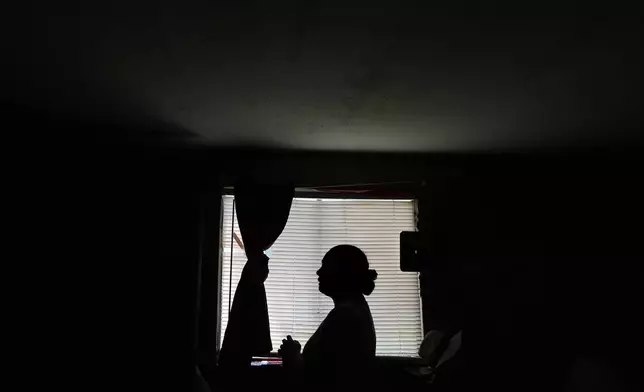
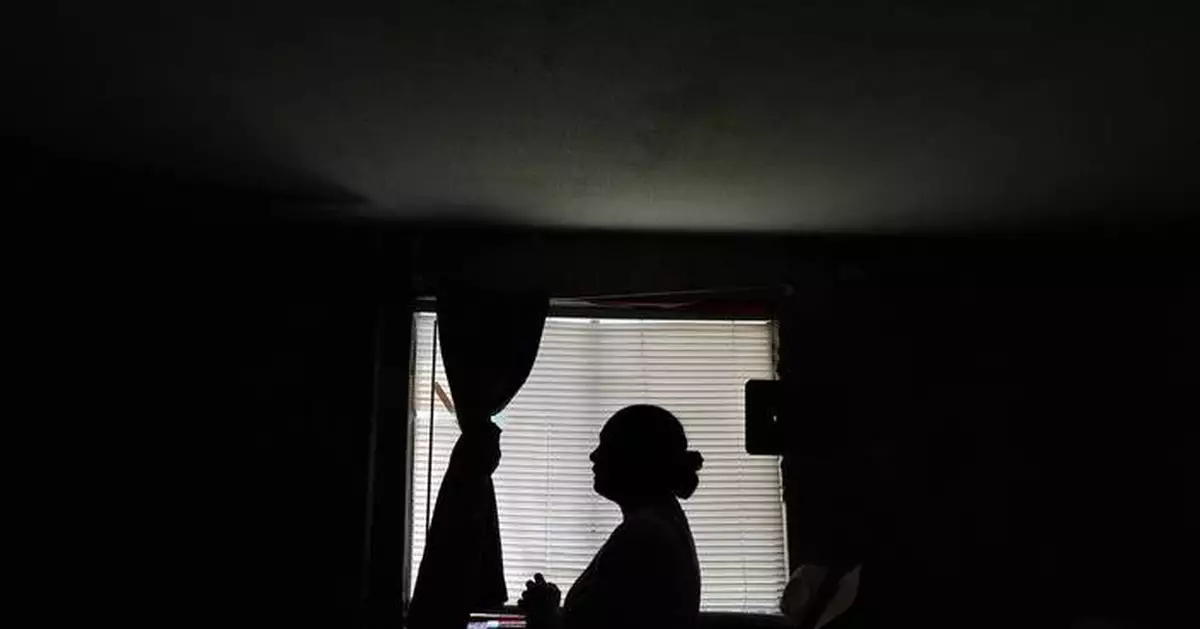
Paola Freites, who asked to be identified by her middle name and second last name to protect her family's safety, stands inside the two-bedroom mobile home where she lives with her husband and three children after fleeing persecution in their native Colombia, Thursday, Aug. 21, 2025, in Apopka, Fla. (AP Photo/Rebecca Blackwell)
No state has been more affected by the increase in immigrants than Florida, according to internal government data obtained by The Associated Press. Florida had 1,271 migrants who arrived from May 2023 to January 2025 for every 100,000 residents, followed by New York, California, Texas and Illinois.
The data from U.S. Customs and Border Protection, which must verify addresses of everyone who is allowed to enter the U.S. and stay to pursue an immigration case, shows Miami was the most affected metropolitan area in the U.S. with 2,191 new migrants for every 100,000 residents. Orlando ranked 10th with 1,499 new migrants for every 100,000 residents. Tampa ranked 17th, and Fort Myers was 30th.
Freites and her husband, who had fled violence in Colombia with their three children, moved to Apopka, an agricultural city near Orlando, where immigrants could find cheaper housing than in Miami as they spread throughout a community that already had large populations of Mexicans and Puerto Ricans. Her sister-in-law owned a mobile home that they could rent.
“She advised us to come to Orlando because Spanish is spoken here and the weather is good,” Freites, 37, said. “We felt good and welcomed.”
The CBP data captured the stated U.S. destinations for 2.5 million migrants who crossed the border, including those like Freites who used the now-defunct CBP One app to make an appointment for entry. The data covered the period when the Biden administration ended COVID-19 restrictions on asylum to when President Donald Trump began his second term and declared a national emergency at the border.
CBP released millions of people in the U.S. at the border during Biden’s presidency to pursue cases in U.S. immigration court, lifting the immigrant population to all-time highs as many people made their way to the U.S. by walking through the once-impenetrable Darién Gap on the border of Colombia and Panama. This year, the Border Patrol released only seven migrants from February through July, as Trump suspended the asylum system and thrust the military into a central role in deterring illegal border crossings.
Freites said she was tortured and raped in Colombia and her father and 8-month-old baby killed. The family requested asylum, and she and her husband obtained work permits.
She is now a housekeeper at a hotel in Orlando, a tourist destination with more than a dozen theme parks, including Walt Disney World, Universal Orlando and SeaWorld. Her husband works at a plant nursery.
“We came here looking for freedom, to work. We don’t like to be given anything for free,” said Freites, who asked that the AP identify her by her middle name and second last name for fear of her mother’s safety in Colombia, which has endured more than a half century of conflict. “We are good people.”
She, her husband and their three children — ages 16, 13 and 7 — live in a two-bedroom mobile home. The children attend school and she attends a Catholic church that offers Mass in Spanish, the only language she speaks.
Historically, Central Florida’s immigrant population was mainly from Mexico and Central America, with a handful of Venezuelan professionals and business owners coming after socialist Hugo Chávez became president in 1999. In 2022, more Venezuelans began to arrive, encouraged by a program created by the Biden administration that offered them a temporary legal pathway. That same program was extended months later to Haitians and Cubans, and their presence became increasingly visible in Central Florida. The state also has a large Colombian population.
Many immigrants came to Florida because they had friends and relatives there.
In Orlando, they settled throughout the area, not just certain neighborhoods. Businesses catering to newer arrivals opened in shopping areas with Mexican and Puerto Rican shops. Venezuelan restaurants selling empanadas and arepas opened in the same plaza as a Mexican supermarket that offers tacos and enchiladas. Churches began offering more Masses in Spanish and in Creole, which Haitians speak.
As the population increased, apartments, shopping centers, offices and warehouses replaced many of the orange groves and forests that once surrounded Orlando.
New immigrants found work in the booming construction industry, as well as in agriculture, transportation, utilities and manufacturing. Many work in restaurants and hotels and as taxi drivers. Some started their own businesses.
“It’s just like a very vibrant community,” said Felipe Sousa-Lazaballet, executive director at Hope CommUnity Center, a group that offers free services to the immigrant community in Central Florida. “It’s like, ‘I’m going to work hard and I’m going to fight for my American dream,’ that spirit.”
Immigrants' contributions to Florida’s gross domestic product — all goods and services produced in the state — rose from 24.3% in 2019 to 25.5% in 2023, according to an American Immigration Council analysis of the Census Bureau's annual surveys. The number of immigrants in the workforce increased from 2.8 million to 3.1 million, or 26.5% to 27.4% of the overall population. The figures include immigrants in the U.S. legally and illegally.
“Immigration has made this area better, more diverse,” said Laudi Campo, director of the Hispanic Federation in Florida. “Immigrants have brought an amazingly economic force and great workforce to the area.”
Groups that help immigrants also increased in size.
“We got hundreds of calls a week,” said Gisselle Martinez, legal director at the Orlando Center for Justice. “So many calls of people saying ‘I just arrived, I don’t know anybody, I don’t have money yet, I don’t have a job yet. Can you help me?’”
The center created a program to welcome them. It grew from serving 40 people in 2022 to 269 in 2023 and 524 in 2024, Melissa Marantes, the executive director, said.
In 2023, the Hispanic Federation launched a program to teach doctors, nurses, and engineers from South America and Haiti how to prepare and dress for job interviews and how to answer questions in English. They also expanded their free English language program and offered another to help parents navigate the school system. In 2021, about 500 immigrants attended a fair that provided free dental, medical, and legal services. By 2024, there were 2,500 attendees.
Sousa-Lazaballet, the executive director at Hope, said his group went from serving 6,000 people in 2019, to more than 20,000 in 2023 and 2024.
“People were welcomed,” Sousa-Lazaballet, the executive director at Hope, said. “It was an incredible moment, when people were coming, people were settling because they have work permits. They could work.”
After Trump took office, anxiety spread through many immigrant communities. Florida, a Republican-led state, has worked to help the Trump administration with its immigration crackdown and has enacted laws targeting illegal immigration. That includes a measure banning people living in the U.S. illegally from entering the state that some law enforcement officers enforced after a judge halted it.
Blanca, a 38-year-old single mother from Mexico who crossed the border with her three children in July 2024, said she came to Central Florida because four nephews who were already living in the area told her it was a peaceful place where people speak Spanish. The math teacher, who has requested asylum in the U.S. insisted on being identified by her first name only because she fears deportation.
In July 2025, immigration officials told her to go to their Orlando office ahead of an October immigration court hearing. There, they placed an electronic bracelet on her ankle to monitor her.
Because a friend of hers was deported after submitting a work permit request, she has not asked for one herself, she said. Blanca gets paid under the table by cleaning and cooking for neighbors. Her children ask her not to take them to or from school for fear that the police will see her electronic bracelet and stop and detain her on the street.
“It’s scary,” she said. “Of course it is.”
Associated Press writer Elliot Spagat in San Diego contributed to this report.
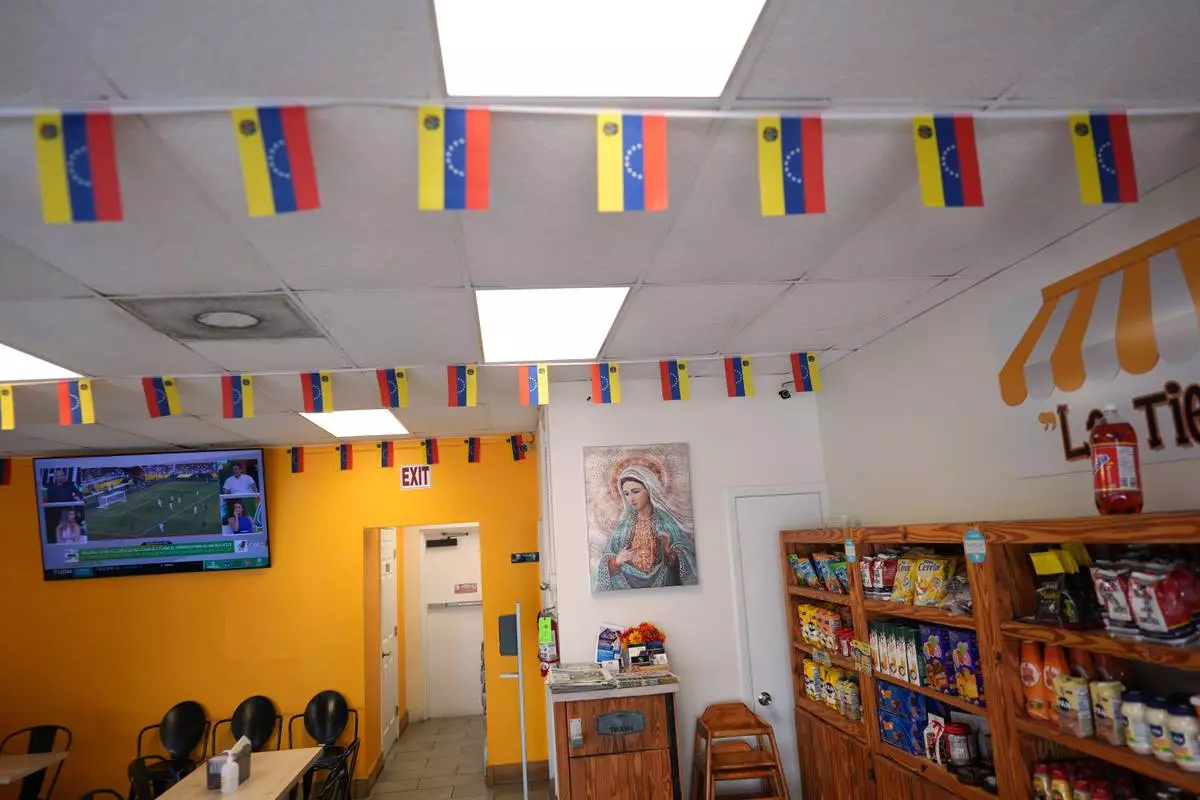
Venezuelan flags hang inside TeqaBite, a restaurant co-owned by two U.S. citizens born in Venezuela, in Kissimmee, Fla., Thursday, Aug. 21, 2025. (AP Photo/Rebecca Blackwell)

Mexican asylum-seeker Blanca's three young children play inside the family's rented duplex in Apopka, Fla., Wednesday, Aug. 20, 2025. (AP Photo/Rebecca Blackwell)
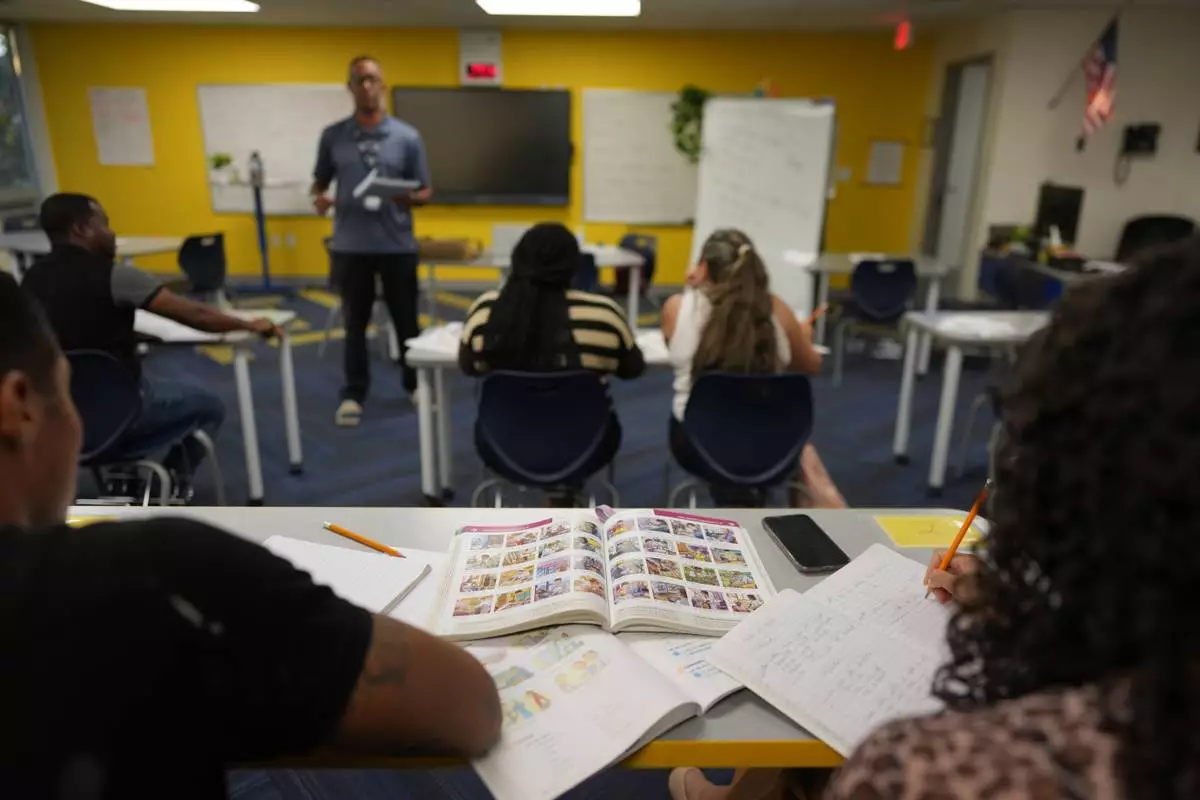
Immigrants trying to learn the English language take notes as Eliezer Guerrero of Catholic Charities of Central Florida teaches an ESOL class, Tuesday, Aug. 19, 2025, in Orlando, Fla. (AP Photo/Rebecca Blackwell)

Hotels and highways are seen around Universal Volcano Bay water park, Friday, Aug. 22, 2025, in Orlando, Fla., which saw an influx of migrants in recent years drawn by warm temperatures, a vibrant migrant community, and plentiful job opportunities. (AP Photo/Rebecca Blackwell)
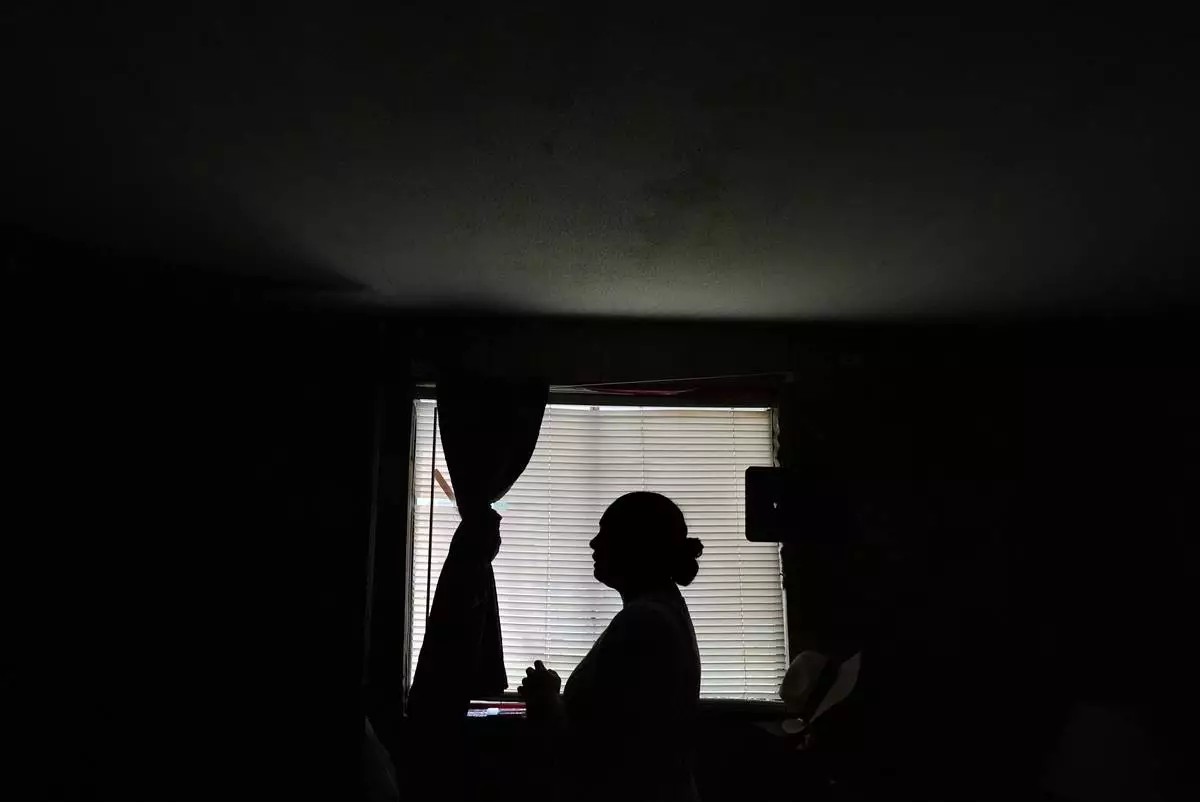
Paola Freites, who asked to be identified by her middle name and second last name to protect her family's safety, stands inside the two-bedroom mobile home where she lives with her husband and three children after fleeing persecution in their native Colombia, Thursday, Aug. 21, 2025, in Apopka, Fla. (AP Photo/Rebecca Blackwell)