Skip to Content Facebook Feature Image

Australia’s Largest University Establishes ‘Monash Boston Hub’ to Accelerate Global Biotech Partnerships and Licensing

News

Australia’s Largest University Establishes ‘Monash Boston Hub’ to Accelerate Global Biotech Partnerships and Licensing
News

News

Australia’s Largest University Establishes ‘Monash Boston Hub’ to Accelerate Global Biotech Partnerships and Licensing

2025-10-02 19:02 Last Updated At:19:10

BOSTON & MELBOURNE, Australia--(BUSINESS WIRE)--Oct 2, 2025--

Monash University, Australia’s largest and a top‑50 global research institution, today announced the establishment of the Monash Boston Hub to meet surging demand from North American and European biotech and life sciences companies for Monash drug discovery, clinical trial, and commercialization of its innovations.

This press release features multimedia. View the full release here: https://www.businesswire.com/news/home/20251002504084/en/

Ranked among the world’s best in pharmacology, clinical trials, and drug commercialization, Monash has completed more than 160 new license deals and created more than 30 spinouts over the past five years, which together have raised nearly USD $1 billion. The Hub, located in the Cambridge Innovation Center at 245 Main Street in Cambridge, will serve as the nexus for building and managing partnerships across North America and Europe. It will have an initial staff of 5-7 development professionals, headed by Boston native Nathan Elia, Monash’s Director of Enterprise for North America and Europe.

“Monash has had successful partnerships and commercial arrangements with United States and European entities for decades, and the Monash Boston Hub marks a significant milestone by building a bigger bridge between Boston and Melbourne - two of the world’s leading centers of biotech research and innovation,” said Sharon Pickering, President of Monash University. “Our goal is to significantly increase mutually beneficial partnerships to advance health outcomes worldwide and grow R&D collaboration between Australia, the United States, and Europe.”

“Boston is an epicenter of biotech innovation, and our expanded presence here allows us to work shoulder‑to‑shoulder with partners, investors, and collaborators to accelerate the path from discovery to patient impact,” said Nathan Elia, Director of Enterprise, North America and Europe for Monash University. “Our team will accelerate licensing and co‑development deals with U.S. and European partners, expand clinical trial collaborations leveraging Australia’s fast, efficient regulatory pathways, and connect more global biotech innovators with Monash’s world‑class research talent and facilities.”

“Moderna and Monash University have multiple productive partnerships, linking world-class academic discovery with Moderna’s development engine to accelerate life-saving vaccines and therapeutics,” said Kate Jeffrey, Vice President of Immunology, Pharmacology, and Genomics at Moderna. “Moderna has established its first mRNA manufacturing facility in the southern hemisphere on the Monash University campus. It’s a powerful model for collaborative R&D that connects training, discovery, and translation.”

“Monash University is an innovation powerhouse with the world’s leading experts in lymphatic transport, which we’re proud to have behind our proprietary Glyph™ platform, a technology Seaport exclusively licensed based on Monash’s pioneering research, co-invented by Professor Christopher Porter and Jamie Simpson, Ph.D., who is now Head of Chemistry at Seaport Therapeutics, in collaboration with many of our team members,” said Daniel Bonner, Ph.D., Co-founder, Senior Vice President, Platform, at Seaport Therapeutics. “Through this collaboration, we’ve been able to translate this important science into clinical development with our pipeline of novel neuropsychiatric medicines, with potential across a broad range of applications beyond CNS and neuropsychiatry.”

“Our partnership with Monash University has helped launch several successful companies in our portfolio, including Seaport Therapeutics and Septerna, founded on science emanating from the Monash Institute for Pharmaceutical Sciences,” said Vyas Ramanan, Venture Partner at Third Rock Ventures. “Monash is a proven source of discovery, and we believe it will continue to fuel breakthrough medicines for serious diseases.”

“Monash University researchers were among our closest collaborators in our early human studies,” said Samarth Kulkarni, CEO and Chairman of CRISPR Therapeutics (NASDAQ: CRSP), a biopharmaceutical company focused on creating transformative gene-based medicines for serious diseases. “Coordination with their Melbourne-based team is seamless, and their expertise and professionalism are world-class.”

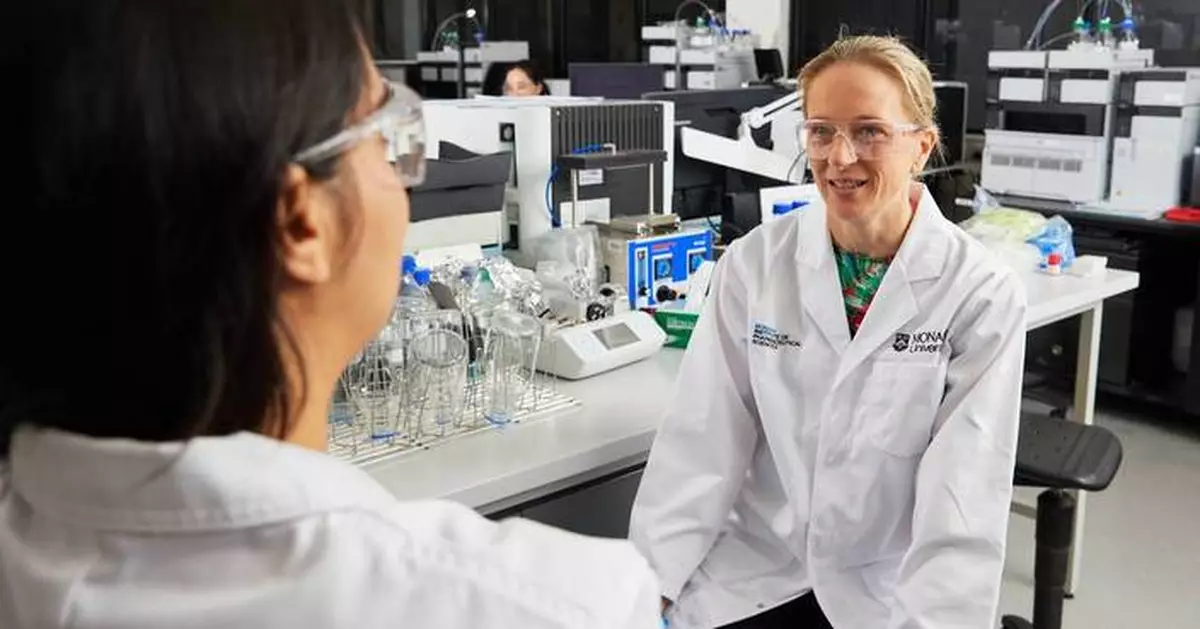
Although Monash researchers work in a wide range of fields, including engineering, advanced materials, and energy, the university is particularly well known for its work in biotechnology and life sciences, and has numerous industry and institutional partnerships in these areas. Some major drivers of this activity include the Monash Institute of Pharmaceutical Sciences (MIPS), which translates research discoveries into real-world impact. Significant MIPS-led commercialization and research translation projects have resulted in the creation of biotech companies, including Cincera, Septerna, Phrenix, Pacalis, Seaport Therapeutics, and others. MIPS is also a trusted global resource for optimizing promising drug candidates ready for development and commercialization, and has been the driving force behind working with partners to progress more than 40 novel drug candidates into clinical development.

Monash is a top destination for early and mid-stage clinical development, benefiting from Australia’s robust infrastructure, one of the fastest and most efficient regulatory pathways in the world, and its collaborative culture.

About Monash University

Change has been the driving force of Monash University’s growth and success for more than 60 years as we have strived to make a positive difference in the world, and it’s the foundation of our future as we redefine what it means to be a university. Our Impact 2030strategic plan charts the path for how we will actively contribute to addressing three key global challenges of the age – climate change, geopolitical security, and thriving communities – through excellent research and education for the benefit of national and global communities. We have skyrocketed through global university rankings and established ourselves consistently among the world's best tertiary institutions. We rank in the world’s top-50 universities in the QS World University Rankings 2026, QS Sustainability Rankings 2024, Times Higher Education (THE) Impact Rankings 2024, and US News and World Report (USNWR) Best Global Universities Rankings 2024-25. Your journey starts here: monash.edu
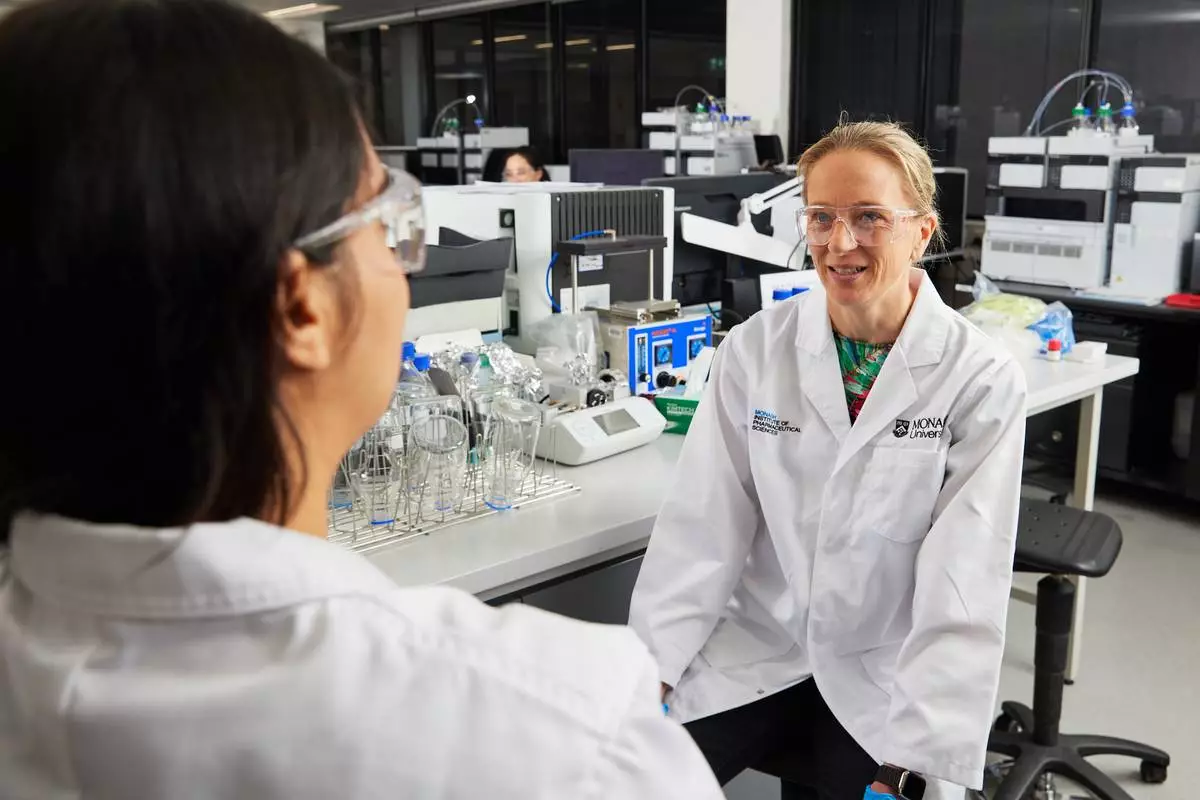
Monash university is particularly well known for its work in biotechnology and life sciences, and has numerous industry and institutional partnerships in these areas. Some major drivers of this activity include the Monash Institute of Pharmaceutical Sciences (MIPS), which translates research discoveries into real-world impact. Significant MIPS-led commercialization and research translation projects have resulted in the creation of biotech companies, including Cincera, Septerna, Phrenix, Pacalis, Seaport Therapeutics, and others. MIPS is also a trusted global resource for optimizing promising drug candidates ready for development and commercialization, and has been the driving force behind working with partners to progress more than 40 novel drug candidates into clinical development.
Monash university is particularly well known for its work in biotechnology and life sciences, and has numerous industry and institutional partnerships in these areas. Some major drivers of this activity include the Monash Institute of Pharmaceutical Sciences (MIPS), which translates research discoveries into real-world impact. Significant MIPS-led commercialization and research translation projects have resulted in the creation of biotech companies, including Cincera, Septerna, Phrenix, Pacalis, Seaport Therapeutics, and others. MIPS is also a trusted global resource for optimizing promising drug candidates ready for development and commercialization, and has been the driving force behind working with partners to progress more than 40 novel drug candidates into clinical development.
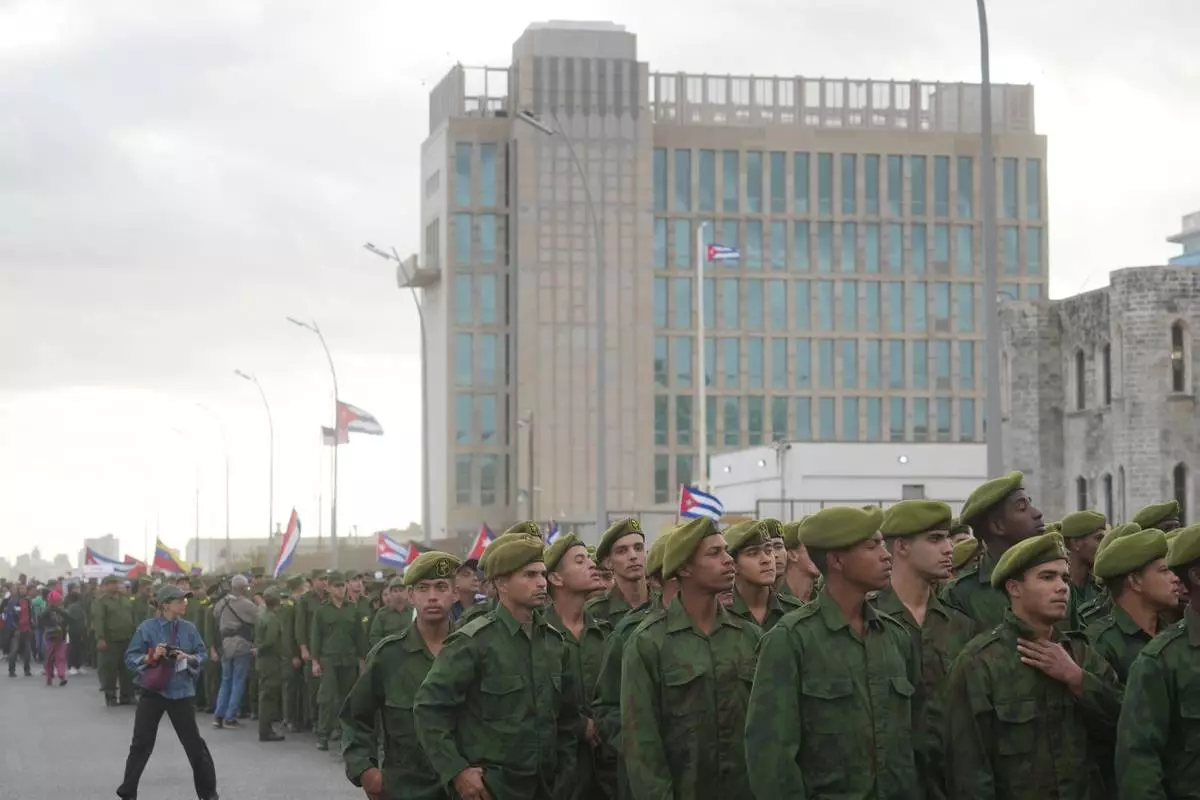
HAVANA (AP) — Tens of thousands of Cubans demonstrated Friday outside the U.S. Embassy in Havana to decry the killing of 32 Cuban officers in Venezuela and demand that the U.S. government release former Venezuelan President Nicolás Maduro.

They crowded into the open-air “José Martí Anti-Imperialist” plaza across from the embassy in a rally organized by the Cuban government as tensions between Cuba and the U.S. spike following the U.S. attack Jan. 3 on Venezuela.

The 32 Cuban officers were part of Maduro’s security detail killed during the raid on his residence in Caracas to seize the former leader and bring him to the U.S. to face drug trafficking charges.

“Humanity is experiencing something very complex, and (the U.S.) is governed by a president who considers himself an emperor,” said René González, 64, one of the protesters.

“We must show him that ideas are worth more than weapons," he said. "This march is a message of our unity. Independence is sacred, and we will defend it tooth and nail if necessary.”

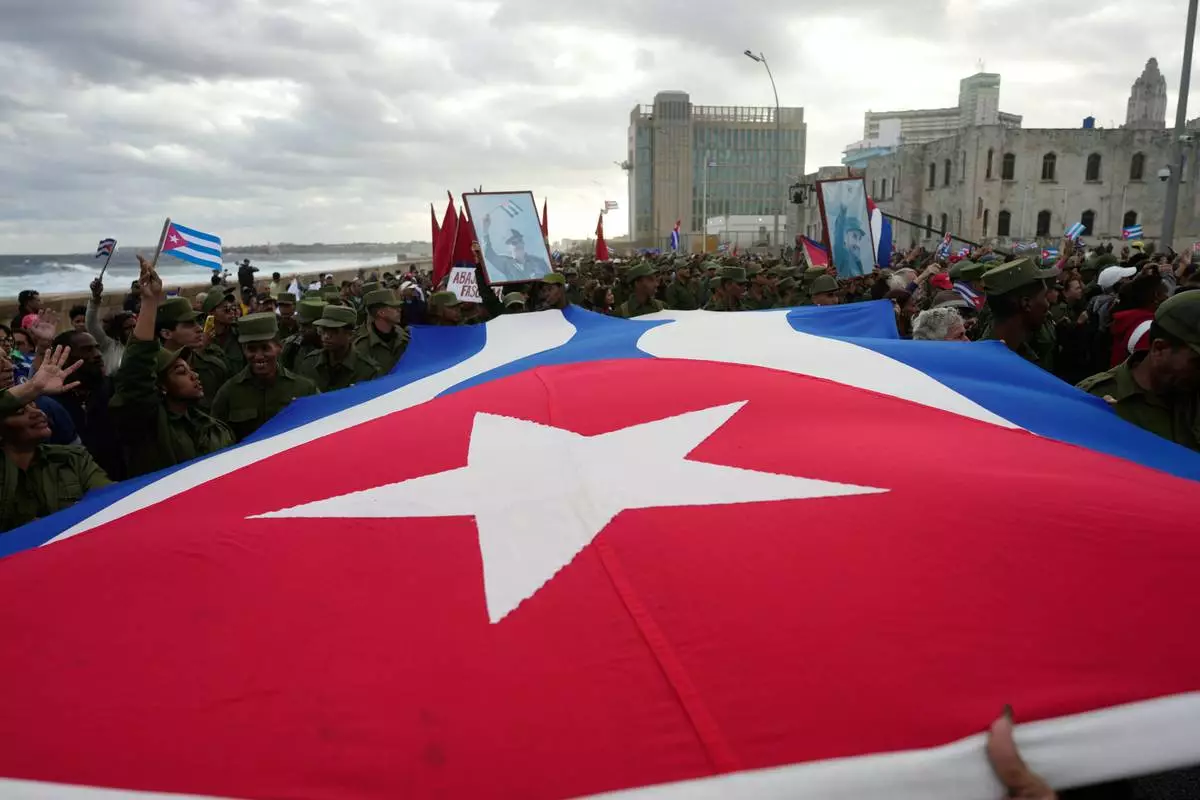
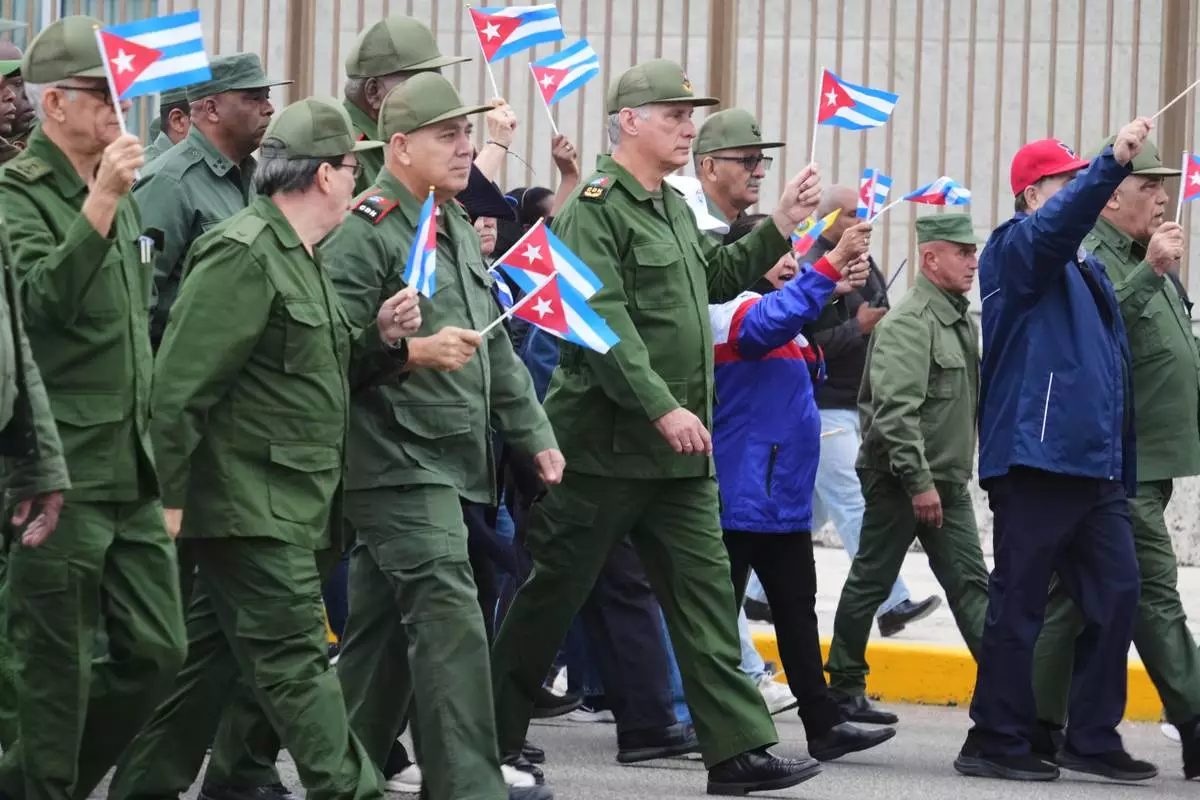
Cuba’s national anthem rang out at Friday’s demonstration as large Cuban flags waved in the chilly wind and big waves broke nearby along Havana’s famed sea wall. Cuban President Miguel Díaz-Canel shook hands with members of the crowd clad in jackets and scarves before speaking to them.

“The current U.S. administration has opened the door to an era of barbarism, plunder and neo-fascism,” he said.

The demonstration was a show of popular strength after U.S. President Donald Trump recently demanded that Cuba make a deal with him before it is “too late.” He did not explain what kind of deal.

Trump also has said that Cuba will no longer live off Venezuela’s oil and money. Experts say the move could have catastrophic consequences since Cuba is already struggling with severe blackouts.

“No one here surrenders," Díaz-Canel said. “The current emperor of the White House and his infamous secretary of state haven’t stopped threatening me.”

Washington has maintained a policy of sanctions against Cuba since the 1960s to pressure the island's government to improve its human rights record, end its one-party communist system and allow democracy. The sanctions have been further tightened during Trump’s presidency, suffocating the island’s economy.

“Cuba does not have to make any political concessions, and that will never be on the table for negotiations aimed at reaching an understanding between Cuba and the United States,” Díaz-Canel said. “It is important that they understand this. We will always be open to dialogue and improving relations between our two countries, but only on equal terms and based on mutual respect.”

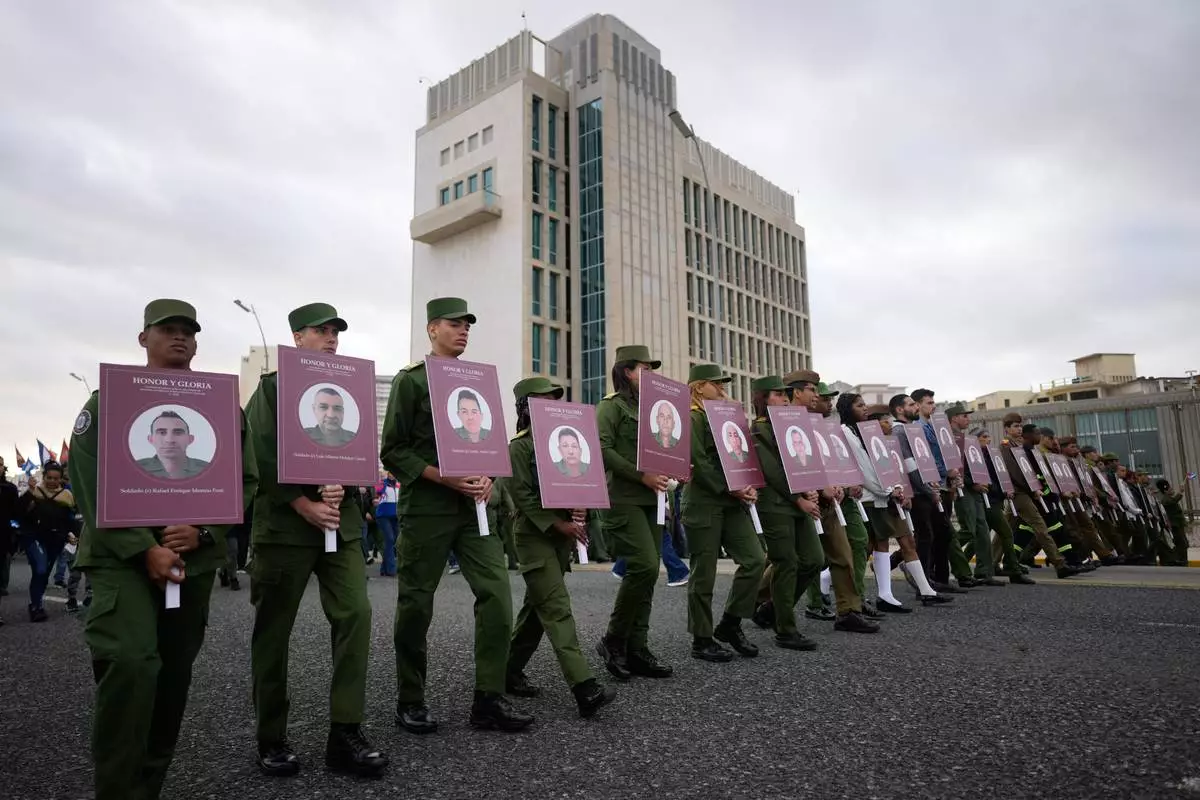
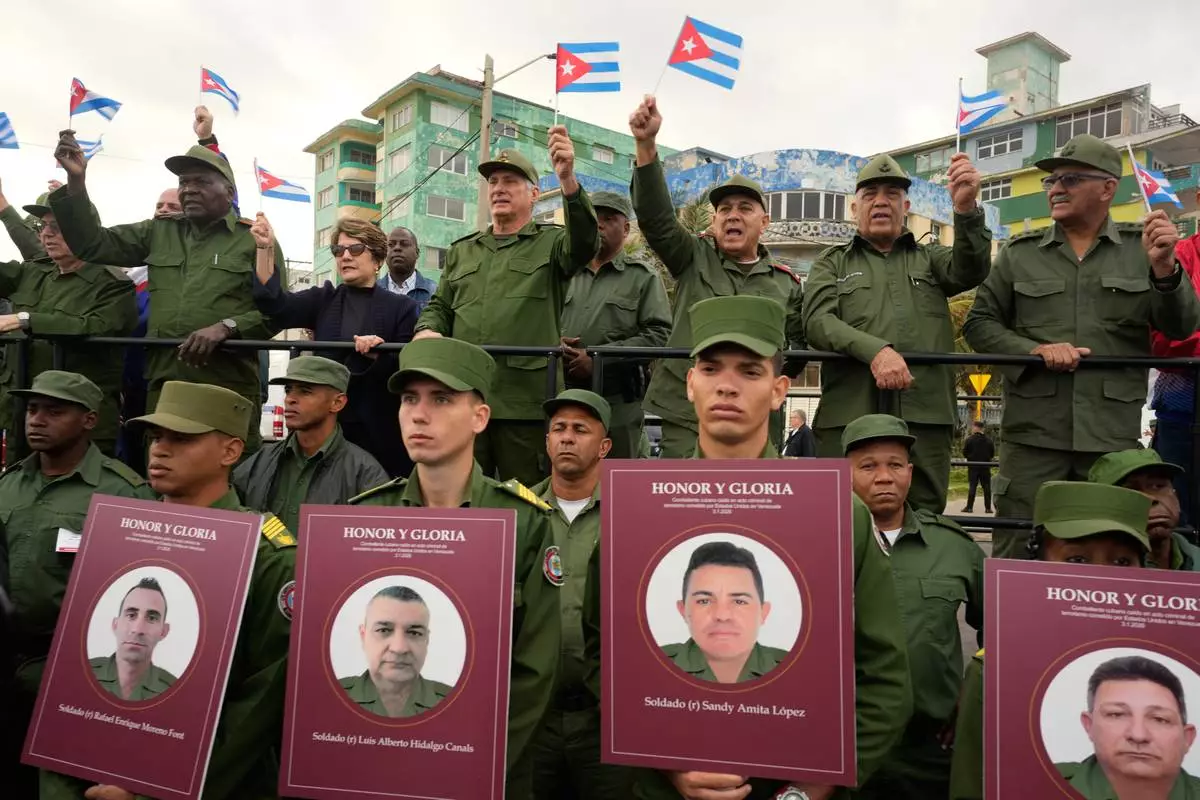
After the president's speech, the demonstration transitioned into a parade that Cubans call a “combatant march,” a custom that originated during the time of the late leader Fidel Castro. The crowd was led by a line of people holding pictures of the 32 officers killed.

“Down with imperialism!” the crowd yelled. “Cuba will prevail!"

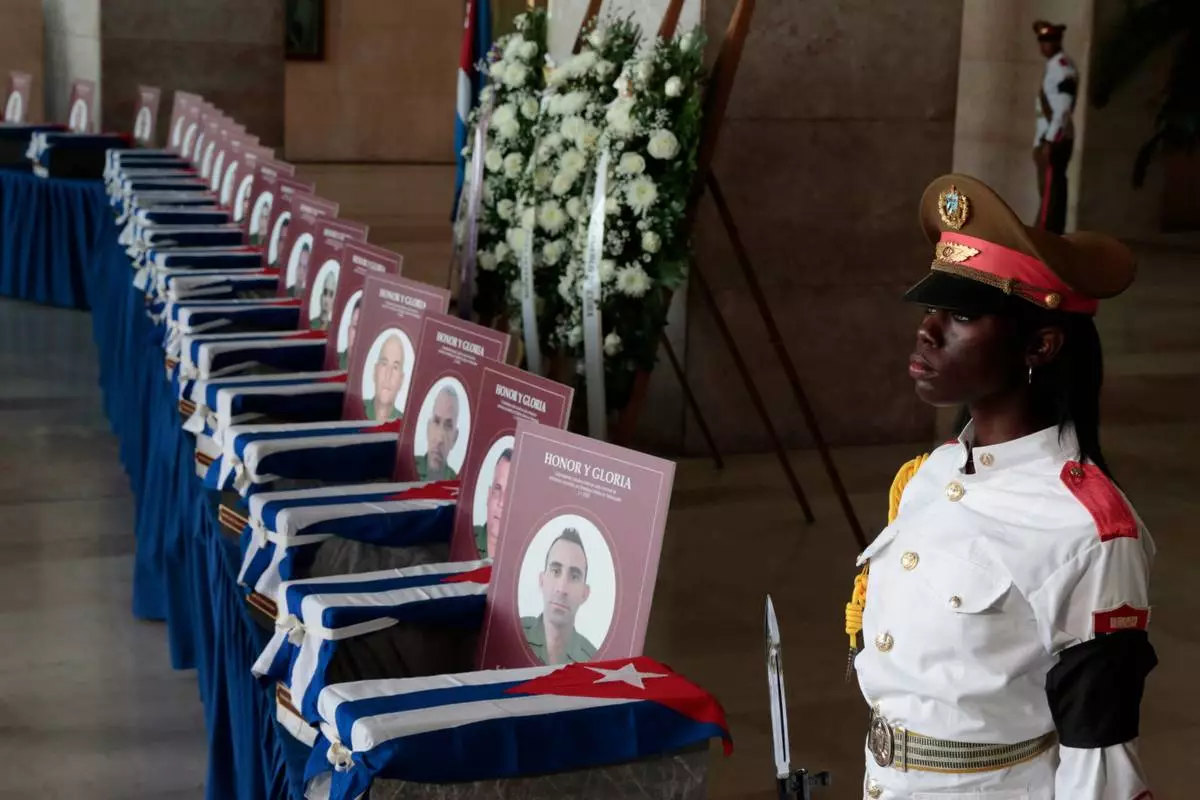
The demonstration was organized a day after tens of thousands of Cubans gathered at the headquarters of the Ministry of the Armed Forces to pay their respects to the 32 officers slain.

Their remains arrived home on Thursday morning, and they are scheduled to be laid to rest on Friday afternoon in various cemeteries following memorial ceremonies in all of Cuba’s provincial capitals.

Associated Press reporter Dánica Coto in San Juan, Puerto Rico contributed to this report.

Cuban President Miguel Diaz-Canel marches during a rally to protest the killing of Cuban officers during the U.S. operation in Venezuela that captured Venezuelan President Nicolas Maduro in Havana, Cuba, Friday, Jan. 16, 2026. (AP Photo/Ramon Espinosa)

Cuban President Miguel Diaz-Canel marches during a rally to protest the killing of Cuban officers during the U.S. operation in Venezuela that captured Venezuelan President Nicolas Maduro in Havana, Cuba, Friday, Jan. 16, 2026. (AP Photo/Ramon Espinosa)

Cuban President Miguel Diaz-Canel marches during a rally to protest the killing of Cuban officers during the U.S. operation in Venezuela that captured Venezuelan President Nicolas Maduro outside the U.S. Embassy in Havana, Cuba, Friday, Jan. 16, 2026. (AP Photo/Ramon Espinosa)

Cuban President Miguel Diaz-Canel marches during a rally to protest the killing of Cuban officers during the U.S. operation in Venezuela that captured Venezuelan President Nicolas Maduro outside the U.S. Embassy in Havana, Cuba, Friday, Jan. 16, 2026. (AP Photo/Ramon Espinosa)

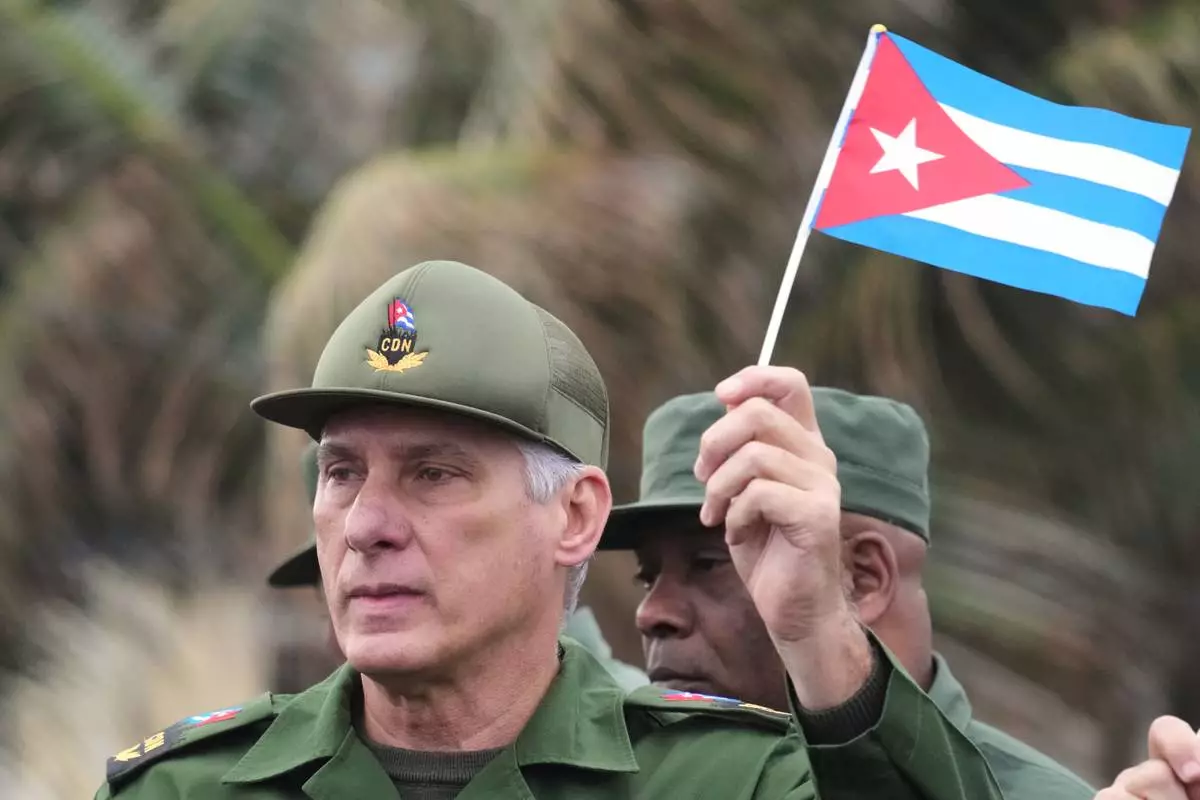
Cuban President Miguel Diaz-Canel, fourth from right, holds up a Cuban flag during a rally to protest the killing of Cuban officers during the U.S. operation that captured Venezuelan President Nicolas Maduro, outside the U.S. Embassy in Havana, Cuba, Friday, Jan. 16, 2026. (AP Photo/Ramon Espinosa)

Cuban President Miguel Diaz-Canel, fourth from right, holds up a Cuban flag during a rally to protest the killing of Cuban officers during the U.S. operation that captured Venezuelan President Nicolas Maduro, outside the U.S. Embassy in Havana, Cuba, Friday, Jan. 16, 2026. (AP Photo/Ramon Espinosa)

Soldiers march outside the U.S. Embassy during a rally to protest the killing of Cuban officers during the U.S. operation in Venezuela that captured Venezuelan President Nicolas Maduro in Havana, Cuba, Friday, Jan. 16, 2026. (AP Photo/Ramon Espinosa)

Soldiers march outside the U.S. Embassy during a rally to protest the killing of Cuban officers during the U.S. operation in Venezuela that captured Venezuelan President Nicolas Maduro in Havana, Cuba, Friday, Jan. 16, 2026. (AP Photo/Ramon Espinosa)

People carry a Cuban flag during a government-organized rally protesting the killing of Cuban officers in Venezuela while U.S. forces captured Venezuelan President Nicolas Maduro and his wife, in Havana, Cuba, Friday, Jan. 16, 2026. (AP Photo/Ramon Espinosa)

People carry a Cuban flag during a government-organized rally protesting the killing of Cuban officers in Venezuela while U.S. forces captured Venezuelan President Nicolas Maduro and his wife, in Havana, Cuba, Friday, Jan. 16, 2026. (AP Photo/Ramon Espinosa)

Soldiers carry photos of Cuban officers killed during the U.S. operation in Venezuela that captured Venezuelan President Nicolas Maduro, during a rally outside the U.S. Embassy in Havana, Cuba, Friday, Jan. 16, 2026. (AP Photo/Ramon Espinosa)

Soldiers carry photos of Cuban officers killed during the U.S. operation in Venezuela that captured Venezuelan President Nicolas Maduro, during a rally outside the U.S. Embassy in Havana, Cuba, Friday, Jan. 16, 2026. (AP Photo/Ramon Espinosa)

Urns containing the remains of Cuban officers, who were killed during the U.S. operation in Venezuela that captured Venezuelan President Nicolas Maduro, are displayed at the Ministry of the Revolutionary Armed Forces in Havana, Cuba, Thursday, Jan. 15, 2026. (AP Photo/Jorge Luis Banos)

Urns containing the remains of Cuban officers, who were killed during the U.S. operation in Venezuela that captured Venezuelan President Nicolas Maduro, are displayed at the Ministry of the Revolutionary Armed Forces in Havana, Cuba, Thursday, Jan. 15, 2026. (AP Photo/Jorge Luis Banos)

Recommended Articles