Skip to Content Facebook Feature Image

Female ostrich farmer succeeds in rural e-commerce, facilitating women employment

China

China

China

Female ostrich farmer succeeds in rural e-commerce, facilitating women employment

2025-10-02 17:26 Last Updated At:21:37

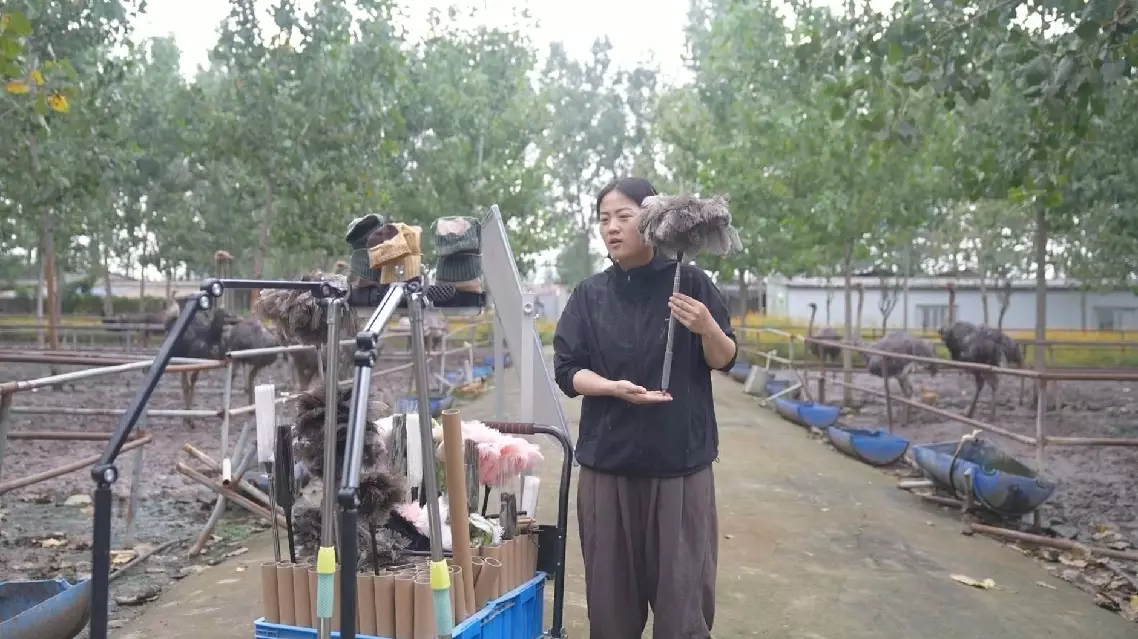
A female ostrich farmer has gone viral for raising the birds and promoting job opportunities for women in her community, as she captured the attention of social media by livestreaming the interesting episodes of raising ostriches and selling ostrich feather dusters.

Zhan Yun, affectionately known as "Tuo Feifei" or "flying ostriches" on Douyin, the Chinese version of TikTok, has amassed over 720,000 followers on the platform by sharing her journey of raising ostrich in Suqian City, east China's Jiangsu Province.

Zhan's journey began in 2018 when she and her husband opened a Douyin account to share their experiences in ostrich farming -- a venture that was initially met with skepticism by local villagers who had never seen these exotic birds outside of wildlife documentaries.

"The villagers felt it was unbelievable, because after all, this bird had never been seen here. They only see them in an animal documentary," she said.

They initially shared knowledge on raising ostriches, but that didn't attract many followers. Despite the initial challenges, Zhan's content took a turn for the better when she shared a video in which she was holding a cabbage near her flock of ostriches. The video quickly went viral, attracting millions of people to watch.

"I think one reason is that ostriches are relatively rare, and when they eat cabbage, the whole picture contrasts with it, and the sound is relaxing," said Zhan.

The newfound popularity on social media led Zhan to explore new business opportunities, particularly with ostrich feathers. Initially hesitant about selling products in livestream, she realized the potential of offering dusters made from ostrich feathers -- an idea suggested by her followers.

Zhan now livestreams almost every day, usually from 13:00 to 17:00, and online sales account for over 80 percent of their income.

"My fans said that I can sell something in my livestream, and ostrich eggs and meat are hard to transport. I told them, I can't sell feathers, can I? But yes, I could sell feathers," she said.

In addition to her entrepreneurial success, Zhan's business has significantly impacted her community. At her factory, which produces around 5,000 ostrich feather dusters daily, the majority of her employees are women from nearby villages.

Women in China's rural areas are often left at home to manage household responsibilities, like taking care of the farmland and children. Therefore, what they often need is a nearby job that allows them to have flexible working hours to take care of their family. Zhan employed almost 50 workers in her ostrich farm and duster factory.

"I feel that many people have a job near their home because of what I do. They can earn some extra money, and I think it's meaningful," said Zhan.

Zhan not only serves as a role model for the factory workers but also inspires women near and far by passing on her humor, optimism and strength through her livestream.
Female ostrich farmer succeeds in rural e-commerce, facilitating women employment

Female ostrich farmer succeeds in rural e-commerce, facilitating women employment

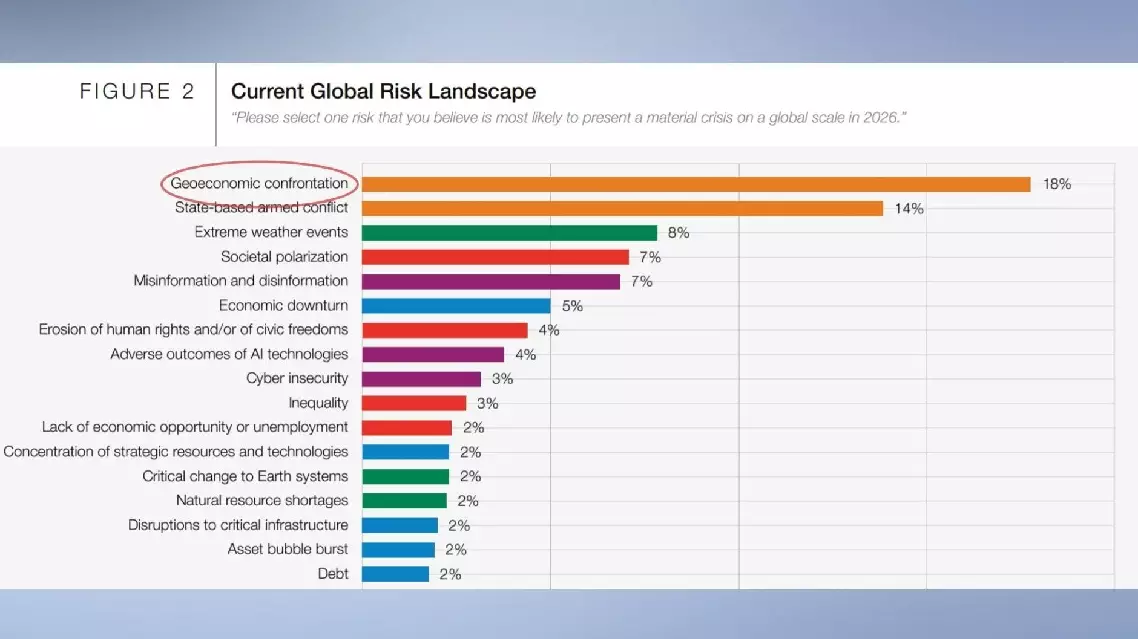
Geoeconomic confrontation is the leading short-term global threat in 2026, the World Economic Forum (WEF) warned in its Global Risks Report 2026 released on Wednesday ahead of its annual meeting in Davos, Switzerland.

The report ranks geoeconomic confrontation as the top risk for 2026, followed by interstate conflict, extreme weather, societal polarization, and misinformation and disinformation. It also identifies geoeconomic confrontation as the most severe risk over the next two years.

"I think if there is to be one key takeaway from the report, it's that we are entering an age of competition and this new competitive order is then shaping current global risks, but it is also shaping and to some extent hindering our ability to actually cope with them. That's really the key takeaway. If we take a look at, the number one risk both for 2026 and two years out, it's dual economic confrontation. But then if we look at the risks 10 years out. It's really the climate and environment related risks. All of these things require global cooperation and that's where we're seeing a big backsliding in this new age of competition," said Saadia Zahidi, managing director of the WEF.

Economic risks showed the largest increase in the two-year outlook, with concerns over economic downturns, inflation, rising debt and potential asset bubbles intensifying amid geoeconomic tensions, the report said.

Environmental risks remain the most severe overall, led by extreme weather, biodiversity loss and critical changes to Earth systems. The report noted that three-quarters of respondents expect a turbulent environmental outlook.

Risks related to adverse outcomes of artificial intelligence rose sharply, climbing from 30th in the two-year horizon to fifth in the 10-year outlook, reflecting concerns over impacts on labor markets, society and security.

The 21st edition of the report draws on views from more than 1,300 experts, policymakers and industry leaders.

The WEF's annual meeting will be held in Davos from Jan 19 to 23 and draw nearly 3,000 guests from more than 130 countries and regions to participate.

"So overall, we are starting to see this shift away from what have traditionally been the ways in which people have been able to cooperate. Now, that is not to say that any of this is a foregone conclusion. And I think that's a really important message around the risks report. None of this is set in stone. All of this is in the hands of leaders. Whether they choose to cooperate and invest in resilience or whether they do not. So that's really what we'll be focused on next week in Davos bringing leaders together under this overall theme of 'a spirit of dialogue' and trying to reestablish relationships, cooperation and trust. That's the fundamental," said Zahidi.

WEF warns of rising geoeconomic risks in 2026

WEF warns of rising geoeconomic risks in 2026

Recommended Articles