Skip to Content Facebook Feature Image

Trump administration cuts nearly $8B in clean energy projects in states that backed Harris

News

Trump administration cuts nearly $8B in clean energy projects in states that backed Harris
News

News

Trump administration cuts nearly $8B in clean energy projects in states that backed Harris

2025-10-03 10:15 Last Updated At:10:20

WASHINGTON (AP) — The Trump administration is cancelling $7.6 billion in grants that supported hundreds of clean energy projects in 16 states, all of which voted for Democrat Kamala Harris in last year’s presidential election.

The move comes as President Donald Trump threatens deep cuts in his fight with congressional Democrats over the government shutdown.

The Energy Department said in a statement Thursday that 223 projects were terminated after a review determined they did not adequately advance the nation’s energy needs or were not economically viable. Officials did not provide details about which projects are being cut, but said funding came from the Office of Clean Energy Demonstrations, Office of Energy Efficiency and Renewable Energy, and other DOE bureaus.

The cuts are likely to affect battery plants, hydrogen technology projects, upgrades to the electric grid and carbon-capture efforts, among many others, according to the environmental nonprofit Natural Resources Defense Council.

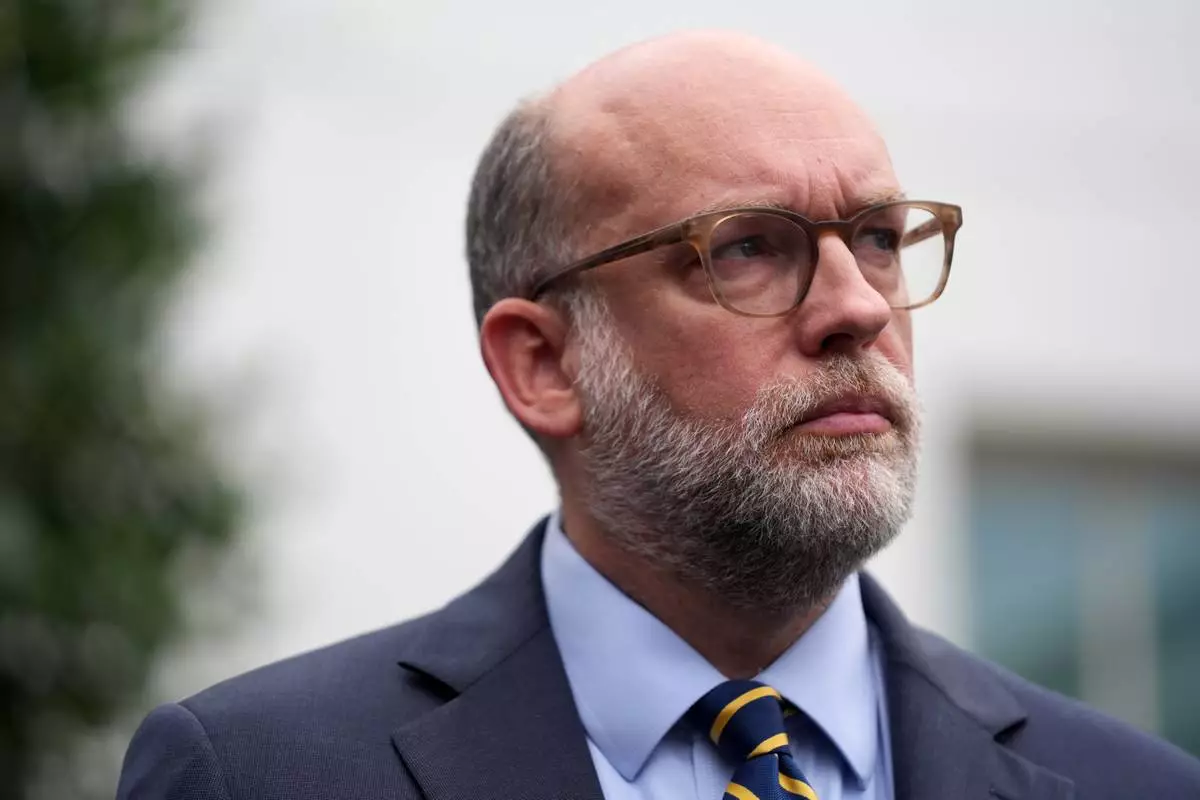
Russell Vought, the White House budget director, highlighted the cutbacks in a social media post late Wednesday, saying money “to fuel the Left’s climate agenda is being cancelled.”

He said projects are on the chopping block in: California, Colorado, Connecticut, Delaware, Hawaii, Illinois, Maryland, Massachusetts, Minnesota, New Hampshire, New Jersey, New Mexico, New York, Oregon, Vermont and Washington state.

Vought and the Energy Department did not explain how they came up with their list of targeted states, considering that dozens of states have clean energy projects. But all 16 targeted states supported Harris, and in each of those states, both U.S. senators voted against the Republican's short-term funding bill to keep the government working.

The cuts include up to $1.2 billion for California’s hydrogen hub that is aimed at accelerating hydrogen technology and production, and up to $1 billion for a hydrogen project in the Pacific Northwest. A Texas hydrogen project and a three-state project in West Virginia, Ohio and Pennsylvania were spared, according to clean-energy supporters who obtained a list of the DOE targets.

Trump said in an interview taped Wednesday with One America News, a conservative outlet, that his administration could cut projects Democrats want — “favorite projects, and they’d be permanently cut."

"I’m allowed to cut things that never should have been approved in the first place and I will probably do that,” Trump said. A clip from the interview was released ahead of the full interview set to air Thursday night.

Trump’s comments show that he and Vought are treating American “families and their livelihoods like pawns in some sort of sick political game,” said Sen. Patty Murray, D-Wash.

“This administration has had plans in the works for months to cancel critical energy projects, and now they are illegally taking action to kill jobs and raise people’s energy bills,” she said in a statement. “This is a blatant attempt to punish the political opposition.”

California Gov. Gavin Newsom said the private sector has committed $10 billion for the state's hydrogen project, known as the Alliance for Renewable Clean Hydrogen Energy Systems, or ARCHES. The cut threatens over 200,000 jobs, Newsom said.

California Democratic Sen. Alex Padilla called cancelation of the project “vindictive, shortsighted and proof this administration is not serious about American energy dominance.”

The California project is one of seven clean-energy projects from West Virginia to Washington state selected by the Biden administration for a $7 billion program to kickstart development and production of hydrogen fuel, part of former President Joe Biden’s agenda to slow climate change.

The Energy Department said it has reviewed billions of dollars awarded by the Biden administration after Trump won the presidential election last November. More than a quarter of the rescinded grants were awarded between Election Day and Inauguration Day, the department said.

“President Trump promised to protect taxpayer dollars and expand America’s supply of affordable, reliable, and secure energy. Today’s cancellations deliver on that commitment,” Energy Secretary Chris Wright said.

Wright told CNN Thursday night that the cancellations had nothing to do with the shutdown or politics. “These decisions are made — business decisions on whether it’s a good use of the taxpayer money or not. So, no, these projects will not be restored” when the government reopens, he said.

While the current cancellations are in Democratic-led states, Wright said other projects, including hydrogen proposals in West Virginia, Texas and Louisiana, are being evaluated.

“We’ve announced project cancellations before in red and blue states. And as this fall goes on, you’ll see cancellations in red and blue states,'' Wright said. “We’ve got to save Americans money."

Award recipients have 30 days to appeal the Energy Department’s termination decision.

The Trump administration has broadly targeted climate programs and clean energy grants, and is proposing to roll back vehicle emission and other greenhouse gas rules it says can’t be justified. Last week, the Energy Department rescinded $13 billion that was intended for clean energy projects. The money was authorized by Congress in the 2022 climate law signed by Biden but had not yet been spent.

Democrats and environmental organizations were quick to slam the latest cuts, saying they would raise energy costs.

"This is yet another blow by the Trump administration against innovative technology, jobs and the clean energy needed to meet skyrocketing demand,'' said Jackie Wong, a senior vice president at NRDC.

Conrad Schneider, senior director at the Clean Air Task Force, said the move “pulls the rug out” from dozens of communities and workers that are counting on the projects. It also "weakens the U.S.’s position in the global marketplace'' for innovative energy technologies, he said.

Associated Press writer Michelle L. Price in Washington contributed to this report.

The Associated Press receives support from the Walton Family Foundation for coverage of water and environmental policy. The AP is solely responsible for all content. For all of AP’s environmental coverage, visit https://apnews.com/hub/climate-and-environment
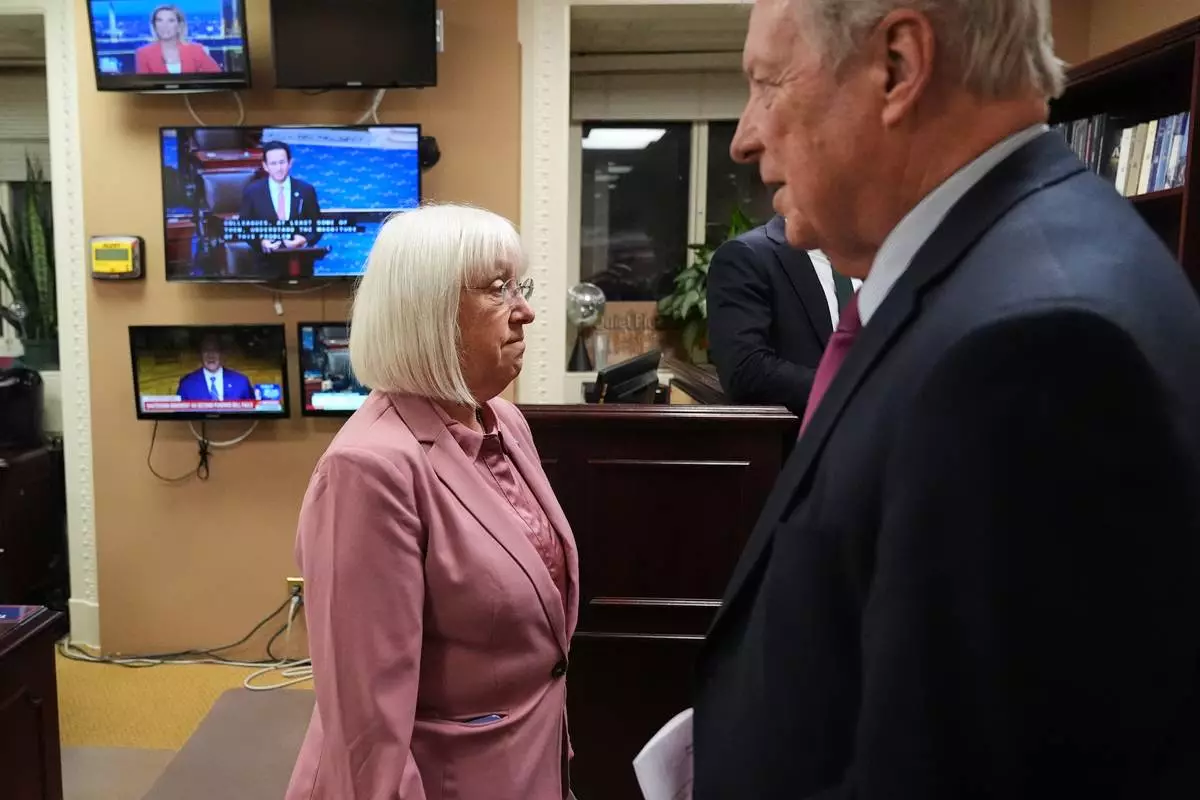
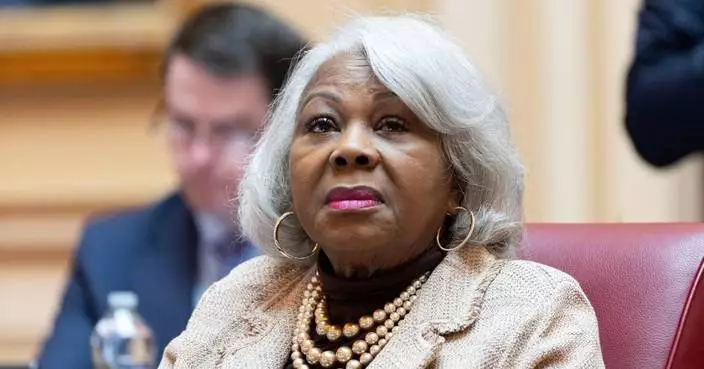
Sen. Dick Durbin, D-Ill., right, and Sen. Patty Murray, D-Wash., prepare for a news conference to speak about the government shutdown, Tuesday, Sept. 30, 2025, on Capitol Hill, in Washington. (AP Photo/Jacquelyn Martin)
Sen. Dick Durbin, D-Ill., right, and Sen. Patty Murray, D-Wash., prepare for a news conference to speak about the government shutdown, Tuesday, Sept. 30, 2025, on Capitol Hill, in Washington. (AP Photo/Jacquelyn Martin)

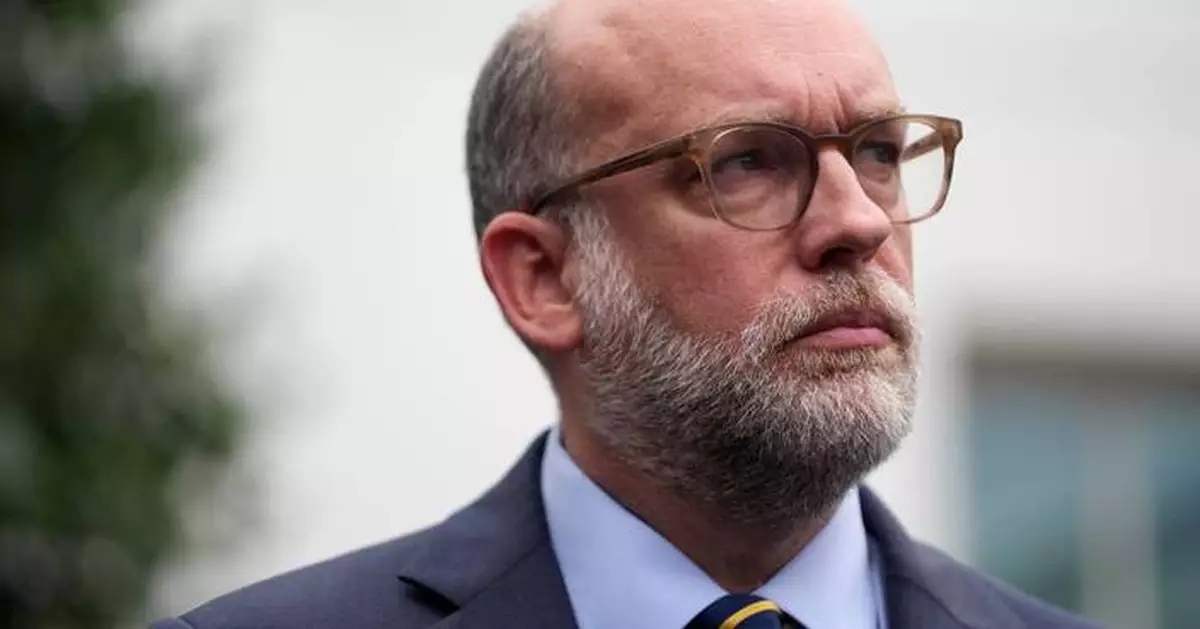
Russell Vought, Office of Management and Budget director, listens as he addresses members of the media outside the West Wing at the White House in Washington, Monday, Sept. 29, 2025, in Washington. (AP Photo/Evan Vucci)


Russell Vought, Office of Management and Budget director, listens as he addresses members of the media outside the West Wing at the White House in Washington, Monday, Sept. 29, 2025, in Washington. (AP Photo/Evan Vucci)

When President Donald Trump suspended the refugee program on day one of his current administration, thousands of people around the world who'd been so close to a new life in America found themselves abandoned.

As part of Trump's crackdown on legal and illegal migration, the Republican president has upended the decades-old refugee program that has served as a beacon for those fleeing war and persecution. In October, he resumed the program but set a historic low of refugee admissions at 7,500 — mostly white South Africans.

New restrictions were announced after an Afghan national became the suspect in the shooting of two National Guard members last week. The Trump administration also plans a review of refugees let in during the Democratic Biden administration. Trump's administration has cited economic and national security concerns for its policy changes.

About 600,000 people were being processed to come to the U.S. as refugees when the program was halted, according to the administration. Aside from dozens of white South Africans let in this year, only about 100 others have been admitted as a result of a lawsuit by advocates seeking to restore the refugee program, said Mevlüde Akay Alp, a lawyer arguing the case.

The Associated Press spoke to three families whose lives have been thrown into disarray because of the changing policies.

The Dawoods fled civil war in Syria and settled in northern Iraq. They hoped to find a new home that could provide better medical care for a daughter who had fallen from the fourth floor of the family’s apartment building.

After they were accepted as refugees to the U.S., son Ibrahim and his sister Ava relocated to Connecticut in November 2024. His parents and one of his brothers were scheduled to fly in January.

But just two days before they were to board their flight, mother Hayat Fatah fainted at a medical check and her departure was postponed. Mohammed, another sibling, didn't want to leave his parents behind.

Nearly a year later, he and his parents are still waiting.

In America, Ibrahim wakes up early to tutor people online before going to his job as a math teacher at a private school, and then he takes care of his sister when he gets home. He said his mother often cries when they talk because she wishes she were in America to help care for her daughter.

Chinese Christian Lu Taizhi fled to Thailand more than a decade ago, fearing persecution for his beliefs. He’s lived in legal limbo since, waiting to be resettled in the United States.

Lu said he has long admired the U.S. for what he calls its Christian character — a place where he feels he and his family “can seek freedom.”

Lu was born into a family branded as “hostile elements” by the Chinese Communist Party for its land ownership and ties to a competing political party. A teacher and poet, Lu grew interested in history banned by the Chinese state, penning tributes to the bloody 1989 Tiananmen crackdown on pro-democracy protests in Beijing.

In 2004, Lu was arrested after police found poems and essays he secretly published criticizing Chinese politics and the education system. After his release, Lu became a Christian and began preaching, drawing scrutiny from local authorities.

With Chinese leader Xi Jinping’s rise to power, controls tightened. When Beijing arrested hundreds of rights lawyers in 2015, Lu took his family and fled, settling in Thailand, where they applied for refugee status with the United Nations.

Eight years later, the U.N. notified Lu the U.S. had accepted his application. But after several delays, his most recent flight was canceled shortly after Trump’s inauguration. His application has been put on hold indefinitely.

Louis arrived in the United States as a refugee in September 2024. He left his wife and two children in East Africa, hoping they could soon be reunited in the U.S.

But that dream faded a few months later with Trump's return to the presidency.

Louis, who insisted on being identified only by his first name out of concern that speaking publicly could complicate his case, was told in January that a request he had made to bring his family to the U.S. had been frozen due to changes in refugee policies.

Now, the family members live thousands of miles apart without knowing when they will be reunited. His wife, Apolina, and the children, 2 and 3 years old, are in a refugee camp in Uganda. Louis is in Kentucky.

“I don’t want to lose her, and she does not want to lose me,” said Louis, who resettled in Kentucky with the help of the International Rescue Committee.

Louis and Apolina's families applied for refugee status after fleeing war in the Democratic Republic of Congo. Louis' application, initiated by his parents, was approved, Apolina's, made separately by her parents, was not.

Apolina thought that, as the wife of a refugee, it would take her no more than one year to reunite with her husband, who now works in an appliance factory and has already applied for permanent residency.

The separation hasn’t been easy for her and the children, who live in a tent in the refugee camp.

Santana reported from Washington, Kang from Beijing and Salomon from Miami. Associated Press writers Evelyne Musambi in Nairobi, Kenya, and Salar Salim in Irbil, Iraq, contributed to this report.

Lu Taizhi, a Chinese Christian who is waiting to be resettled in the United States, points to the webpage of the International Rescue Committee, which is under maintenance and not operational in Ban Wawee village, Chiang Rai Province, Thailand, Nov. 27, 2025. (AP Photo/ Tian Macleod Ji)

Lu Taizhi, a Chinese Christian who is waiting to be resettled in the United States, points to the webpage of the International Rescue Committee, which is under maintenance and not operational in Ban Wawee village, Chiang Rai Province, Thailand, Nov. 27, 2025. (AP Photo/ Tian Macleod Ji)

Syrian refugee Abdulilah Amin Dawoud, 73, poses for a picture at his home in Irbil, Iraq, Nov. 16, 2025. (AP Photo/Farid Abdulwahed)

Syrian refugee Abdulilah Amin Dawoud, 73, poses for a picture at his home in Irbil, Iraq, Nov. 16, 2025. (AP Photo/Farid Abdulwahed)

Syrian refugee Hayat Fatah, 65, cleans dishes at her home in Irbil, Iraq, Nov. 16, 2025. (AP Photo/Farid Abdulwahed)

Syrian refugee Hayat Fatah, 65, cleans dishes at her home in Irbil, Iraq, Nov. 16, 2025. (AP Photo/Farid Abdulwahed)

Syrian refugee Mohammed Dawood, 30, left, poses for a photo with his parents, Hayat Fatah, 65, center, and Abdulilah Amin Dawoud, 73, at their home in Irbil, Iraq, Nov. 16, 2025. (AP Photo/Farid Abdulwahed)

Syrian refugee Mohammed Dawood, 30, left, poses for a photo with his parents, Hayat Fatah, 65, center, and Abdulilah Amin Dawoud, 73, at their home in Irbil, Iraq, Nov. 16, 2025. (AP Photo/Farid Abdulwahed)

Recommended Articles