Skip to Content Facebook Feature Image

Trump says US is in 'armed conflict' with drug cartels after ordering strikes in the Caribbean

News

Trump says US is in 'armed conflict' with drug cartels after ordering strikes in the Caribbean
News

News

Trump says US is in 'armed conflict' with drug cartels after ordering strikes in the Caribbean

2025-10-03 07:02 Last Updated At:07:10

WASHINGTON (AP) — President Donald Trump has declared drug cartels to be unlawful combatants and says the United States is now in an "armed conflict” with them, according to a Trump administration memo obtained by The Associated Press on Thursday, following recent U.S. strikes on boats in the Caribbean.

The memo appears to represent an extraordinary assertion of presidential war powers, with Trump effectively declaring that trafficking of drugs into the United States amounts to armed conflict requiring the use of military force — a new rationale for past and future actions.

More Images
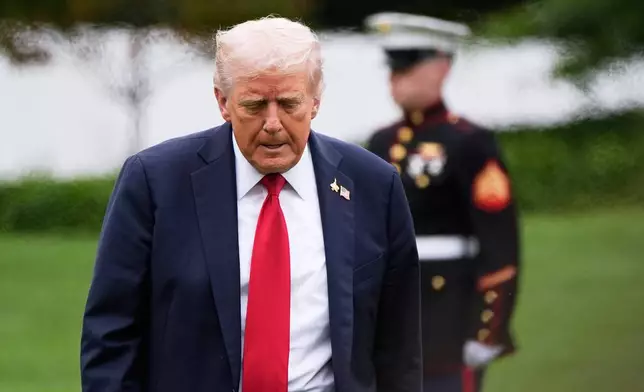
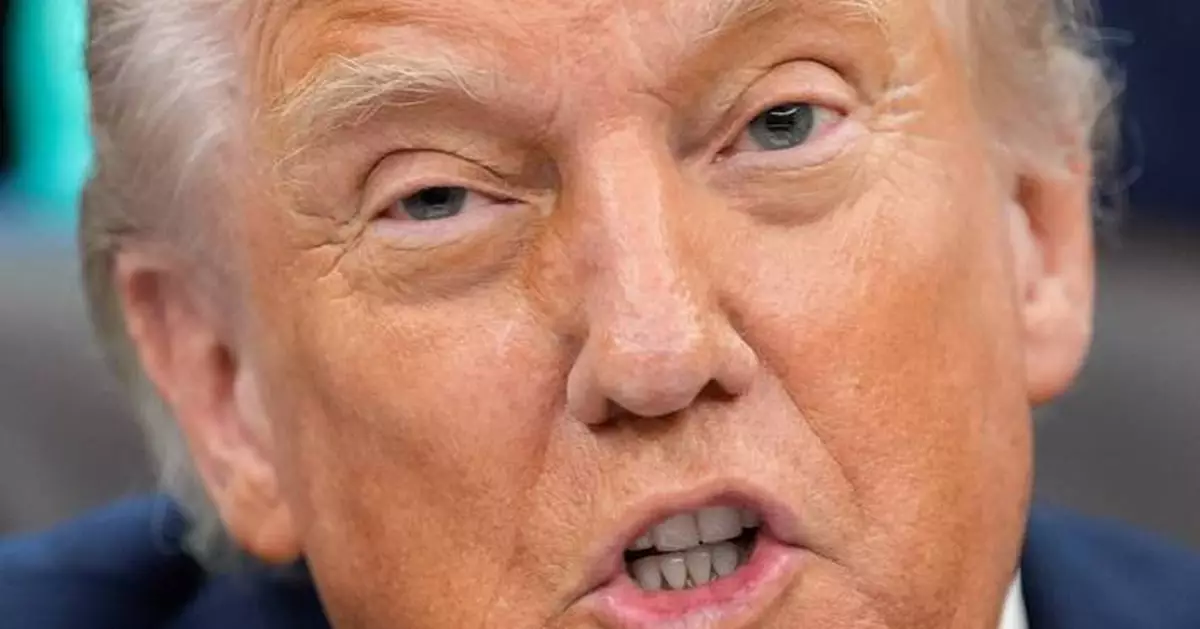
President Donald Trump walks from Marine One after arriving on the South Lawn of the White House, Tuesday, Sept. 30, 2025, in Washington. (AP Photo/Alex Brandon)
President Donald Trump walks from Marine One after arriving on the South Lawn of the White House, Tuesday, Sept. 30, 2025, in Washington. (AP Photo/Alex Brandon)

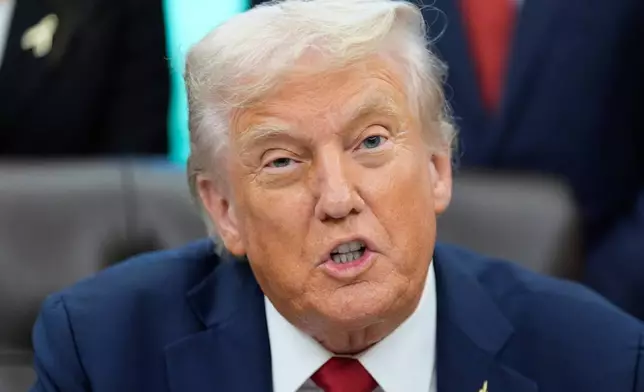
President Donald Trump speaks in the Oval Office of the White House, Tuesday, Sept. 30, 2025, in Washington. (AP Photo/Alex Brandon)
President Donald Trump speaks in the Oval Office of the White House, Tuesday, Sept. 30, 2025, in Washington. (AP Photo/Alex Brandon)

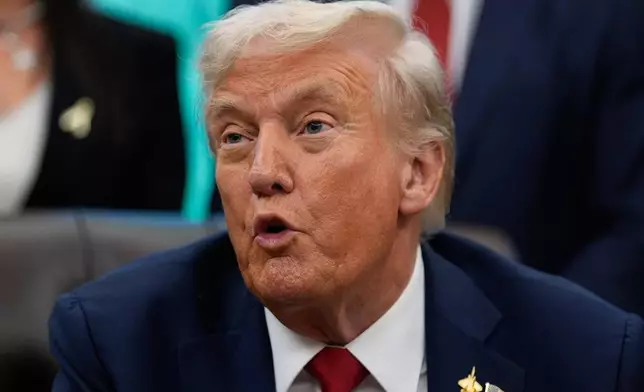
President Donald Trump speaks in the Oval Office of the White House before signing an executive order regarding childhood cancer and the use of AI, Tuesday, Sept. 30, 2025, in Washington. (AP Photo/Alex Brandon)
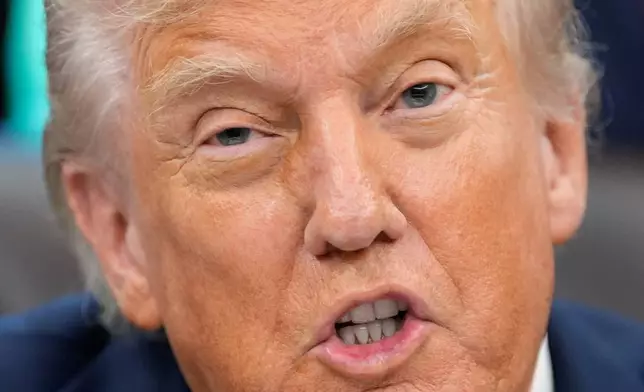
President Donald Trump speaks in the Oval Office of the White House before signing an executive order regarding childhood cancer and the use of AI, Tuesday, Sept. 30, 2025, in Washington. (AP Photo/Alex Brandon)

President Donald Trump speaks in the Oval Office of the White House, Tuesday, Sept. 30, 2025, in Washington. (AP Photo/Alex Brandon)

President Donald Trump speaks in the Oval Office of the White House, Tuesday, Sept. 30, 2025, in Washington. (AP Photo/Alex Brandon)

“The President determined that the United States is in a non-international armed conflict with these designated terrorist organizations,” the memo says. Trump directed the Pentagon to “conduct operations against them pursuant to the law of armed conflict.”

“The United States has now reached a critical point where we must use force in self-defense and defense of others against the ongoing attacks by these designated terrorist organizations,” the memo says.

Besides signaling a potential new moment in Trump's stated “America First” agenda that favors non-intervention overseas, the declaration raises stark questions about how far the White House intends to use its war powers and if Congress will exert its authority to approve — or ban — such military actions.

“The United States is taking a much more dramatic step — one that I think is a very, very far stretch of international law and a dangerous one," said Matthew Waxman, who was a national security official in the George W. Bush administration. It "means the United States can target members of those cartels with lethal force. It means the United States can capture and detain them without trial.”

The U.S. military last month carried out three deadly strikes against boats in the Caribbean that the administration accused of ferrying drugs. At least two of those operations were carried out on vessels that originated from Venezuela.

Those strikes followed up a buildup of U.S. maritime forces in the Caribbean unlike any seen in recent times. The Navy’s presence in the region — eight warships with over 5,000 sailors and Marines — has been pretty stable for weeks, according to two defense officials, who spoke on condition of anonymity to discuss ongoing operations.

The memo did not include a timestamp, but it references a Sept. 15 U.S. strike that “resulted in the destruction of the vessel, the illicit narcotics, and the death of approximately 3 unlawful combatants.”

“As we have said many times, the President acted in line with the law of armed conflict to protect our country from those trying to bring deadly poison to our shores, and he is delivering on his promise to take on the cartels and eliminate these national security threats from murdering more Americans,” the White House said.

Pentagon officials briefed senators on the strikes Wednesday, according to a person familiar with the matter, who was not authorized to comment publicly and spoke on the condition of anonymity. The Pentagon referred questions to the White House.

What the Trump administration laid out at the classified briefing at the Capitol was perceived by several senators as pursuing a new legal framework that raised questions particularly regarding the role of Congress in authorizing any such action, that person said.

Pentagon officials also briefed House staffers last week on the strikes, according to another person who was briefed on the meeting and similarly spoke on condition of anonymity.

The memo, which was reported earlier by The New York Times, lays out a rationale seen both as the administration's justification for the military strikes it has already taken on the boats in the Caribbean — which have raised concerns from lawmakers as potentially unlawful — as well as any action to come.

A White House official who wasn’t authorized to comment publicly and spoke on condition of anonymity said the memo was sent to Congress on Sept. 18 and does not convey any new information. The person familiar with the Senate briefing said it was transmitted this week.

Trump has designated several Latin American drug cartels as foreign terrorist organizations, and the administration had previously justified the military action as a necessary escalation to stem the flow of drugs into the United States.

Pentagon officials could not provide a list of the designated terrorist organizations at the center of the conflict, a matter that was a major source of frustration for some of the lawmakers who were briefed this week, according to one of the people familiar with the briefings.

While “friendly foreign nations have made significant efforts to combat these organizations,” the memo said, the groups “are now transnational and conduct ongoing attacks throughout the Western Hemisphere as organized cartels.” The memo refers to cartel members as “unlawful combatants.”

The Trump administration is trying to justify the use of military force against drug cartels in the same way the Bush administration justified the war against al-Qaida following the Sept. 11 attacks, said Waxman, who served in the State and Defense Departments and on the National Security Council under Bush.

Bush, however, had authorization from Congress, unlike Trump. The Trump administration is arguing that it no longer has to consider the individual circumstances of using force, said Waxman, who now chairs Columbia Law School’s National Security Law Program.

“It’s basically saying, ‘We don’t have to engage in that kind of case-by-case decision-making,’” Waxman said. “All of these vessels that are carrying enemy personnel can be targeted, whether they’re headed towards the United States or not.”

Waxman said he expects more strikes and “we’ll see if the United States takes the next big step and engages in lethal force or armed force on the territory of another state.”

Lawmakers of both major political parties have pressed Trump to seek war powers authority from Congress for operations against alleged drug traffickers. Several senators and human rights groups have questioned the legality of the strikes, calling them potential overreach of executive authority in part because the military was used for law enforcement purposes.

Sen. Jack Reed of Rhode Island, the top Democrat on the Senate Armed Services Committee, said drug cartels are “despicable” but the Trump administration has offered “no credible legal justification, evidence or intelligence for these strikes.”

Reed, a former Army officer, said “every American should be alarmed that their President has decided he can wage secret wars against anyone he calls an enemy.”

Associated Press writers Konstantin Toropin, Ben Finley and Michelle L. Price contributed to this report.
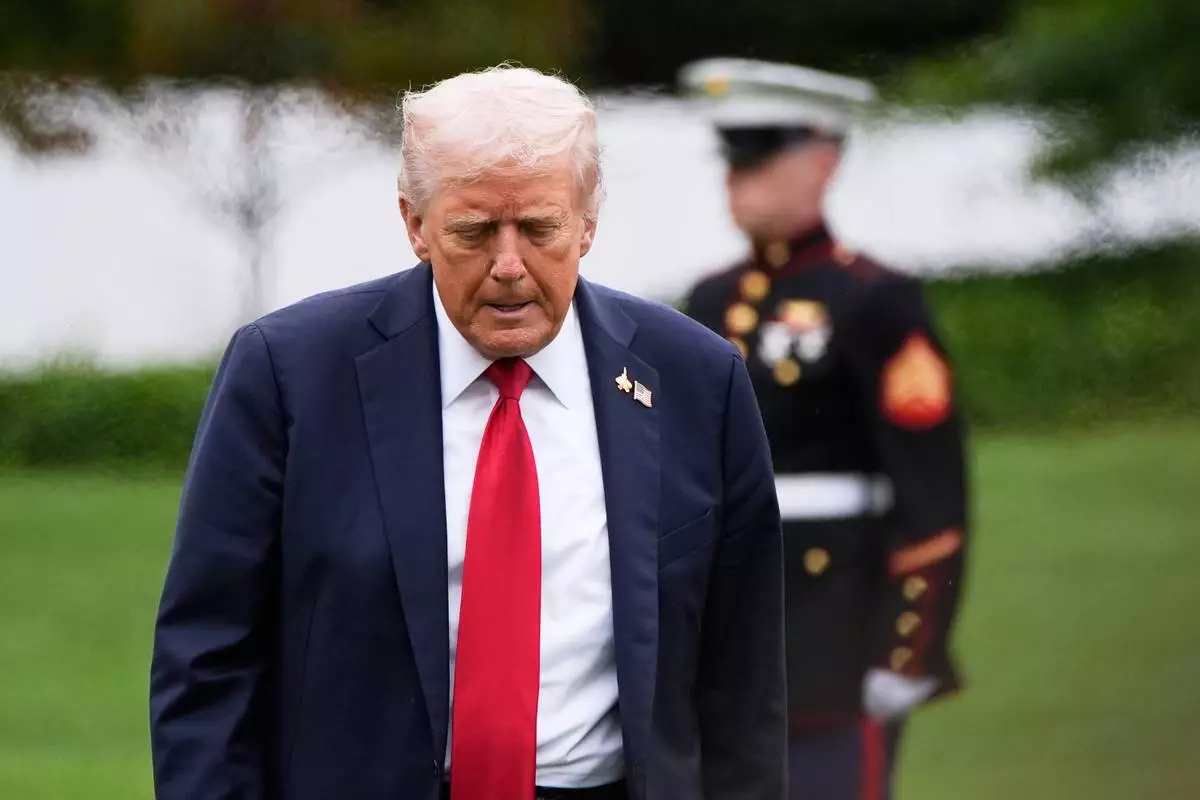
President Donald Trump walks from Marine One after arriving on the South Lawn of the White House, Tuesday, Sept. 30, 2025, in Washington. (AP Photo/Alex Brandon)
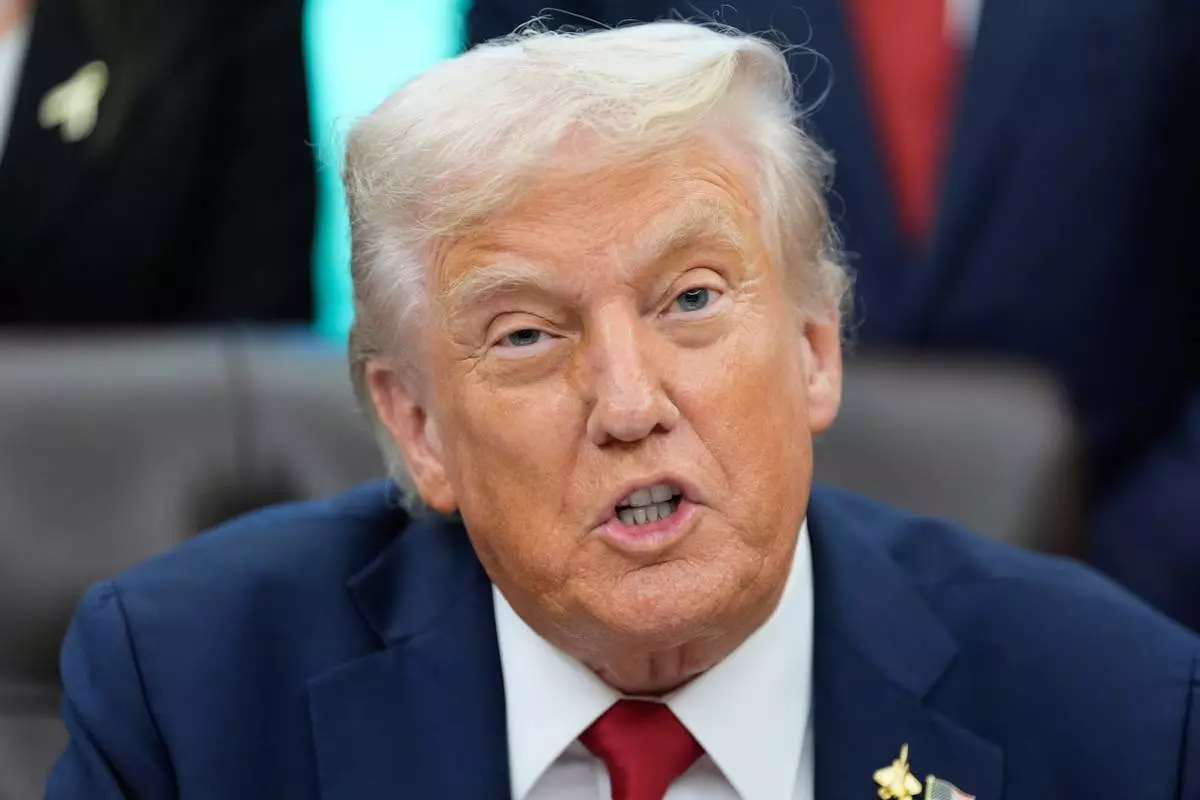
President Donald Trump walks from Marine One after arriving on the South Lawn of the White House, Tuesday, Sept. 30, 2025, in Washington. (AP Photo/Alex Brandon)

President Donald Trump speaks in the Oval Office of the White House, Tuesday, Sept. 30, 2025, in Washington. (AP Photo/Alex Brandon)
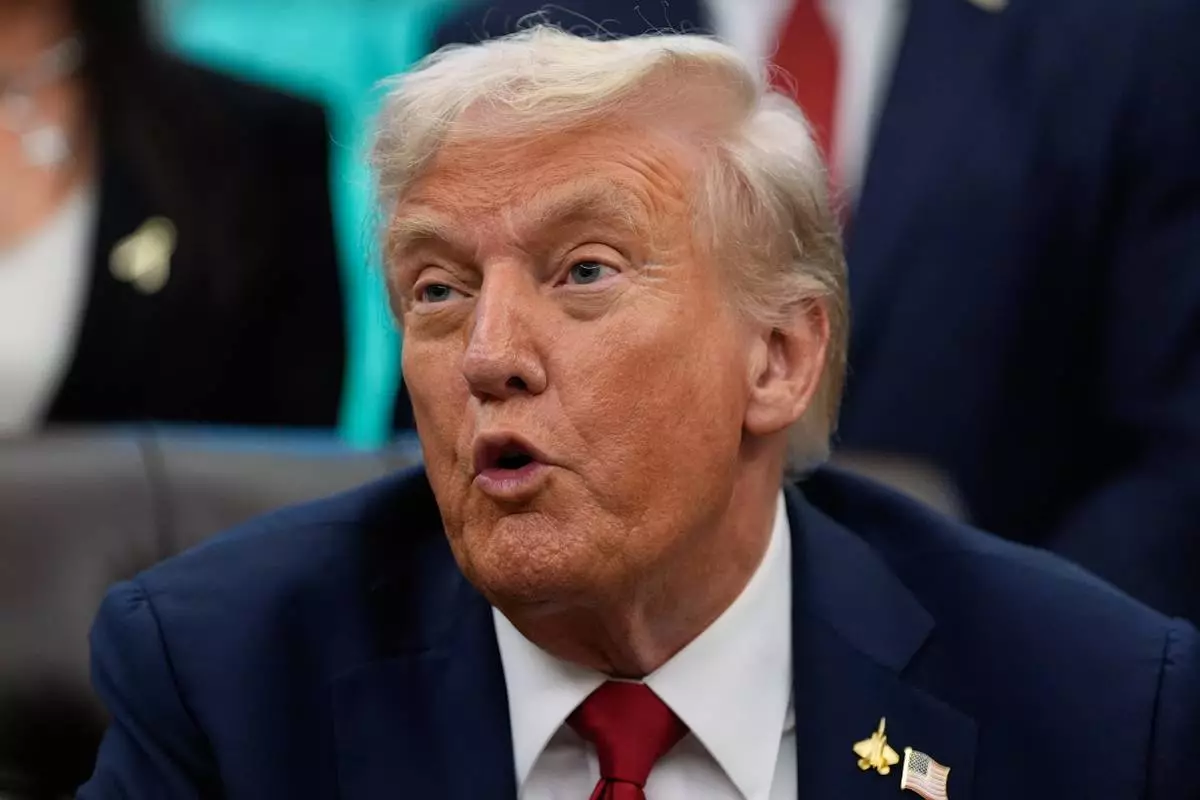
President Donald Trump speaks in the Oval Office of the White House, Tuesday, Sept. 30, 2025, in Washington. (AP Photo/Alex Brandon)

President Donald Trump speaks in the Oval Office of the White House before signing an executive order regarding childhood cancer and the use of AI, Tuesday, Sept. 30, 2025, in Washington. (AP Photo/Alex Brandon)
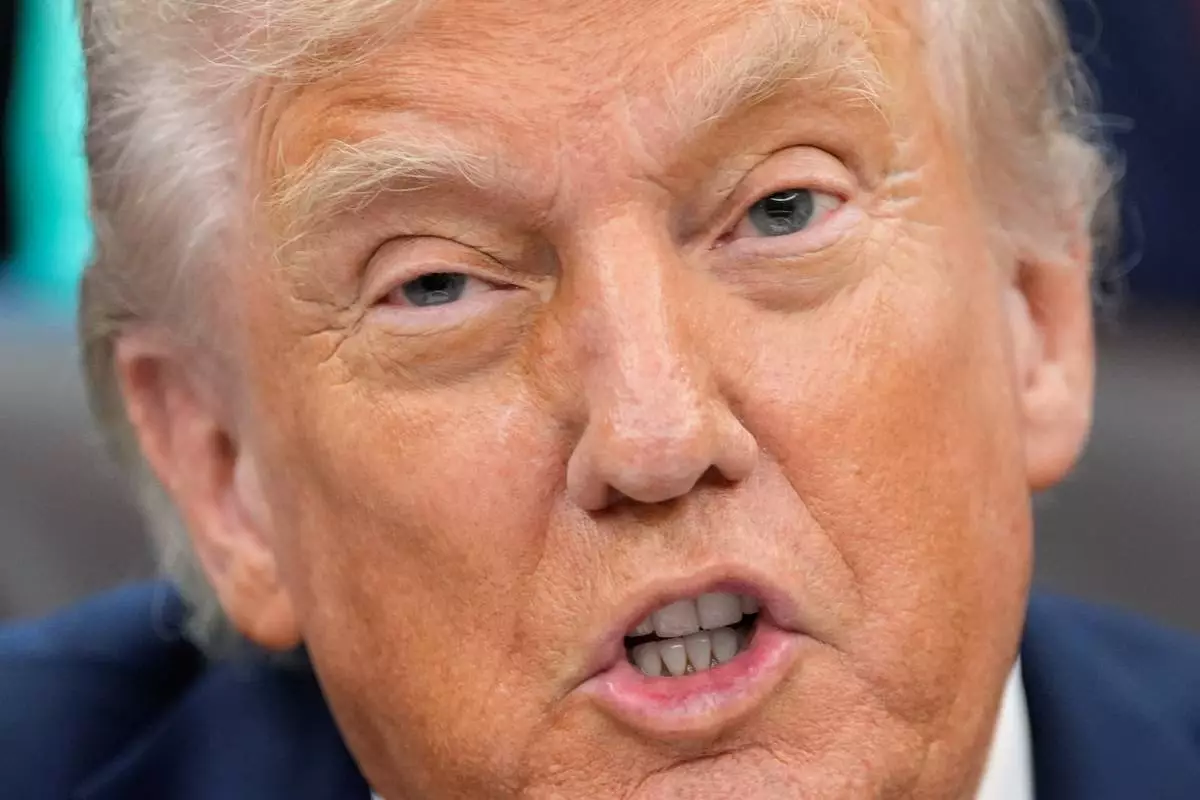
President Donald Trump speaks in the Oval Office of the White House before signing an executive order regarding childhood cancer and the use of AI, Tuesday, Sept. 30, 2025, in Washington. (AP Photo/Alex Brandon)

President Donald Trump speaks in the Oval Office of the White House, Tuesday, Sept. 30, 2025, in Washington. (AP Photo/Alex Brandon)


President Donald Trump speaks in the Oval Office of the White House, Tuesday, Sept. 30, 2025, in Washington. (AP Photo/Alex Brandon)

When President Donald Trump suspended the refugee program on day one of his current administration, thousands of people around the world who'd been so close to a new life in America found themselves abandoned.

As part of Trump's crackdown on legal and illegal migration, the Republican president has upended the decades-old refugee program that has served as a beacon for those fleeing war and persecution. In October, he resumed the program but set a historic low of refugee admissions at 7,500 — mostly white South Africans.

New restrictions were announced after an Afghan national became the suspect in the shooting of two National Guard members last week. The Trump administration also plans a review of refugees let in during the Democratic Biden administration. Trump's administration has cited economic and national security concerns for its policy changes.

About 600,000 people were being processed to come to the U.S. as refugees when the program was halted, according to the administration. Aside from dozens of white South Africans let in this year, only about 100 others have been admitted as a result of a lawsuit by advocates seeking to restore the refugee program, said Mevlüde Akay Alp, a lawyer arguing the case.

The Associated Press spoke to three families whose lives have been thrown into disarray because of the changing policies.

The Dawoods fled civil war in Syria and settled in northern Iraq. They hoped to find a new home that could provide better medical care for a daughter who had fallen from the fourth floor of the family’s apartment building.

After they were accepted as refugees to the U.S., son Ibrahim and his sister Ava relocated to Connecticut in November 2024. His parents and one of his brothers were scheduled to fly in January.

But just two days before they were to board their flight, mother Hayat Fatah fainted at a medical check and her departure was postponed. Mohammed, another sibling, didn't want to leave his parents behind.

Nearly a year later, he and his parents are still waiting.

In America, Ibrahim wakes up early to tutor people online before going to his job as a math teacher at a private school, and then he takes care of his sister when he gets home. He said his mother often cries when they talk because she wishes she were in America to help care for her daughter.

Chinese Christian Lu Taizhi fled to Thailand more than a decade ago, fearing persecution for his beliefs. He’s lived in legal limbo since, waiting to be resettled in the United States.

Lu said he has long admired the U.S. for what he calls its Christian character — a place where he feels he and his family “can seek freedom.”

Lu was born into a family branded as “hostile elements” by the Chinese Communist Party for its land ownership and ties to a competing political party. A teacher and poet, Lu grew interested in history banned by the Chinese state, penning tributes to the bloody 1989 Tiananmen crackdown on pro-democracy protests in Beijing.

In 2004, Lu was arrested after police found poems and essays he secretly published criticizing Chinese politics and the education system. After his release, Lu became a Christian and began preaching, drawing scrutiny from local authorities.

With Chinese leader Xi Jinping’s rise to power, controls tightened. When Beijing arrested hundreds of rights lawyers in 2015, Lu took his family and fled, settling in Thailand, where they applied for refugee status with the United Nations.

Eight years later, the U.N. notified Lu the U.S. had accepted his application. But after several delays, his most recent flight was canceled shortly after Trump’s inauguration. His application has been put on hold indefinitely.

Louis arrived in the United States as a refugee in September 2024. He left his wife and two children in East Africa, hoping they could soon be reunited in the U.S.

But that dream faded a few months later with Trump's return to the presidency.

Louis, who insisted on being identified only by his first name out of concern that speaking publicly could complicate his case, was told in January that a request he had made to bring his family to the U.S. had been frozen due to changes in refugee policies.

Now, the family members live thousands of miles apart without knowing when they will be reunited. His wife, Apolina, and the children, 2 and 3 years old, are in a refugee camp in Uganda. Louis is in Kentucky.

“I don’t want to lose her, and she does not want to lose me,” said Louis, who resettled in Kentucky with the help of the International Rescue Committee.

Louis and Apolina's families applied for refugee status after fleeing war in the Democratic Republic of Congo. Louis' application, initiated by his parents, was approved, Apolina's, made separately by her parents, was not.

Apolina thought that, as the wife of a refugee, it would take her no more than one year to reunite with her husband, who now works in an appliance factory and has already applied for permanent residency.

The separation hasn’t been easy for her and the children, who live in a tent in the refugee camp.

Santana reported from Washington, Kang from Beijing and Salomon from Miami. Associated Press writers Evelyne Musambi in Nairobi, Kenya, and Salar Salim in Irbil, Iraq, contributed to this report.

Lu Taizhi, a Chinese Christian who is waiting to be resettled in the United States, points to the webpage of the International Rescue Committee, which is under maintenance and not operational in Ban Wawee village, Chiang Rai Province, Thailand, Nov. 27, 2025. (AP Photo/ Tian Macleod Ji)

Lu Taizhi, a Chinese Christian who is waiting to be resettled in the United States, points to the webpage of the International Rescue Committee, which is under maintenance and not operational in Ban Wawee village, Chiang Rai Province, Thailand, Nov. 27, 2025. (AP Photo/ Tian Macleod Ji)

Syrian refugee Abdulilah Amin Dawoud, 73, poses for a picture at his home in Irbil, Iraq, Nov. 16, 2025. (AP Photo/Farid Abdulwahed)

Syrian refugee Abdulilah Amin Dawoud, 73, poses for a picture at his home in Irbil, Iraq, Nov. 16, 2025. (AP Photo/Farid Abdulwahed)

Syrian refugee Hayat Fatah, 65, cleans dishes at her home in Irbil, Iraq, Nov. 16, 2025. (AP Photo/Farid Abdulwahed)

Syrian refugee Hayat Fatah, 65, cleans dishes at her home in Irbil, Iraq, Nov. 16, 2025. (AP Photo/Farid Abdulwahed)

Syrian refugee Mohammed Dawood, 30, left, poses for a photo with his parents, Hayat Fatah, 65, center, and Abdulilah Amin Dawoud, 73, at their home in Irbil, Iraq, Nov. 16, 2025. (AP Photo/Farid Abdulwahed)

Syrian refugee Mohammed Dawood, 30, left, poses for a photo with his parents, Hayat Fatah, 65, center, and Abdulilah Amin Dawoud, 73, at their home in Irbil, Iraq, Nov. 16, 2025. (AP Photo/Farid Abdulwahed)

Recommended Articles