LANSING, Mich. (AP) — An online fundraiser for family members of the man who opened fire in a Michigan church and set it ablaze has raised over $275,000 as of Thursday in what the organizer described as a “whirlwind of love and forgiveness.”
On Sunday, Thomas “Jake” Sanford, 40, drove his pickup truck into The Church of Jesus Christ of Latter-day Saints chapel in Grand Blanc Township, near Flint, shot at the congregation and set the building on fire.
The attack killed four people, injured eight others and left the church destroyed. Police killed Sanford at the scene.
Dave Butler, a Utah resident and lifelong member of The Church of Jesus Christ of Latter-day Saints, watched news coverage of the attack for hours. The following day, he considered that Sanford's family were also victims of the attack.
“We understand that there is a family that needs to be taken care of,” he said.
Butler set up the fundraiser on the platform GiveSendGo on Tuesday morning. He leveraged media connections from his participation in podcasts about the Latter-day Saints faith to help promote the fundraiser.
Donations poured in and the effort quickly drew attention, too, highlighting many people being far more familiar with efforts to raise money online for victims of mass shootings in the U.S.
Authorities have not discussed Sanford's motive for the attack this week, though they have described it as an “act of targeted violence” by Sanford alone. Longtime friends have said he expressed hatred toward the faith known widely as the Mormon church after living in Utah, where he dated but later broke up with a woman who was a member of the faith.
Butler's original goal was to raise $10,000 to help the family through the next few months.
He said many members of the faith have articulated that contributing felt like the right way to respond to the tragedy.
“I feel like I’m responding to an attack against us in the right way. Not to get revenge, not to get justice, not to blame the wrong people,” Butler said.
Over 7,000 people contributed to the fundraiser for the Sanford family in the 48 hours since it was posted, raising more money than any of the verified online fundraisers for the churchgoers who were killed or injured in the attack. Many left messages saying that they are members of the wider church.
“Another Latter-Day Saint here, praying for this family to feel loved and supported during these challenging times,” wrote a donor who did not list a name.
An attorney for the Sanford family did not return a message left by The Associated Press on Thursday. In a previous written statement release by their attorney, family members said, “No words can adequately convey our sorrow for the victims and their families.”
Forgiveness is a mandate for members of the faith, said Deidre Nicole Green, assistant professor of Latter-day Saint/Mormon Studies at the Graduate Theological Union in Berkeley, California. She said Joseph Smith’s Book of Doctrine and Covenants states that “it is up to God to forgive who God wants to forgive, but as human beings, we’re required to forgive everyone – even our enemies.”
“There is still some nuance that could apply to different situations,” Green said. “In one passage in the Book of Mormon, we’re told we need to forgive those who repent or when a perpetrator is seeking forgiveness.”
Green teaches a class on forgiveness and has conducted research among women members of the faith who survived the genocide in Rwanda and in post-apartheid South Africa. Green said a Rwandan woman felt compelled to forgive her father’s killer because she wanted to break the cycle of violence.
“She talked about how without forgiveness, there is this ongoing cycle of retaliation where the sense of justice gets lost,” Green said. “So in that sense, forgiveness was necessary for justice.”
Butler pointed to several tenets of his faith that have likely inspired contributors, including the Christian ideal of forgiveness and turning “the other cheek.”
“The Epistle of James says to care for the widows and the orphans,” Butler said. “Jesus says, ‘Blessed are those that mourn. They shall be comforted.’"
Lisa Louis, who was in the chapel when her father, Craig Hayden, was fatally shot, said she instantly forgave the gunman “with my heart” after looking into his eyes.
Butler said he is in contact with the Sanford family and believes the messages left by many donors online were meaningful to them.
“The event is awful. There’s no way around it,” Butler said. “I hope that healing can come soon and that this can be part of the experience of healing.”
Associated Press writer Deepa Bharath contributed from Los Angeles.
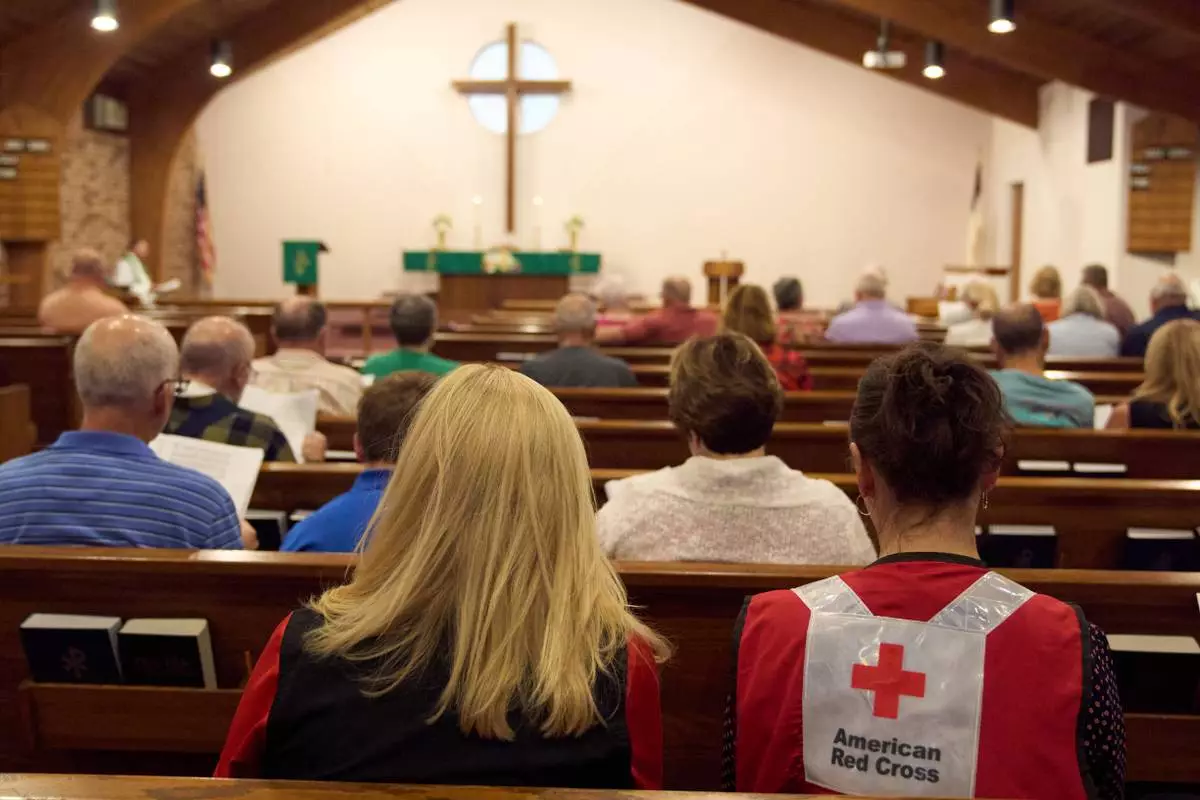
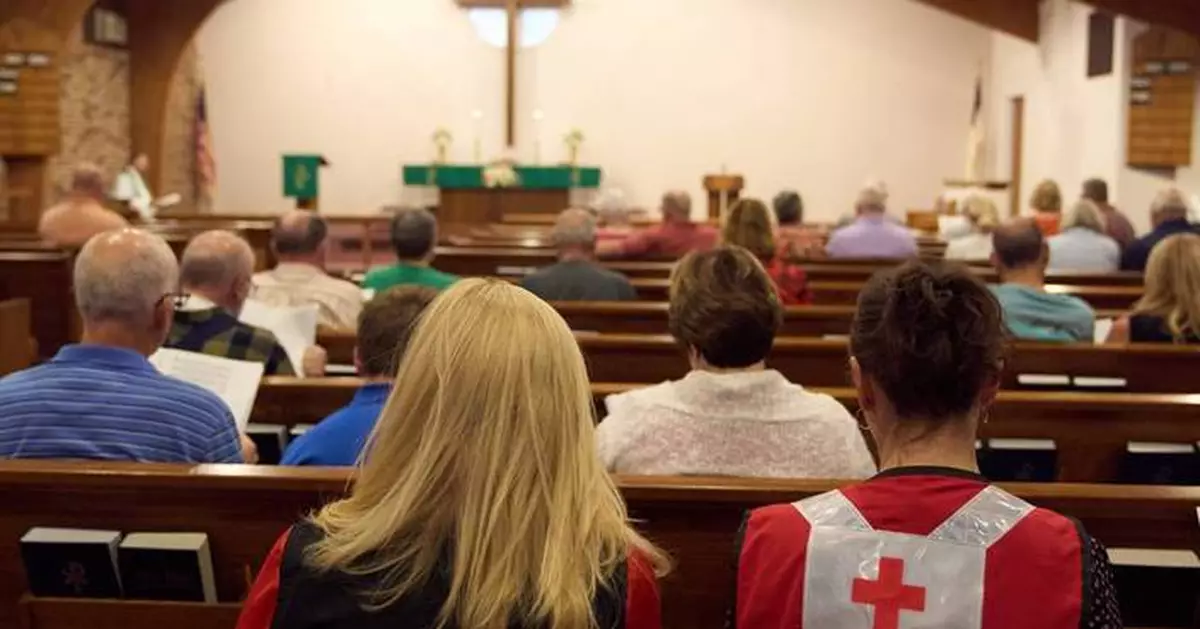
A woman wearing an American Red Cross shirt is seen during a service for the Sunday morning shooting at The Church of Jesus Christ of Latter-day Saints in Grand Blanc Township, Mich., Monday, Sept. 29, 2025. (AP Photo/Ryan Sun)
SEOUL, South Korea (AP) — A South Korean court sentenced former President Yoon Suk Yeol to five years in prison Friday in the first verdict from eight criminal trials over the martial law debacle that forced him out of office and other allegations.
Yoon was impeached, arrested and dismissed as president after his short-lived imposition of martial law in December 2024 triggered huge public protests calling for his ouster.
The most significant criminal charge against him alleges that his martial law enforcement amounted to a rebellion, and the independent counsel has requested the death sentence in the case that is to be decided in a ruling next month.
Yoon has maintained he didn’t intend to place the country under military rule for an extended period, saying his decree was only meant to inform the people about the danger of the liberal-controlled parliament obstructing his agenda. But investigators have viewed Yoon’s decree as an attempt to bolster and prolong his rule, charging him with rebellion, abuse of power and other criminal offenses.
In Friday’s case, the Seoul Central District Court sentenced Yoon for defying attempts to detain him, fabricating the martial law proclamation, and sidestepping a legally mandated full Cabinet meeting and thus depriving some Cabinet members who were not convened of their due rights to deliberate on his decree.
Judge Baek Dae-hyun said in the televised ruling that imposing “a grave punishment” was necessary because Yoon hasn’t shown remorse and has only repeated “hard-to-comprehend excuses.” The judge also restoring legal systems damaged by Yoon’s action was necessary.
Yoon’s defense team said they will appeal the ruling, which they believe was “politicized” and reflected “the unliberal arguments by the independent counsel.” Yoon’s defense team argued the ruling “oversimplified the boundary between the exercise of the president’s constitutional powers and criminal liability.”
Prison sentences in the multiple, smaller trials Yoon faces would matter if he is spared the death penalty or life imprisonment at the rebellion trial.
Park SungBae, a lawyer who specializes in criminal law, said there is little chance the court would decide Yoon should face the death penalty in the rebellion case. He said the court will likely issue a life sentence or a sentence of 30 years or more in prison.
South Korea has maintained a de facto moratorium on executions since 1997 and courts rarely hand down death sentences. Park said the court would take into account that Yoon’s decree didn’t cause casualties and didn’t last long, although Yoon hasn’t shown genuine remorse for his action.
South Korea has a history of pardoning former presidents who were jailed over diverse crimes in the name of promoting national unity. Those pardoned include strongman Chun Doo-hwan, who received the death penalty at a district court over his 1979 coup, the bloody 1980 crackdowns of pro-democracy protests that killed about 200 people, and other crimes.
Some observers say Yoon will likely retain a defiant attitude in the ongoing trials to maintain his support base in the belief that he cannot avoid a lengthy sentence but could be pardoned in the future.
On the night of Dec. 3, 2024, Yoon abruptly declared martial law in a televised speech, saying he would eliminate “anti-state forces” and protect “the constitutional democratic order.” Yoon sent troops and police officers to encircle the National Assembly, but many apparently didn’t aggressively cordon off the area, allowing enough lawmakers to get into an assembly hall to vote down Yoon’s decree.
No major violence occurred, but Yoon's stunt caused the biggest political crisis in South Korea and rattled its diplomacy and financial markets. For many, his decree, the first of its kind in more than four decades in South Korea, brought back harrowing memories of past dictatorships in the 1970s and 1980s, when military-backed leaders used martial law and emergency measures to deploy soldiers and tanks on the streets to suppress demonstrations.
After Yoon's ouster, his liberal rival Lee Jae Myung became president via a snap election last June. After taking office, Lee appointed three independent counsels to look into allegations involving Yoon, his wife and associates.
Yoon's other trials deal with charges like ordering drone flights over North Korea to deliberately inflame animosities to look for a pretext to declare martial law. Other charges accuse Yoon of manipulating the investigation into a marine’s drowning in 2023 and receiving free opinion surveys from an election broker in return for a political favor.

A supporter of former South Korean President Yoon Suk Yeol shouts slogans outside Seoul Central District Court, in Seoul, South Korea, Friday, Jan. 16, 2026. (AP Photo/Lee Jin-man)

Supporters of former South Korean President Yoon Suk Yeol hold signs and flags outside Seoul Central District Court, in Seoul, South Korea, Friday, Jan. 16, 2026. (AP Photo/Lee Jin-man)
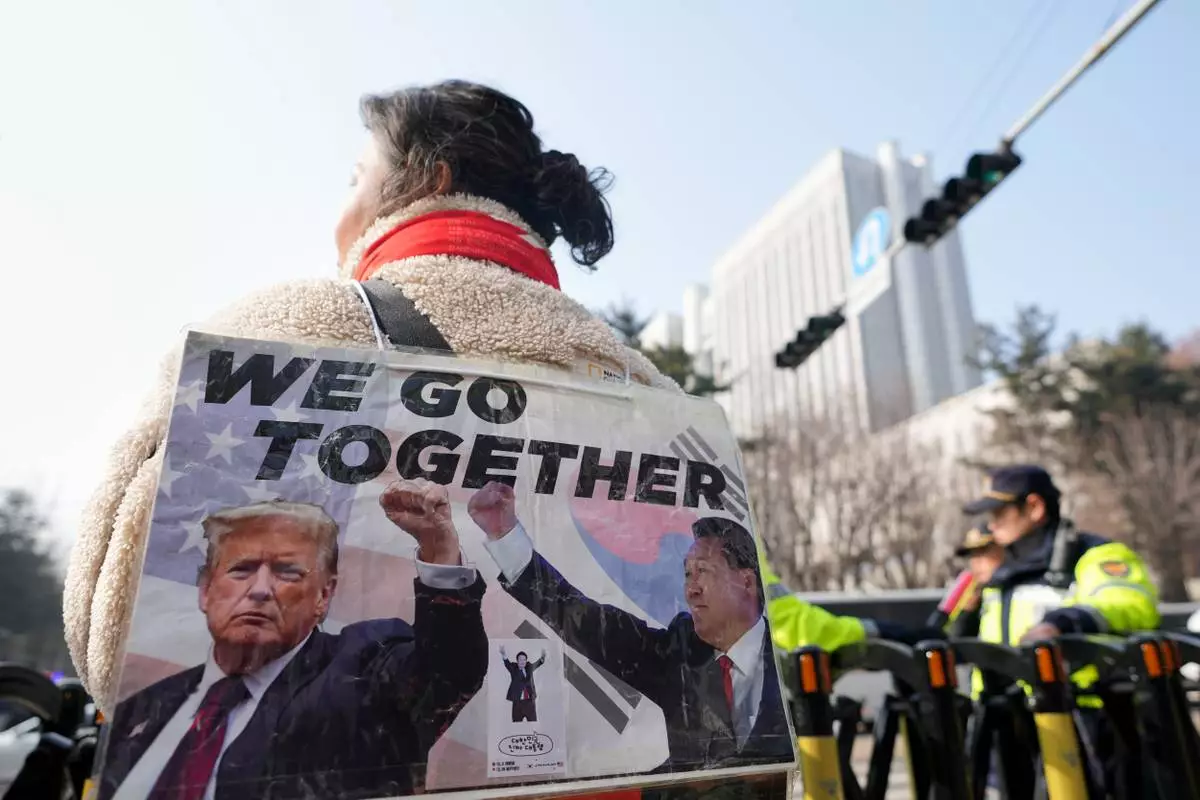
A supporter of former South Korean President Yoon Suk Yeol waits for a bus carrying former South Korean President Yoon Suk Yeol outside Seoul Central District Court, in Seoul, South Korea, Friday, Jan. 16, 2026. (AP Photo/Lee Jin-man)
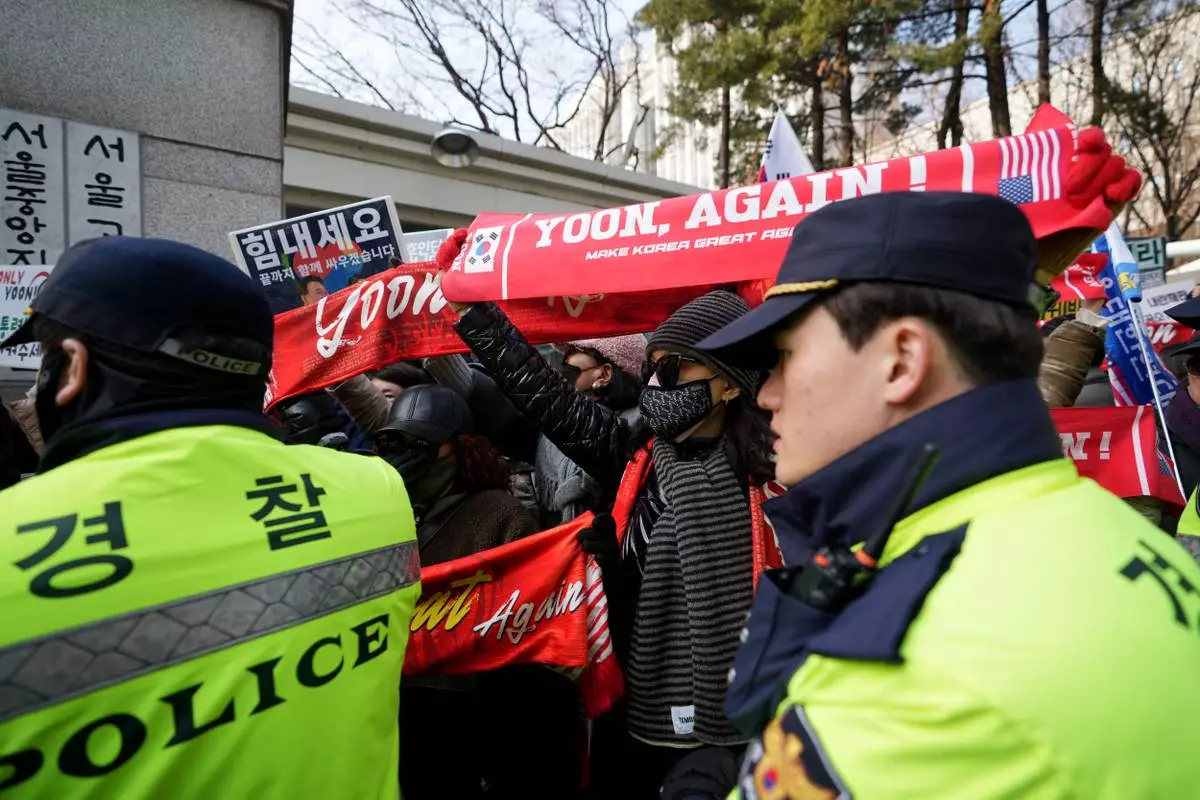
Supporters of former South Korean President Yoon Suk Yeol hold signs as police officers stand guard outside Seoul Central District Court, in Seoul, South Korea, Friday, Jan. 16, 2026. (AP Photo/Lee Jin-man)
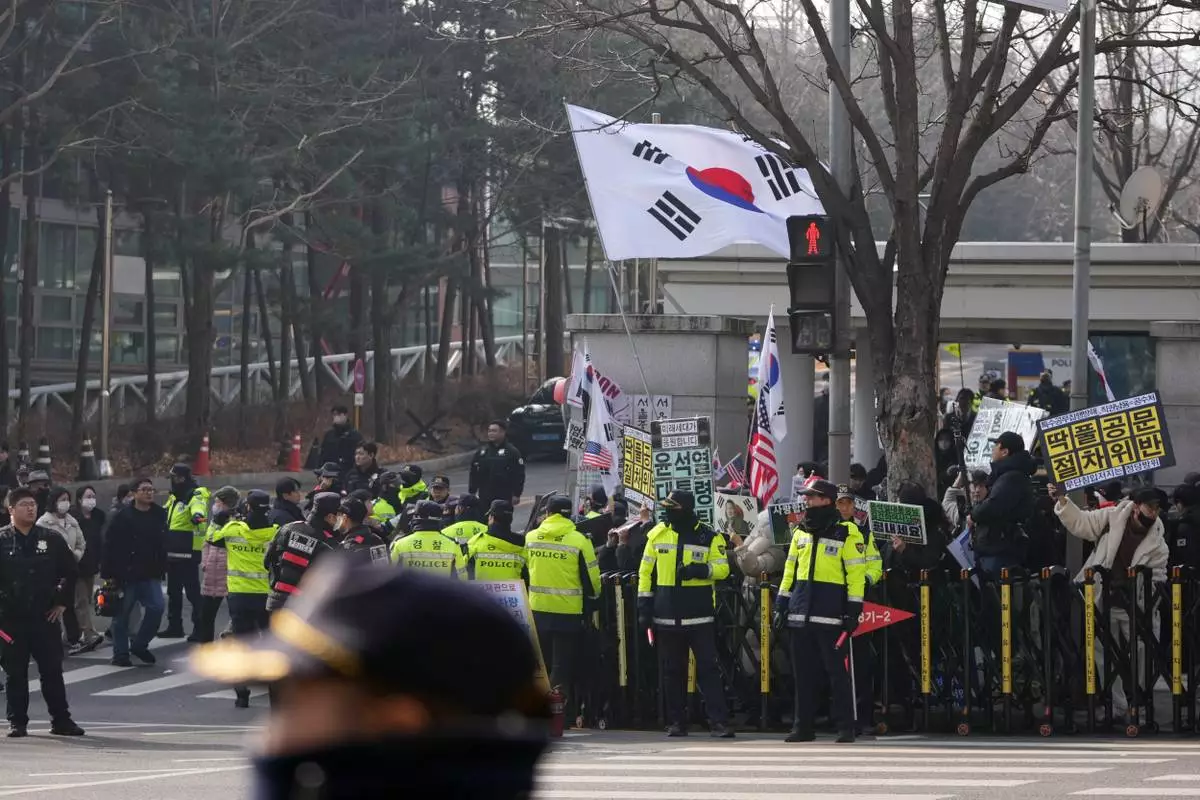
Supporters of former South Korean President Yoon Suk Yeol hold signs and flags outside Seoul Central District Court, in Seoul, South Korea, Friday, Jan. 16, 2026. (AP Photo/Lee Jin-man)
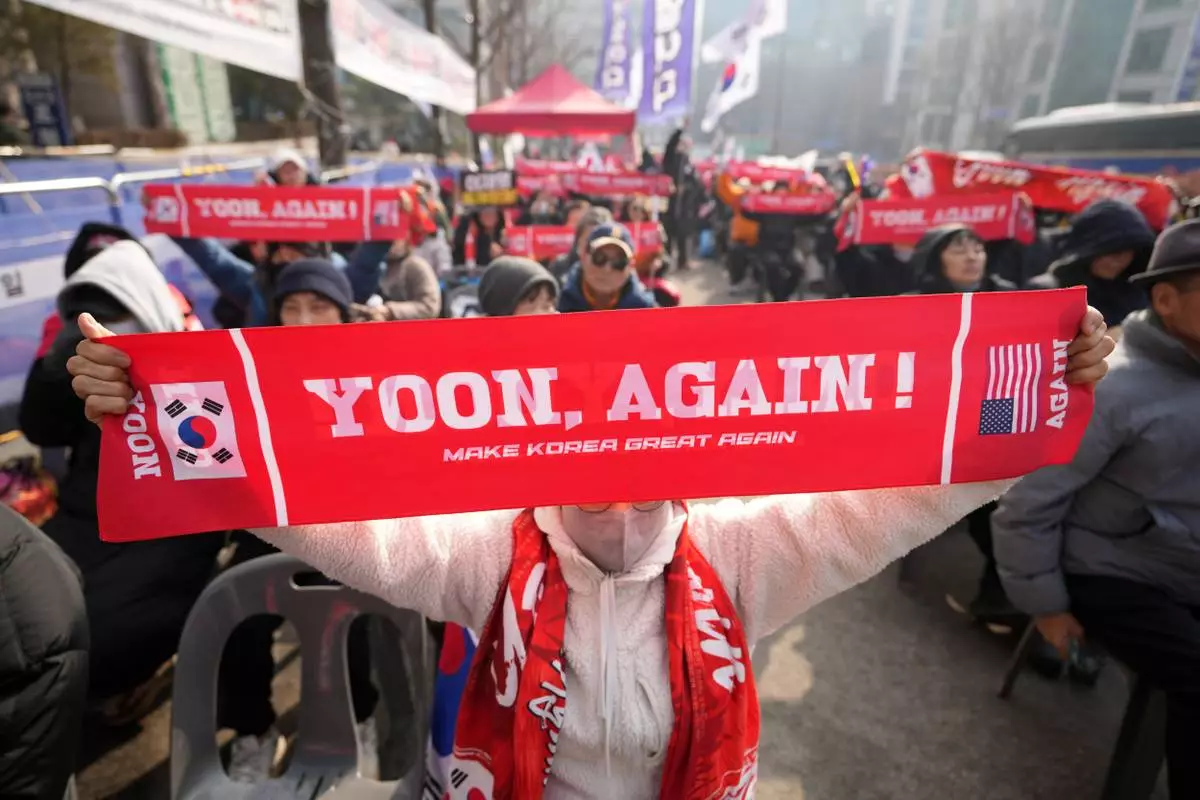
Supporters of former South Korean President Yoon Suk Yeol hold signs outside Seoul Central District Court, in Seoul, South Korea, Friday, Jan. 16, 2026. (AP Photo/Lee Jin-man)
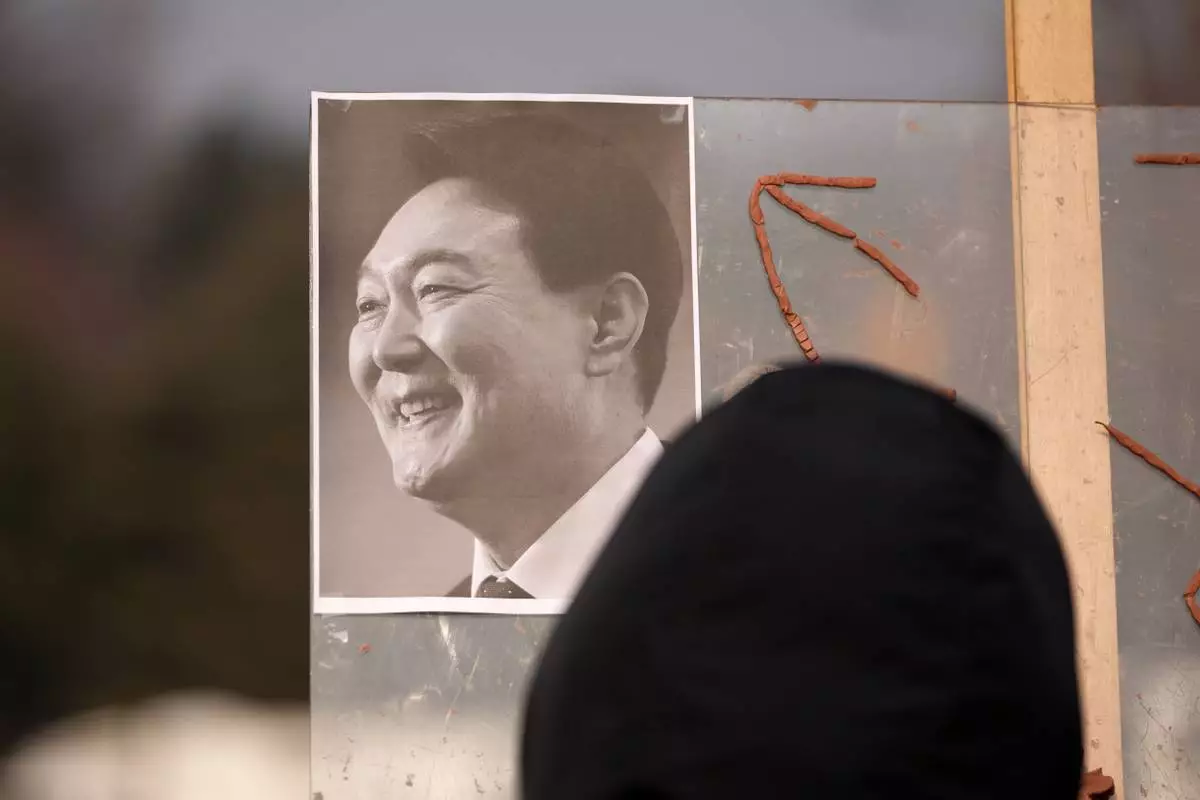
A picture of former South Korean President Yoon Suk Yeol is placed on a board as supporters gather outside Seoul Central District Court, in Seoul, South Korea, Friday, Jan. 16, 2026. (AP Photo/Lee Jin-man)