HANGZHOU, CHINA - Media OutReach Newswire - 3 October 2025 - Geely Riddara launches the RD6 Econ all-electric pickup in Laos and the Philippines, with rollouts to Thailand, Malaysia, and Pakistan—Positioned as an economical, dual-use pickup for commercial and personal needs, the RD6 Econ combines outstanding cost efficiency with optimized energy consumption to offer global markets a more sustainable, value-driven choice.

Geely Riddara Launches RD6 Econ All-electric Pickup in Southeast Asia
The RD6 "Econ" designation derives from "Economic," reflecting the pickup's core values of being Eco-Friendly, Efficient and Economical. With the five major advantages of "Economy, Power, Loading Capacity , Maneuverability and Safety", this model focuses on commercial scenarios, while taking into account the multi-functional needs of family use. The RD6 Econ completely overturns the pain points of traditional fuel pickups such as high energy consumption, low response, and high maintenance.
Economy — Compared with ICE pickups, the RD6 Econ achieves significantly lower running costs in energy and maintenance, with measured consumption as low as 16.2 kWh/100 km.
Power — With a maximum output of 280 kW and peak torque of 485 N·m, the 4WD system ensures confident performance on rugged climbs.
Loading Capacity — A 1,765 mm truck bed and a 1,235 kg loading capacity meet heavy-duty needs; STC surface treatment adds wear resistance and anti-corrosion protection for high-humidity coastal use.
Maneuverability —A 6.1 m minimum turning radius (0.4 m tighter than mainstream ICE pickups) enhances agility in narrow alleys and work sites, while the exceptionally quiet cabin elevates extended driving comfort.
Safety — An integrated skeleton body (70% high-strength steel; 30,300 N·m/deg body torsional stiffness) and 225 mm ground clearance help withstand potholes, gravel, and site scrapes.
Geely Riddara has been China's No. 1 NEV pickup brand for three consecutive years. This achievement reflects broad user trust and support. Building on this foundation, the RD6 Econ (BEV) and RD6 PHEV establish a "BEV + PHEV" dual-technology lineup that complements existing offerings in Southeast Asia, Latin America and Africa, broadens choice in value-driven commercial segments, and accelerates the electrification of regional commercial pickup markets.
Advancing its "Tech-driven, Scenario-defined" strategy, Geely Riddara pairs this lineup with localized energy and service solutions to reduce energy consumption and optimize total cost of ownership. With the RD6 Econ at its core, Geely Riddara brings better choices to the global commercial pickup market, expanding practical options for fleets and businesses.
Hashtag: #GeelyRiddara
The issuer is solely responsible for the content of this announcement.
** The press release content is from Media OutReach Newswire. Bastille Post is not involved in its creation. **
Code4Mzansi highlights the growing strength of South Africa’s developer ecosystem and the role of youth-led innovation in shaping the country’s digital future
JOHANNESBURG, SOUTH AFRICA - Media OutReach Newswire - 26 May 2026 - South Africa’s emerging developers are building close to the ground, with many of the strongest solutions at the inaugural Huawei Code4Mzansi finals focused on systems people use every day: township retail, healthcare, energy, agriculture, payments and the creative economy.
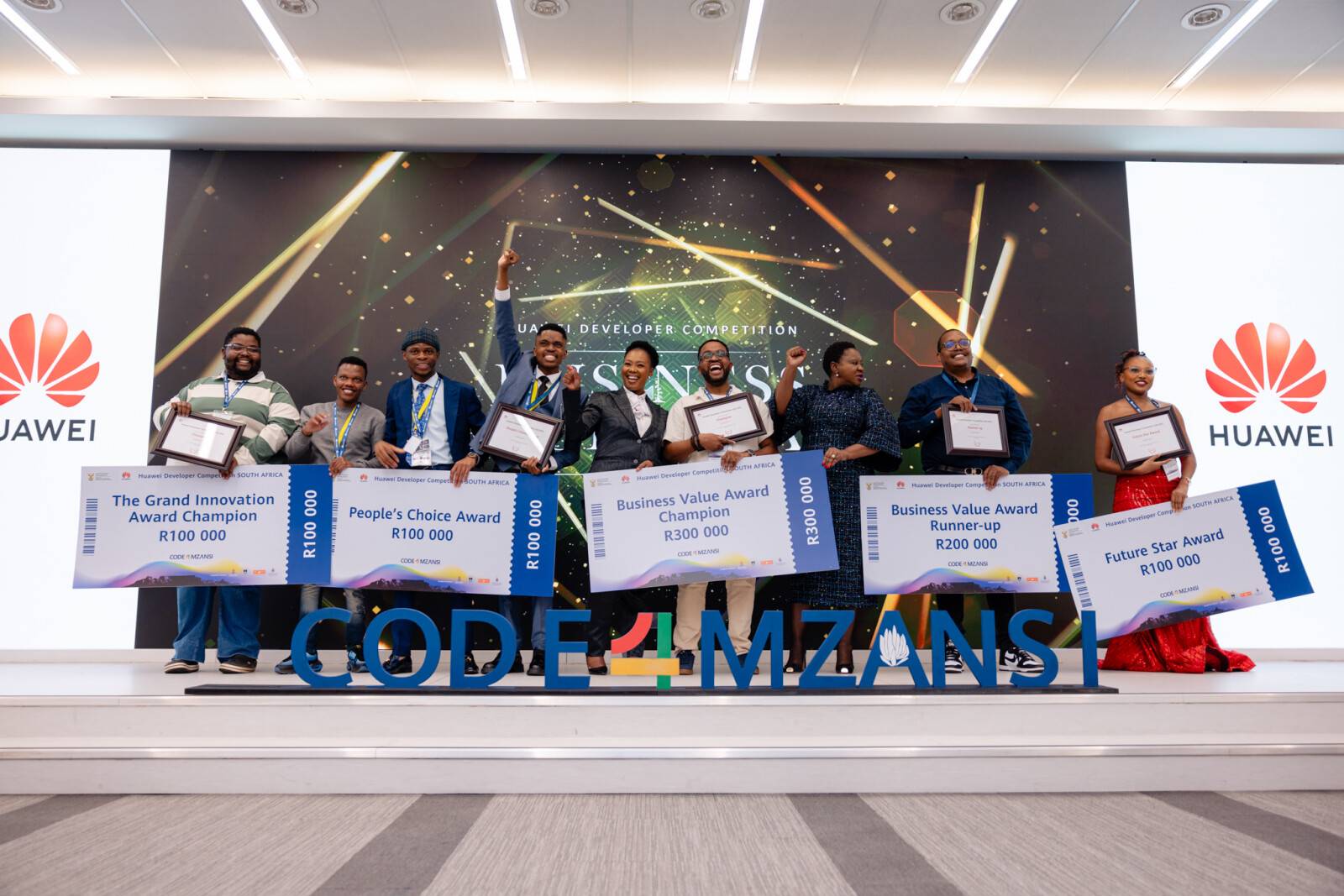 The winners at the Huawei Developer Competition, Code4Mzansi
 The competition was held in partnership with the Department of Small Business Development. "The Code4Mzansi competition is not just a celebration of achievement, it is a launchpad for the future," said Minister Stella Ndabeni, whose department co-hosted the event and delivered the closing address.
The finals revealed a clear shift from building abstract digital products to practical tools that help small businesses trade better, communities access services more easily, and local industries solve problems faster.
Four finalist teams focused directly on the township economy, with solutions covering food safety verification for spaza shops, offline point-of-sale systems built for load-shedding, WhatsApp-native marketplaces for informal retailers, and community credit systems for SASSA grant recipients.
Others addressed AI-driven healthcare access, electricity theft detection, smart agriculture, financial infrastructure for the creator economy, and AI-generated African music.
Held at Huawei Office Park in Woodmead, the finals brought together more than 100 attendees, including government representatives, academic partners, industry leaders and media.
"The quality of the finalist solutions demonstrated the potential of local innovation to respond to real market needs," said Steven Chen, Cloud CEO of Huawei Technologies South Africa.
Academic partners included the University of Pretoria, the University of Johannesburg, the University of the Witwatersrand and the University of Cape Town.
"Small businesses are the backbone of our economy, and technology is their greatest accelerator. The participants here today are future entrepreneurs who will drive South Africa's digital economy forward," said Professor Thokozani Shongwe, Vice Dean of Postgraduate Studies, Research and Internationalisation at the University of Johannesburg's Faculty of Engineering and the Built Environment.
Industry partner rain also attended. Leon Nortje, Principal and Senior Architect at rain, said the competition offered a strong view of the country’s emerging technology pipeline.
"It is always good to see new projects and new teams working on solutions that are valuable and industry-related. We will be looking out for potential new employees," said Nortje.
The winners
The finalists competed for a prize pool of R800,000. MAAT by SIMVAK was named the overall grand winner and received the Business Value Award, taking home R300,000. The platform addresses food safety and regulatory compliance in South Africa’s informal retail sector through AI agents, real-time product recall alerts, and counterfeit detection for the spaza shop ecosystem.
"The spaza network is the supply chain for most South African households," said SIMVAK founder Shingirayi Mandebvu.
HealthHive by FTCK received second prize in the Business Value Award category, taking home R200,000, for its AI telemedicine platform that matches patients with the right medical practitioners based on their symptoms.
Auraa received the Grand Innovation Award for its AI music engine built to generate authentic African sound. The platform has been associated with an album that has crossed one million streams.
The Future Star Award went to e-Khadi, a community credit and stokvel platform giving SASSA grant recipients access to essentials at their local spaza shops, supported by AI-assisted credit scoring and fraud detection.
The People’s Choice Award, voted by the public on Huawei’s social media channels, went to DevRift, a semi-finalist in the competition, who took home R100,000.
Minister Ndabeni delivered the closing address, positioning Code4Mzansi within the government’s agenda for youth entrepreneurship, small business development and digital inclusion.
"Our task is to ensure that innovation does not remain a moment of applause, but becomes a pathway to enterprise creation, digital inclusion, and sustainable growth," she said.
"Thank you to Huawei for being a perfect partner on the journey that we are travelling, and of course, those that matter most, the developers who dared to compete," she said.
Code4Mzansi forms part of the global Huawei Cloud Developer Competition. In its inaugural edition, South Africa attracted more participants than any other country: 1,041 across 353 teams, including 176 enterprise teams, resulting in the highest enterprise participation rate among all competing markets. Twenty semi-finalists were selected before the top nine advanced to the final.
For the finalists, the work is just beginning. As Minister Ndabeni said, "Go home today proud. But tomorrow, wake up, build again."
Hashtag: #Huawei #Code4Mzansi #SouthAfrica
https://www.huawei.com/za/
https://www.linkedin.com/company/Huawei
https://twitter.com/HuaweiSAR
https://www.facebook.com/HuaweiSAR
http://www.google.com/+Huawei
http://www.youtube.com/Huawei
The issuer is solely responsible for the content of this announcement.
About Huawei
Founded in 1987, Huawei is a leading global provider of information and communications technology (ICT) infrastructure and smart devices. With 213,000 employees operating in over 170 countries, we serve more than three billion people worldwide.
Huawei is committed to bringing digital to every person, home, and organisation for a fully connected, intelligent world. In 2025, Huawei generated CNY880.9 billion in revenue, reinvesting 21.8% (CNY192.3 billion) into R&D, with about 53.7% of its employees working in R&D. As a private company fully owned by its employees, Huawei focuses on customer-centric innovation and open collaboration to create lasting value and drive technological breakthroughs globally.
For more information, please visit Huawei online at www.huawei.com or follow us on:
http://www.huawei.com/za/
https://twitter.com/HuaweiSAR
https://www.facebook.com/HuaweiSAR
http://www.linkedin.com/company/Huawei
http://www.google.com/+Huawei
http://www.youtube.com/Huawei
JOHANNESBURG, SOUTH AFRICA - Media OutReach Newswire - 26 May 2026 - South Africa’s emerging developers are building close to the ground, with many of the strongest solutions at the inaugural Huawei Code4Mzansi finals focused on systems people use every day: township retail, healthcare, energy, agriculture, payments and the creative economy.
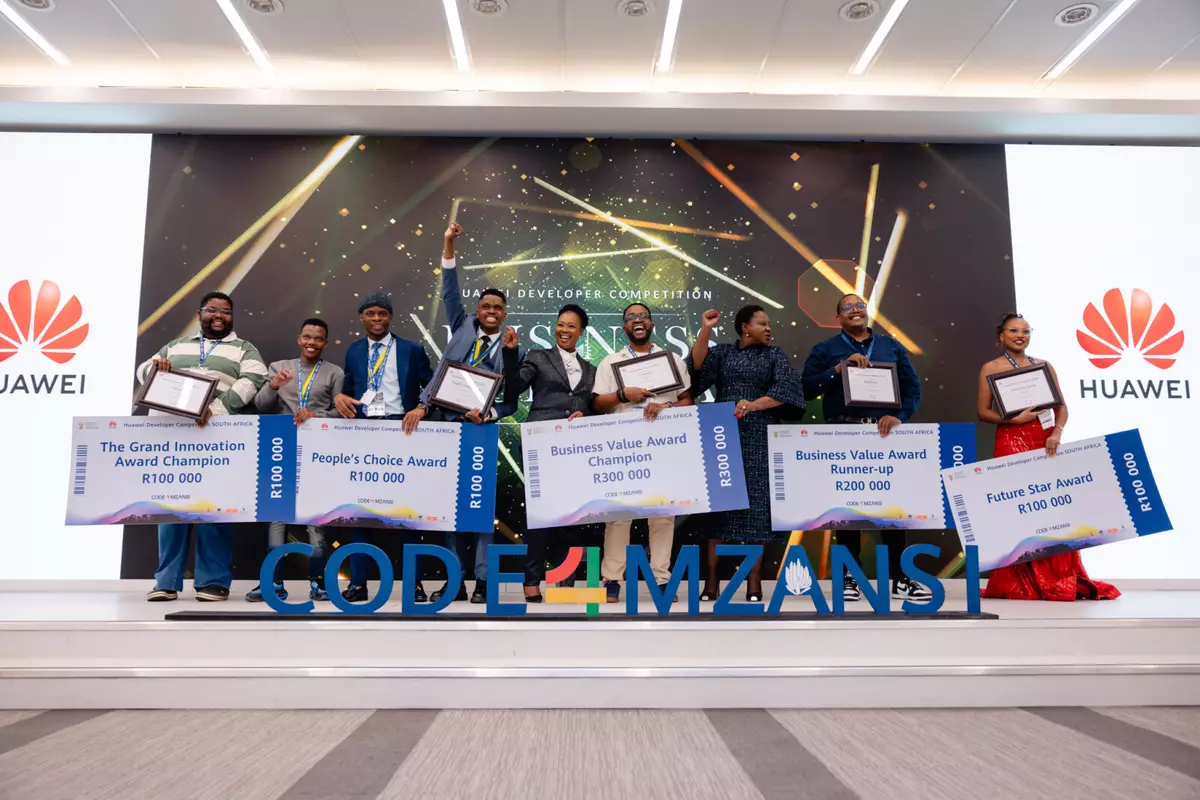
The winners at the Huawei Developer Competition, Code4Mzansi
The competition was held in partnership with the Department of Small Business Development. "The Code4Mzansi competition is not just a celebration of achievement, it is a launchpad for the future," said Minister Stella Ndabeni, whose department co-hosted the event and delivered the closing address.
The finals revealed a clear shift from building abstract digital products to practical tools that help small businesses trade better, communities access services more easily, and local industries solve problems faster.
Four finalist teams focused directly on the township economy, with solutions covering food safety verification for spaza shops, offline point-of-sale systems built for load-shedding, WhatsApp-native marketplaces for informal retailers, and community credit systems for SASSA grant recipients.
Others addressed AI-driven healthcare access, electricity theft detection, smart agriculture, financial infrastructure for the creator economy, and AI-generated African music.
Held at Huawei Office Park in Woodmead, the finals brought together more than 100 attendees, including government representatives, academic partners, industry leaders and media.
"The quality of the finalist solutions demonstrated the potential of local innovation to respond to real market needs," said Steven Chen, Cloud CEO of Huawei Technologies South Africa.
Academic partners included the University of Pretoria, the University of Johannesburg, the University of the Witwatersrand and the University of Cape Town.
"Small businesses are the backbone of our economy, and technology is their greatest accelerator. The participants here today are future entrepreneurs who will drive South Africa's digital economy forward," said Professor Thokozani Shongwe, Vice Dean of Postgraduate Studies, Research and Internationalisation at the University of Johannesburg's Faculty of Engineering and the Built Environment.
Industry partner rain also attended. Leon Nortje, Principal and Senior Architect at rain, said the competition offered a strong view of the country’s emerging technology pipeline.
"It is always good to see new projects and new teams working on solutions that are valuable and industry-related. We will be looking out for potential new employees," said Nortje.
The winners
The finalists competed for a prize pool of R800,000. MAAT by SIMVAK was named the overall grand winner and received the Business Value Award, taking home R300,000. The platform addresses food safety and regulatory compliance in South Africa’s informal retail sector through AI agents, real-time product recall alerts, and counterfeit detection for the spaza shop ecosystem.
"The spaza network is the supply chain for most South African households," said SIMVAK founder Shingirayi Mandebvu.
HealthHive by FTCK received second prize in the Business Value Award category, taking home R200,000, for its AI telemedicine platform that matches patients with the right medical practitioners based on their symptoms.
Auraa received the Grand Innovation Award for its AI music engine built to generate authentic African sound. The platform has been associated with an album that has crossed one million streams.
The Future Star Award went to e-Khadi, a community credit and stokvel platform giving SASSA grant recipients access to essentials at their local spaza shops, supported by AI-assisted credit scoring and fraud detection.
The People’s Choice Award, voted by the public on Huawei’s social media channels, went to DevRift, a semi-finalist in the competition, who took home R100,000.
Minister Ndabeni delivered the closing address, positioning Code4Mzansi within the government’s agenda for youth entrepreneurship, small business development and digital inclusion.
"Our task is to ensure that innovation does not remain a moment of applause, but becomes a pathway to enterprise creation, digital inclusion, and sustainable growth," she said.
"Thank you to Huawei for being a perfect partner on the journey that we are travelling, and of course, those that matter most, the developers who dared to compete," she said.
Code4Mzansi forms part of the global Huawei Cloud Developer Competition. In its inaugural edition, South Africa attracted more participants than any other country: 1,041 across 353 teams, including 176 enterprise teams, resulting in the highest enterprise participation rate among all competing markets. Twenty semi-finalists were selected before the top nine advanced to the final.
For the finalists, the work is just beginning. As Minister Ndabeni said, "Go home today proud. But tomorrow, wake up, build again."
Hashtag: #Huawei #Code4Mzansi #SouthAfrica
https://www.huawei.com/za/
https://www.linkedin.com/company/Huawei
https://twitter.com/HuaweiSAR
https://www.facebook.com/HuaweiSAR
http://www.google.com/+Huawei
http://www.youtube.com/Huawei
The issuer is solely responsible for the content of this announcement.
About Huawei
Founded in 1987, Huawei is a leading global provider of information and communications technology (ICT) infrastructure and smart devices. With 213,000 employees operating in over 170 countries, we serve more than three billion people worldwide.
Huawei is committed to bringing digital to every person, home, and organisation for a fully connected, intelligent world. In 2025, Huawei generated CNY880.9 billion in revenue, reinvesting 21.8% (CNY192.3 billion) into R&D, with about 53.7% of its employees working in R&D. As a private company fully owned by its employees, Huawei focuses on customer-centric innovation and open collaboration to create lasting value and drive technological breakthroughs globally.
For more information, please visit Huawei online at www.huawei.com or follow us on:
http://www.huawei.com/za/
https://twitter.com/HuaweiSAR
https://www.facebook.com/HuaweiSAR
http://www.linkedin.com/company/Huawei
http://www.google.com/+Huawei
http://www.youtube.com/Huawei
** This press release is distributed by Media OutReach Newswire through automated distribution system, for which the client assumes full responsibility. **