Update on chikungunya fever
The Centre for Health Protection (CHP) of the Department of Health announced that as of 5pm today (October 4), no new cases of chikungunya fever (CF) had been recorded.
Latest surveillance data
So far this year, Hong Kong has recorded a total of 24 confirmed CF cases. All are imported cases. From 2016 to 2019, Hong Kong recorded between one and 11 imported cases annually.
Since the beginning of 2025, and as of September 30, a total of 445 271 suspected and confirmed CF cases and 155 CF-related deaths have been reported in 40 countries/territories. Cases have been reported in the Americas, Africa, Asia, and Europe. CF outbreaks currently occur in many countries worldwide. Members of the public should check the situation of the destinations before travelling abroad.
Continuously strengthening prevention and control
The Food and Environmental Hygiene Department (FEHD) continues to conduct vector investigations and targeted mosquito control operations, and intensify mosquito prevention and control measures at the residences of recently confirmed patients, as well as at locations visited after the onset of symptoms. These measures include:
 carrying out intensive fogging in scrubby areas within a 250-metre radius of the relevant locations to kill adult mosquitoes;
carrying out inspections of the locations, removing stagnant water, applying insecticides and disposing of abandoned water containers every week with a view to preventing mosquito breeding; and
enhancing public education efforts through organising health talks, setting up mobile education stations, and distributing publicity leaflets.
carrying out intensive fogging in scrubby areas within a 250-metre radius of the relevant locations to kill adult mosquitoes;
carrying out inspections of the locations, removing stagnant water, applying insecticides and disposing of abandoned water containers every week with a view to preventing mosquito breeding; and
enhancing public education efforts through organising health talks, setting up mobile education stations, and distributing publicity leaflets.
The CHP urged schools to follow the FEHD's anti-mosquito guidelines to strengthen efforts to clear stagnant water on school premises and eliminate mosquito breeding sites. It is also imperative to remind staff members and students to consistently implement mosquito prevention and personal protective measures to guard against the spread of mosquito-borne diseases within school premises.
Additionally, the CHP's Port Health Division continues to step up inspections at boundary control points and remind cross-boundary public transport operators and other relevant parties to ensure good environmental hygiene and effective implementation of anti-mosquito measures. Furthermore, staff members of the Port Health Division distribute leaflets to travellers, conduct temperature screenings for inbound travellers, conduct health assessments for travellers with fever or related symptoms and refer them to hospitals for follow ups when necessary.
Proper use of DEET-containing insect repellents or other effective active ingredients can prevent mosquito bites, but the following precautions should be taken when using them:
read the label instructions carefully first;
apply right before entering an area with a risk of mosquito bites;
apply on exposed skin and clothing;
use DEET of up to 30 per cent for pregnant women and up to 10 per cent for children (For children who travel to countries or areas where mosquito-borne diseases are endemic or epidemic and where exposure is likely, those aged 2 months or above can use DEET-containing insect repellents with a DEET concentration of up to 30 per cent);
apply sunscreen first, then insect repellent;
reapply only when needed and follow the instructions; and
in addition to DEET, there are other insect repellents available on the market containing different active ingredients, such as IR3535 and picaridin. When using any insect repellent, the public should follow the usage instructions and precautions on the product label.
The FEHD also appeals to members of the public to continue to stay alert and work together to carry out mosquito prevention and control measures early, including inspecting their homes and surroundings to remove potential breeding grounds, changing water in vases and scrubbing their inner surfaces, removing water in saucers under potted plants at least once a week, and properly disposing of containers such as soft drink cans and lunch boxes. The FEHD also advises members of the public and estate management bodies to keep drains free of blockage and level all defective ground surfaces to prevent the accumulation of water. They should also scrub all drains and surface sewers with an alkaline detergent at least once a week to remove any mosquito eggs.
The public should call 1823 in case of mosquito problems, and may visit the following pages for more information: the CF page of theCHPand theTravel Health Service, the latestTravel Health News,tips for using insect repellents, and the CHPFacebook Page,Instagram AccountandYouTube Channel, and also theMosquito Prevention and Control dedicated pageof the FEHD.
Source: AI-found images
Special traffic arrangements for race meeting in Happy Valley
The Police will implement special traffic arrangements in Happy Valley today (January 14). These arrangements will remain in effect until the race meeting has concluded, spectators have dispersed, and traffic conditions return to normal.
A. Traffic arrangements before the commencement of the first race
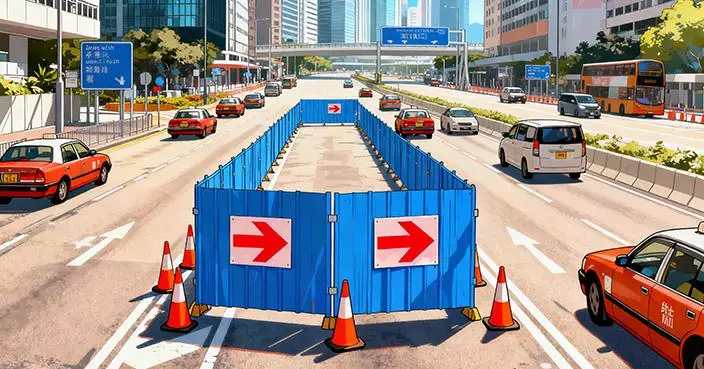
The following road closure and traffic diversions will be implemented from 50 minutes before the start of the first race for day racing, or from 6pm onwards for night racing:
1. Road closure
Southbound Wong Nai Chung Road between Queen’s Road East and the up-ramp outside the Hong Kong Jockey Club (HKJC) will be closed, except for vehicles heading for Aberdeen Tunnel.
2. Traffic diversions
- Southbound Wong Nai Chung Road between Village Road and the up-ramp outside the HKJC will be re-routed one way northbound;
- Traffic along eastbound Queen's Road East heading for Wan Chai and Happy Valley will be diverted to turn left to Morrison Hill Road;
- Traffic along southbound Morrison Hill Road heading for Happy Valley will be diverted via Sports Road and Wong Nai Chung Road;
- Traffic along Queen's Road East cannot turn right to Wong Nai Chung Road, except for vehicles heading for Aberdeen Tunnel;
- Traffic from Cross Harbour Tunnel heading for Queen's Road East will be diverted via the down-ramp leading from southbound Canal Road flyover to Morrison Hill Road to turn right at the junction of Wong Nai Chung Road and Queen's Road East; and
- Traffic from Cross Harbour Tunnel heading for Happy Valley or Racecourse will be diverted via the down-ramp leading from southbound Canal Road flyover to Canal Road East, southbound Morrison Hill Road, Sports Road and Wong Nai Chung Road.
B. Traffic arrangements before the conclusion of race meeting
The following road closure and traffic diversions will be implemented from about 35 minutes before the start of the last race:
1. Road closure
- The up-ramp on Wong Nai Chung Road outside the HKJC leading to Aberdeen Tunnel;
- Southbound Wong Nai Chung Road between Queen's Road East and the up-ramp leading to Aberdeen Tunnel;
- Southbound Wong Nai Chung Road between Village Road and the Public Stands of the HKJC;
- Westbound Leighton Road between Wong Nai Chung Road and Canal Road East; and
- Southbound Morrison Hill Road between Leighton Road and Queen's Road East.
In addition, southbound Wong Nai Chung Road between the up-ramp leading to Aberdeen Tunnel and the Public Stands of the HKJC will be closed from about 10 minutes before the start of the last race.
2. Traffic diversions
- Eastbound Queen's Road East at its junction with Morrison Hill Road will be reduced to one-lane traffic heading for northbound Canal Road flyover;
- Traffic from Cross Harbour Tunnel heading for Wan Chai will be diverted via the down-ramp leading from southbound Canal Road flyover to Canal Road East, U-turn slip road beneath Canal Road flyover, Canal Road West and Hennessy Road;
- Traffic from Cross Harbour Tunnel heading for Happy Valley will be diverted via the down-ramp leading from southbound Canal Road flyover to Canal Road East, eastbound Leighton Road and Wong Nai Chung Road;
- Traffic along southbound Morrison Hill Road will be diverted to turn left to eastbound Leighton Road;
- Traffic along southbound Morrison Hill Road heading for Happy Valley will be diverted via eastbound Leighton Road and Wong Nai Chung Road; and
- Traffic along westbound Leighton Road will be diverted to Wong Nai Chung Road.
C. Prohibition for learner drivers
Learner drivers will be prohibited to turn left from Caroline Hill Road to Leighton Road between one and a half hours before the start of the first race and one hour after the last race. In addition, learner drivers will be prohibited from accessing the following roads within the above period of time:
- Shan Kwong Road between Yik Yam Street and Wong Nai Chung Road;
- Village Road between its upper and lower junctions with Shan Kwong Road;
- Percival Street between Hennessy Road and Leighton Road;
- Canal Road East; and
- The service road leading from Gloucester Road to Canal Road flyover.
D. Suspension of parking spaces
Parking spaces on southbound Wong Nai Chung Road between Sports Road and Blue Pool Road will be suspended from 11am to 7pm for day racing, and from 5pm to 11.59pm for night racing respectively.
All vehicles parked illegally during the implementation of the above special traffic arrangements will be towed away without prior warning, and may be subject to multiple ticketing.
Actual implementation of road closure and traffic diversion will be made by the Police at the time depending on traffic conditions in the areas. Motorists should exercise tolerance and patience, and follow the instructions of police officers on site.
Source: AI-found images