Skip to Content Facebook Feature Image

China-supported agricultural training program to become 'game-changer' for Pakistan: PM

China

China

China

China-supported agricultural training program to become 'game-changer' for Pakistan: PM

2025-10-04 17:20 Last Updated At:22:37

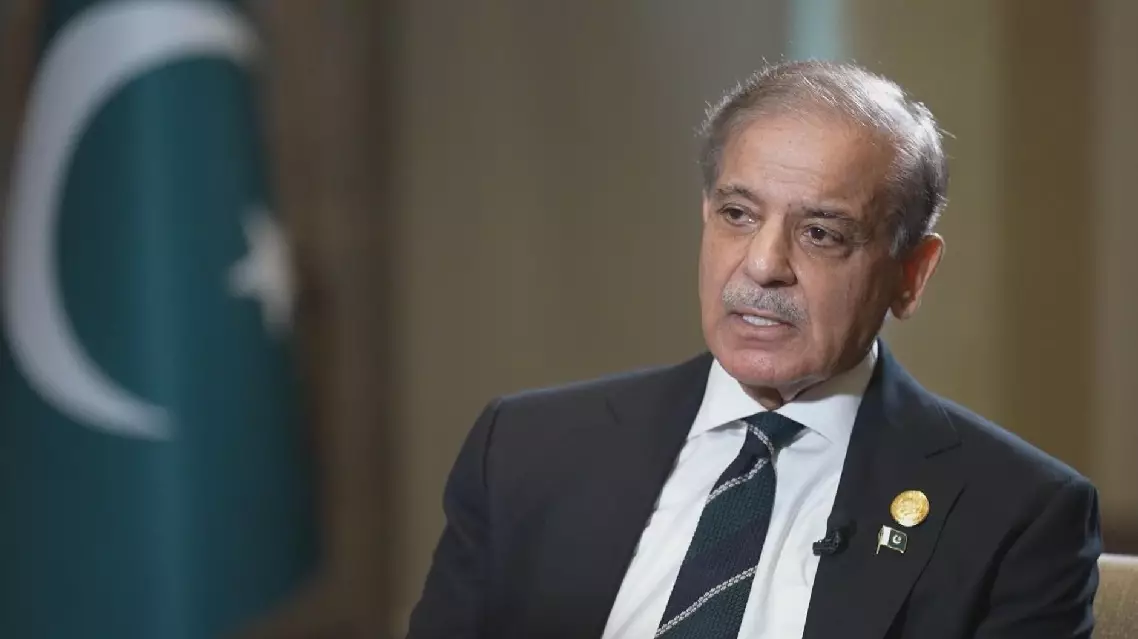
Pakistani Prime Minister Shehbaz Sharif has described the capacity-building initiative for Pakistani agricultural graduates in China as a transformative step for Pakistan's agrarian economy, crediting Chinese expertise and the enduring "iron brotherhood" between the two countries.

In an interview with China Media Group released on Friday, Sharif reflected on his official visit to China in June last year, during which he proposed training 1,000 Pakistani agricultural graduates at Chinese universities, particularly at Northwest Agriculture and Forestry University, located in northwest China's Shaanxi Province -- Chinese President Xi Jinping's home province.

"When I was here in my last official visit, during my banquet meeting with my very dear President Xi Jinping, I raised these points of discussion, and I told him that, 'I'm visiting Shaanxi province, your home province'. He said, 'Really?' I said, 'Yes, tomorrow'. And then he immediately gave instructions for my visit to Shaanxi Agricultural University. And this was an eye-opener. This university has the most modern techniques to promote agriculture not only in China, but any part of the world," said Sharif.

"So I said, I will immediately decide to send 1,000 fresh agri-graduates to get modern training in this university, and of course, other universities. And as I speak, more than 500 students have already been trained or are under active training, and the rest of the batches will be visiting soon to other universities of China," he said.

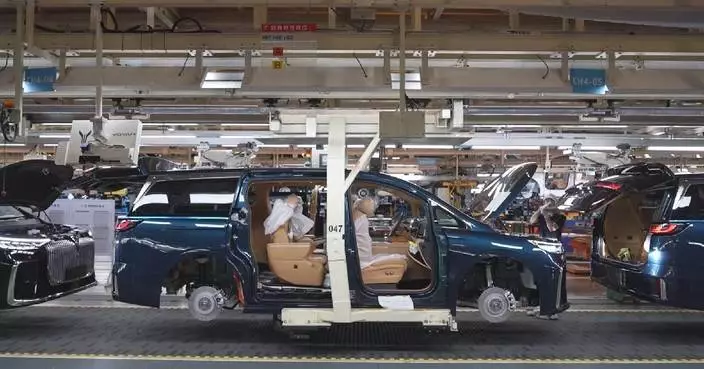
The prime minister emphasized that the initiative would empower young Pakistani professionals to return home equipped with cutting-edge agricultural knowledge. Their expertise, he said, would directly benefit local farmers and boost production of key crops, including wheat, sugarcane, cotton, maize, and rice.

"This will be a game-changer. They will go back to Pakistan and assist our farmers, our agri-community how to use most modern techniques, implement hybrid seeds, and of course, modern techniques to enhance our agri-production in wheat, in sugar cane, in cotton, in maize, rice, and so on and so forth, and then on top of it, build small, medium enterprises in the rural areas to use these fruits, these vegetables, to convert them into high-value-added products to be consumed not only in Pakistan, but exporting to Middle Eastern countries and then increasing our GDP, our exports. This will be a game-changer. And there, I look forward to seeking cooperation from our Chinese company. This is all-weather friendship. This is iron brother friendship," he said.
China-supported agricultural training program to become 'game-changer' for Pakistan: PM
China-supported agricultural training program to become 'game-changer' for Pakistan: PM
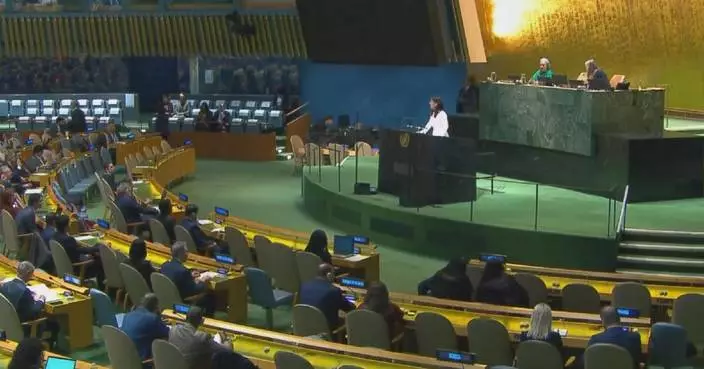
Ghanaian President John Dramani Mahama has underscored the need for the international community to properly recognize the historical injustices committed against Africa and support efforts to advance reparations for Africans and people of African descent.

Mahama made the remarks in an interview with the China Media Group (CMG) which was aired Friday and recorded during the Ghanaian President's trip to Beijing in October.

Earlier this year, Mahama had issued a call for collective action in securing justice for Africans and individuals of African descent through reparations at the 38th Ordinary Session of the African Union.

Located in West Africa along the northern shore of the Gulf of Guinea and bordered by the Atlantic Ocean to the south, Ghana boasts a more than 500-km coastline and abundant agricultural, fishery, forestry and mineral resources. Yet its history, like much of the African continent, has been deeply scarred by centuries of foreign aggression.

From the 15th century onward, Western colonial powers invaded coastal areas of what is now Ghana, plundering resources and conducting the slave trade, casting a long colonial shadow over the African continent which hung for centuries.

In 1955, the successful convening of the Bandung Conference -- which gathered representatives of Asian and African states in Indonesia -- ignited a new wave of national liberation movements these continents, accelerating the collapse of the global colonial system.

Ghana's independence in 1957 lit the first torch of freedom in sub-Saharan Africa and was hailed as the dawn of Africa's awakening.

Africa's first tragedy, the transatlantic slave trade, constituted an extremely grave atrocity, Mahama said.

During that period, an estimated 12 to 15 million Africans were forcibly taken from the continent and sent to the Caribbean, the Americas and Europe. They contributed to the building of modern Western civilization, yet received no compensation for their labor, whether working on sugar plantations or constructing railways, roads and bridges, he noted.

Mahama outlined his wish that the United Nations takes action to recognize the slave trade as "the greatest crime against humanity" and takes steps to ensure reparations are paid back to the descendants of those who suffered.

"We believe that first and foremost, it should be recognized as the greatest crime against humanity. We must condemn the activity of slavery of the people who were shipped to what I call the 'New World', that's the Western world. It's estimated that as many as 2 million did not arrive at the destination because they were either too sick or they died on board, and they were just tossed over into the ocean. That was genocide. And so it's an issue that the first step is for us to accept. And so Ghana wants to move a motion in the UN next year asking the world to recognize the slave trade as the greatest crime against humanity. And so we'll continue to push on the African [Union] Champion on Reparations when I spoke even at the UN, I raised the issue of reparations and so I do think that that is to do with slavery," he said.

Mahama also stressed the impact of colonialism, which further entrenched injustice and led to global inequality as African nations were ruthlessly exploited.

"With regards to colonialism, the Berlin Conference (1884–1885) partitioned Africa and the European nations took colonies in Africa, ran those colonies, exploited their natural resources and transferred those natural resources, oil palm, gold, minerals, cocoa and other products, to develop their countries. And it's only from the late 1950s that countries like Ghana got independent. And so that was an injustice. Colonialism was an injustice against African countries," he said.

Ghanaian president urges reparative justice for Africa, citing slavery, colonial exploitation

Ghanaian president urges reparative justice for Africa, citing slavery, colonial exploitation

Recommended Articles