China's next-generation stealth fighter jets, the carrier-based J-35 and land-based J-35A, highlight advances in air superiority, marking the People's Liberation Army (PLA) Navy's shift toward far-sea combat readiness, according to their designers.
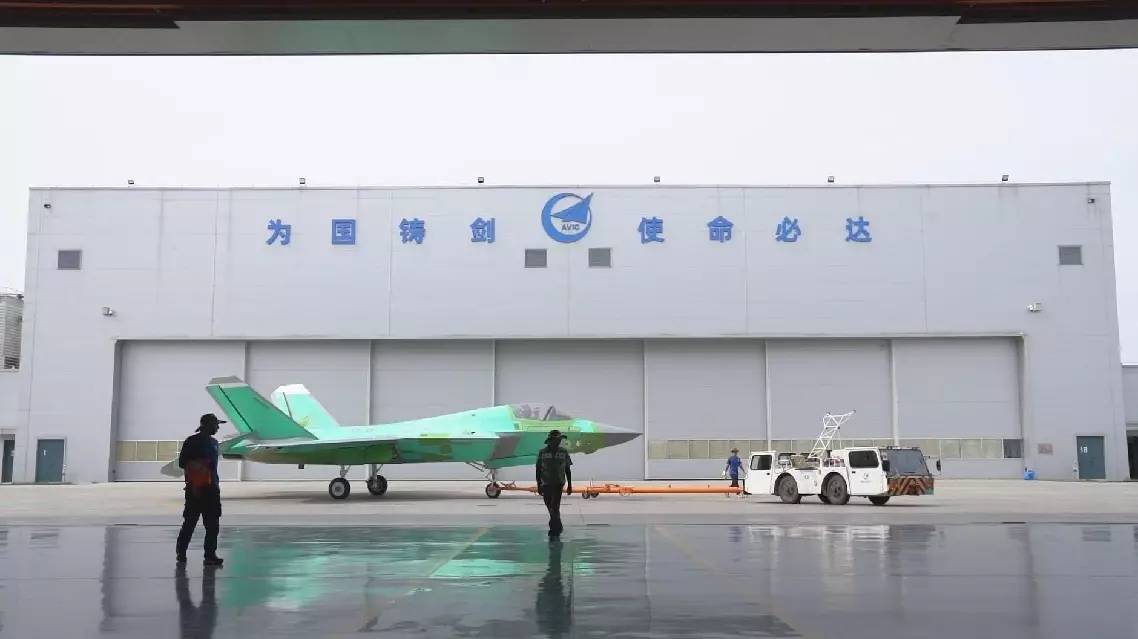
At a hangar in northeast China's Liaoning Province, engineers at the AVIC Shenyang Aircraft Design and Research Institute were seen assembling the jets, which remain in active development.
The J-35 is a multi-role carrier-based fighter jet designed primarily for air superiority while retaining ground-attack capabilities.
Sun Cong, academician of the Chinese Academy of Engineering, said the J-35 represents a landmark advancement in naval aviation, enabling extended-range operations and enhancing offensive reach for the PLA Navy.
"The greatest feature of the J-35 is its stealth capability. When designing the stealth fighter J-35, our primary focus was on pursuing low observability, meaning we aimed to make it as stealthy as possible to avoid detection by adversaries, enabling us to detect and strike them first," said Sun.
Compared to the J-15, the J-35 adopts a highly integrated design. Although smaller in size, it has a higher level of informatization, said Sun.
"Its equipment density is very high, and its level of integration is also quite advanced. After all, it is an aircraft designed for the information age. In terms of usage, the J-35 emphasizes on offensive air superiority," he said.
The land-based J-35A is a single-seat, twin-engine stealth multi-role fighter with a conventional aerodynamic configuration.
According to its designers from AVIC Shenyang Aircraft Design and Research Institute, the J-35A is capable of both air superiority and strike missions against ground and maritime targets.
Specifically, the jet can be used to engage with hostile aircraft including fighters and bombers, shoot down enemy cruise missiles, and eliminate adversaries' land- and ship-based air defense hardware.
The J-35A's design seamlessly integrates stealth performance with combat effectiveness, said the designers.
"From a purely stealth perspective, having no protrusions on the aircraft's exterior would theoretically provide the best stealth effect. However, from the perspective the developers, an aircraft is an integrated system. In addition to its stealth capabilities, we must also consider other factors such as its combat capabilities, flight performance, structural strength, and various other attributes. Therefore, the J-35A aircraft becomes what it is today," said Ai Zhiqiang, engineer at the AVIC Shenyang Aircraft Design and Research Institute.
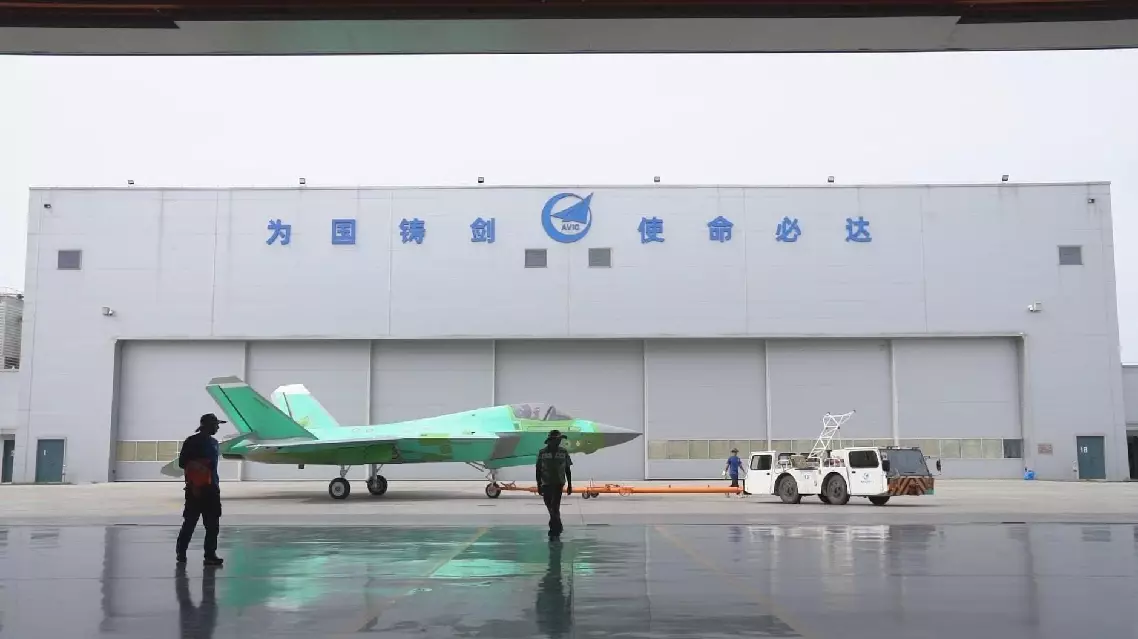
China's new stealth jets highlight advances in air superiority
China's new stealth jets highlight advances in air superiority