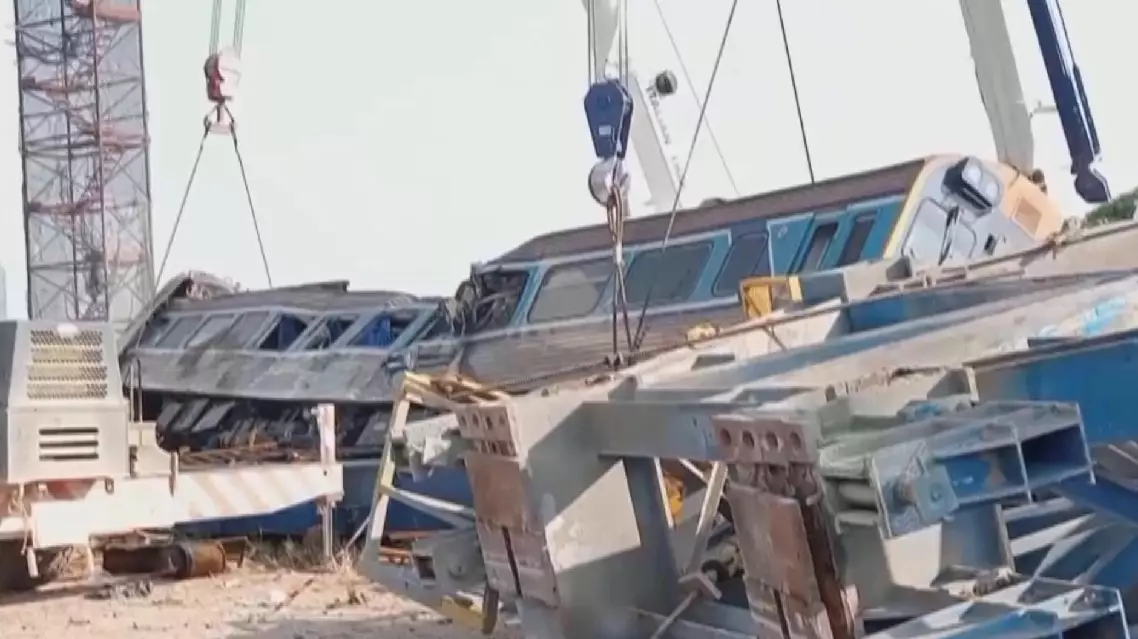
The death toll from a crane collapse that derailed a passenger train in northeastern Thailand's Nakhon Ratchasima Province has risen to 32, with the number of injured now standing at 67, authorities said on Wednesday.
The accident occurred on Wednesday morning when the construction crane used for a high-speed rail bridge collapsed onto the train traveling from Bangkok to Ubon Ratchathani Province.
Speaking at a press briefing, Nakhon Ratchasima Governor Chaiwat Chuenkosum said the State Railway of Thailand expects to take approximately seven days to clear the wreckage and restore the track to normal operation while a full investigation into the cause of the accident is underway.
Thai Deputy Prime Minister and Minister of Transport Phiphat Ratchakitprakarn earlier told reporters that he has instructed agencies to conduct a transparent, comprehensive investigation to determine the cause and prevent recurrence.
According to Thai media reports, the main contractor for the involved railway section is Italian-Thai Development PLC, which has issued a statement on the accident, saying that the company will fully assume responsibilities related to compensation and medical treatment.
Songrit Yoonsoongnern, a rescuer, said that rescue teams are waiting for some parts of the wrecked train to be moved before continuing operations.
"Right now, we are waiting for the cranes to secure the carriage and the crane above, and to remove some debris that is on the bodies. For safety reasons, we must wait until Italian-Thai Development’s cranes complete the operation and safety is 100-percent assured, before ordering rescue personnel to enter and recover the bodies," he said.
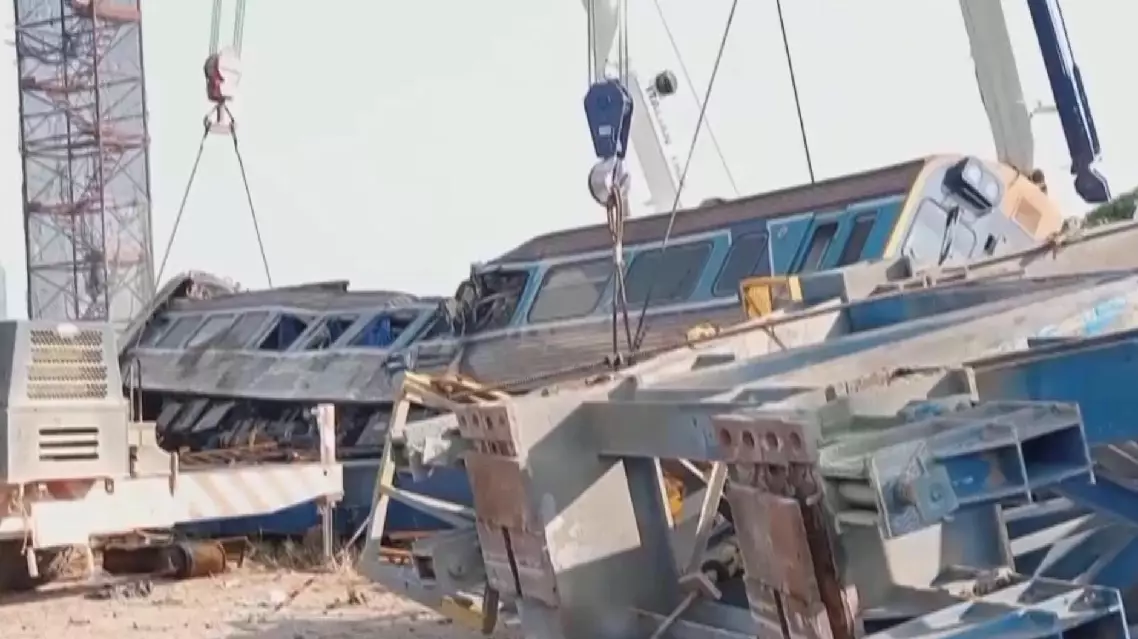
32 killed after crane collapse derails train in Thailand
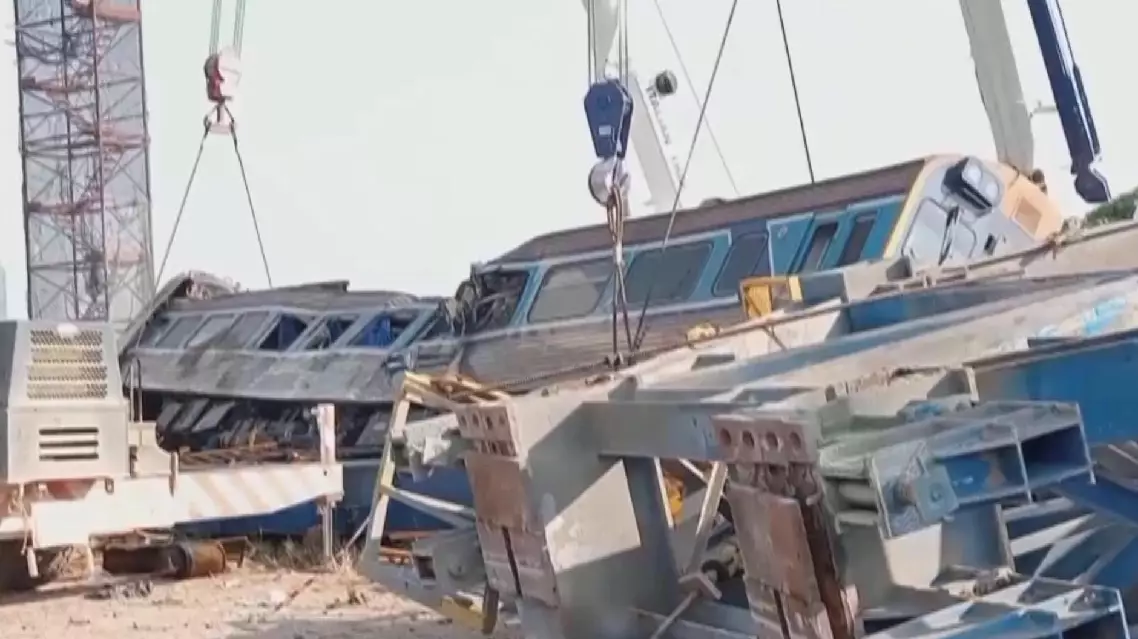
32 killed after crane collapse derails train in Thailand
32 killed after crane collapse derails train in Thailand
China's blue-chip CSI 300 Index made modest gains in the past week thanks to the huge electrification campaign that reduces the country's exposure to the volatile oil price as the continuing conflict in the Middle East enters the second week, said an analyst on Friday.
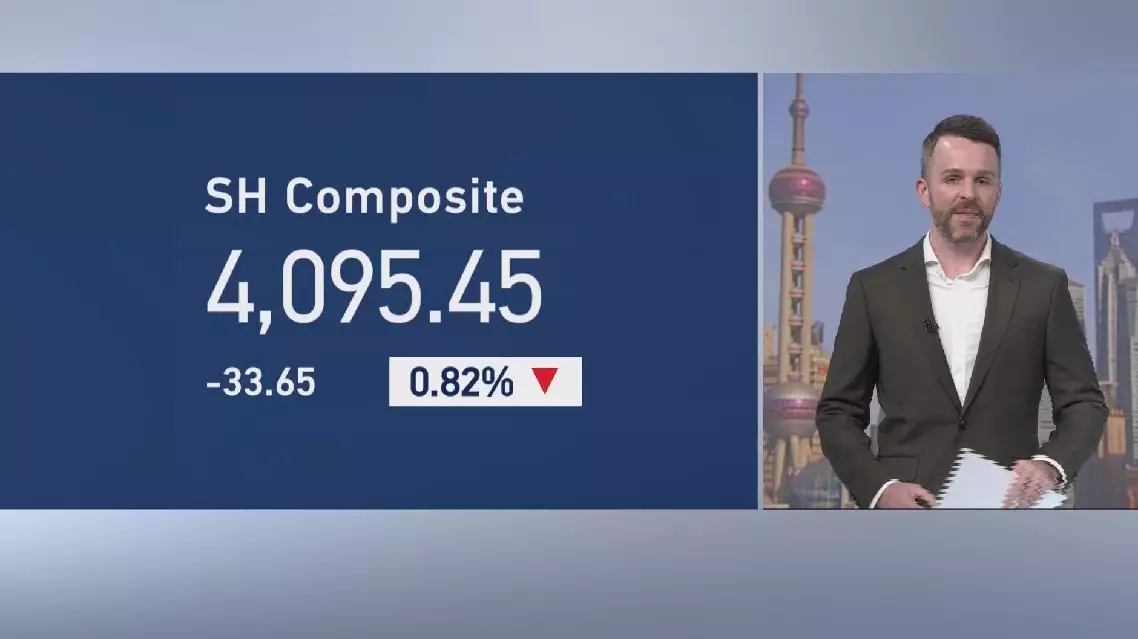
Chinese stocks closed lower on Friday, with the benchmark Shanghai Composite Index down 0.81 percent to 4,095.45 points.
Timothy Pope, a market analyst for China Global Television Network, said the CSI 300 Index made modest gains despite a rough week for both Chinese and global stock markets.
"The conflict in the Middle East really shows no sign of winding down and it has been as you said another rough week for the global markets. Today the Shanghai Composite Index closed down 0.8 percent, and ended lower for the week as well, but the blue-chip CSI 300 Index actually managed to make some modest gains this week. And that fits what we've been hearing from analysts and investment banks, including Morgan Stanley and UBS. They've said that China's got less oil exposure than other economies. This is partly because of the huge electrification campaign which has been happening in China from family cars to road haulage, and also just the total energy mix here. But we know that oil isn't the only thing that's not getting out of the Middle East at the moment. Fertilizer has emerged as another big disruption point and we have seen in the last 48 hours China already begin early releases of fertilizer reserves ahead of the spring planting season. With all that in the mix we have seen the likes of Morgan Stanley and UBS touting A-shares as a diversification option and a resilient market in this risk-off investment environment," said Pope.
"Sector-wise today we saw some consumer stocks rising -- led by liquor makers, in particular, Kweichow Moutai. There were also some limited gains for Chinese real estate and financial firms. But with the oil price still extremely volatile, Chinese resources and energy shares pulled back today to become the two worst-performing sectors," said Pope.
Chinese blue-chip stocks make gains amid a rough week for global markets: analyst