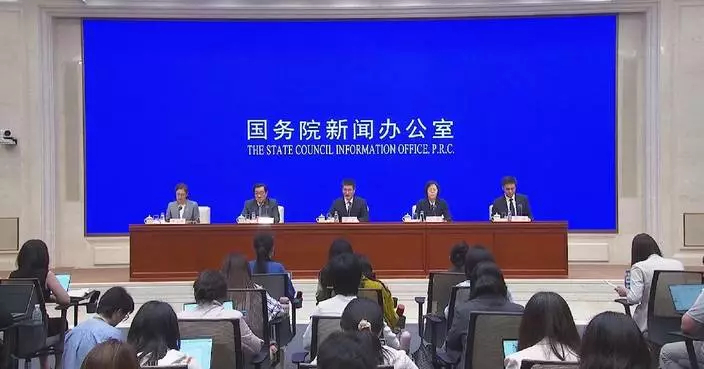
The Red Cross Society of China will provide 200,000 U.S. dollars in emergency humanitarian assistance to the Iranian Red Crescent Society, Foreign Ministry spokesman Guo Jiakun said at a press briefing in Beijing on Friday
Guo made the statement after a girls' elementary school in southern Iran was struck during a U.S.-Israeli military operation, killing more than 160 people, most of them are students.
"China condemns all indiscriminate attacks against civilians and non-military targets. Attacks on schools and harm to children are an even more serious violation of international humanitarian law and broke the bottom line of human morality and conscience. We express deep condolences regarding the deaths of students in the attack on the Shajareh Tayyebeh elementary school in Minab, Hormozgan Province and extend our sincere sympathy to the families of the deceased students," said Guo.
"The Red Cross Society of China has decided to provide the Iranian Red Crescent Society with 200,000 U.S. dollars in emergency humanitarian assistance, to be used specifically to offer condolences and bereavement support to the parents of the deceased students. China stands ready to continue, in the spirit of humanitarianism, to provide necessary assistance to the affected Iranian people and support them in overcoming the difficulties," he continued.
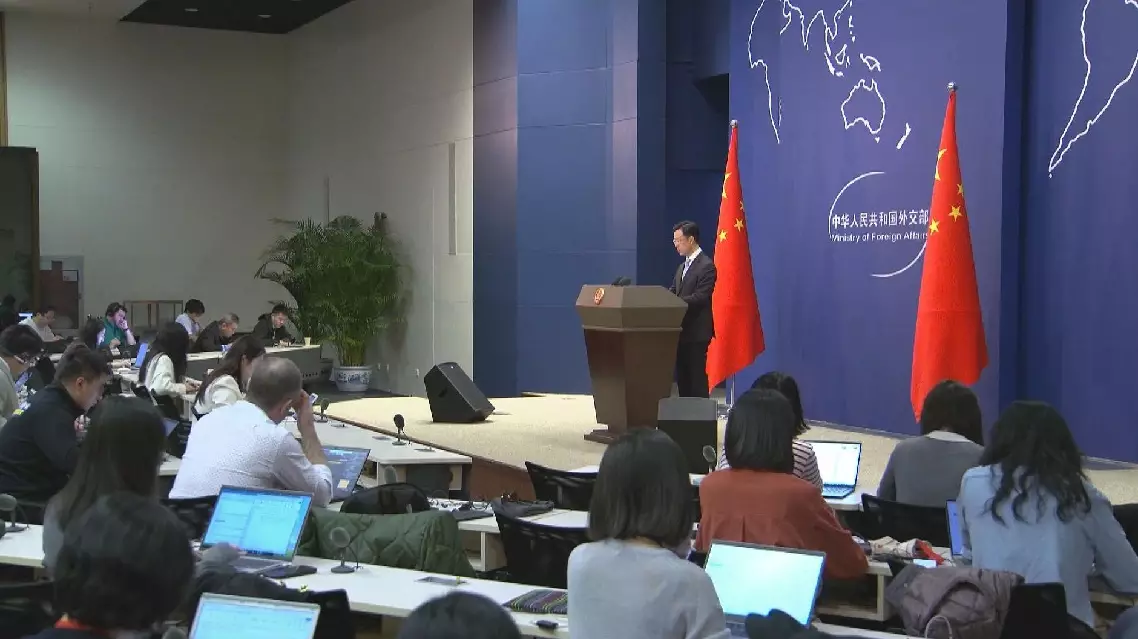
China Red Cross to provide 200,000 USD for Iranian victims of elementary school attack: Foreign Ministry

Colombians are heading to the polls on Sunday to elect their next president. The country's constitution prevents the current President, Gustavo Petro, from running for a second term.
Yet, many see this election as a referendum on the policies of Gustavo Petro, Colombia's first leftist president.
There are 14 candidates on Sunday's ballot, but the polls show it will likely be a tight three-way race.
The frontrunner is Ivan Cepeda, a 63-year-old three-term senator, representing President Gustavo Petro's party, the Historic Pact coalition. Cepeda has vowed to defend and deepen Petro's progressive reforms and social justice policies to reduce inequality. He also promises to continue the government's controversial "Total Peace" strategy to negotiate the disarmament of remaining guerrilla groups and criminal gangs.
"True prosperity comes from equality, from access to rights, and from transforming the peripheral and excluded territories of the rural world," Cepeda said at a campaign rally.
Running as a political outsider and independent is Abelardo de la Espriella, a 47-year-old lawyer, nicknamed "The Tiger." He has presented himself as the "authority and order" candidate who will reduce state spending by up to 40 percent in the next four years.
"(First,) we must fight insecurity. Colombia is suffering today from a pandemic of insecurity. Crime is out of control: extortion, cattle theft, smuggling, drug trafficking," he said to his supporters at an election event.
According to polls, the third candidate with strong support is Paloma Valencia. The 48-year-old senator represents the Democratic Center party led by popular former President Alvaro Uribe Velez. Her candidacy is backed by politicians and economists who are concerned with growing levels of public debt. They want to see a return to more conservative fiscal policies.
"I don't want to be a president who governs alone, locked away in glass offices. I want to be a president who stands with citizens, who embraces them, who reaches out to them, who has a team, and who governs to transform Colombia," the candidate said at the campaign event
According to polls earlier in the year, many voters are expressing concerns about unemployment, rising living costs, corruption, and, above all, public security.
The election comes after a turbulent year that the International Committee of the Red Cross has called "the worst humanitarian consequences of armed conflict over the past decade."
"(We arrive at this election in a tense atmosphere - tense) because of the economic situation, because of the security situation, and because of the narratives that have been built around the country's main problems. On top of that, emotions, ideas and social media have all helped raise (the tone,)" said Eduardo Velosa, associate professor from International Studies Javeriana University.
If no candidate receives 50 percent of the vote, a runoff election will be held between the top two finishers on June 21st.
Colombians prepare to choose their next president