China's blue-chip CSI 300 Index made modest gains in the past week thanks to the huge electrification campaign that reduces the country's exposure to the volatile oil price as the continuing conflict in the Middle East enters the second week, said an analyst on Friday.
Chinese stocks closed lower on Friday, with the benchmark Shanghai Composite Index down 0.81 percent to 4,095.45 points.
Timothy Pope, a market analyst for China Global Television Network, said the CSI 300 Index made modest gains despite a rough week for both Chinese and global stock markets.
"The conflict in the Middle East really shows no sign of winding down and it has been as you said another rough week for the global markets. Today the Shanghai Composite Index closed down 0.8 percent, and ended lower for the week as well, but the blue-chip CSI 300 Index actually managed to make some modest gains this week. And that fits what we've been hearing from analysts and investment banks, including Morgan Stanley and UBS. They've said that China's got less oil exposure than other economies. This is partly because of the huge electrification campaign which has been happening in China from family cars to road haulage, and also just the total energy mix here. But we know that oil isn't the only thing that's not getting out of the Middle East at the moment. Fertilizer has emerged as another big disruption point and we have seen in the last 48 hours China already begin early releases of fertilizer reserves ahead of the spring planting season. With all that in the mix we have seen the likes of Morgan Stanley and UBS touting A-shares as a diversification option and a resilient market in this risk-off investment environment," said Pope.
"Sector-wise today we saw some consumer stocks rising -- led by liquor makers, in particular, Kweichow Moutai. There were also some limited gains for Chinese real estate and financial firms. But with the oil price still extremely volatile, Chinese resources and energy shares pulled back today to become the two worst-performing sectors," said Pope.
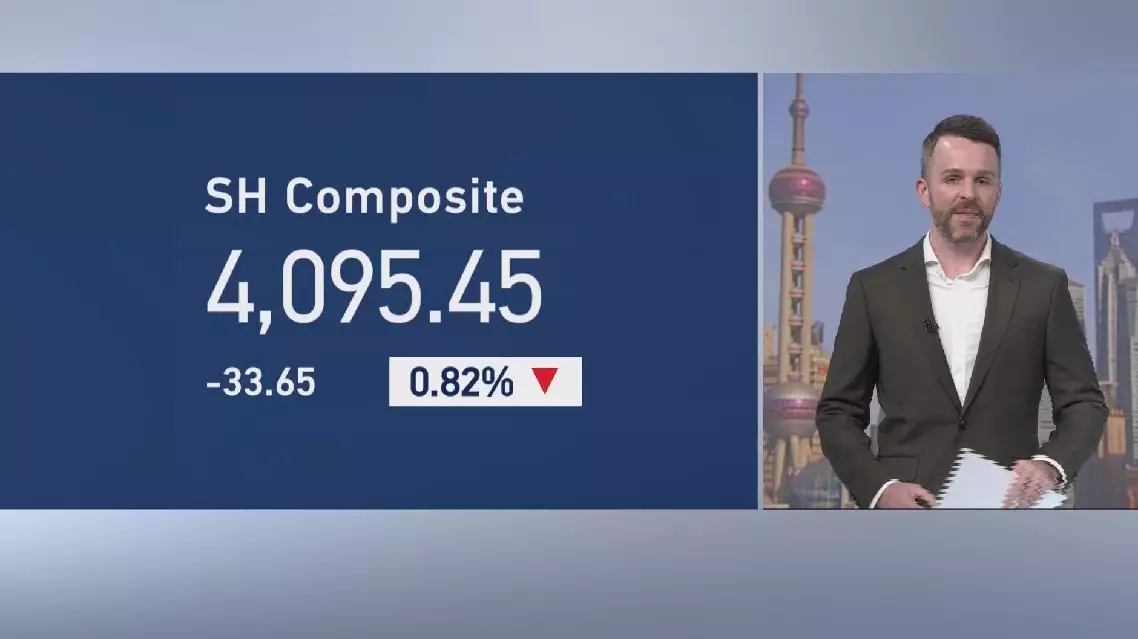
Chinese blue-chip stocks make gains amid a rough week for global markets: analyst

A growing number of children in Gaza are now working to help support their families as schools are damaged and people are struggling to survive due to the war's impact.
In Gaza City, children once seen carrying school bags are now working amid the rubble of destroyed neighborhoods.
With cement in short supply, many residents have begun reusing stones recovered from homes destroyed during the war.
Thirteen-year-old Zakaria Abu Asr is one of the children working among the rubble. He spends long hours among the ruins of destroyed homes and the dangers of unexploded ordnance.
"I no longer go to school at all. My mother and my three siblings were killed, so I have to work. I start at six in the morning and work until sunset so I can earn money for my family," he said.
Extracting stones from destroyed homes has become a source of income for some families. The work is exhausting and risky, especially for children who spend long hours lifting heavy rocks.
"These children's fathers used to work with me before. Their fathers were killed during the displacement. I tried to help them, but the boys came to work on their own. I also have children as young as 10 asking to work, but I refused, and try to help them," said Wajih al-Khor, a workshop owner.
According to the Palestinian Central Bureau of Statistics, around 39,000 children in Gaza have lost one or both parents since the war began. Nearly 17,000 have lost both and were forced to care for themselves and what remains of their families.
"But also we are talking about children who can't go to school or can't go to learning because they need to help and support their families financially. And this is an issue that affects so many families and so many children. The other problem with it is the kind of work that they are doing to support their families is usually dangerous, it's usually very straining and really affects their health now but also their future prospects," said UNICEF Spokesperson Salim Oweis.
The United Nations Relief and Works Agency for Palestine Refugees said about 660,000 children in Gaza have been out of school for a third year, with nearly 90 percent of schools destroyed or damaged.
War robs Gaza children of childhood as they become family breadwinners