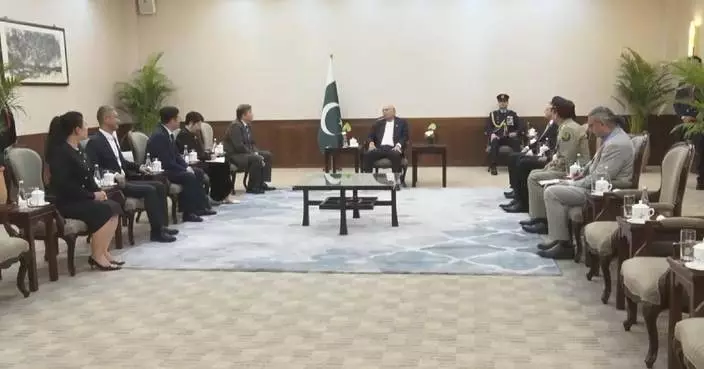
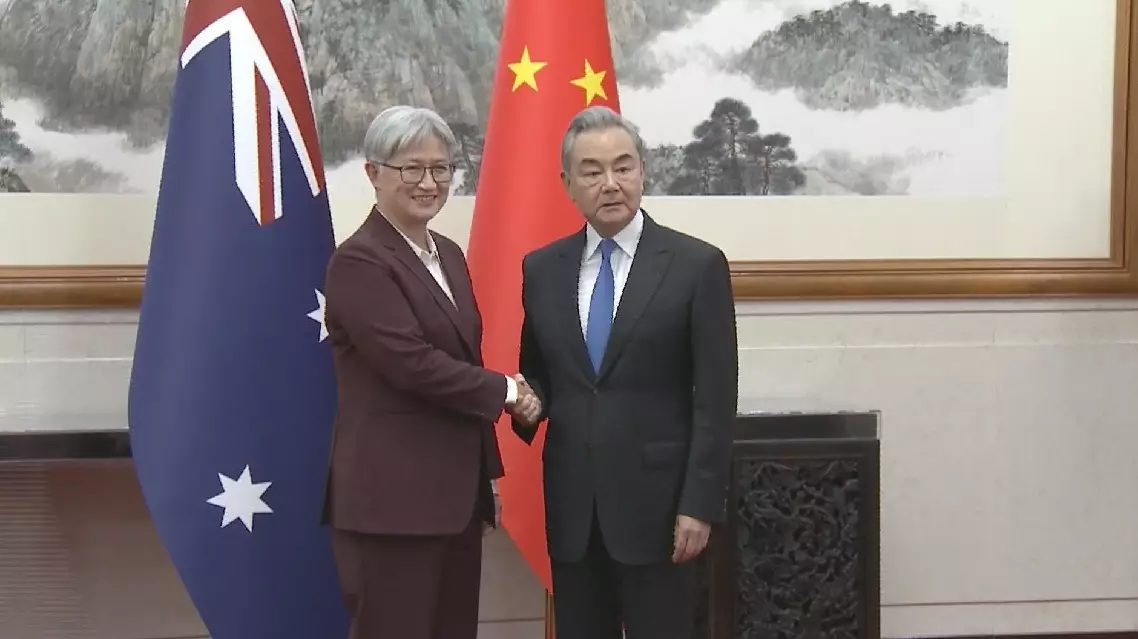
China and Australia should jointly stand on the right side of history and on the side of multilateralism, and promote the building of a more just and equitable global governance system, Chinese Foreign Minister Wang Yi said on Wednesday when holding the eighth China-Australia diplomatic and strategic dialogue with Australian Foreign Minister Penny Wong in Beijing.
During the meeting, Wang, also a member of the Political Bureau of the Communist Party of China Central Committee, said that China is willing to work with Australia to implement the important common consensus reached between the leaders of the two countries, consolidate the positive momentum of bilateral relations, truly implement the comprehensive strategic partnership, and provide more certainty for the region and the world.
The four global initiatives and the vision of a community with a shared future for humanity put forward by Chinese President Xi Jinping are in line with the calls of all countries and the overall interests of humanity, representing the right path forward, said Wang.
Wang also elaborated on China's stance on the Taiwan question.
Wong said that Australia is committed to developing relations with China, adheres to the one-China policy, and stands ready to work with China to uphold international rules, ensure energy security, and promote world peace, stability and prosperity.
The two sides also exchanged views on issues including the situation in the Middle East.
China, Australia should jointly uphold multilateralism: Chinese FM
The United Arab Emirates (UAE) has withdrawn from the Organization of the Petroleum Exporting Countries (OPEC) to secure its greater crude oil pricing autonomy and show its dissatisfaction with neighboring Arab states over their failure to condemn Iran's attacks on it, a Chinese expert on the Middle East said.
On Tuesday, the UAE announced it would withdraw from OPEC and the broader OPEC+ alliance, effective May 1. The move removes the bloc's third-largest oil producer and further weakens its influence over global oil supplies and prices.
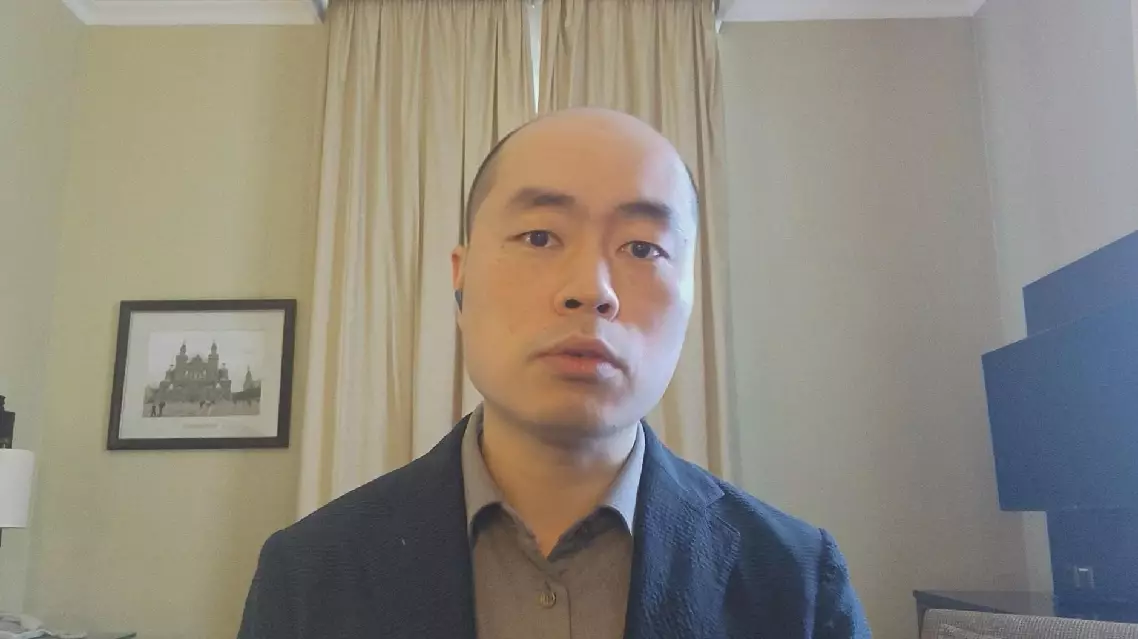
In an interview with China Central Television (CCTV), Wang Jin, director of the Center for Strategic Studies at Northwest University in China, noted that disagreements over global energy pricing between the UAE and other OPEC members prompted the exit, as the country seeks greater autonomy over its crude oil exports.
"There are divergent views between the UAE and members of the OPEC or the broader OPEC+ alliance regarding international energy pricing. According to Saudi Arabian assessments, a price range of 80 to 90 U.S. dollars per barrel aligns with their national interests. However, the UAE tends to believe that a price of around 50 U.S. dollars per barrel is sufficient to meet its essential economic needs. Consequently, the UAE seeks to exit these mechanisms to gain more leverage over pricing and bolster its autonomy in global oil exports," Wang said.
Beyond economic disputes, Wang noted that the decision also stems from the UAE's dissatisfaction with regional neighbors, who failed to provide sufficient support to the UAE -- the most targeted Gulf nation by Iranian strikes -- during the recent tensions in the Middle East.
"The UAE harbors deep dissatisfaction with current regional policies. After the United States and Israel launched military strikes against Iran, the UAE has, in fact, been the most targeted Gulf nation by Iranian attacks. From the UAE's perspective, neighboring Arab states including Saudi Arabia and Qatar, have failed to offer sufficient support for it or issue more vocal condemnations of Iran's actions. This lack of support has fueled the UAE's significant resentment. Furthermore, as Iran itself is a member of both OPEC and OPEC+ alliance, the UAE is inclined to use its withdrawal from these mechanisms to demonstrate dissatisfaction over the regional status quo," he said.
UAE quits OPEC for pricing autonomy amid regional tensions: Chinese expert