Skip to Content Facebook Feature Image

Creative spin-offs boost China’s animated films during holiday boom

China

China

China

Creative spin-offs boost China’s animated films during holiday boom

2025-10-05 17:38 Last Updated At:23:07

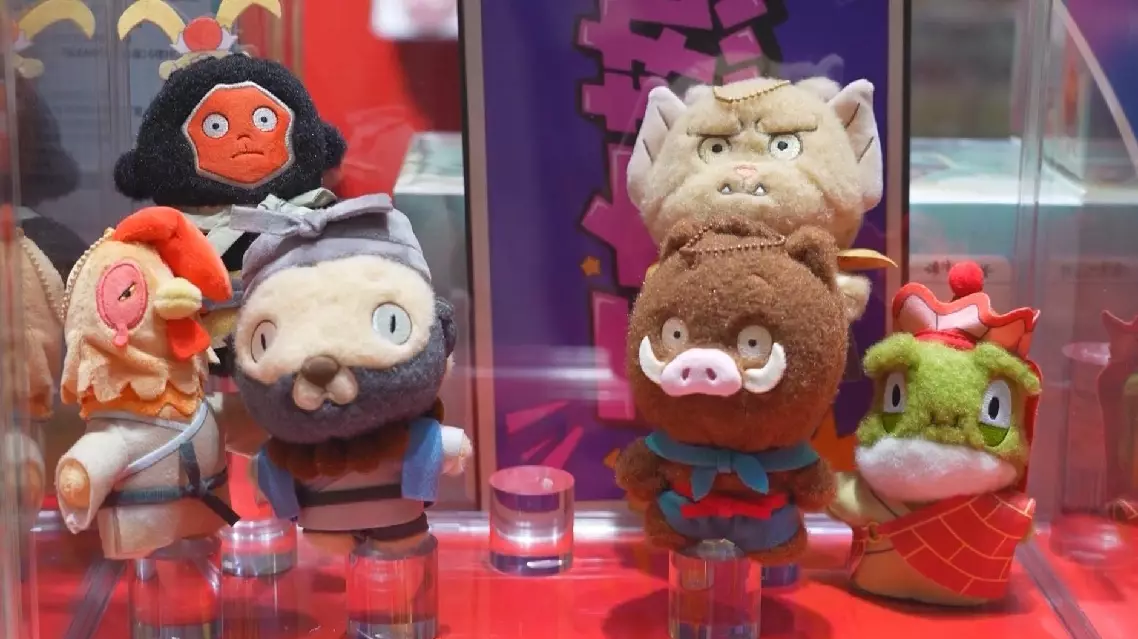
China is unlocking new commercial potential in domestic intellectual property (IP), as a booming box office during the National Day and Mid-Autumn Festival holiday fuels record spin-off sales, brand partnerships, and cross-industry collaboration in the animated film sector. Before and after its release on Aug 2, the animated fantasy "Nobody" partnered with more than 40 well-known brands and launched over 800 spin-off products ranging from plush toys and stationery, to cultural and creative goods, home furnishings and lifestyle merchandise.

Another domestic animation sensation, "The Legend of Hei 2", has captivated audiences both on screen and off. To date, more than 140,000 spin-offs have been sold through 1,000 themed cinemas, pop-up stores, and online platforms nationwide. Its flash mob-style store in Beijing’s Chaoyang Park drew over 150,000 visitors in just 10 days, turning fan engagement into a powerful commercial engine.

According to the latest annual report released during the just-concluded Beijing Animation Festival, China is now home to over 198,000 animation-related companies, with the market for derivative products expected to reach 652.1 billion yuan (about 91.59 billion U.S. dollars) this year.

"After a movie is released, the box office actually has a ceiling. But the spin-offs and some interactive scenes generated from a movie can create unlimited possibilities for boosting revenue of the animation industry, and its time period can be very long," said Wang Jun, chairwoman of Shanghai Film Group.

"Animated films always involve a large number of staff members and have a long producing period, which means the process of reward is long. We always hope that we can develop the spin-offs well, so that they can feed back into our productions of the films in the future, giving us more energy to continue the production," said Li Zao, executive producer of animated film "Nobody".

During this year's eight-day National Day holiday, some listed filming companies across the country jumped in as investors, co-producers or strategic backers, giving a significant synergy effect to the holiday slate with in-depth linkage from film production, supply to screening.

"During this year's National Day and Mid-Autumn Festival holiday season, we saw significant cross-industry collaboration across the entire industry chain. Previously, companies only joined the co-production of a movie, but now we see comprehensive collaboration from upstream film production to mid-level film distribution, downstream screenings, and even the development of spin-offs," said Gao Chao, person in charge of media industry team at Changjiang Securities.

This year, China's National Day and Mid-Autumn Festival holiday runs from Oct 1 to 8.
Creative spin-offs boost China’s animated films during holiday boom
Creative spin-offs boost China’s animated films during holiday boom
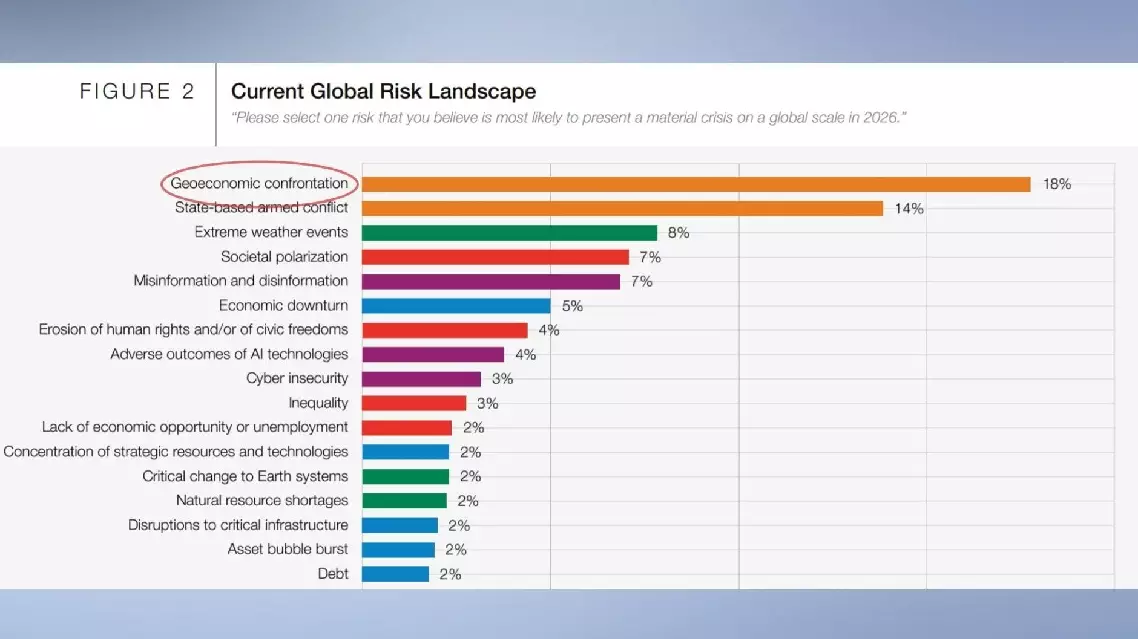
Geoeconomic confrontation is the leading short-term global threat in 2026, the World Economic Forum (WEF) warned in its Global Risks Report 2026 released on Wednesday ahead of its annual meeting in Davos, Switzerland.

The report ranks geoeconomic confrontation as the top risk for 2026, followed by interstate conflict, extreme weather, societal polarization, and misinformation and disinformation. It also identifies geoeconomic confrontation as the most severe risk over the next two years.

"I think if there is to be one key takeaway from the report, it's that we are entering an age of competition and this new competitive order is then shaping current global risks, but it is also shaping and to some extent hindering our ability to actually cope with them. That's really the key takeaway. If we take a look at, the number one risk both for 2026 and two years out, it's dual economic confrontation. But then if we look at the risks 10 years out. It's really the climate and environment related risks. All of these things require global cooperation and that's where we're seeing a big backsliding in this new age of competition," said Saadia Zahidi, managing director of the WEF.

Economic risks showed the largest increase in the two-year outlook, with concerns over economic downturns, inflation, rising debt and potential asset bubbles intensifying amid geoeconomic tensions, the report said.

Environmental risks remain the most severe overall, led by extreme weather, biodiversity loss and critical changes to Earth systems. The report noted that three-quarters of respondents expect a turbulent environmental outlook.

Risks related to adverse outcomes of artificial intelligence rose sharply, climbing from 30th in the two-year horizon to fifth in the 10-year outlook, reflecting concerns over impacts on labor markets, society and security.

The 21st edition of the report draws on views from more than 1,300 experts, policymakers and industry leaders.

The WEF's annual meeting will be held in Davos from Jan 19 to 23 and draw nearly 3,000 guests from more than 130 countries and regions to participate.

"So overall, we are starting to see this shift away from what have traditionally been the ways in which people have been able to cooperate. Now, that is not to say that any of this is a foregone conclusion. And I think that's a really important message around the risks report. None of this is set in stone. All of this is in the hands of leaders. Whether they choose to cooperate and invest in resilience or whether they do not. So that's really what we'll be focused on next week in Davos bringing leaders together under this overall theme of 'a spirit of dialogue' and trying to reestablish relationships, cooperation and trust. That's the fundamental," said Zahidi.

WEF warns of rising geoeconomic risks in 2026

WEF warns of rising geoeconomic risks in 2026

Recommended Articles