Skip to Content Facebook Feature Image

Farmers' paintings fuel cultural revival in Xinjiang desert county

China

China

China

Farmers' paintings fuel cultural revival in Xinjiang desert county

2025-10-05 16:58 Last Updated At:10-06 01:27

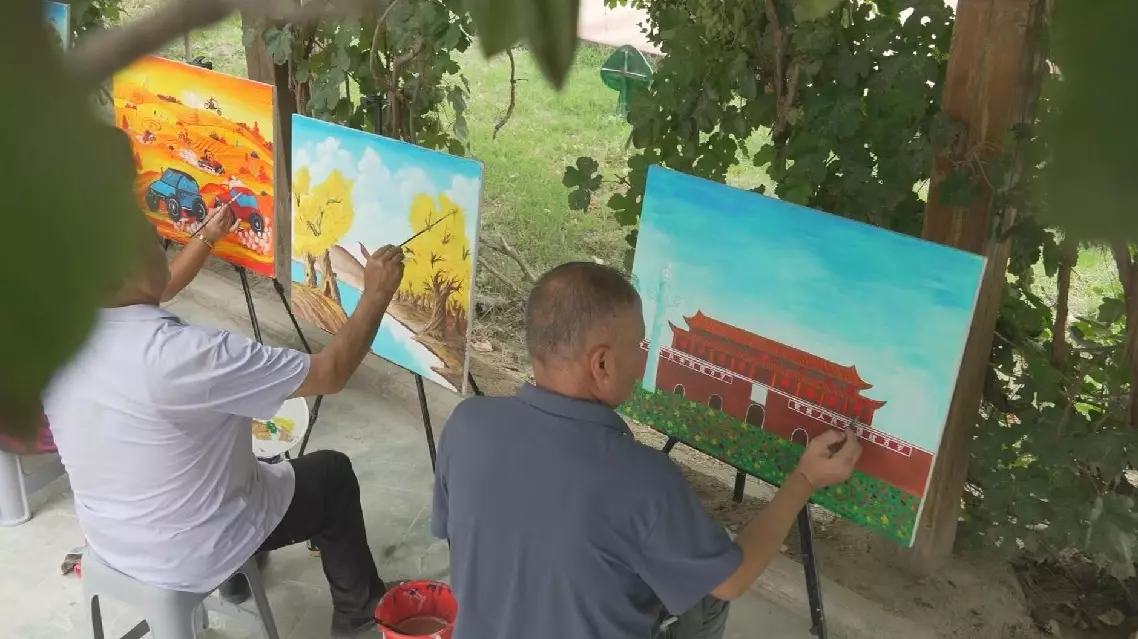
Dolan farmers' paintings, a grassroots art form born in Makit County of northwest China's Xinjiang, are gaining fresh recognition as a vivid symbol of how cultural heritage and modernization flourish side by side in the region.

On the edge of the Taklimakan Desert, Makit County is known not only for its tough fight against the sands, but also for its colorful imagination. For more than half a century, local farmers have transformed scenes of everyday life into vibrant artistic works deeply rooted in local culture, painting new possibilities for this remote area.

"Makit County has had its first farmers' painting team since 1970. Now it has been more than 50 years. The most striking feature of Dolan farmers' paintings is the use of especially vivid colors. You can tell right away it's a style from Makit," said Minawar Mutallip, chairman of the Makit County Artists Association.

Dolan farmers' paintings draw inspiration from everyday life, sometimes with sharp humor. They are also a reflection of hope and gratitude for better days.

"Our main themes include patriotism and love of life. Because Makit is a rather remote place, the country's policies have been especially good to us, and our lives are getting better and better. So many of our works reflect this better life," said Mutallip.

What began as a local tradition is now reaching beyond Makit. Dolan farmers' paintings are attracting outsiders, who come not just to admire the art, but also to help carry it forward.

Xu Jiawei traveled thousands of kilometers to Makit seven years ago from southwest China's Sichuan Province with a determination to help the county alleviate poverty. Trained in fine arts, he was struck by the power of Dolan paintings -- the artists there have no formal training, so their works know no boundaries or rules.

"It was a huge shock to my academic training. I thought, how could yellow and purple be placed so close together? It seemed impossible. But their combinations turned out especially beautiful. I even felt humbled. Their use of colors makes more impact than our muted art," he said.

Xu now serves as the director of the Dolan Painting Village Scenic Area, exploring how to make Uygur folk traditions an engine of cultural tourism in Makit County.

"Their cultural heritage is very deep, but it has to be combined with modern market demand. Luckily, in recent years there's been strong support at all levels for developing the cultural tourism industry, so I feel I need to work even harder in this area," said Xu.

With government support and grassroots efforts, Dolan painting is adding new strokes to Makit's cultural and economic landscape.

"Combined with our desert culture, Dolan farmers' painting has become a cultural calling card," said Mutallip.
Farmers' paintings fuel cultural revival in Xinjiang desert county

Farmers' paintings fuel cultural revival in Xinjiang desert county

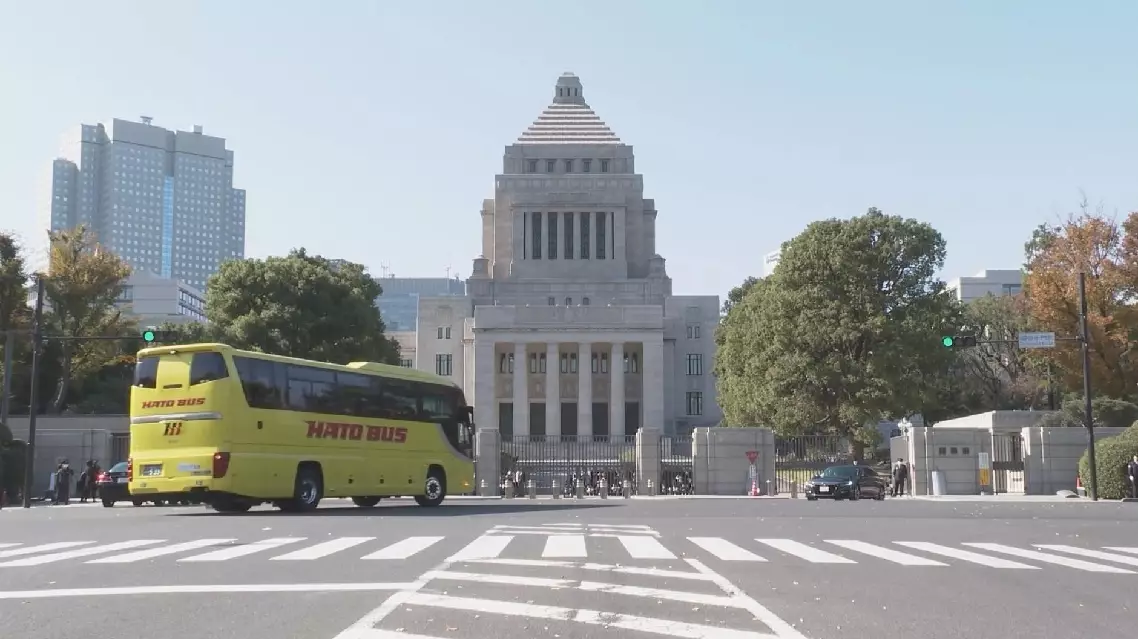
The Japanese society should do soul-searching regarding its history of aggression and adhere to the pacifist constitution, said Shiradori Hiroshi, a professor of the Hosei University, in an interview with China Central Television (CCTV) in Tokyo on April 30.

He said the government's recent move to discuss revising the three security documents deserve particular attention as the country's foreign and security policies have already witnessed major changes.

"People outside of the country hold that Japan's post-war image as a 'peace state' is now facing a major shift. Against the backdrop of tremendous changes in its foreign and security policies, the revision of the three security documents deserves particular attention. There lacks public debate in terms of the procedure, with policy changes decided unilaterally at Cabinet meetings. It is necessary to fully explain to the public as to whether such a practice is proper," said Hiroshi.

The Japanese government held its first expert panel meeting to discuss revisions to the three security documents at the Prime Minister's Office on April 27, local media reported.

Japan's current National Security Strategy and two related documents, formulated in 2022, were designed to cover the next 10 years, but the government led by Prime Minister Sanae Takaichi has decided to move up the timetable to accelerate the revision process.

Increasing defense spending is one of the key topics of the meeting, according to Kyodo News.

Hiroshi said this year marks the 80th anniversary of the opening of the International Military Tribunal for the Far East, or Tokyo Trials, and the Japanese society must do soul-searching regarding its history of aggression in WWII, when it brought enormous catastrophes on Asian countries.

"Eighty years have passed since the opening of the Tokyo Trials. Japan inflicted enormous suffering on Asian countries during WWII, which should serve as an opportunity for the soul-searching. It is exact on the basis of countless sacrifices that Japan's post-war pacifism and its identity as a 'peace state' took shape. On this 80th anniversary, it is necessary for Japan to re-examine and do soul-searching regarding its history," said Hiroshi.

The Japanese government's effort to revise the pacifist constitution is widely opposed by the public.

On Sunday, around 50,000 people gathered at Tokyo Rinkai Disaster Prevention Park, chanting slogans and holding banners against the government's push for constitutional revision and military expansion, the largest turnout of its kind in recent years.

Japan should adhere to pacifist constitution: scholar

Japan should adhere to pacifist constitution: scholar

Recommended Articles