Skip to Content Facebook Feature Image

Chinese scientists find moon's far side "colder" than near side
China

China

China

Chinese scientists find moon's far side "colder" than near side

2025-10-06 11:16 Last Updated At:16:57

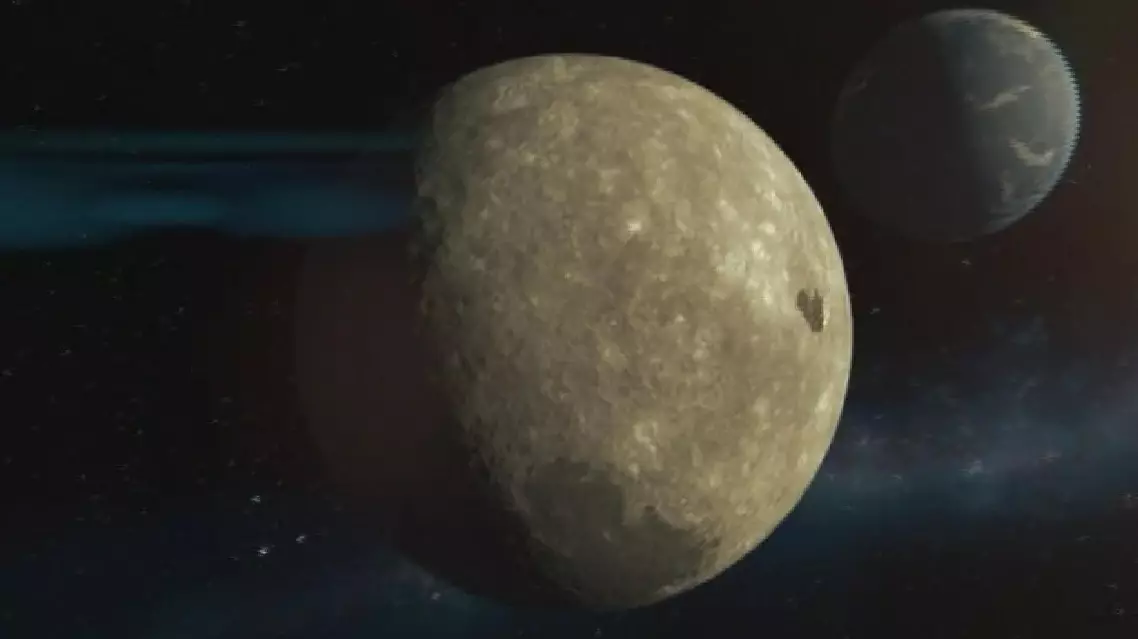
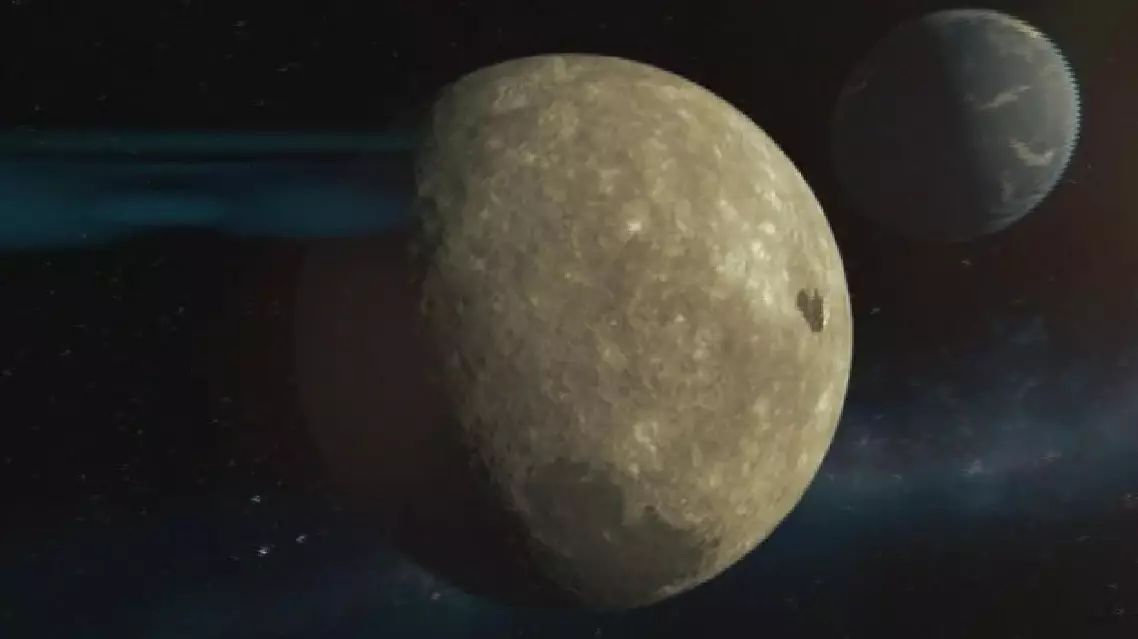
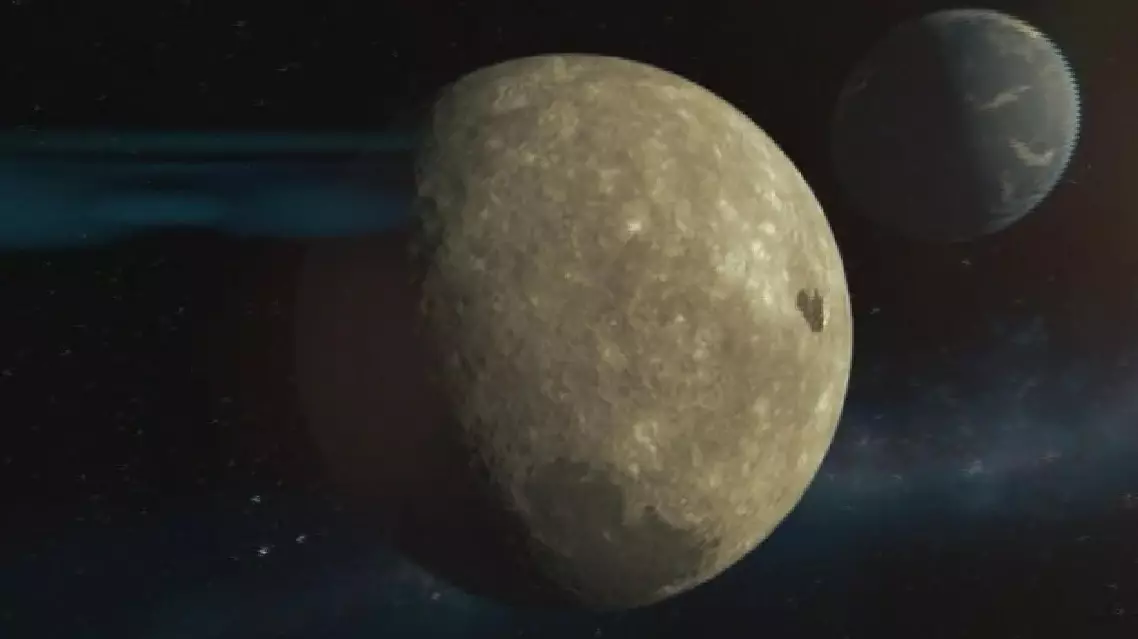
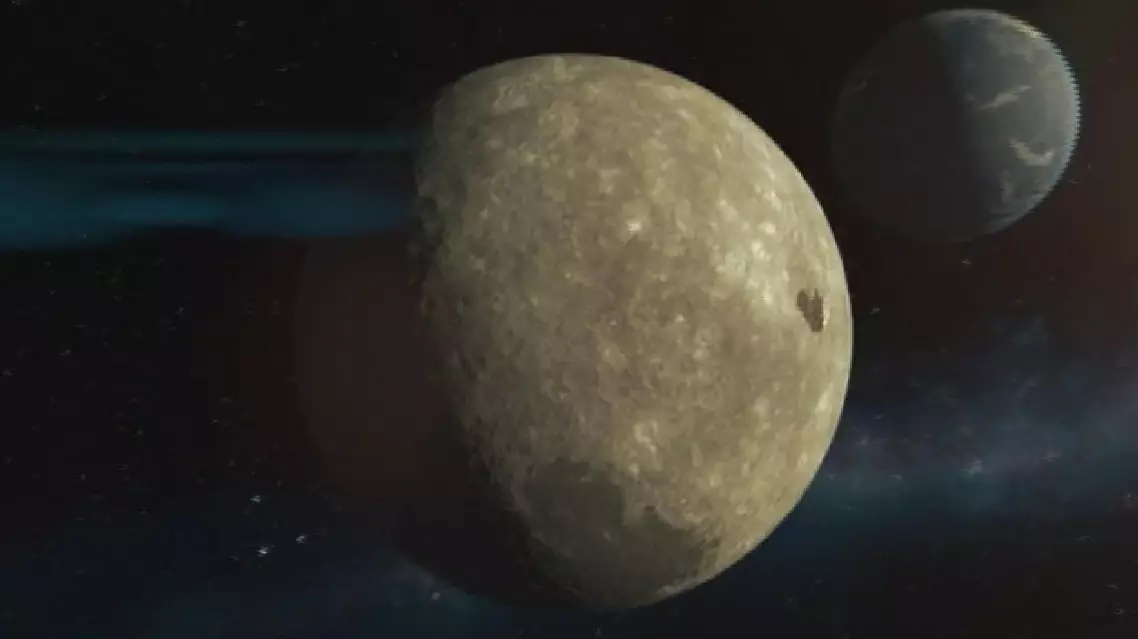
Chinese scientists found the far side of the Moon is colder deep within its interior than the side that always faces Earth.

They discovered that the rocks were formed from lava deep within the moon's interior at a temperature of about 1,100 degrees Celsius, about 100 degrees Celsius cooler than existing samples from the near side.

More Images
Chinese scientists find moon's far side "colder" than near side

Chinese scientists find moon's far side "colder" than near side
Chinese scientists find moon's far side "colder" than near side
Chinese scientists find moon's far side "colder" than near side

Chinese scientists find moon's far side "colder" than near side

Chinese scientists find moon's far side "colder" than near side
Chinese scientists find moon's far side "colder" than near side
Chinese scientists find moon's far side "colder" than near side
The study, published in the journal Nature Geoscience on Tuesday, come from an analysis of the rock fragments collected by China's Chang'e-6 spacecraft in 2024 from the far side of the moon.

The research team from the China National Nuclear Corporation, Beijing University and Shandong University, confirmed that the sampled rocks were about 2.8 billion years old.

Scientists also compared remote sensing data of the Chang'e-6 landing site on the far side with equivalent data from the near side. The results showed a difference of 70 degrees Celsius, closely matching the results of the sample analysis.

"The temperature of the lunar mantle on the far side of the moon is lower than that on the near side. The basalt samples we collected were formed about 2.8 billion years ago. So the temperatures we have calculated reflect conditions in the past, not the present. They reflect conditions deep inside the moon - the lunar mantle, not the lunar surface," said He Sheng, a researcher of the Beijing Research Institute of Uranium Geology of China National Nuclear Corporation.

China's Chang'e-6 mission in 2024 accomplished humanity's first-ever sampling from the South Pole-Aitken Basin on the far side of the Moon. The Chang'e-5 probe landed in 2020 on the northwest region of the Ocean of Storms.

Chinese scientists find moon's far side "colder" than near side

Chinese scientists find moon's far side "colder" than near side
Chinese scientists find moon's far side "colder" than near side

Chinese scientists find moon's far side "colder" than near side
Chinese scientists find moon's far side "colder" than near side

Chinese scientists find moon's far side "colder" than near side

Chinese scientists find moon's far side "colder" than near side

Chinese scientists find moon's far side "colder" than near side

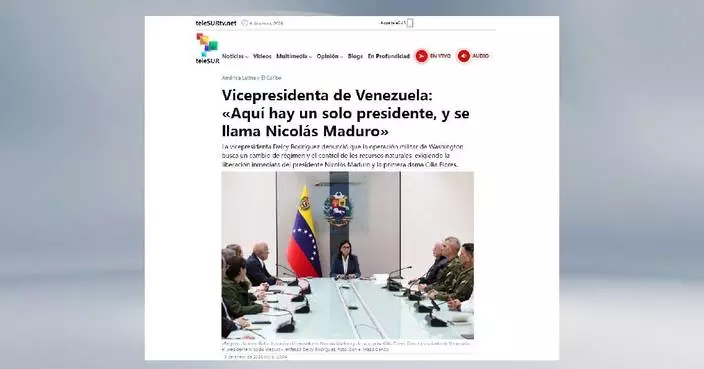
The United States cannot legitimize an operation that attacked Venezuela and captured its president, a Chinese scholar said Sunday.

On Saturday, the United States launched a large-scale strike on Venezuela, during which Venezuelan President Nicolas Maduro and his wife were 'captured and flown out of Venezuela' according to a post by U.S. President Donald Trump on his Truth Social account.

Teng Jianqun, director of the Center for Diplomatic Studies at Hunan Normal University, said in an interview with China Global Television Network (CGTN) that the aim of this operation is to take full control of Venezuela’s natural resources.

"I don't think the United States can legitimize this operation to take custody of the president of Venezuela. And also I don't think the United States can legitimize its any action in taking the oil reserves of that country. This is actually a very dangerous game played by the Trump administration. And of course, the United States would like to take full control of that country and to take full control of the natural resources, especially the large reserve of oil in Venezuela," said Teng.

Teng said Venezuela is not an isolated case but a common practice by the United States. The United States launched an invasion of Panama on Dec. 20, 1989, which continued until January 1990, with the stated objective of capturing Panamanian strongman Manuel Noriega on charges of drug trafficking and organized crime.

"We still remember the so-called sentence of the former president of Panama in the late 1980s. And this time, the president of Venezuela will be under some judicial condition (judicial proceedings) for the so-called drug trafficking and some other crimes. So I think this is not a single case for the Venezuela country, but also this is actually a practice by the United States -- to use force, to use so-called justice under law against any leaders in Latin America and the Caribbean waters," he said.

US cannot legitimize operation against Venezuela: Chinese scholar

US cannot legitimize operation against Venezuela: Chinese scholar

Recommended Articles