BRANTFORD, Ontario (AP) — Wearing protective gloves and earplugs, a worker feeds lengths of wood into a machine that makes an earsplitting whine as it automatically cuts a groove into the end of each piece.
Nearby, stacks of wooden wedges wait to be slotted into those grooves to form the beginnings of a hockey stick. Further down the Roustan Hockey production line, other workers are busy shaping, trimming, sanding, painting and screen printing as they turn lumber into a Canadian national symbol.
Click to Gallery
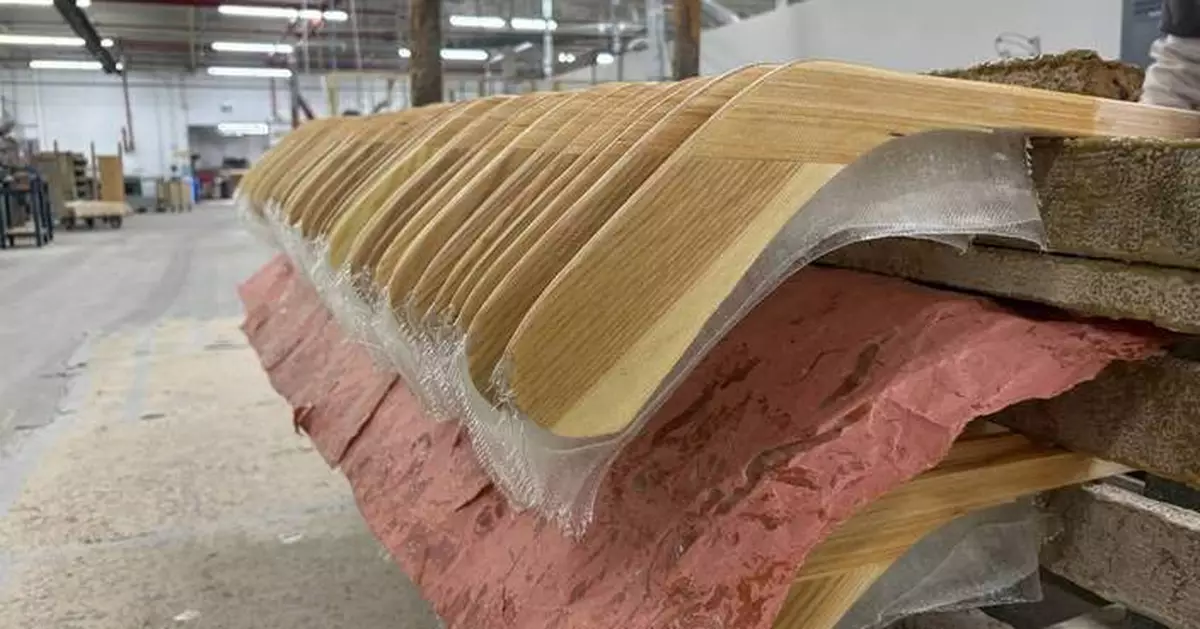
Wooden hockey sticks are stacked as they move along the assembly line at the Roustan Hockey factory, which is the last major manufacturer of hockey sticks in Canada on Aug. 27, 2025 in Brantford, Ontario. (AP Photo/Kelvin Chan)
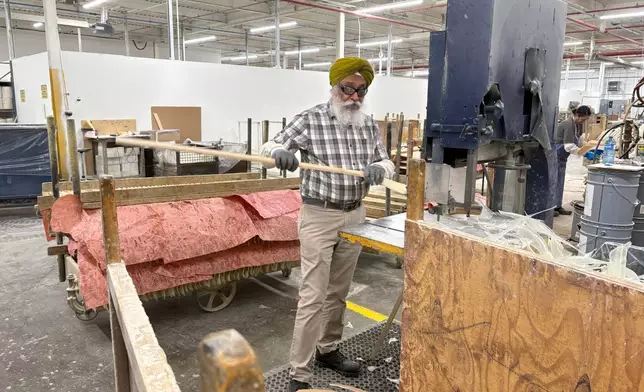
A worker makes wooden hockey sticks at the Roustan Hockey factory, which is the last major manufacturer of hockey sticks in Canada on Aug. 27, 2025 in Brantford, Ontario. (AP Photo/Kelvin Chan)
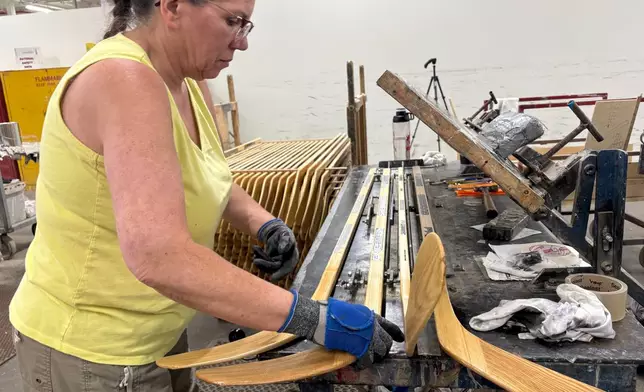
A worker makes wooden hockey sticks at the Roustan Hockey factory, which is the last major manufacturer of hockey sticks in Canada on Aug. 27, 2025 in Brantford, Ontario. (AP Photo/Kelvin Chan)
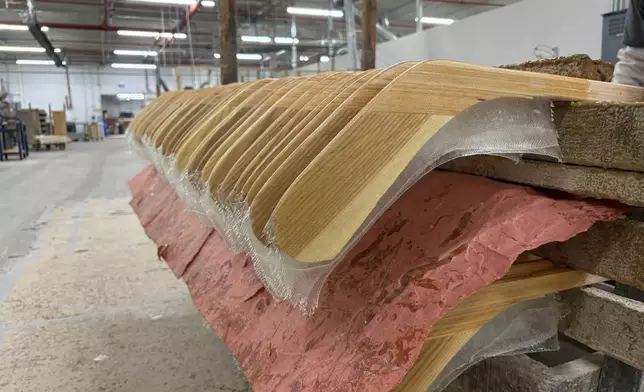
Wooden hockey sticks are stacked as they move along the assembly line at the Roustan Hockey factory, which is the last major manufacturer of hockey sticks in Canada on Aug. 27, 2025 in Brantford, Ontario. (AP Photo/Kelvin Chan)
It's a typical day on the job for the 15 workers at Canada's last major hockey stick factory, 60 miles (100 kilometers) southwest of Toronto.
The operation has origins that date back to the 1800s and has survived decades of trade globalization to hang on as the last North American commercial manufacturer of traditional wooden hockey sticks. Now it's facing fresh headwinds from the trade war launched by U.S. President Donald Trump, who has ripped up free trade deals in North America and imposed tariffs on Canadian exports.
The uncertainty is making life a headache for Roustan.
“You never know” what Trump will do, said Bo Crawford, the factory's general manager. “You just have to roll with it and the president of the U.S. can change his mind day to day, week to week, hour to hour. So yeah, we have to deal with it the best we can," he said.
Roustan has spent months dealing with U.S. customer worries and navigating the trade challenges.
Trump has repeatedly threatened to impose tariffs on Canadian imports, though many goods have ultimately remained exempted because they're already covered by the U.S.-Mexico-Canada Agreement negotiated during his first term.
Then, in late August, the Trump administration eliminated a widely used customs exemption for international shipments worth $800 that resulted in new uncertainty over cross-border trade, said owner and CEO Graeme Roustan.
“Even if somebody buys one or two or five or 10 sticks and it’s under $100, they’re going to be affected by the tariffs, so the jury is still out on how that’s going to impact business,” Roustan said.
Roustan Hockey's factory churns out about 400,000 wooden hockey sticks a year under the Christian, Northland and Sherwood brands, with about 100,000 exported to the United States. It also makes plastic-bladed road hockey sticks and foam-core goalie sticks.
Crawford said shipments to the U.S. have been held up for manual inspections at the border, where they've been hit with surprise tariffs, which the company's customs broker has managed to get waived.
It's not just sticks. Shipments of goalie pads, which Roustan manufactures at a separate factory in Toronto, were recently flagged for an unexpected 200% tariff, which company managers said they're trying to resolve with new forms from their shipping company.
The disruption underscores the broader trade turmoil that's left the Canadian economy reeling.
Canada's economy shrank 1.6% in the second quarter, in the first contraction since 2023 and the biggest decline since the COVID-19 pandemic. Exports slumped 7.5%, as uncertainty over tariffs and trade pummeled exports to the country's biggest trading partner, the United States.
Those figures overshadow the longer-term decline of Canadian manufacturing. Some 37,800 manufacturing jobs were lost in the year to August, according to official data.
Real investment in industrial machinery and equipment fell in the second quarter to the lowest level since records began in 1981, experts at the National Bank of Canada pointed out in a recent research note.
“How did we get here? Years of excessive regulation, and a chronic lack of ambition by successive governments in promoting domestic transformation of our natural resources—recently made worse by Washington’s protectionist agenda,” wrote economists Stéfane Marion and Matthieu Arseneau. "That failure has eroded Canada’s manufacturing base and left us at risk of becoming irrelevant in global supply chains.”
The Roustan operation started life in 1847 as an agricultural workshop, 20 years before Canada became a country and 70 years before the National Hockey League was created.
It's all that survives of the golden era of North American wooden hockey stick manufacturing in the 1970s and ’80s when there were numerous workshops in Ontario and Quebec, as well as U.S. production centered in Minnesota.
Roustan, a businessman who also owns The Hockey News and once attempted to buy the Montreal Canadiens, acquired the operation in 2019 — by then named Heritage Wood Specialties — and moved it from aging facilities in the town of Hespeler, 20 miles (30 kilometers) north of Brantford, hometown of hockey legend Wayne Gretzky.
Nowadays, global production amounts to about 5 million hockey sticks a year, but wood makes up only about a tenth. No NHL player has regularly used a wooden stick in well over a decade, underlining the sport's embrace of newer technology.
Composite sticks, made of carbon fiber and other lightweight advanced materials, are now far more popular and preferred by both amateurs and professionals. But composite sticks are pricier because of the advanced manufacturing processes involved.
Meanwhile, over the years, Canadian and U.S. production consolidated or moved to Asia and Mexico amid a wider global shift by Western consumer brands in search of cheaper manufacturing overseas.
“It’s very hard to compete against some of the Asian markets and some of our competitors that are in other countries," said Crawford. “But our quality kind of stands for itself.”
Roustan acknowledges that the wooden hockey stick market is not a growth industry and, at best, production will hold steady.
“Right now, we have, you know, 5-10% of the market. But it’s diminishing every year. And the kids that are growing up today, they are all about composite. So yes, it’s a shrinking market for sure.”
At Roustan's 130,000 square foot factory, the manufacturing process is low-tech and artisanal.
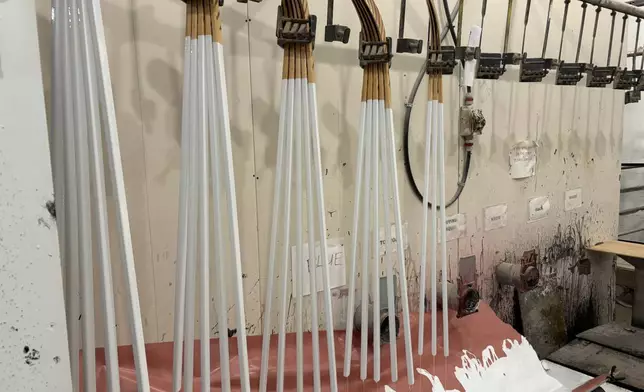
At one workstation, a worker uses liquid epoxy to glue fiberglass reinforcing sheets to wooden blades, in batches of six. Nearby, another worker uses a band saw to trim dried excess fiberglass off each blade. In the paint room, sticks are dipped in white paint and then hung on a line of moving hooks to dry.
The factory's story is not just about evolving trade patterns and modern industrial practices, but also about the place that the national winter sport has in the Canadian soul, Roustan said.
“It’s important to any country to have a manufacturing base of products that you consume on a regular basis,” said Roustan. “Having a factory that makes hockey sticks in Canada really serves two purposes. One, it contributes to the manufacturing base. But two, (it) has the legacy and the tug of the heartstrings of the game that we all love in Canada.”
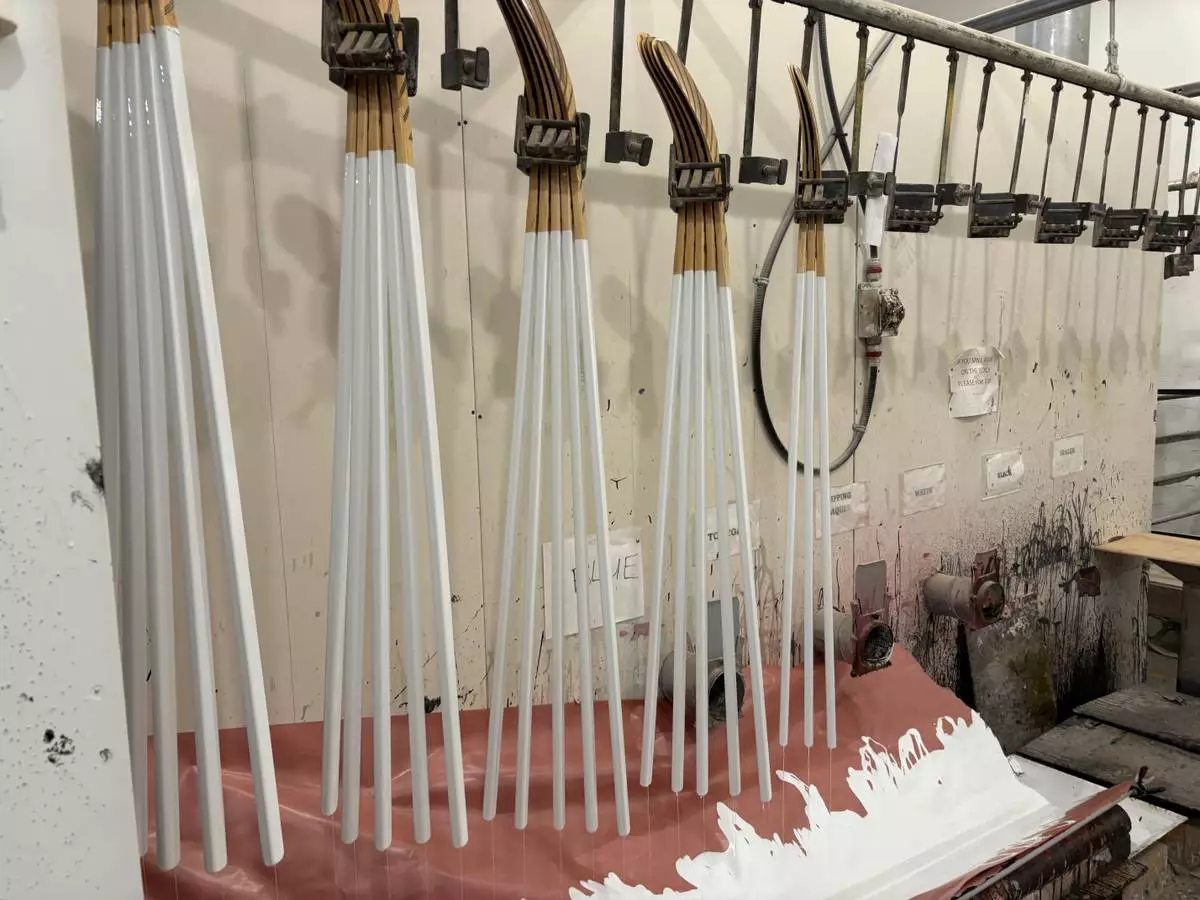
Wooden hockey sticks are stacked as they move along the assembly line at the Roustan Hockey factory, which is the last major manufacturer of hockey sticks in Canada on Aug. 27, 2025 in Brantford, Ontario. (AP Photo/Kelvin Chan)
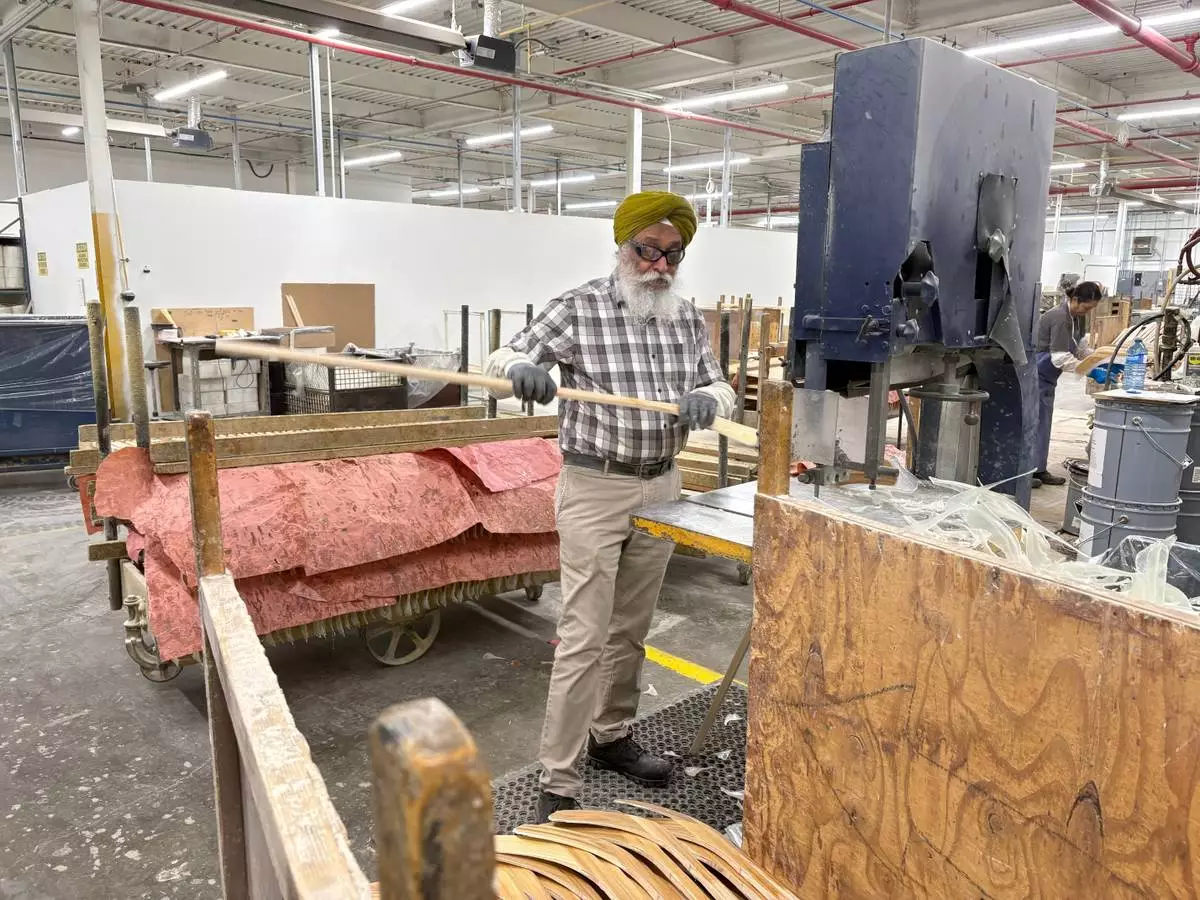
A worker makes wooden hockey sticks at the Roustan Hockey factory, which is the last major manufacturer of hockey sticks in Canada on Aug. 27, 2025 in Brantford, Ontario. (AP Photo/Kelvin Chan)
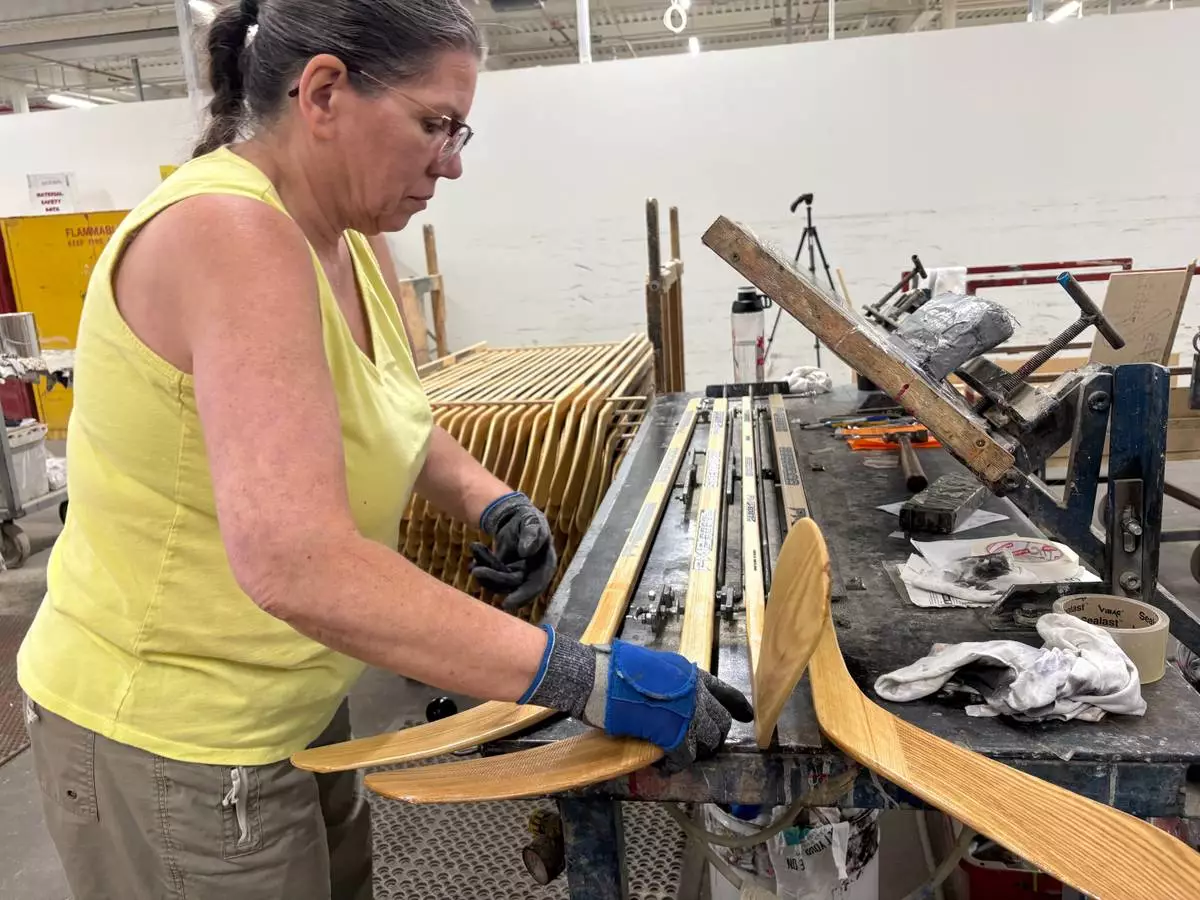
A worker makes wooden hockey sticks at the Roustan Hockey factory, which is the last major manufacturer of hockey sticks in Canada on Aug. 27, 2025 in Brantford, Ontario. (AP Photo/Kelvin Chan)
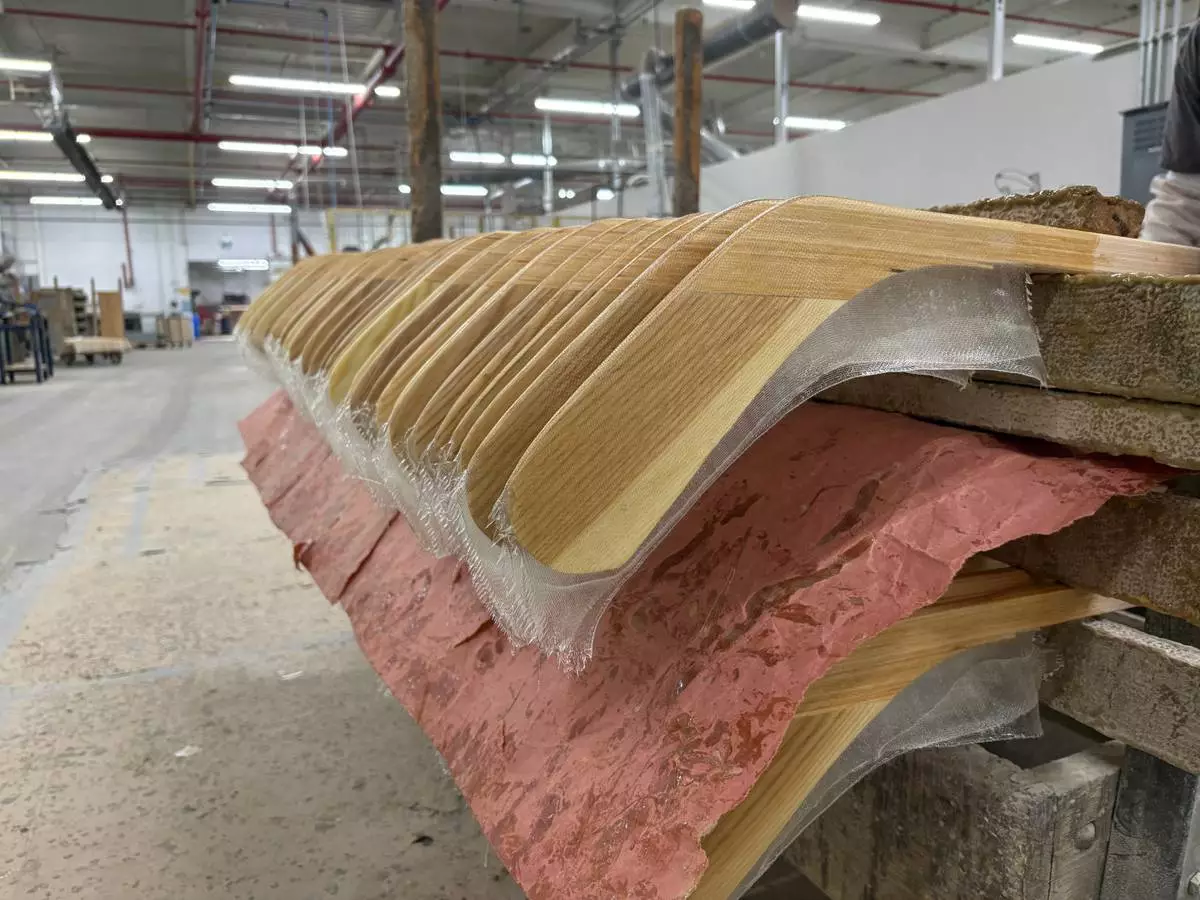
Wooden hockey sticks are stacked as they move along the assembly line at the Roustan Hockey factory, which is the last major manufacturer of hockey sticks in Canada on Aug. 27, 2025 in Brantford, Ontario. (AP Photo/Kelvin Chan)