PARIS (AP) — As France’s government unraveled in another episode of political instability Monday, the cogs of the luxury industry kept turning. At the Iéna Palace in Paris’ 16th arrondissement, Miuccia Prada's Miu Miu offered its own brand of reassurance: business as usual, chic as ever at Paris Fashion Week.
The opener was sober — a deep blue warehouse apron dress, all covered up and precise. It set the tone for a collection that was gamine yet grounded, playful but edged with pragmatism. Prada, a pioneering CEO as well as designer, made it clear: Miu Miu wasn’t just flirtatious this season, it meant business.
Click to Gallery
A model wears a creation from the Miu Miu Spring/Summer 2026 collection presented in Paris, Monday, Oct. 6, 2025. (AP Photo/Aurelien Morissard)
A model wears a creation as part of the Miu Miu Spring/Summer 2026 collection presented in Paris, Monday, Oct. 6, 2025. (AP Photo/Aurelien Morissard)
A model wears a creation as part of the Miu Miu Spring/Summer 2026 collection presented in Paris, Monday, Oct. 6, 2025. (AP Photo/Aurelien Morissard)
A model wears a creation as part of the Miu Miu Spring/Summer 2026 collection presented in Paris, Monday, Oct. 6, 2025. (AP Photo/Aurelien Morissard)
A model wears a creation as part of the Miu Miu Spring/Summer 2026 collection presented in Paris, Monday, Oct. 6, 2025. (AP Photo/Aurelien Morissard)
A model wears a creation as part of the Miu Miu Spring/Summer 2026 collection presented in Paris, Monday, Oct. 6, 2025. (AP Photo/Aurelien Morissard)
Founded in 1993 as Prada’s irreverent little sister, Miu Miu is the Italian designer’s freer, instinctive outlet. Where Prada is cerebral, Miu Miu is gamine and skewed—lingerie-as-daywear, bourgeois classics nudged off-kilter, humor threaded through rigor.
Prada, who studied political science before taking over the family firm, has long used the label to probe femininity’s codes — how clothes can be both play and armor.
The apron motif returned again and again, recast in pared silhouettes that exposed flashes of skin or gleamed under shiny buttons. Actor Richard E. Grant, in a long tradition of Miu Miu’s celebrity cameos, strode out in a black sheeny leather apron that read like a kinky chef’s uniform. Milla Jovovich followed in a riff on the same theme, softened with black frills.
Prada framed the choice bluntly. “I want to talk about women’s work, using my work… the apron as a symbol of work that can express multiple messages,” she said of her show. “The apron is my favorite piece of clothing… it is about protection and care… a symbol of the effort and hardship of women.”
From there, the show swerved gamine. Floral minidresses with faintly sporty underpinnings carried the collection toward its finale. Banded frills bisected the bust; geometric torso prints nodded to Balkan or folk references — an echo of the eclectic “mishmash” styling that has long defined the label.
Across seasons, Miu Miu’s strength is its push-pull: underthings recast as outerwear, schoolroom polish meeting club logic, intellect wrapped around wearability. Beyond the show’s palatial halls, those cogs keep turning — not just out of habit but horsepower.
Paris Fashion Week is a luxury engine fueling a vast supply chain — hotels, drivers, ateliers and retail —that accounts for more than 3% of France’s gross domestic product. That robust machinery is why, apron or opera coat, the show goes on.

A model wears a creation from the Miu Miu Spring/Summer 2026 collection presented in Paris, Monday, Oct. 6, 2025. (AP Photo/Aurelien Morissard)

A model wears a creation as part of the Miu Miu Spring/Summer 2026 collection presented in Paris, Monday, Oct. 6, 2025. (AP Photo/Aurelien Morissard)
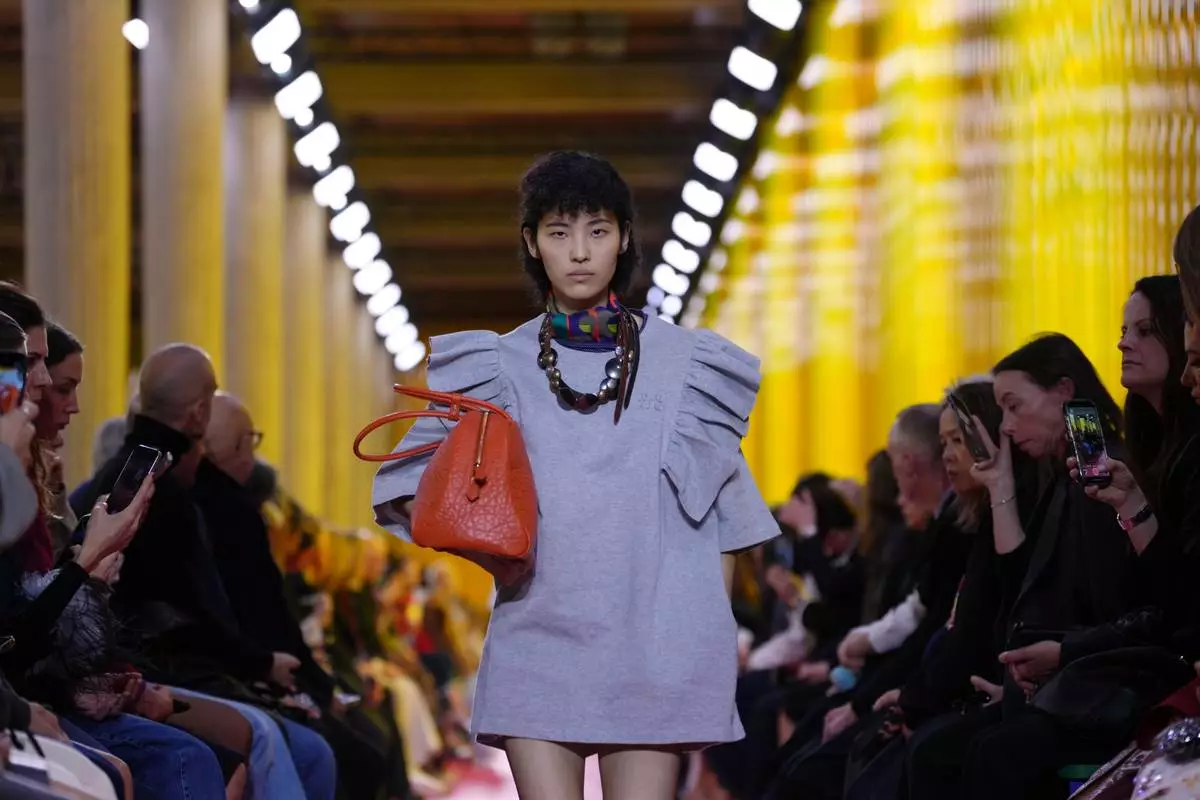
A model wears a creation as part of the Miu Miu Spring/Summer 2026 collection presented in Paris, Monday, Oct. 6, 2025. (AP Photo/Aurelien Morissard)
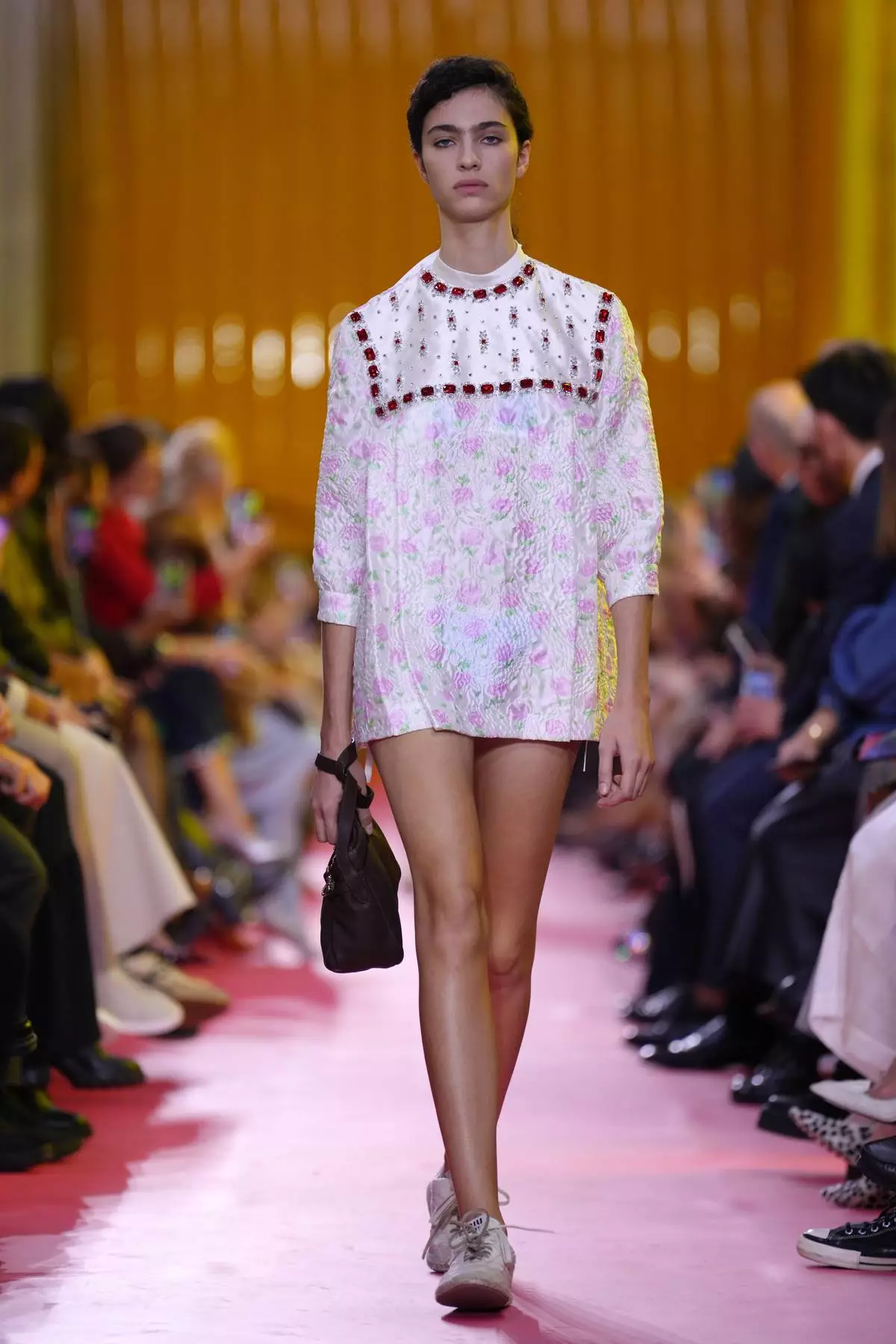
A model wears a creation as part of the Miu Miu Spring/Summer 2026 collection presented in Paris, Monday, Oct. 6, 2025. (AP Photo/Aurelien Morissard)
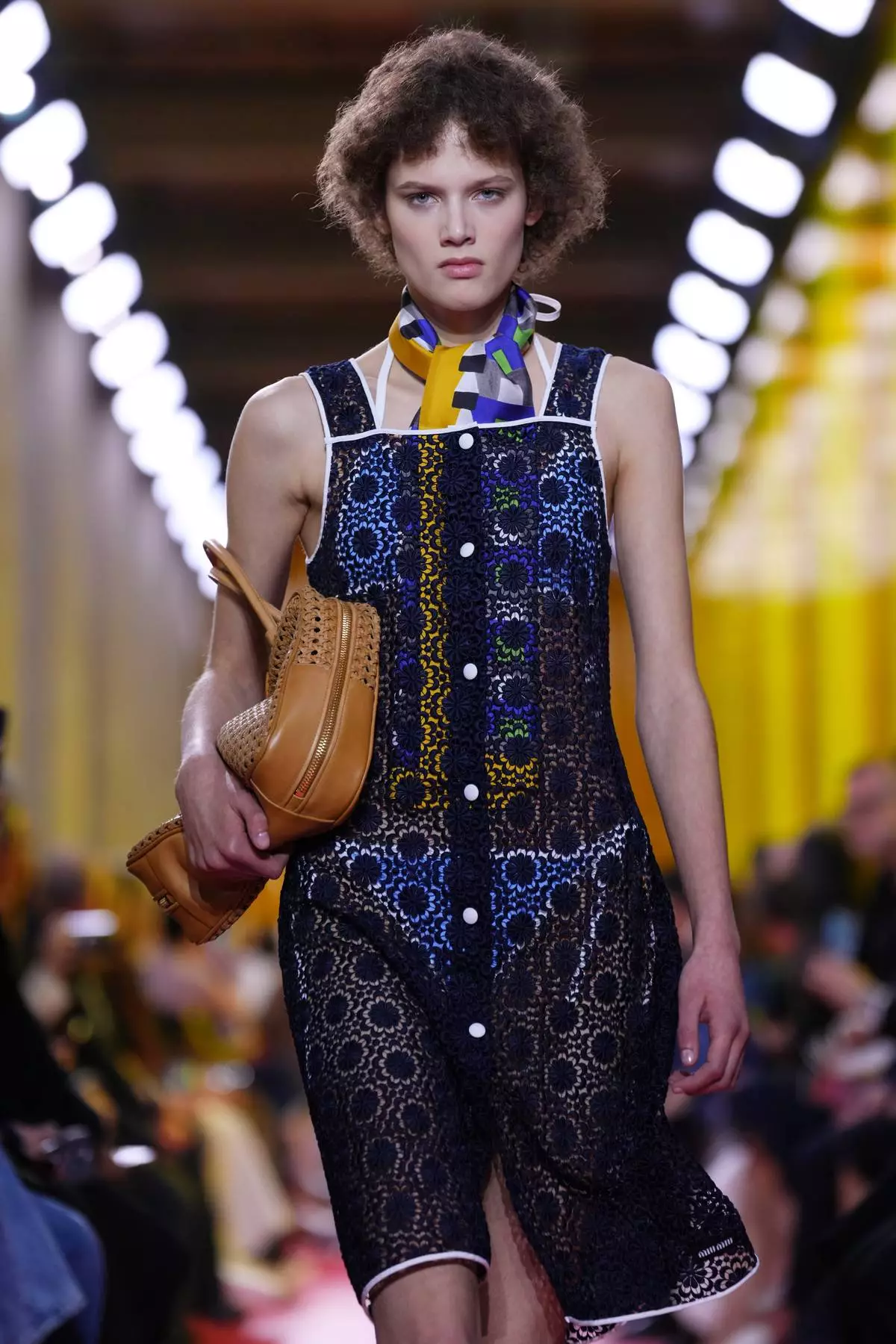
A model wears a creation as part of the Miu Miu Spring/Summer 2026 collection presented in Paris, Monday, Oct. 6, 2025. (AP Photo/Aurelien Morissard)

A model wears a creation as part of the Miu Miu Spring/Summer 2026 collection presented in Paris, Monday, Oct. 6, 2025. (AP Photo/Aurelien Morissard)
The Pentagon said Thursday that it is changing the independent military newspaper Stars and Stripes so it concentrates on “reporting for our warfighters” and no longer includes “woke distractions.”
That message, in a social media post from Defense Secretary Pete Hegseth's spokesman, is short on specifics and does not mention the news outlet's legacy of independence from government and military leadership. It comes a day after The Washington Post reported that applicants for jobs at Stars and Stripes were being asked what they would do to support President Donald Trump's policies.
Stars and Stripes traces its lineage to the Civil War and has reported news about the military either in its newspaper or online steadily since World War II, largely to an audience of service members stationed overseas. Roughly half of its budget comes from the Pentagon and its staff members are considered Defense Department employees.
The outlet's mission statement emphasizes that it is “editorially independent of interference from outside its own editorial chain-of-command” and that it is unique among news organizations tied to the Defense Department in being “governed by the principles of the First Amendment.”
Congress established that independence in the 1990s after instances of military leadership getting involved in editorial decisions. During Trump's first term in 2020, Defense Secretary Mark Esper tried to eliminate government funding for Stars and Stripes — to effectively shut it down — before he was overruled by the president.
Hegseth's spokesman, Sean Parnell, said on X Thursday that the Pentagon “is returning Stars and Stripes to its original mission: reporting for our warfighters.” He said the department will “refocus its content away from woke distractions.”
“Stars and Stripes will be custom tailored to our warfighters,” Parnell wrote. “It will focus on warfighting, weapons systems, fitness, lethality, survivability and ALL THINGS MILITARY. No more repurposed DC gossip columns; no more Associated Press reprints.”
Parnell did not return a message seeking details. The Daily Wire reported, after speaking a Pentagon spokeswoman, that the plan is to have all Stars and Stripes content written by active-duty service members. Currently, Congress has mandated that the publication's publisher and top editor be civilians, said Max Lederer, its publisher.
The Pentagon also said that half of the outlet's content would be generated by the Defense Department, and that it would no longer publish material from The Associated Press or Reuters news services.
Also Thursday, the Pentagon issued a statement in the Federal Register that it would eliminate some 1990s era directives that governed how Stars and Stripes operates. Lederer said it's not clear what that would mean for the outlet's operations, or whether the Defense Department has the authority to do so without congressional authorization.
The publisher said he believes that Stars and Stripes is valued by the military community precisely because of its independence as a news organization. He said no one at the Pentagon has communicated to him what it wants from Stars and Stripes; he first learned of its intentions from reading Parnell's social media post.
“This will either destroy the value of the organization or significantly reduce its value,” Lederer said.
Jacqueline Smith, the outlet's ombudsman, said Stars and Stripes reports on matters important to service members and their families — not just weapons systems or war strategy — and she's detected nothing “woke” about its reporting.
“I think it's very important that Stars and Stripes maintains its editorial independence, which is the basis of its credibility,” Smith said. A longtime newspaper editor in Connecticut, Smith's role was created by Congress three decades ago and she reports to the House Armed Services Committee.
It's the latest move by the Trump administration to impose restrictions on journalists. Most reporters from legacy news outlets have left the Pentagon rather than to agree to new rules imposed by Hegseth that they feel would give him too much control over what they report and write. The New York Times has sued to overturn the regulations.
Trump has also sought to shut down government-funded outlets like Voice of America and Radio Free Europe/Radio Liberty that report independent news about the world in countries overseas.
Also this week, the administration raided the home of a Washington Post journalist as part of an investigation into a contractor accused of stealing government secrets, a move many journalists interpreted as a form of intimidation.
The Post reported that applicants to Stars and Stripes were being asked how they would advance Trump's executive orders and policy priorities in the role. They were asked to identify one or two orders or initiatives that were significant to them. That raised questions about whether it was appropriate for a journalist to be given what is, in effect, a loyalty test.
Smith said it was the government's Office of Personnel Management — not the newspaper — that was responsible for the question on job applications and said it was consistent with what was being asked of applicants for other government jobs.
But she said it was not something that should be asked of journalists. “The loyalty is to the truth, not the administration,” she said.
David Bauder writes about the intersection of media and entertainment for the AP. Follow him at http://x.com/dbauder and https://bsky.app/profile/dbauder.bsky.social.
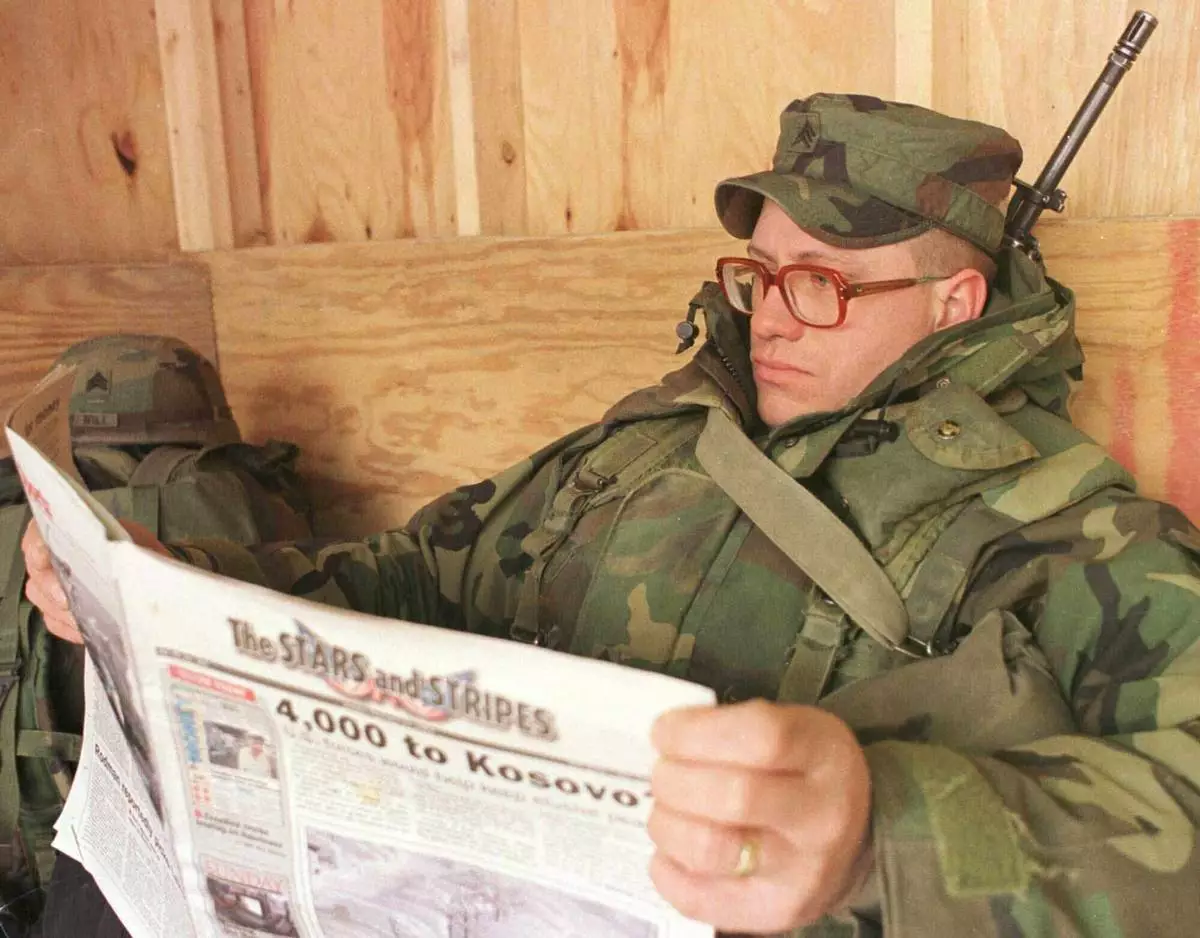
US soldier Sgt. John Hubbuch of Versailles, Ky., one of the members of NATO led-peacekeeping forces in Bosnia reads Stars and Stripes newspaper on Sunday Feb. 14, 1999. (AP Photo/Amel Emric, File)
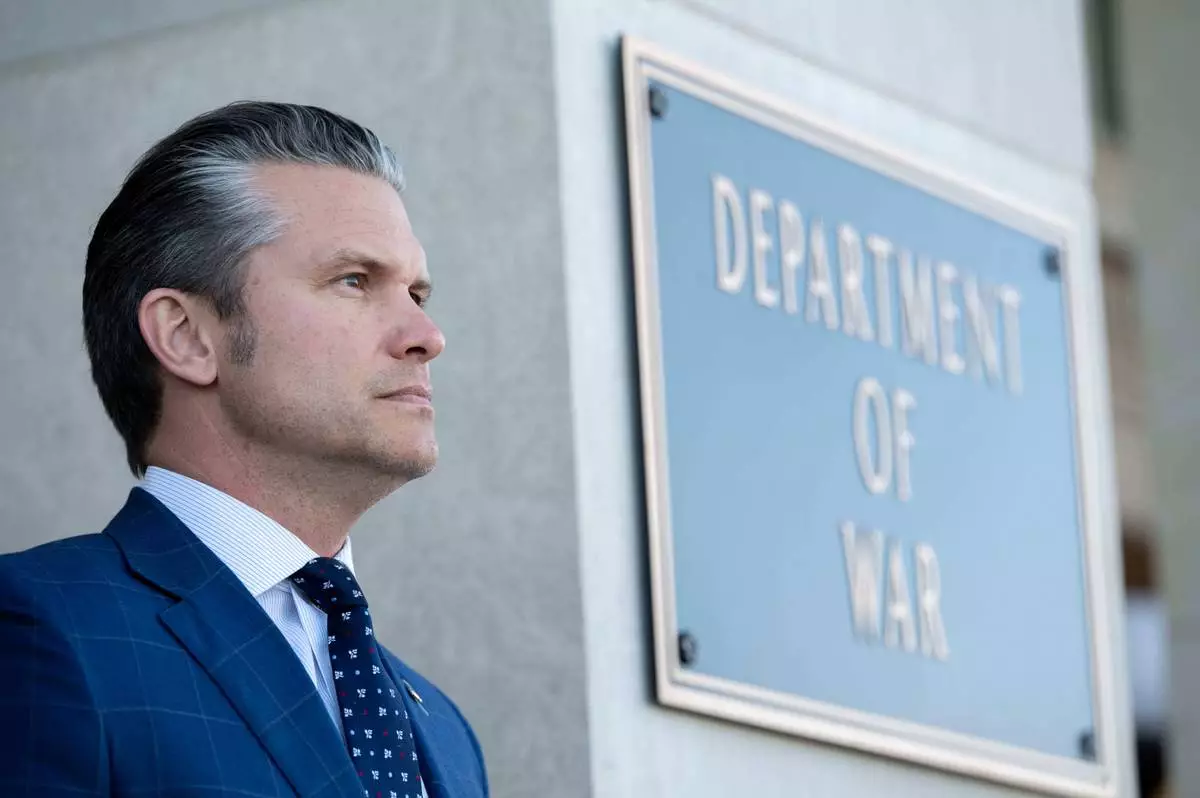
Defense Secretary Pete Hegseth stands outside the Pentagon during a welcome ceremony for Japanese Defense Minister Shinjirō Koizumi at the Pentagon, Thursday, Jan. 15, 2026 in Washington. (AP Photo/Kevin Wolf/)
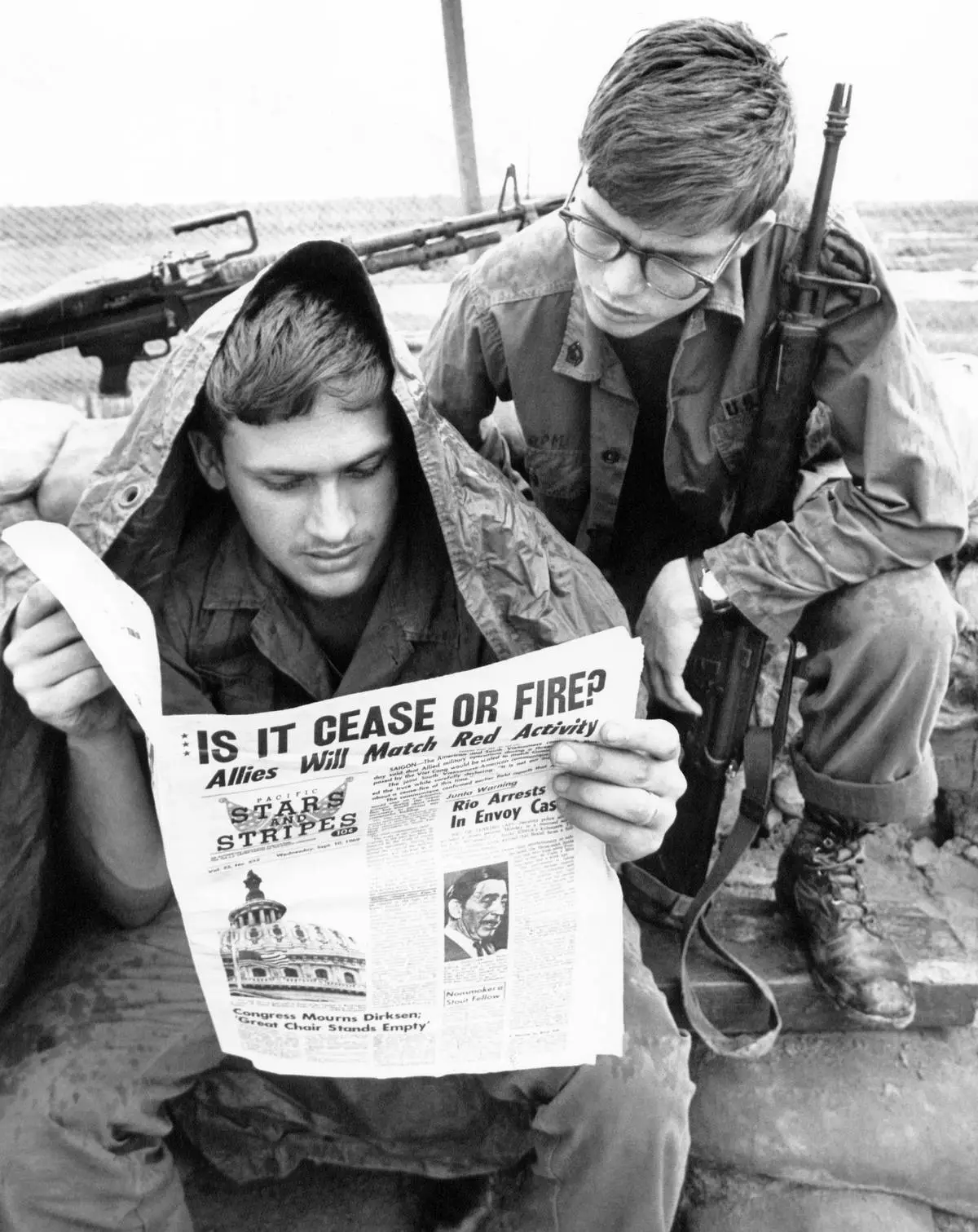
FILE - A GI with the U.S. 25th division reads Stars and Stripes newspaper at Cu Chi, South Vietnam on Sept. 10, 1969. (AP Photo/Mark Godfrey)