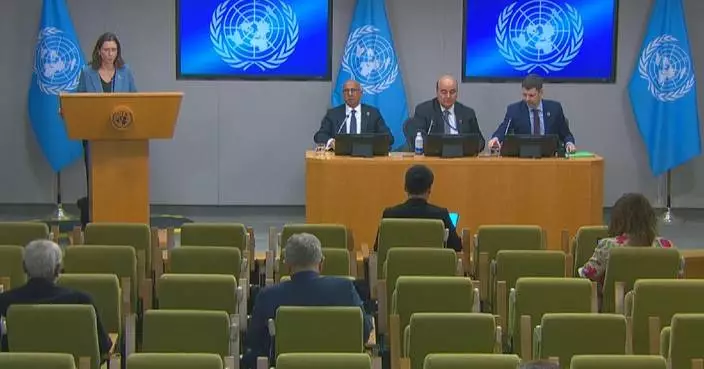
Two years into the relentless conflict in the Gaza Strip, United Nations Secretary-General Antonio Guterres on Monday issued a statement mourning the victims of the Palestinian-Israeli conflict and urging the release of the remaining hostages in Gaza and an end to the fighting.
Guterres said that two years ago, Hamas and other Palestinian factions launched large-scale attacks on Israel, resulting in the deaths of more than 1,250 Israelis and foreign nationals. Also, more than 250 others were abducted and taken into the Gaza Strip as hostages, including women, children and the elderly, he reminded in the statement.
Those still living are being held in deplorable conditions, said the U.N. chief, who has met some of the hostage families and survivors who shared their harrowing experiences.
He reiterated his strong call for the unconditional and immediate release of the hostages still being held there.
"End the suffering for all. This is a humanitarian catastrophe on a scale that defies comprehension," Guterres said of the worsening humanitarian situation in the enclave. He called on all parties to end the hostilities. "Stop making civilians pay with their lives and their futures", he added.
After two years of trauma, the international community must choose hope, Guterres said.
The secretary-general said that achieving a permanent ceasefire and establishing a credible political process are crucial steps to prevent further bloodshed and pave the way for peace, underscoring the necessity of respecting international law. The U.N. remains unwavering in its commitment to support all parties in advancing the peace process, he added.
Guterres said that the world should honor all victims through action and strive together to achieve a just and lasting peace, in which Israelis, Palestinians, and all the peoples of the region live side by side in security, dignity and mutual respect.
Gaza's health authorities said on Monday that since the latest round of Palestinian-Israeli conflict broke out on October 7, 2023, more than 67,000 Palestinians have been killed and nearly 170,000 wounded during Israel's offensives.
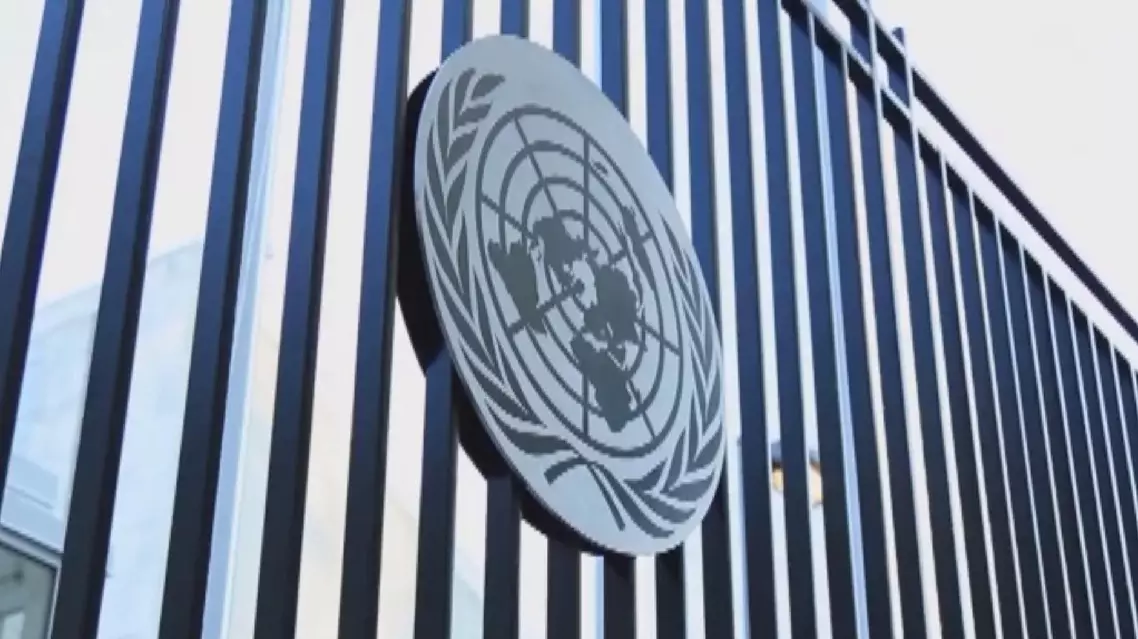
U.N. chief urges immediate release of hostages, end to conflict in Gaza
U.N. chief urges immediate release of hostages, end to conflict in Gaza
U.N. chief urges immediate release of hostages, end to conflict in Gaza
Yemen's temporary capital Aden is showing resilience and stability in economy, with market operations and public services running smoothly despite a recent escalation in the region's volatile military and political situation.
Currently, various essential supplies, including grain, oil, food and everyday items, are consistently available on the markets.
Public services such as water, electricity and communications are also functioning normally, and shops in multiple commercial districts remain open.
"We went out to buy household items today. The prices were the same. There was no rise in prices," said Mohamed Naguib, a resident.
The current market stability is attributed to the efficient functioning of the transportation and logistics systems, as well as the government's ongoing efforts to enhance market oversight and regulate prices, which have helped reduce market volatility, according to analysts.
"Although there are some rumors about rising tensions, the overall situation in Aden remains stable. The industry and commerce department has continued to monitor the market and rigorously control prices to prevent increases in commodity and food costs," said Amjad Al-Husseini, director of the Aden Governor's Office.
The city's monetary circulation system has also largely maintained balance, with the exchange rate of the local currency against major foreign currencies remaining relatively stable.
Aden has long been a flashpoint in the country's civil war, which erupted in 2014 when Houthi forces seized much of the north, prompting a Saudi-led military intervention in the following year. Tensions in the south have persisted despite repeated power-sharing deals.
The tensions further escalated last month after the United Arab Emirates-backed Southern Transitional Council (STC) seized large swathes of Yemen's oil-rich Hadramout province and the eastern province of Al-Mahrah. Riyadh considers these areas as a "red line" due to their proximity to the Saudi border and their concentration of Yemen's remaining energy reserves.
Last week, airstrikes and ground operations by the Saudi-led coalition forced the STC forces to withdraw from the two provinces.
Formed in 2017, the STC seeks autonomy and eventual independence for southern Yemen. Although it joined the Saudi-led coalition and became part of the Yemen's Presidential Leadership Council in 2022, the group's push for southern self-rule has continued to fuel disputes over power-sharing and control of territory and resources.

Economy, market remain stable in Yemen's Aden despite escalating violence