|
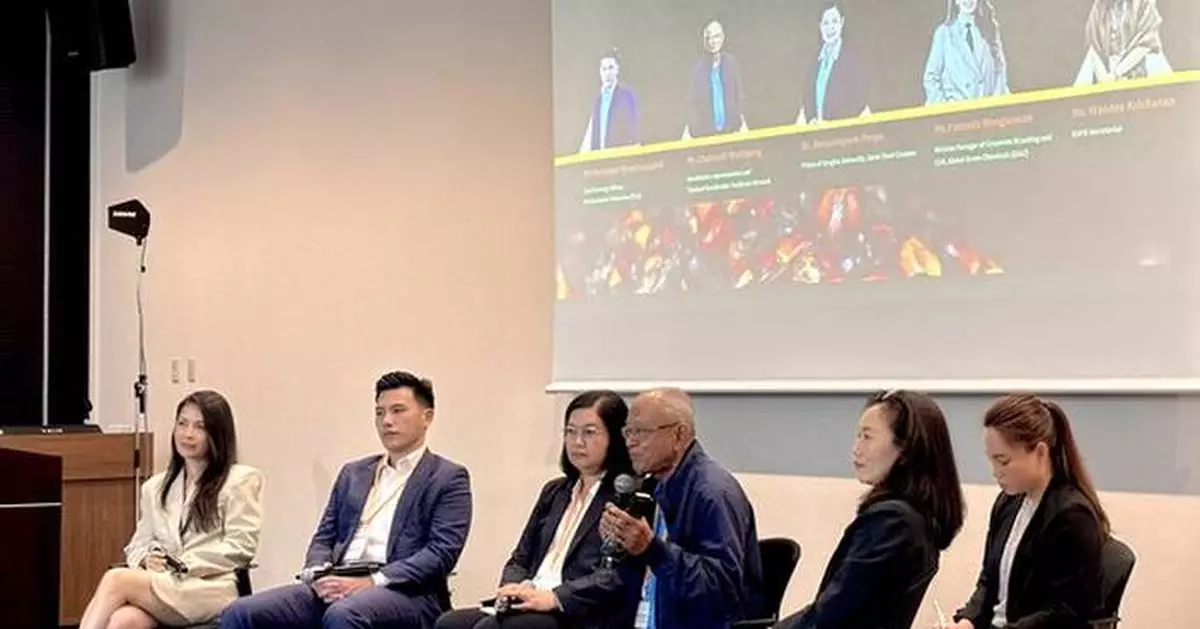
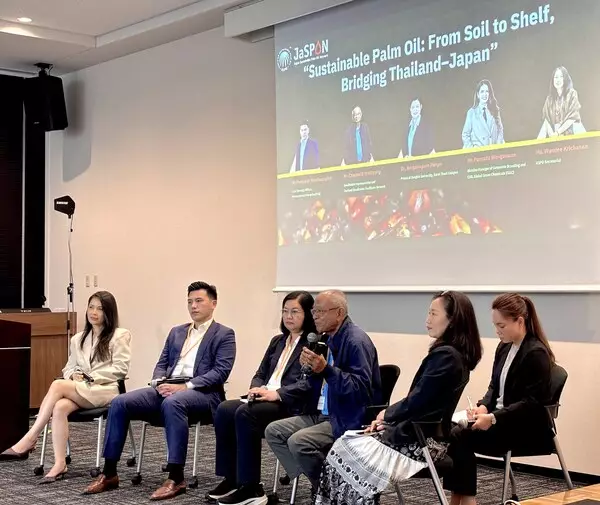
TOKYO, Oct. 7, 2025 /PRNewswire/ -- The Roundtable on Sustainable Palm Oil (RSPO) and the Japan Sustainable Palm Oil Network (JaSPON) co-hosted the RSPO x JaSPON Conference 2025 from 6 to 8 October at Bellesalle Yaesu, Tokyo. The event brought together industry leaders, government agencies, academia, and smallholder representatives to reinforce cooperation between Thailand and Japan in building responsible palm oil supply chains.
Since 2015, the Thai government has set an ambitious national target to achieve 100% RSPO Certified sustainable palm oil (CSPO), positioning the country as a low-risk, smallholder-inclusive producer under the EU Deforestation Regulation (EUDR). Thailand became the first palm-oil-producing nation to bring a closed-loop delegation to Japan, showcasing that sustainability and inclusion now stand at the core of trade diplomacy.
Conference delegates included representatives from the Department of Agricultural Extension (DoAE), Thailand Smallholder Facilitator Network, Prince of Songkla University, Global Green Chemicals (GGC), Petchsrivichai Enterprise (PCE), and Saraya, alongside international stakeholders.
With smallholders managing about 85% of Thailand's oil palm production area, the country demonstrates that sustainable production can also be farmer-led. Certified independent smallholders have already sold up to 90% of their physical CSPO volumes, the world's highest share mobilised by independent smallholders, highlighting the success of Thailand's inclusive transformation.
"We need to do more, but we cannot do it alone. The market must respond. Putting the smallholder at the centre means walking the talk of shared responsibility," said Wandee Krichanan, RSPO Smallholder Manager, who moderated the independent smallholder panel.
Inclusive and competitive supply chains
Downstream players are showing that sourcing can be both sustainable and inclusive. PCE and GGC, both RSPO Members, are leading examples. Through long-term partnerships, training programmes, and targeted sourcing, they are enabling smallholders to access certified markets.
"PCE is building the value chain of the future linking smallholder development with digital innovation for transparent traceability and pursuing a 'Negative GHG Emission' status," said Mr. Pornpipat Prasitsupaphol, Chief Strategy Officer, PCE.
Ms. Panrada Wongsuwan, Division Manager, Corporate Branding and CSR, GGC (P TT GC Group) stated "At GGC, we believe sustainability must span the entire value chain from upstream to downstream. We are committed to empowering smallholders and strengthening our responsibility to society and the environment".
In addition, Saraya has long pioneered eco-friendly products using natural, plant-based ingredients, including Japan's first antibacterial soap and plant-based detergent. Since 2004, it has led environmental efforts in Borneo to address palm oil-related deforestation and wildlife threats, becoming Japan's first RSPO member in 2005.
"To enhance the value chain, it is essential to have a supply chain that incorporates smallholder farmers. Therefore, we support smallholders" said Mr. Shinichi Yoshikawa, Vice General Manager of Supply Chain Management Division at Saraya Co, Ltd and the Vice Chairman of JaSPON.
With over 400,000 farm households engaged in palm oil, the Thai government views inclusive sourcing as a national priority. "Responsible sourcing is not only about environmental commitment, it ensures farmers are fully included in global supply chains and receive fair returns for their efforts," said a DoAE representative. "Partnering with Japanese companies that value transparency and inclusivity guarantees palm oil that meets the highest standards of sustainability and quality."
"RSPO Certified smallholders are guardians of the global environment. Support from buyers whether through physical or credit purchases empowers us to continue this stewardship," said Chaowalit Wuttipong, President of the Srijaroen Sustainable Oil Palm Production Community Enterprise and Chairman of the Thailand Smallholder Facilitator Network.
From Surat Thani to Tokyo, Thailand's independent oil palm smallholders are stepping into the global spotlight. Through collaboration with mills, Japanese buyers, and the Thai government, they are proving that inclusive and sustainable supply chains can drive prosperity and trust across Asia.
About RSPO:
The Roundtable on Sustainable Palm Oil (RSPO) is a global partnership to make palm oil sustainable. Formed in 2004, the RSPO is a multi-stakeholder non-profit organisation that unites members from across the palm oil value chain, including oil palm producers, palm oil processors and traders, consumer goods manufacturers, retailers, banks and investors, environmental or nature conservation non-governmental organisations (NGOs), and social or developmental NGOs.
As a partnership for progress and positive impact, the RSPO facilitates global change to make the production and consumption of palm oil sustainable. To inspire change, we communicate the environmental and social benefits. To make progress, we catalyse collaboration. To provide assurance, we set the standards of certification.
The RSPO is registered as an international association in Zurich, Switzerland, with main offices in Malaysia and Indonesia, and offices in China, Colombia, Netherlands, United Kingdom and the United States.
About JaSPON:
JaSPON (Japan Sustainable Palm Oil Network) was established in April 2019 to accelerate the procurement and consumption of sustainable palm oil in the Japanese market, aiming to address environmental issues and other challenges associated with conventional palm oil production.
JaSPON operates on the belief that, as a consumer country, Japan has an important role in addressing the environmental, social, and ethical issues tied to palm oil. It emphasises cross‐industry collaboration, encouraging its members from different sectors to work together from their respective standpoints, to promote sustainable practices.
TOKYO, Oct. 7, 2025 /PRNewswire/ -- The Roundtable on Sustainable Palm Oil (RSPO) and the Japan Sustainable Palm Oil Network (JaSPON) co-hosted the RSPO x JaSPON Conference 2025 from 6 to 8 October at Bellesalle Yaesu, Tokyo. The event brought together industry leaders, government agencies, academia, and smallholder representatives to reinforce cooperation between Thailand and Japan in building responsible palm oil supply chains.
Since 2015, the Thai government has set an ambitious national target to achieve 100% RSPO Certified sustainable palm oil (CSPO), positioning the country as a low-risk, smallholder-inclusive producer under the EU Deforestation Regulation (EUDR). Thailand became the first palm-oil-producing nation to bring a closed-loop delegation to Japan, showcasing that sustainability and inclusion now stand at the core of trade diplomacy.
Conference delegates included representatives from the Department of Agricultural Extension (DoAE), Thailand Smallholder Facilitator Network, Prince of Songkla University, Global Green Chemicals (GGC), Petchsrivichai Enterprise (PCE), and Saraya, alongside international stakeholders.
With smallholders managing about 85% of Thailand's oil palm production area, the country demonstrates that sustainable production can also be farmer-led. Certified independent smallholders have already sold up to 90% of their physical CSPO volumes, the world's highest share mobilised by independent smallholders, highlighting the success of Thailand's inclusive transformation.
"We need to do more, but we cannot do it alone. The market must respond. Putting the smallholder at the centre means walking the talk of shared responsibility," said Wandee Krichanan, RSPO Smallholder Manager, who moderated the independent smallholder panel.
Inclusive and competitive supply chains
Downstream players are showing that sourcing can be both sustainable and inclusive. PCE and GGC, both RSPO Members, are leading examples. Through long-term partnerships, training programmes, and targeted sourcing, they are enabling smallholders to access certified markets.
"PCE is building the value chain of the future linking smallholder development with digital innovation for transparent traceability and pursuing a 'Negative GHG Emission' status," said Mr. Pornpipat Prasitsupaphol, Chief Strategy Officer, PCE.
Ms. Panrada Wongsuwan, Division Manager, Corporate Branding and CSR, GGC (P TT GC Group) stated "At GGC, we believe sustainability must span the entire value chain from upstream to downstream. We are committed to empowering smallholders and strengthening our responsibility to society and the environment".
In addition, Saraya has long pioneered eco-friendly products using natural, plant-based ingredients, including Japan's first antibacterial soap and plant-based detergent. Since 2004, it has led environmental efforts in Borneo to address palm oil-related deforestation and wildlife threats, becoming Japan's first RSPO member in 2005.
"To enhance the value chain, it is essential to have a supply chain that incorporates smallholder farmers. Therefore, we support smallholders" said Mr. Shinichi Yoshikawa, Vice General Manager of Supply Chain Management Division at Saraya Co, Ltd and the Vice Chairman of JaSPON.
With over 400,000 farm households engaged in palm oil, the Thai government views inclusive sourcing as a national priority. "Responsible sourcing is not only about environmental commitment, it ensures farmers are fully included in global supply chains and receive fair returns for their efforts," said a DoAE representative. "Partnering with Japanese companies that value transparency and inclusivity guarantees palm oil that meets the highest standards of sustainability and quality."
"RSPO Certified smallholders are guardians of the global environment. Support from buyers whether through physical or credit purchases empowers us to continue this stewardship," said Chaowalit Wuttipong, President of the Srijaroen Sustainable Oil Palm Production Community Enterprise and Chairman of the Thailand Smallholder Facilitator Network.
From Surat Thani to Tokyo, Thailand's independent oil palm smallholders are stepping into the global spotlight. Through collaboration with mills, Japanese buyers, and the Thai government, they are proving that inclusive and sustainable supply chains can drive prosperity and trust across Asia.
About RSPO:
The Roundtable on Sustainable Palm Oil (RSPO) is a global partnership to make palm oil sustainable. Formed in 2004, the RSPO is a multi-stakeholder non-profit organisation that unites members from across the palm oil value chain, including oil palm producers, palm oil processors and traders, consumer goods manufacturers, retailers, banks and investors, environmental or nature conservation non-governmental organisations (NGOs), and social or developmental NGOs.
As a partnership for progress and positive impact, the RSPO facilitates global change to make the production and consumption of palm oil sustainable. To inspire change, we communicate the environmental and social benefits. To make progress, we catalyse collaboration. To provide assurance, we set the standards of certification.
The RSPO is registered as an international association in Zurich, Switzerland, with main offices in Malaysia and Indonesia, and offices in China, Colombia, Netherlands, United Kingdom and the United States.
About JaSPON:
JaSPON (Japan Sustainable Palm Oil Network) was established in April 2019 to accelerate the procurement and consumption of sustainable palm oil in the Japanese market, aiming to address environmental issues and other challenges associated with conventional palm oil production.
JaSPON operates on the belief that, as a consumer country, Japan has an important role in addressing the environmental, social, and ethical issues tied to palm oil. It emphasises cross‐industry collaboration, encouraging its members from different sectors to work together from their respective standpoints, to promote sustainable practices.
** The press release content is from PR Newswire. Bastille Post is not involved in its creation. **
Spotlight on Thai Smallholders: Japan-Thailand Cross-Border Partnership Strengthens Sustainable Palm Oil Pathways
SINGAPORE, Jan. 16, 2026 /PRNewswire/ -- Coda, a global leader in digital content monetization, today announced that it is integrating Unity's In‑App Purchasing (IAP) SDK with Coda's global web store platforms. This collaboration offers developers a single place to manage and optimize their entire digital catalog across mobile, web, and PC - directly through Unity's existing IAP workflow.
With just a few lines of code, developers can launch secure, branded web stores powered by Coda - offering players more ways to purchase securely while improving their margins.
The integration is powered by Coda's Merchant of Record (MoR) solution, which is already trusted by leading publishers and fast-growing studios worldwide. As the legal seller in each market, Coda manages payments, fraud prevention, tax remittance, invoicing, and compliance across more than 70 markets and over 400 payment methods. This gives developers more time to focus on the game and the player experience.
"As the games industry moves beyond closed ecosystems, developers of every size want more flexibility and control over how they grow," said Shane Happach, CEO of Coda. "Our integration with Unity's IAP SDK gives creators more choice in how they launch and operate their own stores, wherever their players are, minus the complexity of managing global payments or compliance. This reflects Coda's commitment to democratizing game development and helping every studio, large or small, succeed on their own terms."
As web-based purchasing becomes a more practical part of developers' business mix, interest in direct-to-consumer web stores continues to grow. Today, these channels already account for roughly 26% of mobile gaming revenue in East and Southeast Asia, according to research from Niko Partners and Coda.
First-party web stores give developers greater control over pricing, promotions, and player communication, but introduce operational complexity across payments, compliance, fraud, and support. Coda removes these barriers with a scalable payments and risk platform, integrated directly into Unity's workflow.
Coda's integration with Unity's IAP sets a new D2C standard by bringing out-of-app monetization into developers' existing workflows, removing operational complexity, and making it easier to run web stores at a global scale.
Learn more at coda.co.
About Coda
Coda is a global leader in digital content monetization and distribution. We're trusted by 300+ publishers—including Activision, Electronic Arts, and Riot Games—to grow their audiences and revenue worldwide. Our out-of-app solutions include Custom Commerce, a fully customizable web store; Codapay, which enables seamless direct payments through a single API integration on publishers' websites; Codashop, the go-to marketplace for millions of gamers to purchase in-game content; and Distribution, which extends content reach through a network of trusted commerce partners. Founded in 2011, Coda is headquartered in Singapore with a team of 550+ Codans around the globe. Coda recently acquired Recharge, Europe's leading prepaid payments platform. Coda is backed by Apis Partners, Insight Partners, and Smash Capital, and has been named an APAC High Growth Company (2023) by Financial Times, one of Granite Asia's NextGenTech 30 (2024), a payments leader on Fortune's Fintech Innovation Asia list (2024), and listed among The Straits Times Fastest Growing Fintechs (2024). For more on Coda, visit coda.co.
Press Contacts
Coda:
Liz Adam — VP, Corporate Affairs
elizah.adam@coda.co
** The press release content is from PR Newswire. Bastille Post is not involved in its creation. **

Coda and Unity to enable out-of-app monetization for game developers globally