More car buyers are finding themselves in a tough spot financially. According to a recent report from Edmunds, more than 26% of new-vehicle trade-ins in the second quarter of 2025 had negative equity — the highest share in more than four years.
Negative equity refers to a situation in which you owe more on your vehicle than it’s worth, leaving you “upside down” or “underwater” on your loan. Negative equity is an acute problem when you trade that vehicle for another new one because you’ll have to pay off what you owe while simultaneously taking on the new loan payments. The average amount owed on these upside-down loans was $6,754, underscoring the mounting risks of car debt in today’s market.
“Consumers being underwater on their car loans isn’t a new trend, but the stakes are higher than ever in today’s financial landscape,” said Ivan Drury, Edmunds’ director of insights. “Affordability pressures, from elevated vehicle prices to higher interest rates, are compounding the negative effects of decisions like trading in too early or rolling debt into a new loan.”
In other words, ending up upside down on your loan is becoming easier than ever. But you can take steps to avoid the worst of negative equity.
If you’re already upside down, the simplest way to avoid digging a deeper financial hole is to hold on to your current vehicle and keep making payments. Time and patience are often your best allies. Every payment you make lowers the balance, while depreciation on your vehicle decreases after the first few years. Eventually, the loan balance will fall below the vehicle’s value.
This strategy requires discipline and the ability to resist the temptation to trade into something newer. But it will help you avoid spending money you don’t have to. According to Edmunds’ data, buyers who had negative equity on their current vehicle and rolled it into a new vehicle loan paid an average $915 per month, compared to an industry average of $756. They also financed $12,145 more than the typical new-vehicle buyer.
Hanging onto your current car until the balance catches up may not be exciting, but it’s often the surest way to avoid multiplying your debt.
Refinancing can sometimes soften the blow of negative equity. If your credit has improved or interest rates are lower than when you first financed, a new loan might reduce your monthly payment and buy you time to catch up.
Another option is to lease your next vehicle rather than finance its purchase. You will still have to pay higher-than-typical monthly payments because you’ll be paying off your current vehicle’s negative equity along with your new vehicle’s lease payments. At the end of the lease, you are no longer upside down, and you’ll be walking away from your vehicle when the lease ends. But therein lies the rub. You won’t have a vehicle to use as a trade-in toward your next purchase. You can either lease again or finance your next new or used car purchase.
The best solution is prevention. Edmunds experts note that buying a brand-new car often puts you in a depreciation hole the second you drive off the lot. A new car typically loses about 20% of its value within the first year, meaning even a modest loan can leave you owing more than the car is worth if you don’t make a big down payment. The solution? Buy used.
Buying a used vehicle helps you avoid the worst of depreciation. A 2- or 3-year-old vehicle will still have plenty of life in it, and it should still have warranty coverage. If peace of mind is important, consider buying a certified pre-owned vehicle. These vehicles must pass a dealership inspection and typically come backed by an extended warranty. This strategy helps minimize the risk of being underwater a year or two down the road.
Another key step is to make a larger down payment. Edmunds recommends aiming for at least 20% down. That cushion will help your loan balance shrink quicker than the car’s value, giving you positive equity sooner.
Finally, avoid ultra-long loan terms. It’s tempting to stretch financing to 72 or even 84 months to lower the monthly payment. But doing so keeps you upside down longer. A 60-month loan or shorter, while more expensive monthly, is much safer financially.
Being underwater on a car loan isn’t catastrophic, but it does require discipline to escape. The first step is prevention: Buy smart, make a solid down payment, and avoid an overly long loan. If you’re already upside down, your best option is usually to keep the car until you regain equity.
This story was provided to The Associated Press by the automotive website Edmunds. Josh Jacquot is a contributor at Edmunds.

FILE - Unsold 2025 Gladiator pickup trucks sit on display outside a Jeep dealership Friday, Sept. 26, 2025, in Englewood, Colo. (AP Photo/David Zalubowski, File)
NEW YORK (AP) — First-time Tony Award host Pink kicked off Sunday’s telecast by leading a crowded, exuberant version of “Lady Marmalade” and John Lithgow took home the first award for “Giant.” A blockbuster revival of “Death of a Salesman” was racking up awards even before the halfway mark.
Lithgow won best lead actor in a play as children’s author Roald Dahl in Mark Rosenblatt’s production set in 1983, when the author is facing intense backlash to his antisemitic comments. The role earned Lithgow his first Olivier Award in London and now the Tony for lead actor in a play, his third.
The win puts Lithgow in an exclusive group of actors who have won in three separate acting categories. He previously won featured actor in a play for “The Changing Room” and lead actor in a musical for “Sweet Smell of Success.”
“Two Tony bookends with 53 years between them," he said. "In those years, I have worked with hundreds of just fantastic theater artists. I’ve had dozens and dozens of ecstatic moments on the stage, but I have to tell you right now, this moment has got to be one of the best.”
A revival of “Death of a Salesman” won at least five Tonys, nearing the record for most statuettes ever won by play revival, which is seven.
Laurie Metcalf won her third Tony for playing Willy Loman’s wife opposite Nathan Lane in “Arthur Miller’s Death of a Salesman,” which also won for lighting, scenic design and sound design. Joe Mantello won best director for a play.
Pink started the show spinning and then dangling uncomfortably from a harness over the stage, dressed like Peter Pan. Former host Neil Patrick Harris stepped in to suggest the first-time host just be herself. “You’re Pink, Pink. You can do anything,” he told her.
After lifting Harris off the stage with her legs, Pink relented to his suggestion of being “less Pan-ish” by taking off her harness, adding a top hat and leading an extended “Lady Marmalade” that included contributions from dozens of performers including Lea Michele and Megan Thee Stallion — plus some strange, new lyrics like “Gitchie, gitchie, Laurie Metcalf” — and ended with some 170 performers on stage and crowding the aisles.
In her opening remarks, Pink, who has not yet gotten a Broadway credit, called herself theater’s second-biggest fan after her teenage daughter, Willow. “I’m not here just to steal peoples’ wigs, although I will be doing that. I’m here to celebrate the hardest-working people in show business,” she said.
“Schmigadoon!” and “Death of a Salesman” each went into the main telecast with a lead of three Tonys after a pre-show on Pluto TV hosted by Laura Benanti and Tituss Burgess that announced the more technical awards. Qween Jean became the first openly trans Tony winner ever for making the costumes for “Cats: The Jellicle Ball.” Kai Harada, nominated twice for the sound design of a musical, didn’t initially know which one he had won for until told onstage — “Ragtime.”
Twenty-four Broadway shows are hoping to nab at least one win Sunday across the 26 Tony categories, which can mean the difference between keeping the doors open and pulling down the curtain.
There will be performances from the seven best new musical and best musical revival nominees: “The Lost Boys,” “Schmigadoon!,” “Titanique,” “Two Strangers (Carry a Cake Across New York),” “Cats: The Jellicle Ball,” “Ragtime” and “The Rocky Horror Show.”
Other performances include the original lead cast members of “The Book of Mormon” — Josh Gad, Andrew Rannells, Rory O’Malley and Nikki M. James — this year celebrating its 15th anniversary. Leslie Odom, Jr. will sing “Without You” from “Rent” during the In Memoriam section, in honor of that show’s 30th anniversary.
Another show celebrating a milestone, “Chicago” now at 30, will have a performance slot featuring Pink, as well as Queen Latifah, Jesse Tyler Ferguson, Alex Newell, Adrienne Warren, Julianne Hough, Whitney Leavitt and Dylan Mulvaney. Plus, “A Chorus Line,” which last year celebrated its 50th anniversary, will get a special tribute by Rachel Zegler.
The competition for best new musical is between four very different shows: “Two Strangers (Carry a Cake Across New York),” an opposites-attract rom-com; “The Lost Boys,” a stage adaptation of a 1987 teen movie vampire thriller; “Schmigadoon!,” which gently mocks Golden-Age Broadway shows; and “Titanique,” a camp musical comedy that reimagines the 1997 movie “Titanic.”
The two top best play nominees are “Giant,” exploring accusations of antisemitism against children's author Roald Dahl, and “Liberation,” about a consciousness-raising women’s group in the 1970s that explores inequality, gender roles and racism.
There are intriguing races in both the revival categories: A “Death of a Salesman” is competing for best play revival with a modern-set “Oedipus” led by Marc Strong and a sweet “Every Brilliant Thing” starring Daniel Radcliffe.
The best musical revival pits a new “Cats” reimagined as a “Pose”-like competition show, the sweeping American history show “Ragtime” and a rollicking, frisky “The Rocky Horror Show.”
For more coverage of the 2026 Tony Awards, visit https://apnews.com/hub/tony-awards.
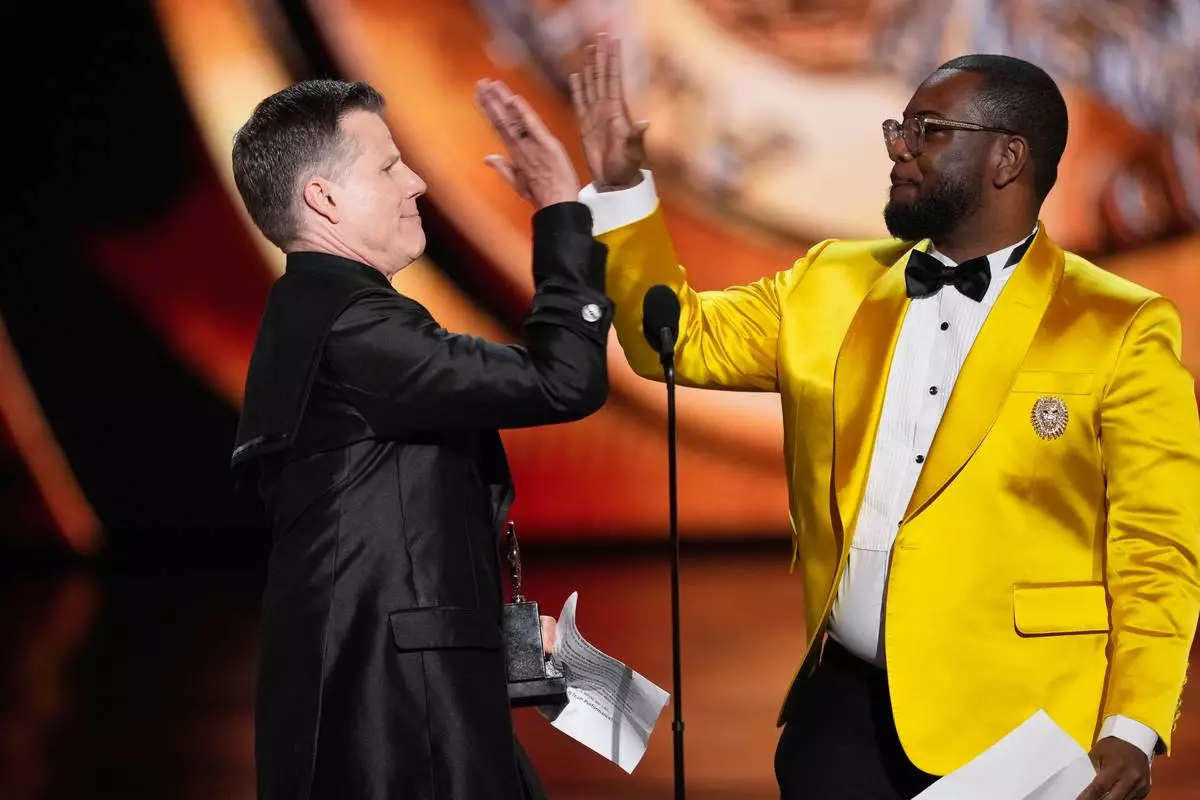
Bill Rauch, left, and Zhailon Levingston accept the award for best direction of a musical for "Cats: The Jellicle Ball" during the 79th Tony Awards on Sunday, June 7, 2026, at Radio City Music Hall in New York. (Photo by Charles Sykes/Invision/AP)
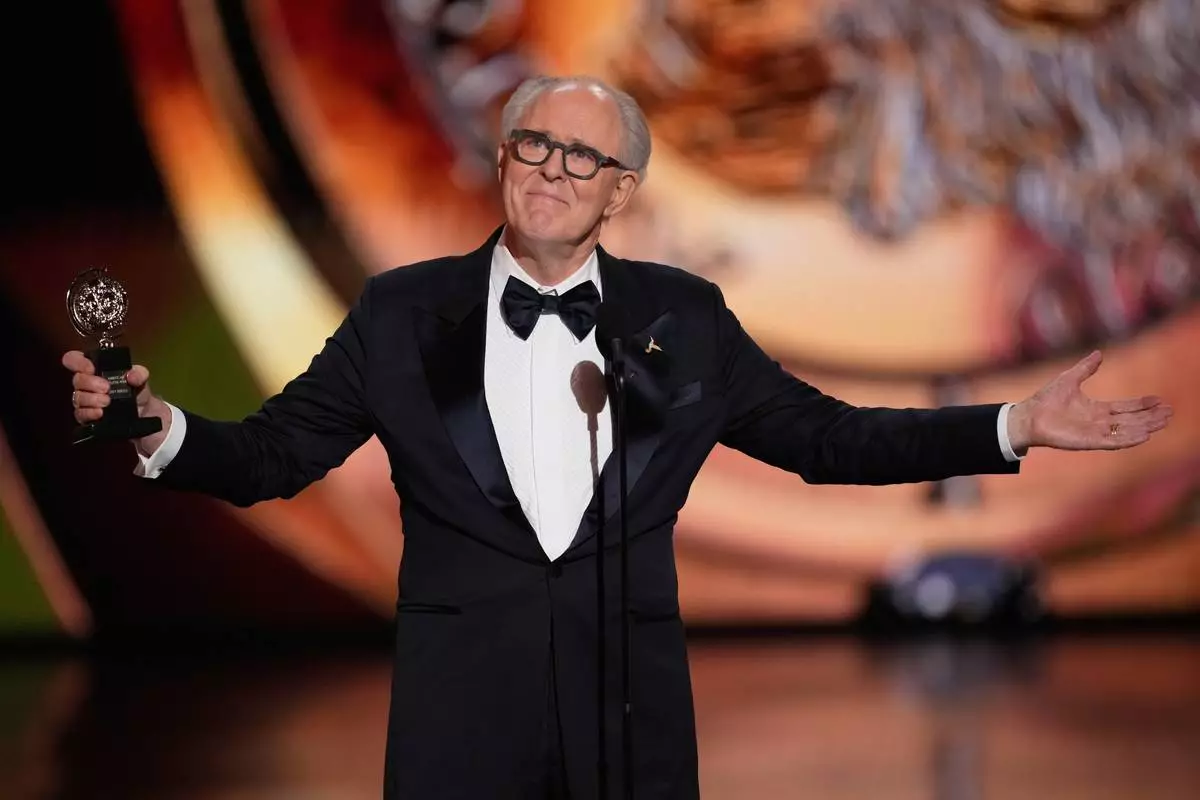
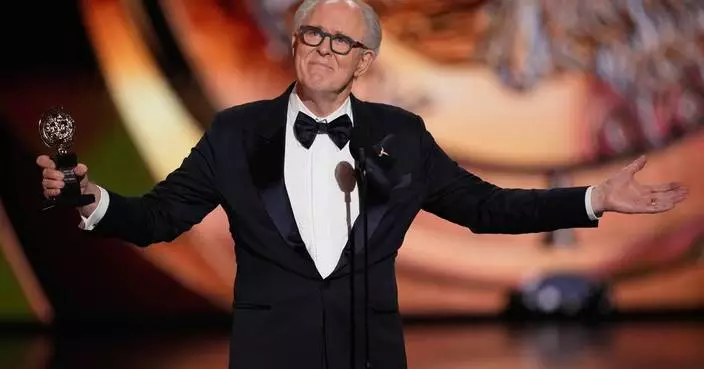
John Lithgow accepts the award for best performance by a leading actor in a play for "Giant" during the 79th Tony Awards on Sunday, June 7, 2026, at Radio City Music Hall in New York. (Photo by Charles Sykes/Invision/AP)
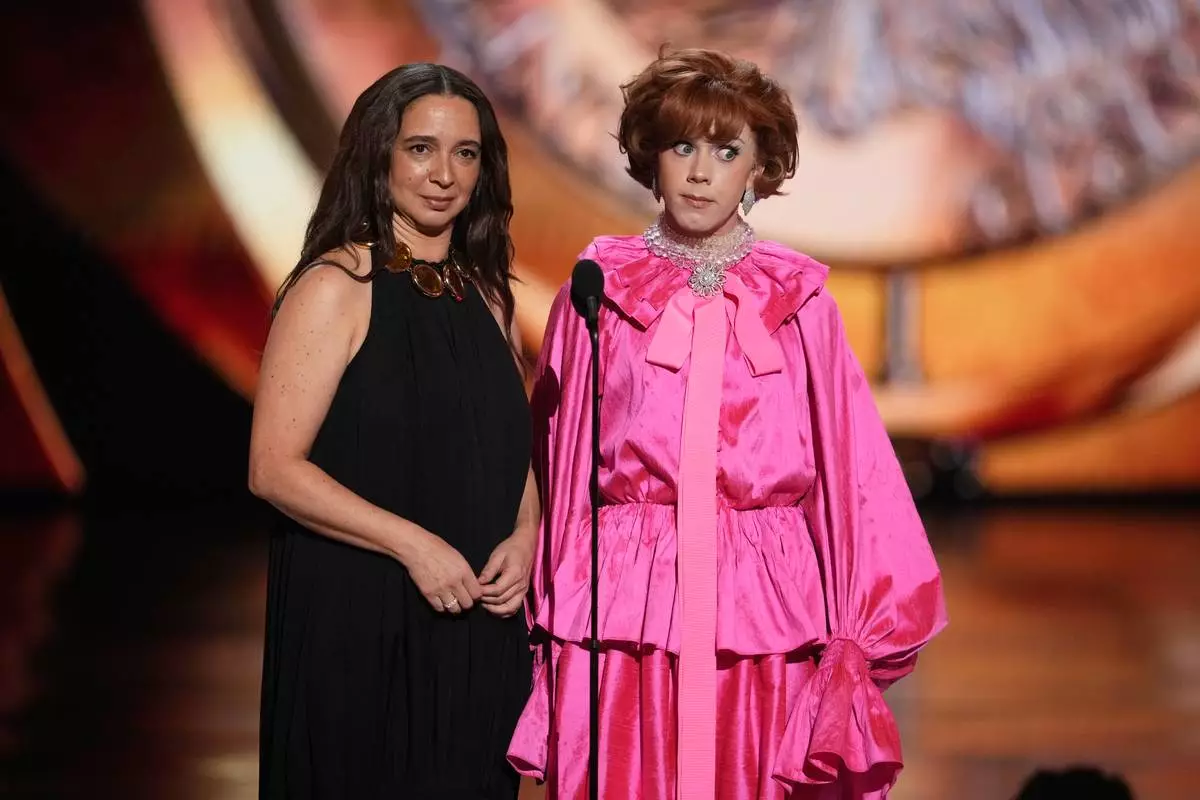
Maya Rudolph, left, and Cole Escola present the award for best performance by a leading actor in a play during the 79th Tony Awards on Sunday, June 7, 2026, at Radio City Music Hall in New York. (Photo by Charles Sykes/Invision/AP)
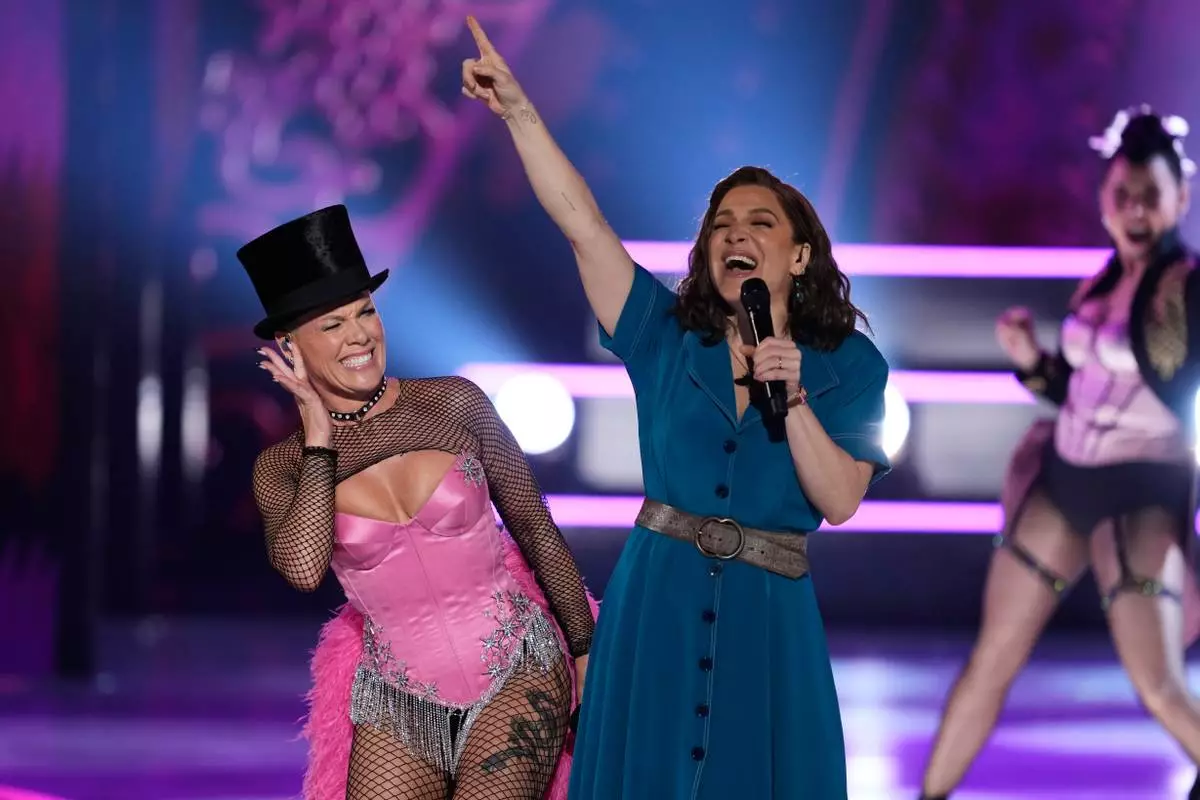
Host Pink, left, and Shoshana Bean perform during the 79th Tony Awards on Sunday, June 7, 2026, at Radio City Music Hall in New York. (Photo by Charles Sykes/Invision/AP)
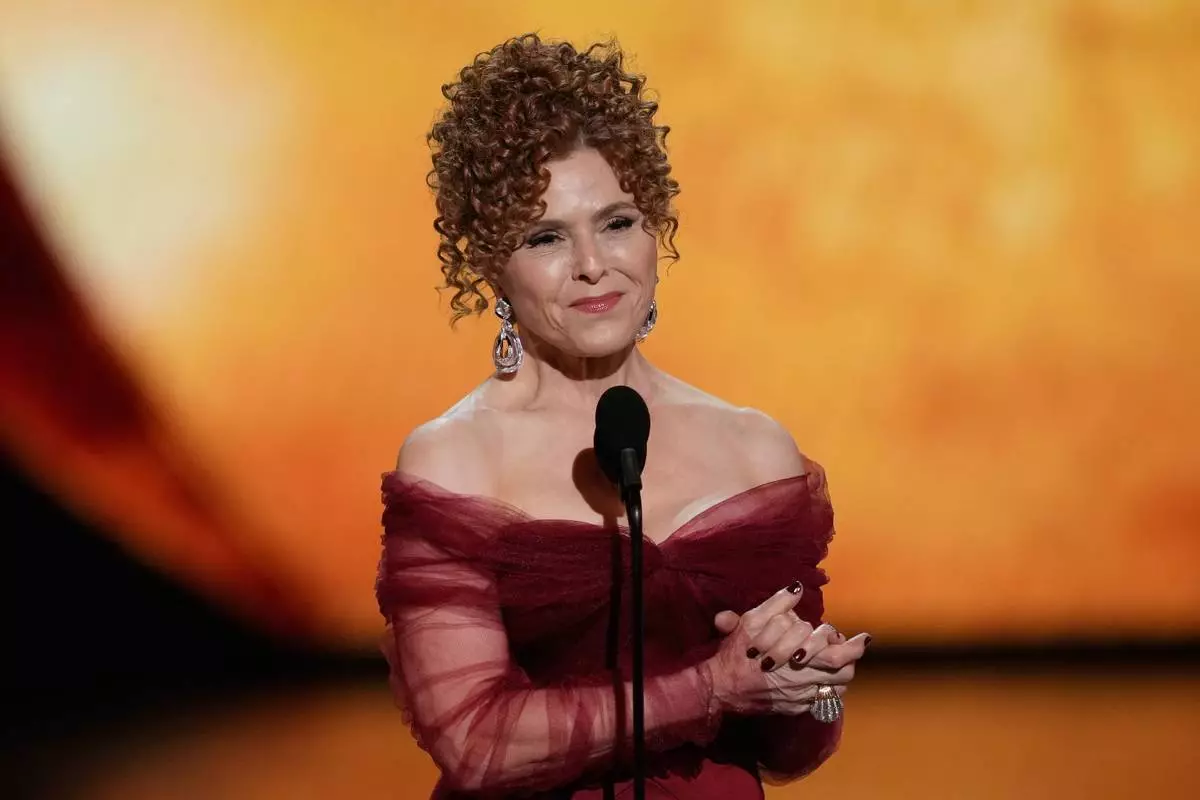
Bernadette Peters speaks during the 79th Tony Awards on Sunday, June 7, 2026, at Radio City Music Hall in New York. (Photo by Charles Sykes/Invision/AP)
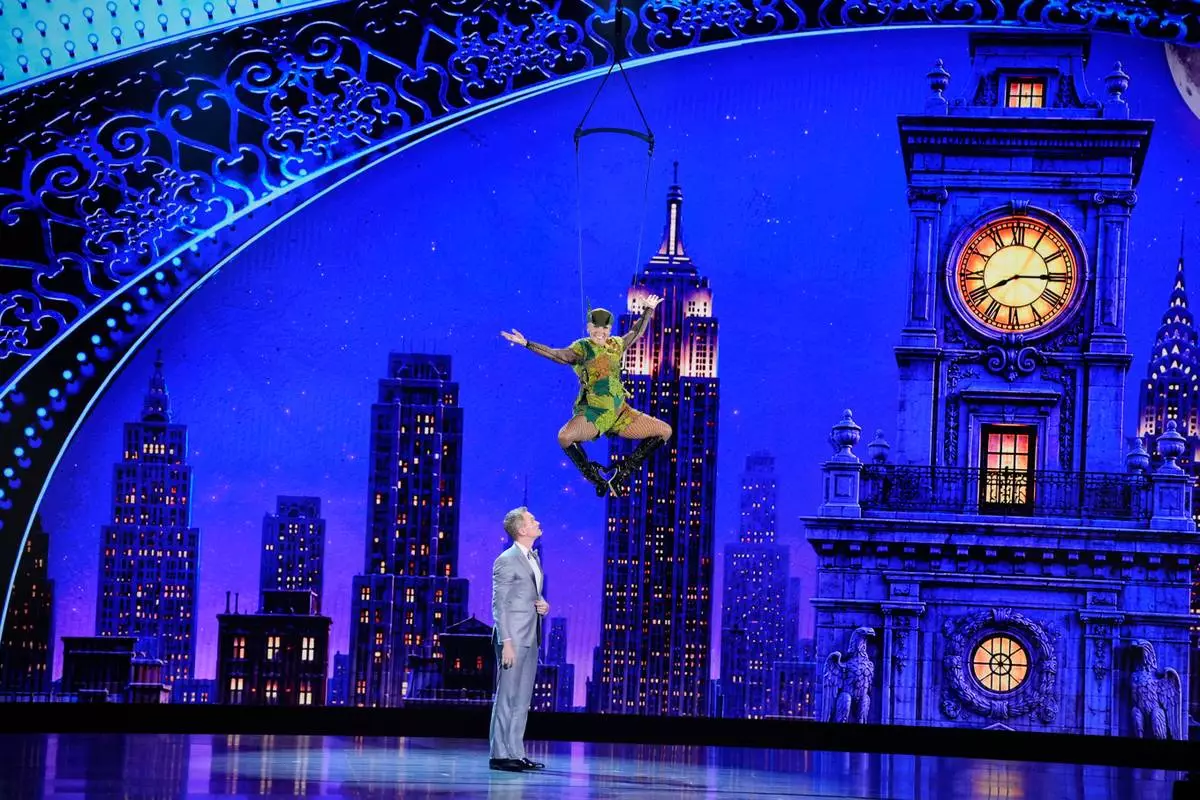
Neil Patrick Harris, left, and Host Pink perform during the 79th Tony Awards on Sunday, June 7, 2026, at Radio City Music Hall in New York. (Photo by Charles Sykes/Invision/AP)
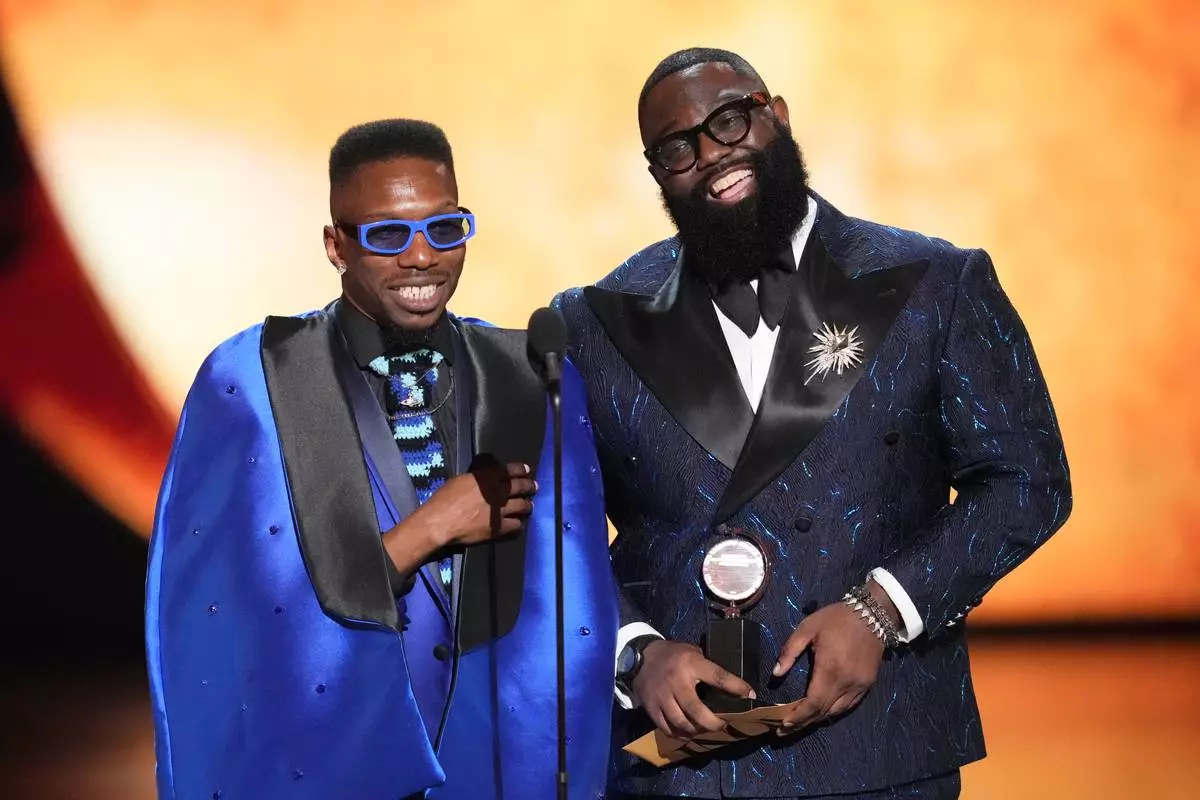
Omari Wiles, left, and Arturo Lyons accept the award for best choreography for "Cats: The Jellicle Ball" during the 79th Tony Awards on Sunday, June 7, 2026, at Radio City Music Hall in New York. (Photo by Charles Sykes/Invision/AP)
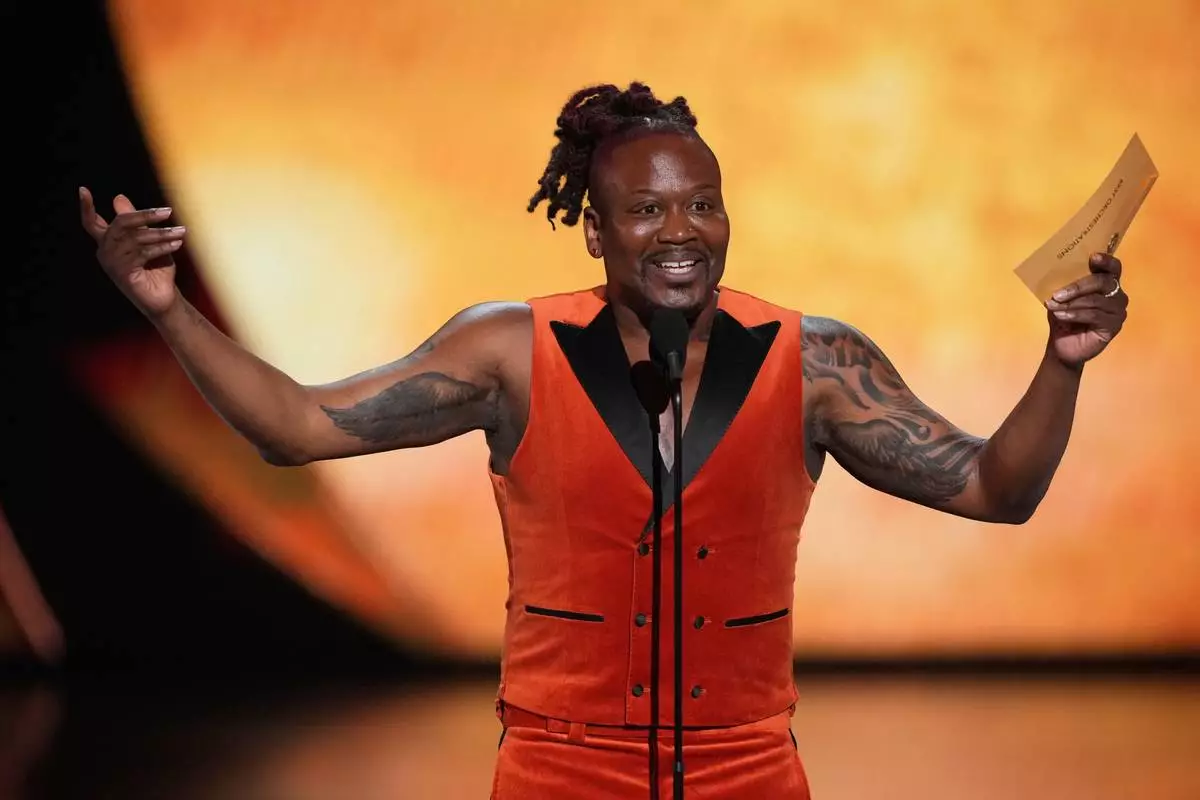
Host Tituss Burgess speaks during the 79th Tony Awards on Sunday, June 7, 2026, at Radio City Music Hall in New York. (Photo by Charles Sykes/Invision/AP)
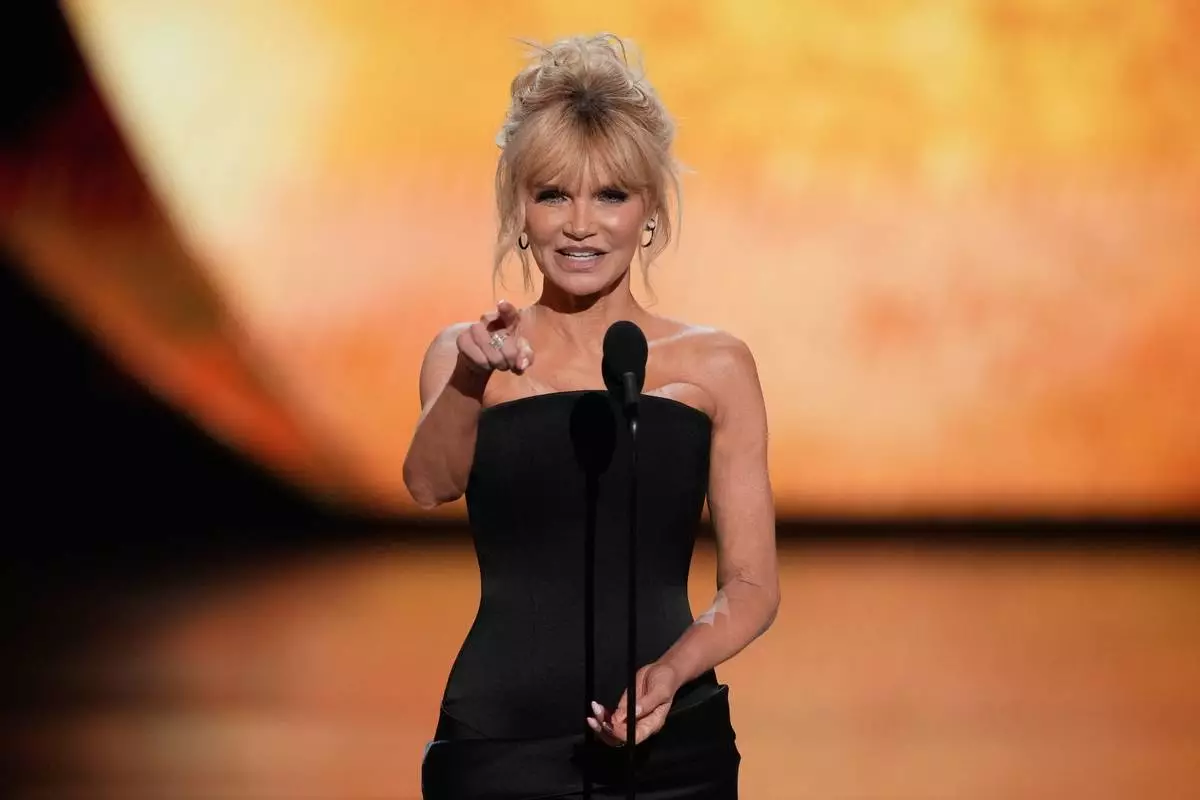
Kristin Chenoweth speaks during the 79th Tony Awards on Sunday, June 7, 2026, at Radio City Music Hall in New York. (Photo by Charles Sykes/Invision/AP)