WALTHAM, Mass.--(BUSINESS WIRE)--Oct 8, 2025--
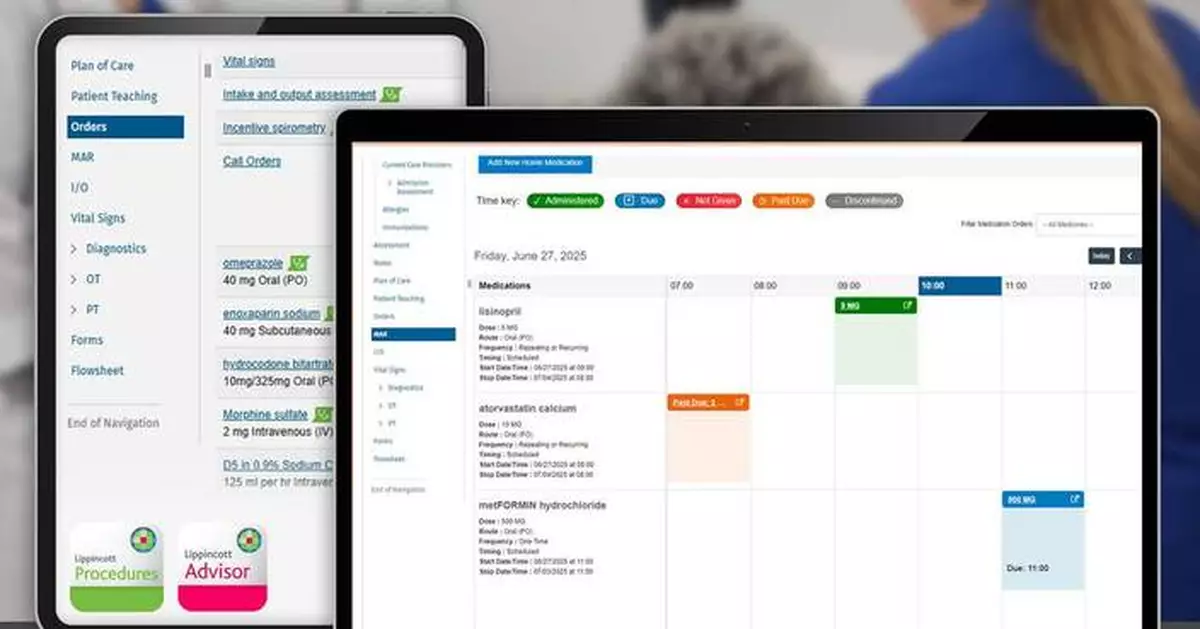
Wolters Kluwer Health today announced the next generation of Lippincott® DocuCare, a forward-looking academic electronic health record (EHR) platform that supports aspiring nurses on their transition to practice. The reimagined simulated EHR provides a realistic, intuitive experience modeled after industry-leading EHR systems used by thousands of nurses every day. DocuCare is fully integrated with the Lippincott learning suite, blending classroom and clinical learning that empowers students to apply their knowledge across the curriculum.
This press release features multimedia. View the full release here: https://www.businesswire.com/news/home/20251008084169/en/
“The transition from education to patient care continues to be a big hurdle for new nurses entering the workforce and the health systems that hire them. Having clinical-like application tools available to nursing students will help build their clinical judgment and reflect a more true-to-practice experience that can minimize these growing pains,” saidJulie Stegman, Vice President, Wolters Kluwer Health Learning & Practice. “The essential goal of documentation is safe, effective patient care delivery and clinician-patient communication. Students that use DocuCare gain exposure to these skills during their education, making them more practice-ready and more attractive to employers, while supporting curriculum needs.”
True-to-life experience in an academic EHR
Aligned with American Association of Colleges of Nursing (AACN) and National Council of State Boards of Nursing (NCSBN) standards, DocuCare supports accreditation and competency-based education, ensuring nurse graduates meet industry demands. It works seamlessly across Lippincott products, offering a unified gradebook, streamlined course management, and comprehensive curriculum alignment. This provides educators with an unparalleled breadth and depth of resources, including 400 customizable patient records, empowering team-teaching and curriculum coverage across courses, clinicals, and simulations.
“Having an academic EHR simulator across our curriculum is absolutely essential training for future nurses. It allows faculty to give students real, actionable feedback on their documentation while sharpening their clinical judgment, which is so critical in practice,” said Kandi Hudson, Ed.D./CI, MSN, CMSRN, CNE at the Community College of Baltimore. “Charting is patient care, so it is imperative for students to understand that every detail they document impacts outcomes and protects both the patient and their own careers. It’s a key tool in preparing safe, confident, and competent nurses.”
Exposure to medication adherence in the safety of the classroom
Nurses entering the workforce will care for a multitude of patients who need different medications and dosing to support their individual care plans—with studies showing a nearly 94% error rate in medication histories of patients. DocuCare medication and procedure facts are updated regularly and approved by medical-regulatory authorities, ensuring students are guided to make informed clinical decisions in practice, so they can be ready for the intricacies of patient care.
As a nurse, what you learn in the classroom directly translates to what you will face when you enter clinical practice. DocuCare brings students life-like patient scenarios and simulations, to help teach key concepts through reviewing specific cases and patient information and reverse engineering case studies. Wolters Kluwer continues to be a dedicated leader in the nursing education market, supporting both students and educators. Learn more about how the full suite of Lippincott offerings supports the next generation of nurses.
For more information about Wolters Kluwer, please visit: www.wolterskluwer.com
About Wolters Kluwer
Wolters Kluwer (EURONEXT: WKL) is a global leader in information, software solutions and services for professionals in healthcare; tax and accounting; financial and corporate compliance; legal and regulatory; corporate performance and ESG. We help our customers make critical decisions every day by providing expert solutions that combine deep domain knowledge with technology and services.
Wolters Kluwer reported 2024 annual revenues of €5.9 billion. The group serves customers in over 180 countries, maintains operations in over 40 countries, and employs approximately 21,600 people worldwide. The company is headquartered in Alphen aan den Rijn, the Netherlands.
For more information, visit www.wolterskluwer.com, follow us on LinkedIn, Facebook, YouTube and Instagram.
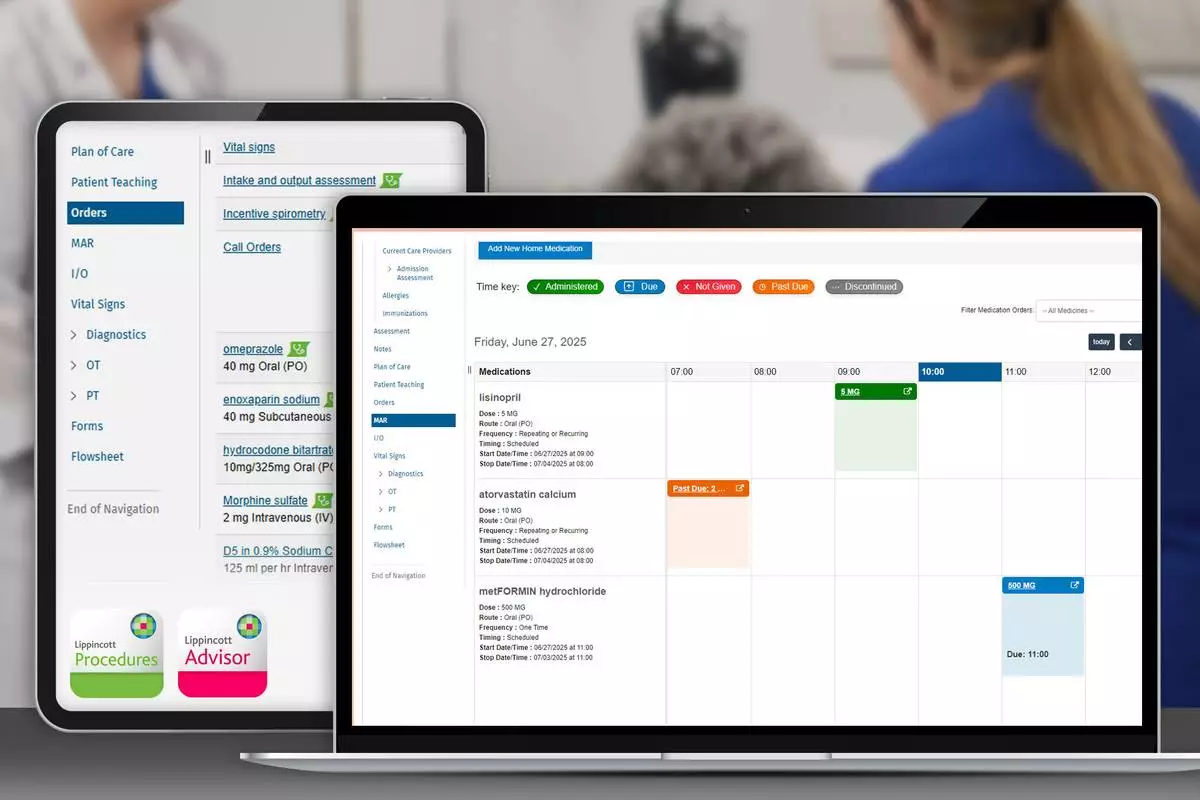
Wolters Kluwer enhances simulated EHR tool, Docucare, to provide a realistic, intuitive experience for nursing students
WASHINGTON (AP) — Two senators from opposite parties are joining forces in a renewed push to ban members of Congress from trading stocks, an effort that has broad public support but has repeatedly stalled on Capitol Hill.
Democratic Sen. Kirsten Gillibrand of New York and Republican Sen. Ashley Moody of Florida on Thursday plan to introduce legislation, first shared with The Associated Press, that would bar lawmakers and their immediate family members from trading or owning individual stocks.
It's the latest in a flurry of proposals in the House and the Senate to limit stock trading in Congress, lending bipartisan momentum to the issue. But the sheer number of proposals has clouded the path forward. Republican leaders in the House are pushing their own bill on stock ownership, an alternative that critics have dismissed as watered down.
“There’s an American consensus around this, not a partisan consensus, that members of Congress and, frankly, senior members of administrations and the White House, shouldn’t be making money off the backs of the American people,” Gillibrand said in an interview with the AP on Wednesday.
Trading of stock by members of Congress has been the subject of ethics scrutiny and criminal investigations in recent years, with lawmakers accused of using the information they gain as part of their jobs — often not known to the public — to buy and sell stocks at significant profit. Both parties have pledged to stop stock trading in Washington in campaign ads, creating unusual alliances in Congress.
The bill being introduced by Gillibrand and Moody is a version of a House bill introduced last year by Reps. Chip Roy, a Republican from Texas, and Seth Magaziner, a Democrat from Rhode Island. That proposal, which has 125 cosponsors, would ban members of Congress from buying or selling individual stocks altogether.
Republican Rep. Anna Paulina Luna of Florida tried to bypass party leadership and force a vote on the bill. Her push with a discharge petition has 79 of the 218 signatures required, the majority of them Democrats.
House Republican leaders are supporting an alternative bill that would prohibit members of Congress and their spouses from buying individual stocks but would not require lawmakers to divest from stocks they already own. It would mandate public notice seven days before a lawmaker sells a stock. The bill advanced in committee Wednesday — which Luna called “a win” — but its prospects are unclear.
Magaziner and other House Democrats, including Rep. Alexandria Ocasio-Cortez of New York, wrote in a joint statement Wednesday that they “are disappointed that the bill introduced by Republican leadership today fails to deliver the reform that is needed.”
The Senate bill from Gillibrand and Moody would give lawmakers 180 days to divest their individual stock holdings after the bill takes effect, while newly elected members would have 90 days from being sworn in to divest. Lawmakers would be prohibited from trading and owning certain other financial assets, including securities, commodities and futures.
“The American people must be able to trust that their elected officials are focused on results for the American people and not focused on profiting from their positions,” Moody wrote in response to a list of questions from the AP.
The legislation would exempt the president and vice president, a carveout likely to draw criticism from some Democrats. Similar objections were raised last year over a bill that barred members of Congress from issuing certain cryptocurrencies but did not apply to the president.
Gillibrand said the president “should be held to the same standard” but described the legislation as “a good place to start.”
“I don’t think we have to allow the perfect to be the enemy of the good,” Gillibrand said. “There’s a lot more I would love to put in this bill, but this is a consensus from a bipartisan basis and a consensus between two bodies of Congress.”
Moody, responding to written questions, wrote that Congress has the “constitutional power of the purse” so it's important that its members don't have “any other interests in mind, financial or otherwise.”
“Addressing Members of Congress is the number one priority our constituents are concerned with,” she wrote.
It remains to be seen if the bill will reach a vote in the Senate. A similar bill introduced by Gillibrand and GOP Sen. Josh Hawley of Missouri in 2023 never advanced out of committee.
Still, the issue has salience on the campaign trail. Moody is seeking election to her first full term in Florida this year after being appointed to her seat when Marco Rubio became secretary of state. Gillibrand chairs the Senate Democrats’ campaign arm.
“The time has come," Gillibrand said. “We have consensus, and there’s a drumbeat of people who want to get this done.”
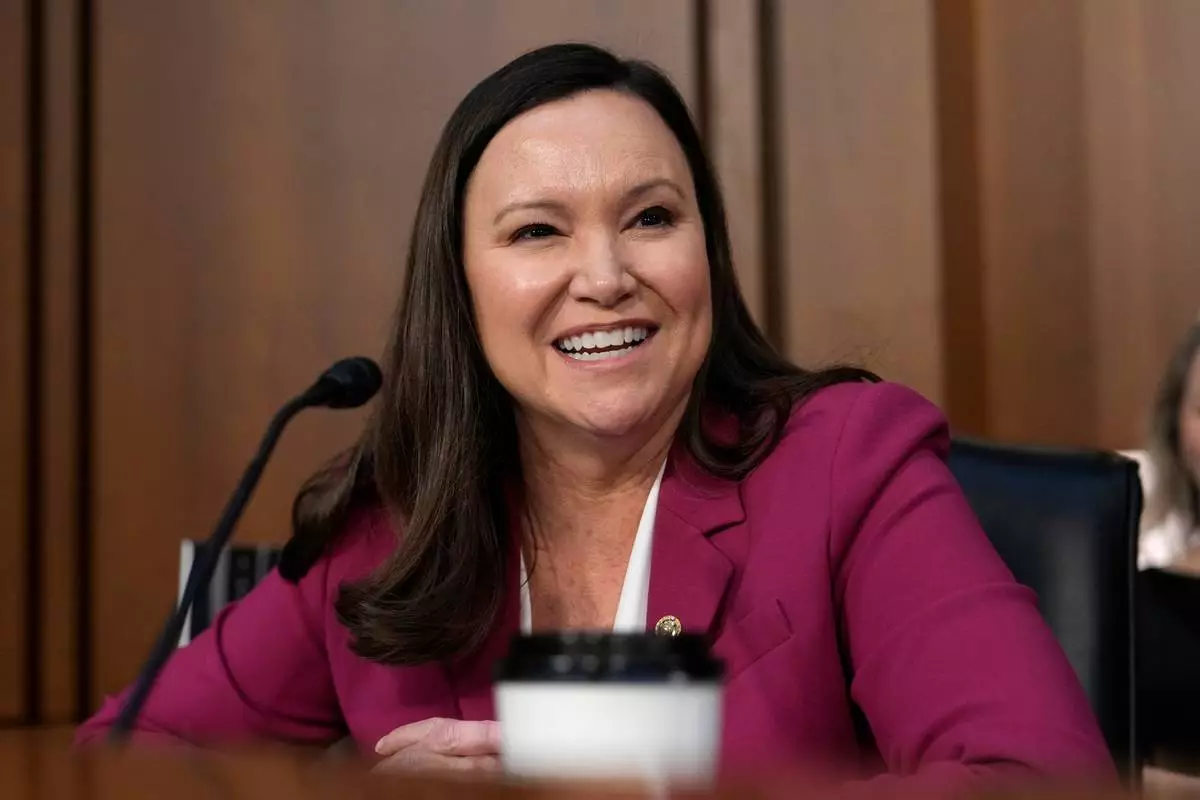
FILE -Sen. Ashley Moody, R-Fla., speaks during the confirmation hearing before the Senate Judiciary Committee for Kash Patel, President Donald Trump's choice to be director of the FBI, at the Capitol in Washington, Jan. 30, 2025. (AP Photo/Ben Curtis, File)

FILE - Sen. Kirsten Gillibrand, D-N.Y., leaves the Senate chamber after voting on a government funding bill at the Capitol in Washington, March 14, 2025. (AP Photo/J. Scott Applewhite, File)