Skip to Content Facebook Feature Image

Women in Mexico step up to protect ancient Aztec farms and save a vanishing ecosystem

News

Women in Mexico step up to protect ancient Aztec farms and save a vanishing ecosystem
News

News

Women in Mexico step up to protect ancient Aztec farms and save a vanishing ecosystem

2025-10-08 23:12 Last Updated At:10-09 09:41

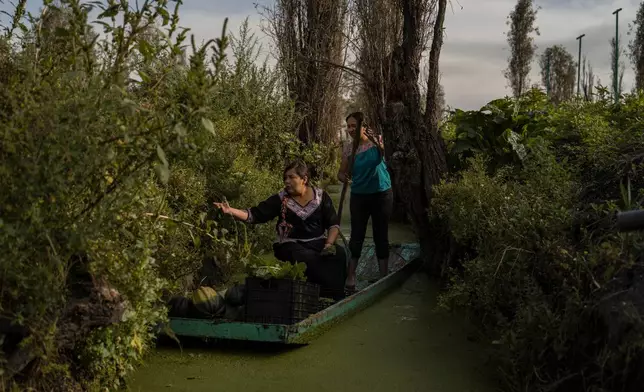
MEXICO CITY (AP) — Jasmín Ordóñez looks out from a wooden boat at the water as she crosses a narrow channel that connects a labyrinth of chinampas, island farms that were built by the Aztecs thousands of years ago.

“Let’s close our eyes and ask our Mother Water for permission to sail in peace,” she said as the boat moves slowly, in contrast to the frenetic traffic of Mexico City just a few miles away.

More Images
Jasmín Ordóñez and Cassandra Garduño, right, paddle a boat in Garduño's chinampa, an island farm built by the Aztecs thousands of years ago, in San Gregorio Atlapulco, a borough of Mexico City, Sept. 20, 2025. (AP Photo/Felix Marquez)
Jasmín Ordóñez and Cassandra Garduño, right, paddle a boat in Garduño's chinampa, an island farm built by the Aztecs thousands of years ago, in San Gregorio Atlapulco, a borough of Mexico City, Sept. 20, 2025. (AP Photo/Felix Marquez)
Jasmín Ordóñez and Cassandra Garduño, right, paddle a boat in Garduño's chinampa, an island farm built by the Aztecs thousands of years ago, in San Gregorio Atlapulco, a borough of Mexico City, Sept. 20, 2025. (AP Photo/Felix Marquez)

Jasmín Ordóñez and Cassandra Garduño, right, paddle a boat in Garduño's chinampa, an island farm built by the Aztecs thousands of years ago, in San Gregorio Atlapulco, a borough of Mexico City, Sept. 20, 2025. (AP Photo/Felix Marquez)

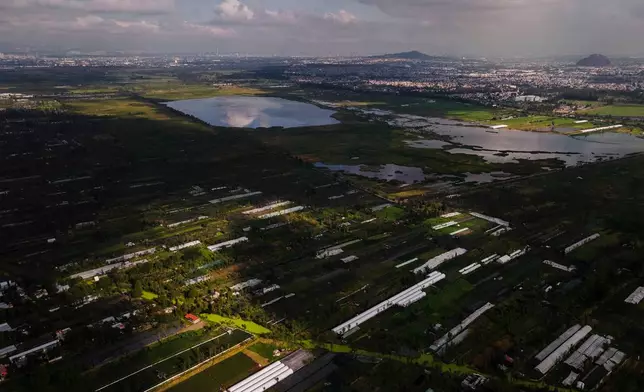
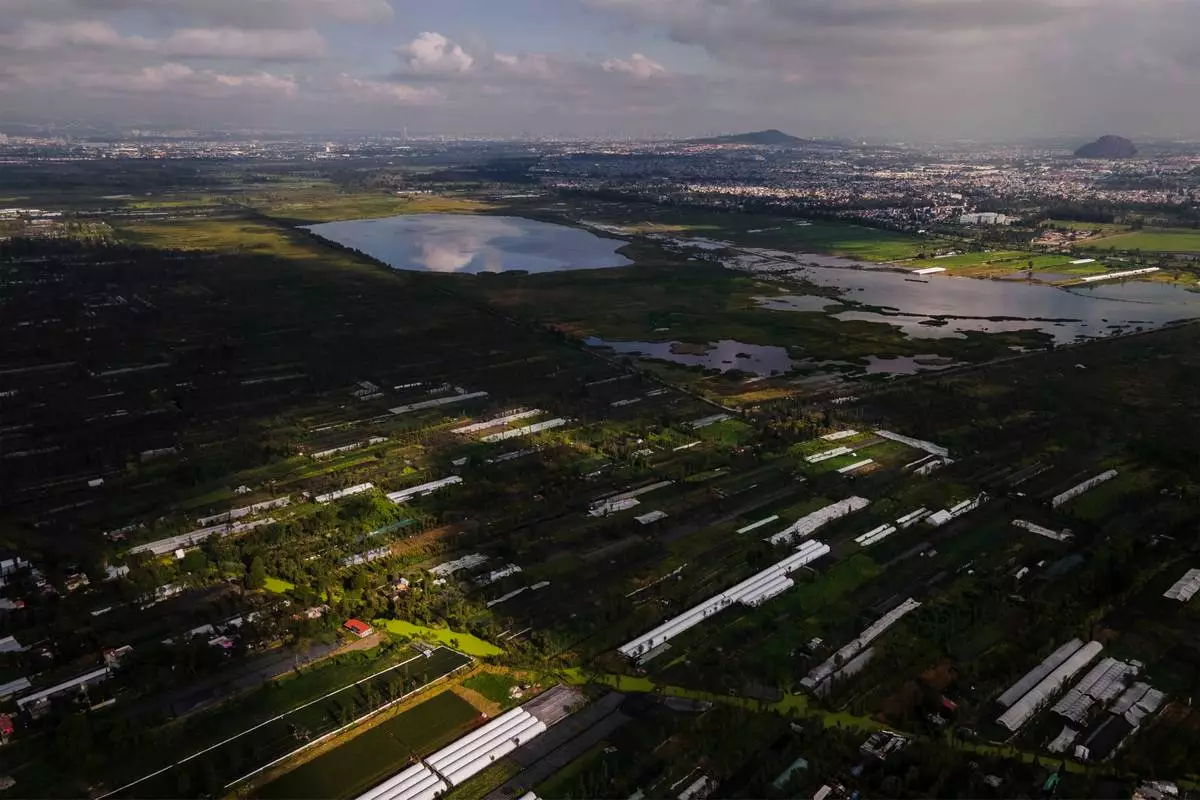
Floating islands known as chinampas are visible in San Gregorio Atlapulco and Xochimilco, boroughs of Mexico City, Sept. 20, 2025. (AP Photo/Felix Marquez)
Floating islands known as chinampas are visible in San Gregorio Atlapulco and Xochimilco, boroughs of Mexico City, Sept. 20, 2025. (AP Photo/Felix Marquez)

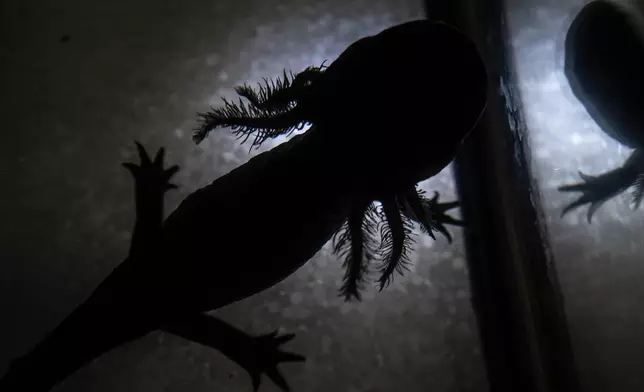
An axolotl is visible in a tank inside a laboratory of the Institute of Biology at the National Autonomous University in Mexico City, Sept. 19, 2025. (AP Photo/Felix Marquez)
An axolotl is visible in a tank inside a laboratory of the Institute of Biology at the National Autonomous University in Mexico City, Sept. 19, 2025. (AP Photo/Felix Marquez)
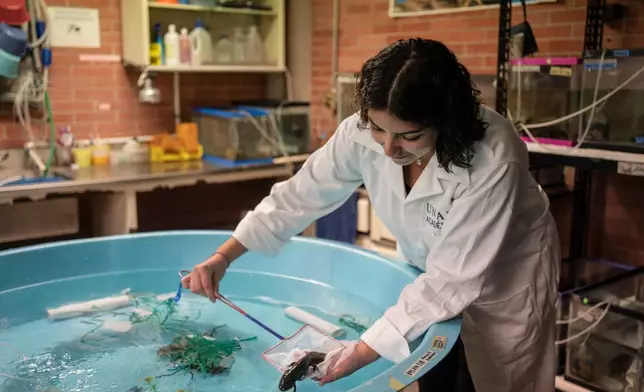
Biologist Diana Laura Vázquez Mendoza examines an axolotl in a laboratory of the Institute of Biology at the National Autonomous University in Mexico City, Sept. 19, 2025. (AP Photo/Felix Marquez)
Biologist Diana Laura Vázquez Mendoza examines an axolotl in a laboratory of the Institute of Biology at the National Autonomous University in Mexico City, Sept. 19, 2025. (AP Photo/Felix Marquez)

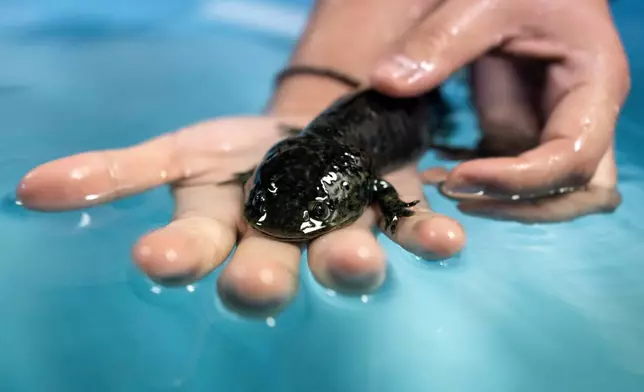
Biologist Diana Laura Vázquez Mendoza holds an axolotl in a laboratory of the Institute of Biology at the National Autonomous University in Mexico City, Sept. 19, 2025. (AP Photo/Felix Marquez)

Biologist Diana Laura Vázquez Mendoza holds an axolotl in a laboratory of the Institute of Biology at the National Autonomous University in Mexico City, Sept. 19, 2025. (AP Photo/Felix Marquez)

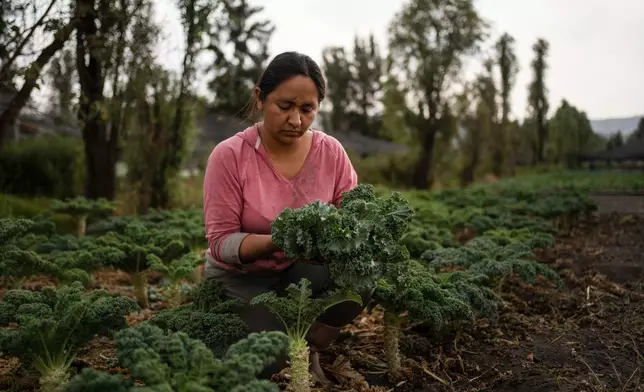
Cassandra Garduño harvests kale in her chinampa, an island farm built by the Aztecs thousands of years ago, in San Gregorio Atlapulco, a borough of Mexico City, Sept. 20, 2025. (AP Photo/Felix Marquez)
Cassandra Garduño harvests kale in her chinampa, an island farm built by the Aztecs thousands of years ago, in San Gregorio Atlapulco, a borough of Mexico City, Sept. 20, 2025. (AP Photo/Felix Marquez)
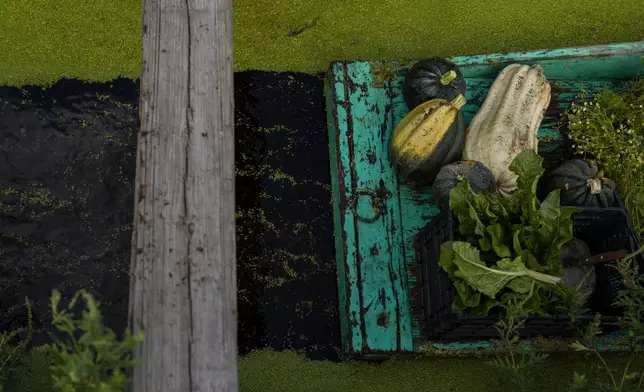
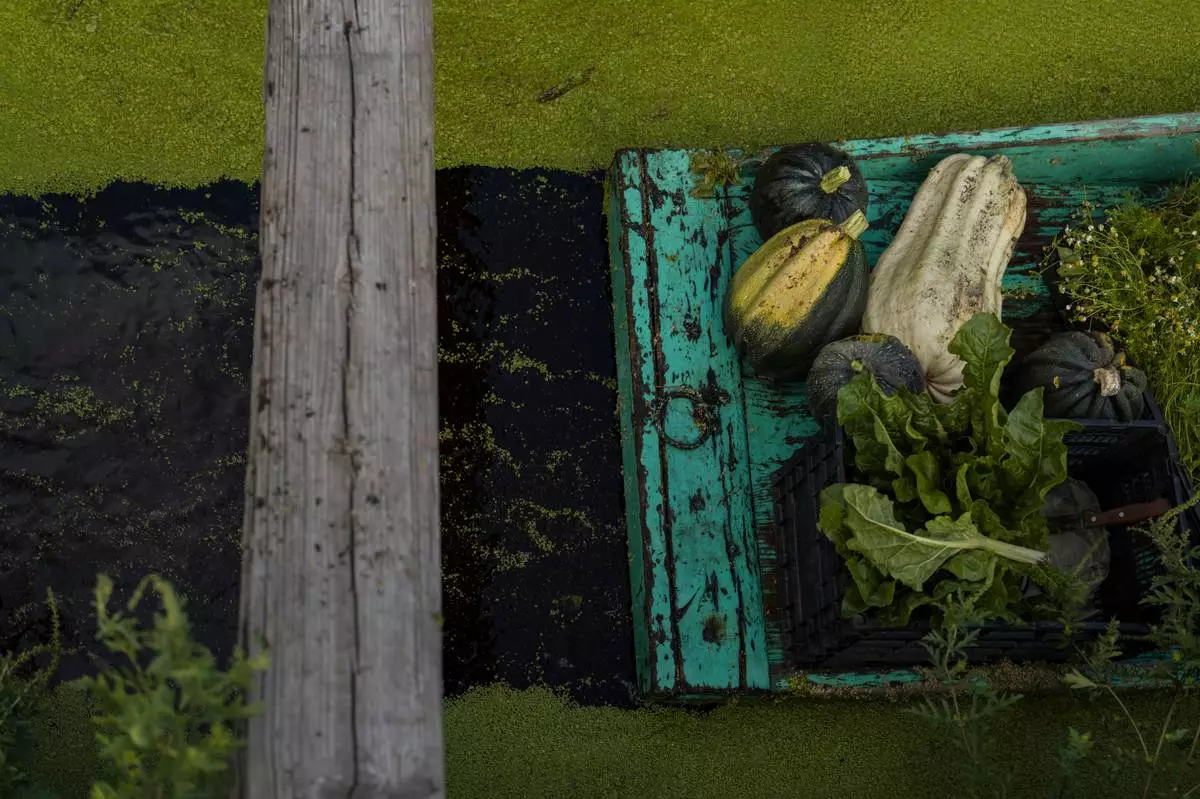
Pumpkins, Swiss chard and chamomile sprouts are visible in a boat floating in Cassandra Garduño's chinampa, an island farm built by the Aztecs thousands of years ago, in San Gregorio Atlapulco, a borough of Mexico City, Sept. 20, 2025. (AP Photo/Felix Marquez)
Pumpkins, Swiss chard and chamomile sprouts are visible in a boat floating in Cassandra Garduño's chinampa, an island farm built by the Aztecs thousands of years ago, in San Gregorio Atlapulco, a borough of Mexico City, Sept. 20, 2025. (AP Photo/Felix Marquez)
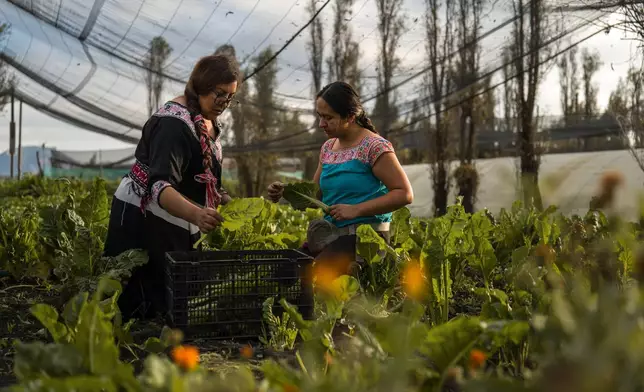
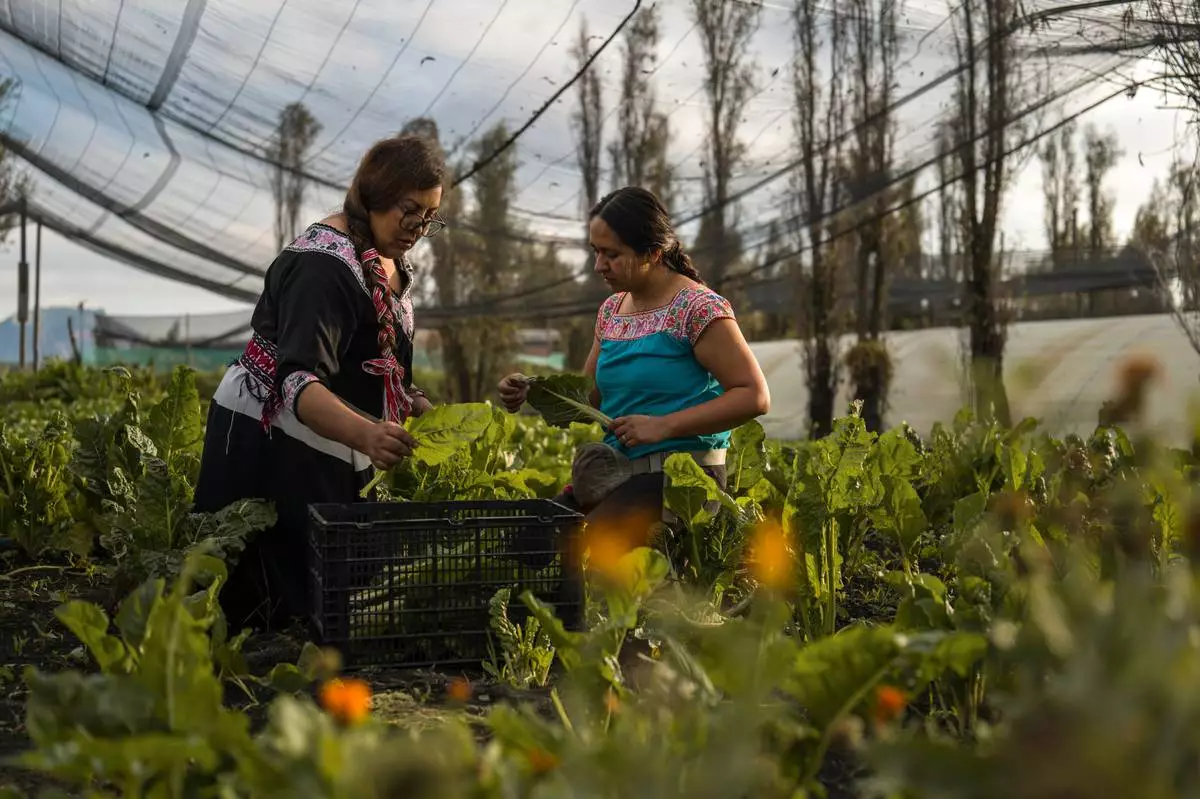
Jasmín Ordóñez, left, and Cassandra Garduño harvest Swiss chard grown in Garduño's chinampa, an island farm built by the Aztecs thousands of years ago, in San Gregorio Atlapulco, a borough of Mexico City, Sept. 20, 2025. (AP Photo/Felix Marquez)

Jasmín Ordóñez, left, and Cassandra Garduño harvest Swiss chard grown in Garduño's chinampa, an island farm built by the Aztecs thousands of years ago, in San Gregorio Atlapulco, a borough of Mexico City, Sept. 20, 2025. (AP Photo/Felix Marquez)

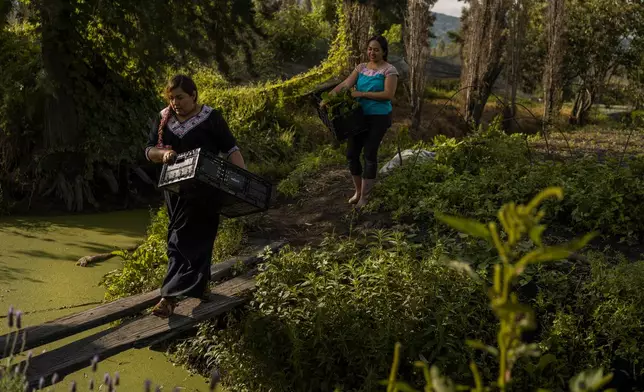
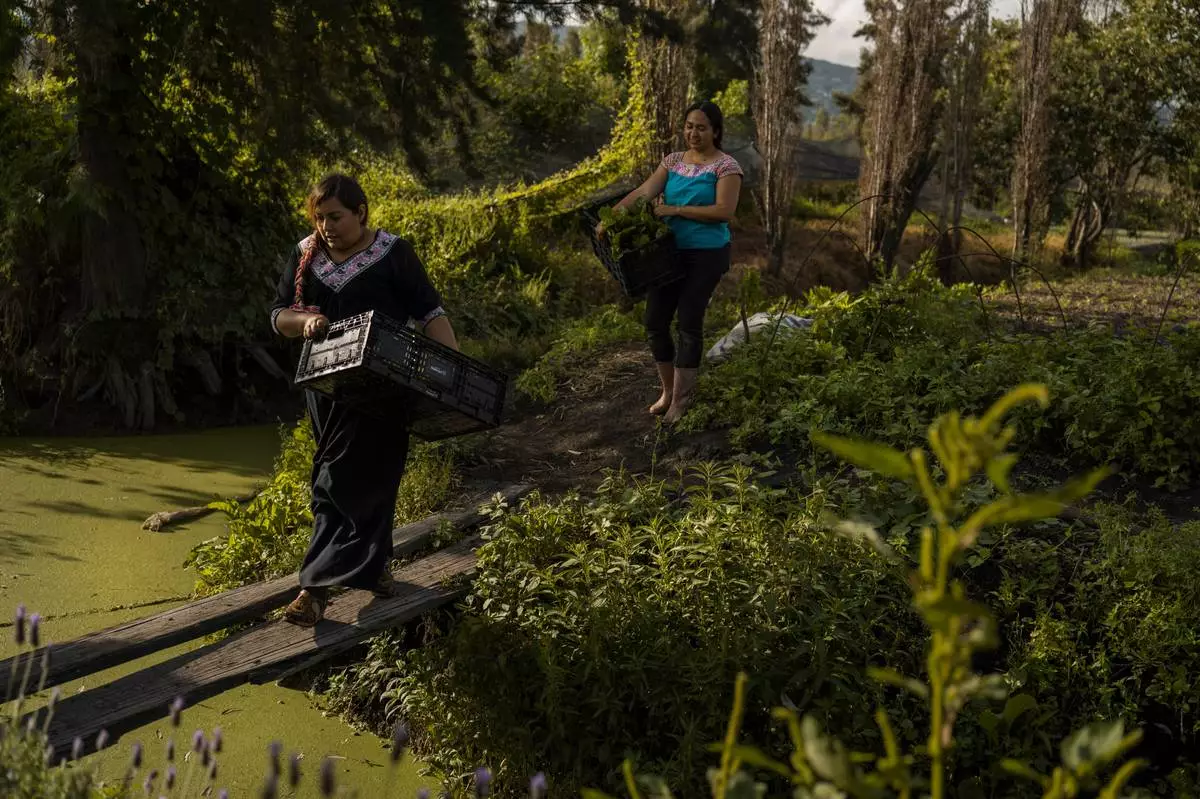
Jasmín Ordóñez, left, and Cassandra Garduño, right, cross an improvised bridge in Garduño's chinampa, an island farm built by the Aztecs thousands of years ago, in San Gregorio Atlapulco, a borough of Mexico City, Sept. 20, 2025. (AP Photo/Felix Marquez)

Jasmín Ordóñez, left, and Cassandra Garduño, right, cross an improvised bridge in Garduño's chinampa, an island farm built by the Aztecs thousands of years ago, in San Gregorio Atlapulco, a borough of Mexico City, Sept. 20, 2025. (AP Photo/Felix Marquez)

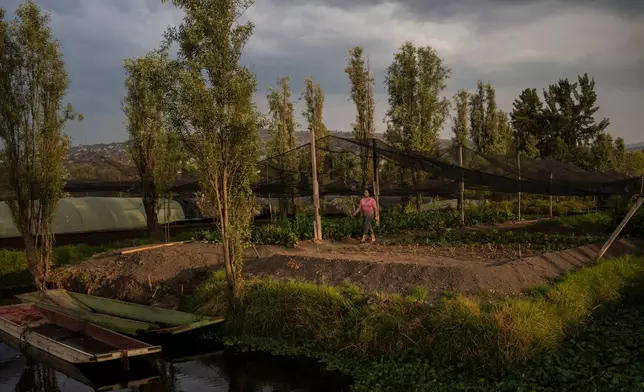
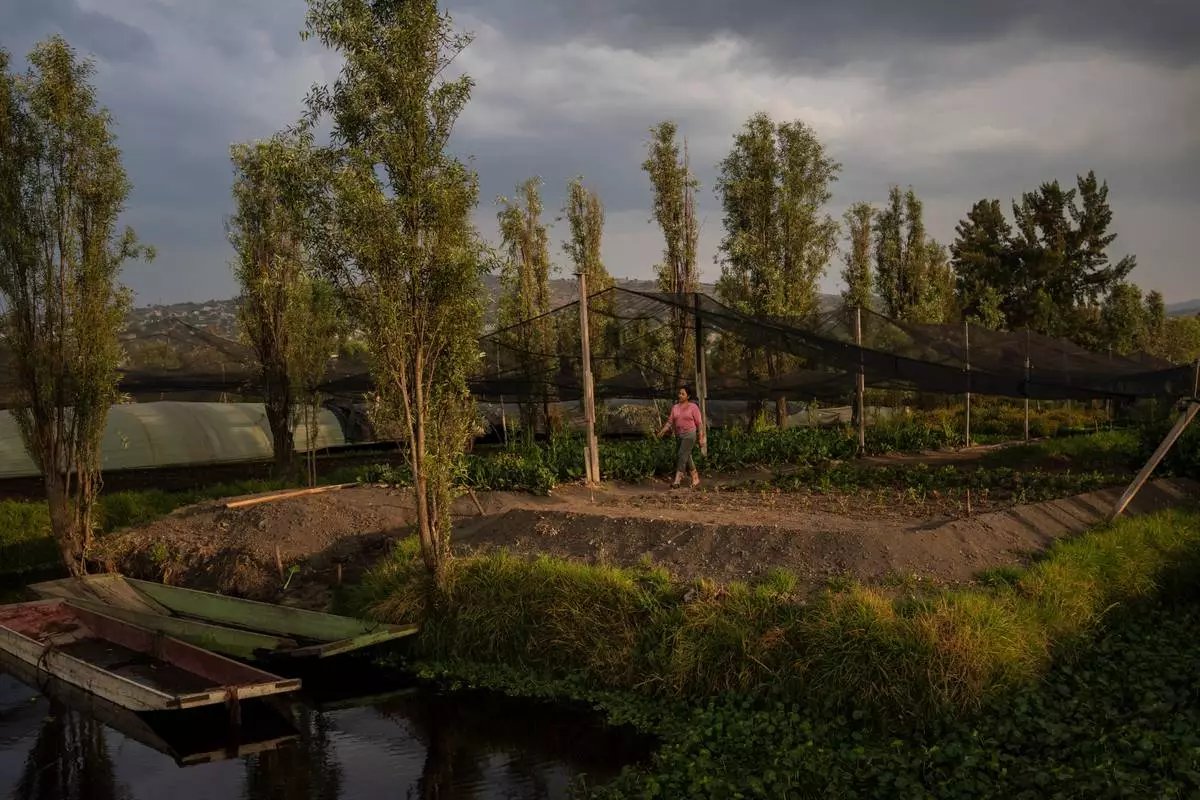
Cassandra Garduño walks through her chinampa, an island farm built by the Aztecs thousands of years ago, at sunset in San Gregorio Atlapulco, a borough of Mexico City, May 8, 2025. (AP Photo/Felix Marquez)
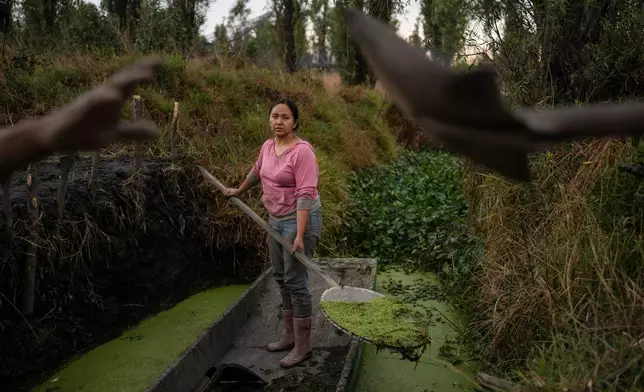
Cassandra Garduño walks through her chinampa, an island farm built by the Aztecs thousands of years ago, at sunset in San Gregorio Atlapulco, a borough of Mexico City, May 8, 2025. (AP Photo/Felix Marquez)

Cassandra Garduño cleans a canal in her chinampa, an island farm built by the Aztecs thousands of years ago, in San Gregorio Atlapulco, a borough of Mexico City, May 8, 2025. (AP Photo/Felix Marquez)

Cassandra Garduño cleans a canal in her chinampa, an island farm built by the Aztecs thousands of years ago, in San Gregorio Atlapulco, a borough of Mexico City, May 8, 2025. (AP Photo/Felix Marquez)

Ordóñez owns one of these island farms, first created with mud from the bottom of the lakes that once covered this area. When the boat arrives at her island, she proudly shows the corn and leafy greens she grows. Her ancestors owned chinampas, but she had to buy this one because women traditionally haven't inherited them.

“My grandmother didn't get any land. Back then, most was left in the hands of men,” she said. At her side, Cassandra Garduño listens attentively. She also didn't inherit the family chinampa.

Today both are part of a small but growing group of women who have bought chinampas to cultivate sustainably in an effort to preserve an ecosystem that is increasingly threatened by urban development, mass tourism and water pollution.

EDITOR'S NOTE: This story is a collaboration between The Associated Press and Mongabay.

Making their way in an area still dominated by men hasn't been easy. In the chinampas of the boroughs of Xochimilco and San Gregorio Atlapulco, hardly any women work the land.

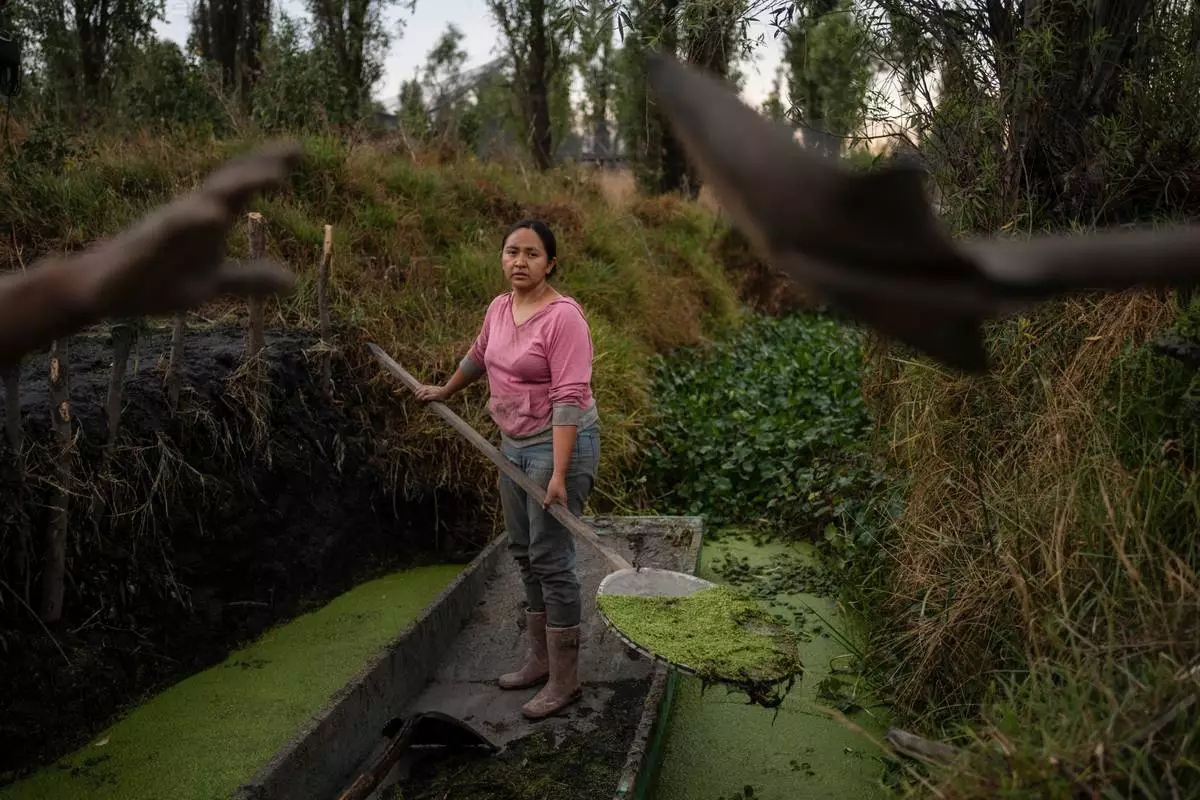
“People believe that men are the (only) ones who have the physical abilities to work them,” said Garduño. The mud stains her pale pink shirt, matching her boots. She knows her outfit gets funny looks from longtime male chinampa workers, but instead of getting upset, she finds it amusing.

After years away, she returned to San Gregorio in 2021 to dedicate herself to chinampa farming. She had gone to college and then spent long periods in Ecuador working in conservation efforts to protect manta rays and sharks. Then one day she came back to San Gregorio and was struck by the degradation of her own land: the lower water levels of the canals, the increasing pollution, the abandoned chinampas.

“That’s where I started to realize: 'You are part of this space. And part of your responsibility is to safeguard it,'” she said.

After saving for a year, she bought a chinampa — and was shocked to find it in such a bad state. A cleanup found pieces of armchairs, televisions and beer bottles. She worked to reopen canals that had been crammed with garbage and began planting crops.

The distrust among the neighbors was palpable.

“They said: 'Let’s see, this girl has never been down to this place, nobody knows her. And she’s already doing what she wants,'” she recalled.

But she knew much more than they thought.

Garduño had learned a lot as a little girl who ran around her grandfather’s chinampa —“a paradise” full of flowers. She learned that the mud from the bottom of the canals is the best fertilizer because it contains the mineral-rich ashes from the volcanoes surrounding Mexico City. She learned that planting a variety of crops keeps frost from destroying one entire crop and that the flowers attract insects, so they don’t eat the cabbage or kale.

“Chinampas can have up to eight rotations per year, whereas in other systems you might have two or three,” Garduño explained. That’s why the Food and Agriculture Organization of the United Nations recognized chinampas as one of the most productive agricultural systems on the planet. Today, her field is a melting pot of colors: pale green of broccoli to the vivid yellow of marigolds.

Since 2016, she has been collaborating with Mexico’s National Autonomous University, advising other farmers who want to stop using agrochemicals and recover these traditional practices that also help preserve the ecosystem.

Kneeling next to a planting bed, Garduño suggests elevating it so it won’t flood when it rains. Ordóñez takes note. She bought this chinampa three years ago and is now seeking to obtain the “Etiqueta Chinampera,” the sustainability tag given by the university to producers who, among other things, use mud as fertilizer instead of agrochemicals. With this label, their products can be sold at higher prices.

There are 16 farmers who have obtained the label, four of them women, said Diana Laura Vázquez Mendoza, of the university's Institute of Biology, adding that the project encourages women to “take back their chinampas and produce.”

In the chinampas supported by the university, filters made from aquatic plants are installed to clean the water and prevent the passage of carp and tilapia. Introduced in Xochimilco in the 1980s, these invasive species became predators of the most distinguished inhabitants of this ecosystem: Mexico’s salamander-like axolotl.

Today, this amphibian is on the verge of extinction because of these invasive species and a combination of factors polluting the canals: the discharge of sewage from urban growth in the area, mass tourism and the use of agrochemicals in many chinampas.

“Chinampas are an artificial agro-ecosystem that was created to supply food in pre-Hispanic times to the entire population. And that endures to this day,” Mendoza said. “So the way to conserve Xochimilco is to also conserve the chinampa.”

But a walk through the area on any given Sunday makes it clear that fewer chinampas are dedicated to agriculture. Every weekend, hundreds of people come here to play soccer on chinampas converted into fields or to drink aboard the brightly painted boats known as “trajineras."

The impact of this transformation on the wetland is evident: contaminants have been found there, from heavy metals such as iron, cadmium and lead to oils, detergents and pesticides, according to a study by biologist Luis Bojórquez Castro, of the Autonomous Metropolitan University. Most come from the treatment plants that discharge their water in Xochimilco and from the chinampas that use agrochemicals, according to Castro's study.

“Look at the clarity of the water,” said Ordóñez as she reaches into the canal where she has installed her biofilter. She knows that taking care of the water is essential to preserving this ecosystem.

This wetland is the last remnant of what was once the great Tenochtitlan, the capital of the Aztec Empire built on the lakes that once filled the Valley of Mexico. Although today what remains of Xochimilco represents only 3% of the original extension of those lakes, it’s still key to the stability of the city.

If it were to disappear, the average temperature of the capital could rise by up to 2 degrees Celsius (3.6 Fahrenheit), according to biologist Luis Zambrano. Xochimilco and San Gregorio also reduce flooding during the rainy season, provide a natural carbon dioxide reservoir and are home to hundreds of species, such as herons and the Tlaloc frog.

“Look at the red-headed birds in the lagoon!” exclaimed Garduño, driving home at dusk along a dirt road after a long day at her chinampa.

For her, this is still the paradise she roamed with her grandfather. She’s convinced that women are needed to preserve chinampas and hopes that within 10 years, many more will own and take care of them.

“From the shared labor of women and men, we can do what we all want, which is conserve what we have left for as long as possible,” she said.

Follow Teresa de Miguel on X at @tdemigueles

Read more of AP’s climate coverage at http://www.apnews.com/climate-and-environment

The Associated Press’ climate and environmental coverage receives financial support from multiple private foundations. AP is solely responsible for all content. Find AP’s standards for working with philanthropies, a list of supporters and funded coverage areas at AP.org.
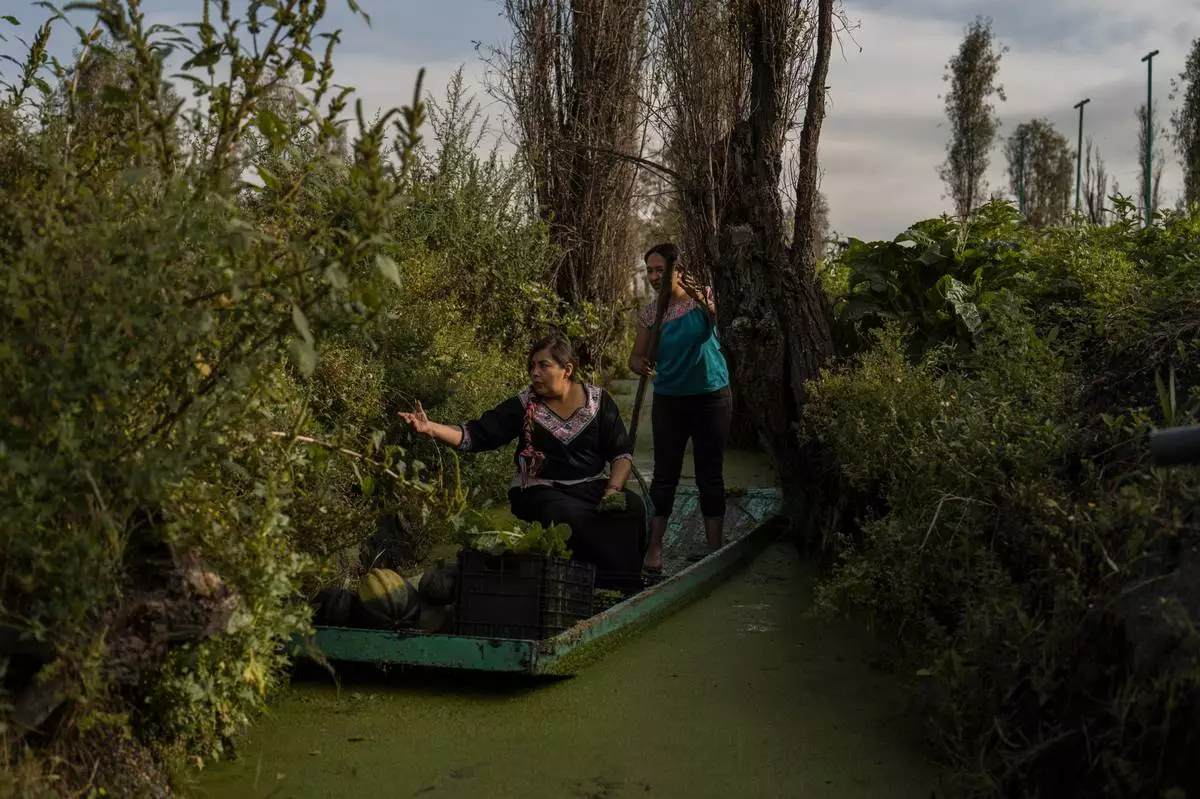
Jasmín Ordóñez and Cassandra Garduño, right, paddle a boat in Garduño's chinampa, an island farm built by the Aztecs thousands of years ago, in San Gregorio Atlapulco, a borough of Mexico City, Sept. 20, 2025. (AP Photo/Felix Marquez)
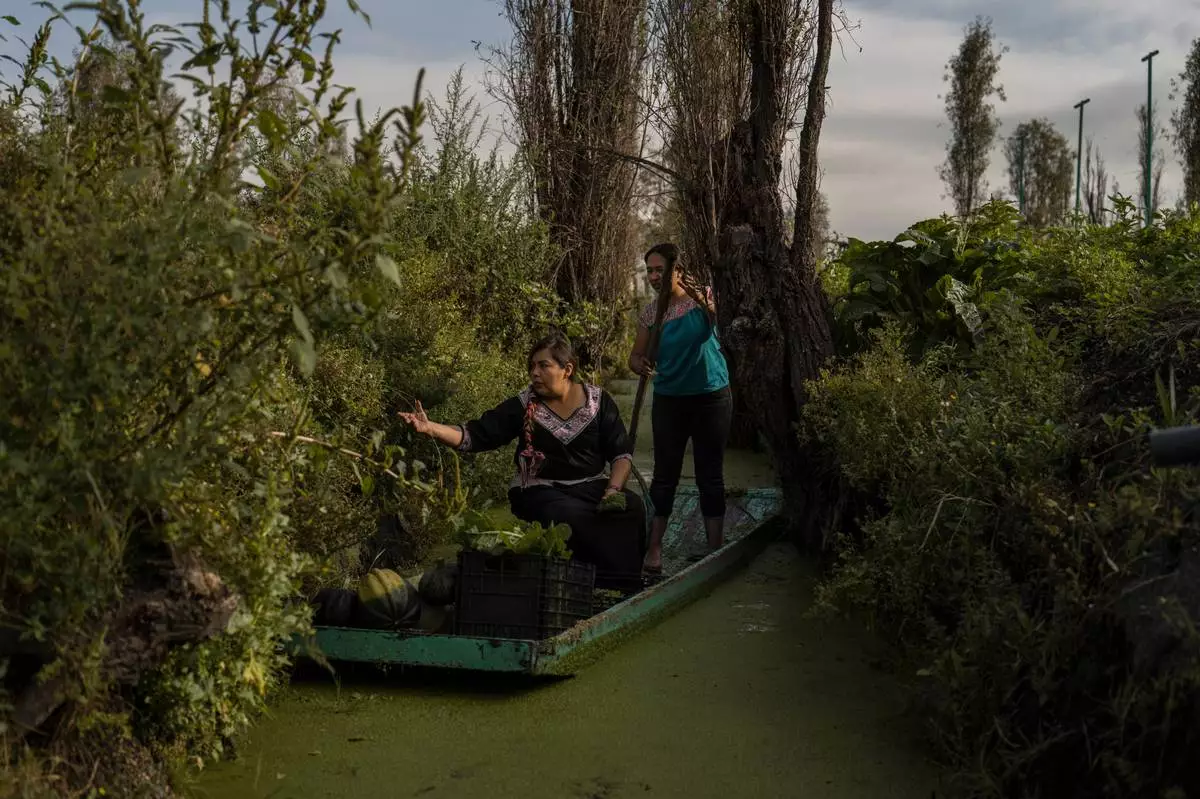
Jasmín Ordóñez and Cassandra Garduño, right, paddle a boat in Garduño's chinampa, an island farm built by the Aztecs thousands of years ago, in San Gregorio Atlapulco, a borough of Mexico City, Sept. 20, 2025. (AP Photo/Felix Marquez)
Jasmín Ordóñez and Cassandra Garduño, right, paddle a boat in Garduño's chinampa, an island farm built by the Aztecs thousands of years ago, in San Gregorio Atlapulco, a borough of Mexico City, Sept. 20, 2025. (AP Photo/Felix Marquez)

Jasmín Ordóñez and Cassandra Garduño, right, paddle a boat in Garduño's chinampa, an island farm built by the Aztecs thousands of years ago, in San Gregorio Atlapulco, a borough of Mexico City, Sept. 20, 2025. (AP Photo/Felix Marquez)

Floating islands known as chinampas are visible in San Gregorio Atlapulco and Xochimilco, boroughs of Mexico City, Sept. 20, 2025. (AP Photo/Felix Marquez)
Floating islands known as chinampas are visible in San Gregorio Atlapulco and Xochimilco, boroughs of Mexico City, Sept. 20, 2025. (AP Photo/Felix Marquez)

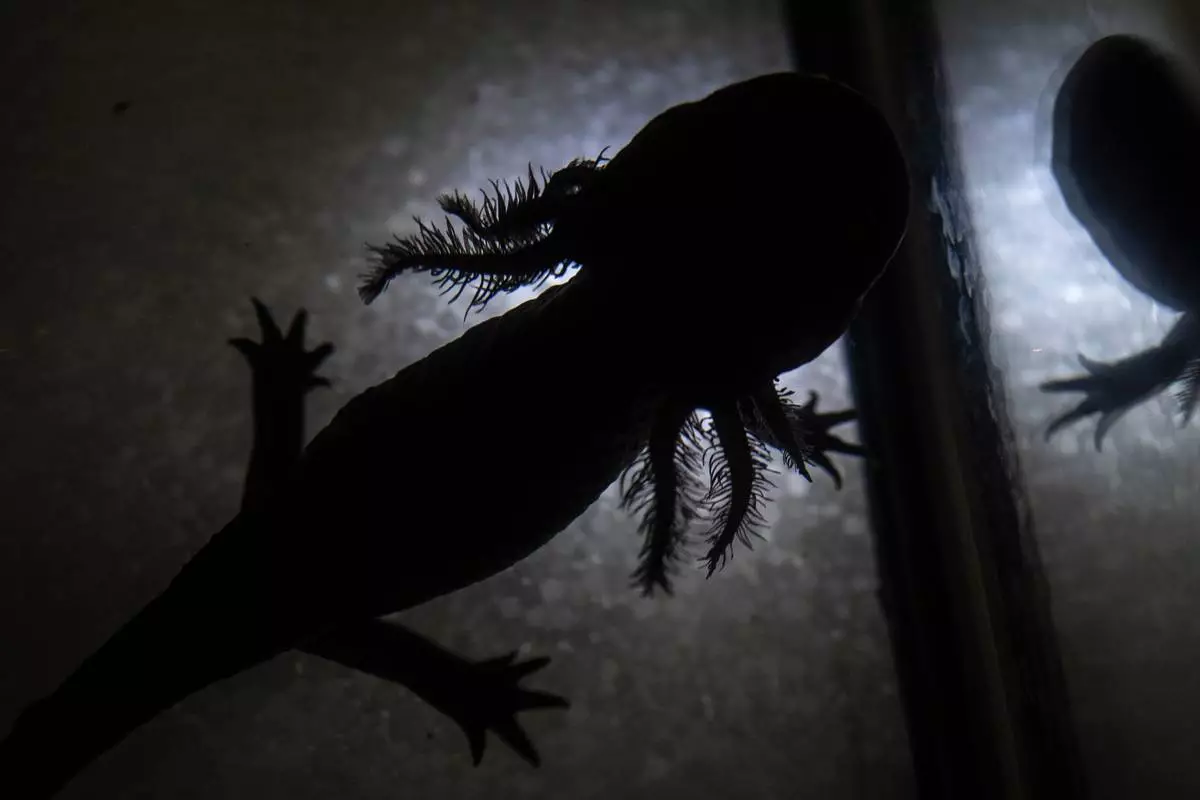
An axolotl is visible in a tank inside a laboratory of the Institute of Biology at the National Autonomous University in Mexico City, Sept. 19, 2025. (AP Photo/Felix Marquez)
An axolotl is visible in a tank inside a laboratory of the Institute of Biology at the National Autonomous University in Mexico City, Sept. 19, 2025. (AP Photo/Felix Marquez)
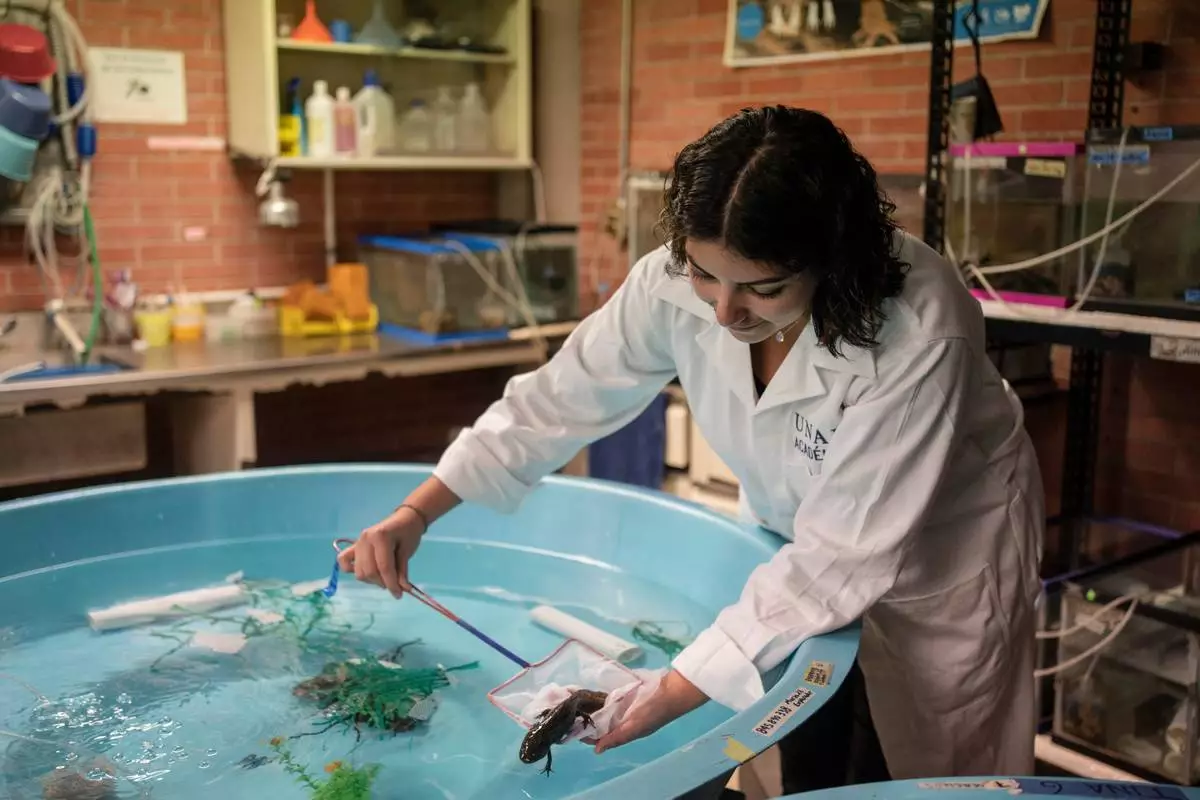
Biologist Diana Laura Vázquez Mendoza examines an axolotl in a laboratory of the Institute of Biology at the National Autonomous University in Mexico City, Sept. 19, 2025. (AP Photo/Felix Marquez)
Biologist Diana Laura Vázquez Mendoza examines an axolotl in a laboratory of the Institute of Biology at the National Autonomous University in Mexico City, Sept. 19, 2025. (AP Photo/Felix Marquez)

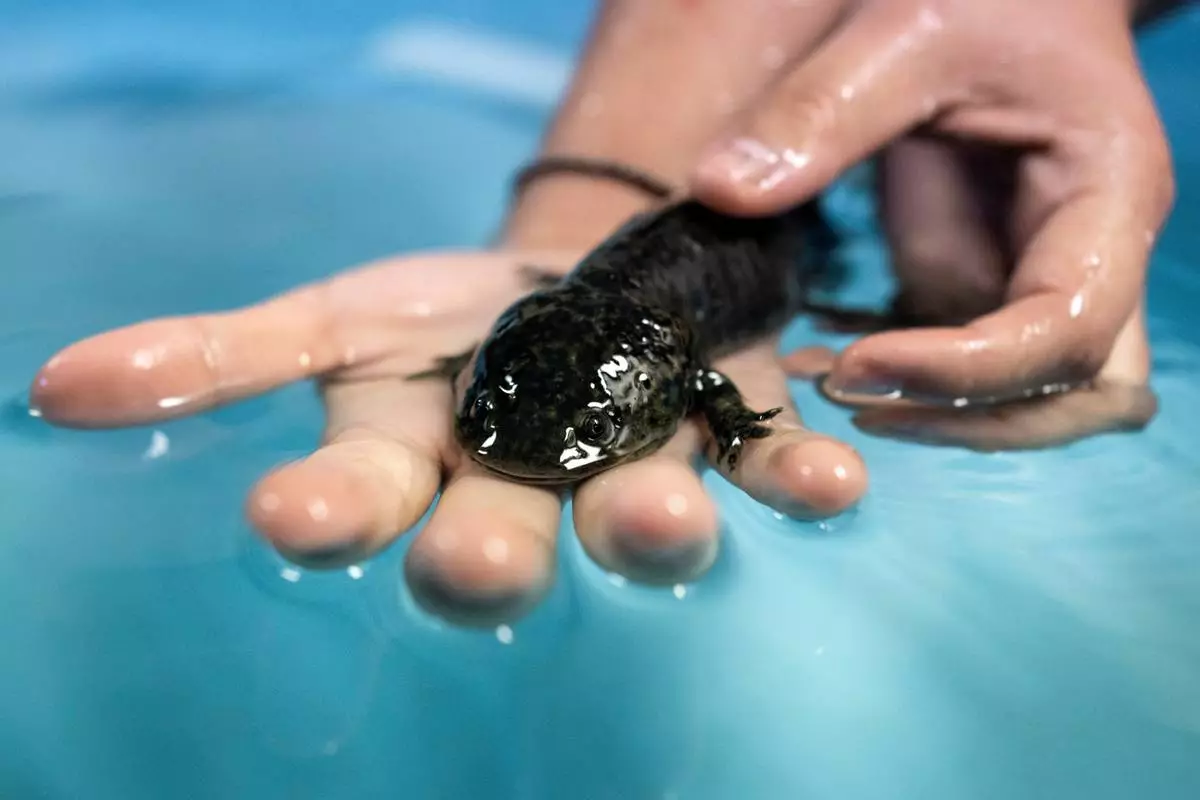
Biologist Diana Laura Vázquez Mendoza holds an axolotl in a laboratory of the Institute of Biology at the National Autonomous University in Mexico City, Sept. 19, 2025. (AP Photo/Felix Marquez)

Biologist Diana Laura Vázquez Mendoza holds an axolotl in a laboratory of the Institute of Biology at the National Autonomous University in Mexico City, Sept. 19, 2025. (AP Photo/Felix Marquez)

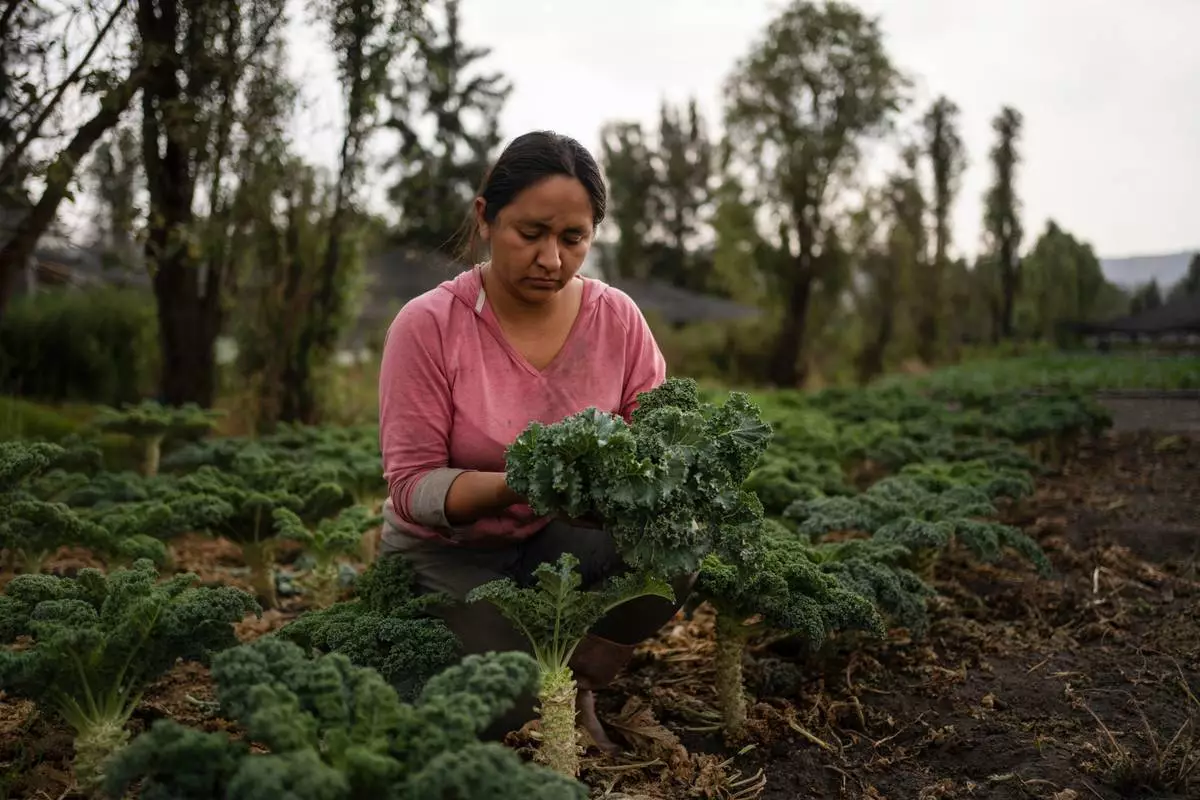
Cassandra Garduño harvests kale in her chinampa, an island farm built by the Aztecs thousands of years ago, in San Gregorio Atlapulco, a borough of Mexico City, Sept. 20, 2025. (AP Photo/Felix Marquez)
Cassandra Garduño harvests kale in her chinampa, an island farm built by the Aztecs thousands of years ago, in San Gregorio Atlapulco, a borough of Mexico City, Sept. 20, 2025. (AP Photo/Felix Marquez)
Pumpkins, Swiss chard and chamomile sprouts are visible in a boat floating in Cassandra Garduño's chinampa, an island farm built by the Aztecs thousands of years ago, in San Gregorio Atlapulco, a borough of Mexico City, Sept. 20, 2025. (AP Photo/Felix Marquez)
Pumpkins, Swiss chard and chamomile sprouts are visible in a boat floating in Cassandra Garduño's chinampa, an island farm built by the Aztecs thousands of years ago, in San Gregorio Atlapulco, a borough of Mexico City, Sept. 20, 2025. (AP Photo/Felix Marquez)
Jasmín Ordóñez, left, and Cassandra Garduño harvest Swiss chard grown in Garduño's chinampa, an island farm built by the Aztecs thousands of years ago, in San Gregorio Atlapulco, a borough of Mexico City, Sept. 20, 2025. (AP Photo/Felix Marquez)

Jasmín Ordóñez, left, and Cassandra Garduño harvest Swiss chard grown in Garduño's chinampa, an island farm built by the Aztecs thousands of years ago, in San Gregorio Atlapulco, a borough of Mexico City, Sept. 20, 2025. (AP Photo/Felix Marquez)

Jasmín Ordóñez, left, and Cassandra Garduño, right, cross an improvised bridge in Garduño's chinampa, an island farm built by the Aztecs thousands of years ago, in San Gregorio Atlapulco, a borough of Mexico City, Sept. 20, 2025. (AP Photo/Felix Marquez)

Jasmín Ordóñez, left, and Cassandra Garduño, right, cross an improvised bridge in Garduño's chinampa, an island farm built by the Aztecs thousands of years ago, in San Gregorio Atlapulco, a borough of Mexico City, Sept. 20, 2025. (AP Photo/Felix Marquez)

Cassandra Garduño walks through her chinampa, an island farm built by the Aztecs thousands of years ago, at sunset in San Gregorio Atlapulco, a borough of Mexico City, May 8, 2025. (AP Photo/Felix Marquez)
Cassandra Garduño walks through her chinampa, an island farm built by the Aztecs thousands of years ago, at sunset in San Gregorio Atlapulco, a borough of Mexico City, May 8, 2025. (AP Photo/Felix Marquez)

Cassandra Garduño cleans a canal in her chinampa, an island farm built by the Aztecs thousands of years ago, in San Gregorio Atlapulco, a borough of Mexico City, May 8, 2025. (AP Photo/Felix Marquez)

Cassandra Garduño cleans a canal in her chinampa, an island farm built by the Aztecs thousands of years ago, in San Gregorio Atlapulco, a borough of Mexico City, May 8, 2025. (AP Photo/Felix Marquez)
SEOUL, South Korea (AP) — A South Korean court sentenced former President Yoon Suk Yeol to five years in prison Friday in the first verdict from eight criminal trials over the martial law debacle that forced him out of office and other allegations.

Yoon was impeached, arrested and dismissed as president after his short-lived imposition of martial law in December 2024 triggered huge public protests calling for his ouster.

The most significant criminal charge against him alleges that his martial law enforcement amounted to a rebellion, An independent counsel has requested the death sentence over that charge, and the Seoul Central District Court will decide on that in a ruling on Feb. 19.

Yoon has maintained he didn’t intend to place the country under military rule for an extended period, saying his decree was only meant to inform the people about the danger of the liberal-controlled parliament obstructing his agenda. But investigators have viewed Yoon’s decree as an attempt to bolster and prolong his rule, charging him with rebellion, abuse of power and other criminal offenses.

In Friday’s case, the Seoul court sentenced Yoon for defying attempts to detain him and fabricating the martial law proclamation. He was also sentenced for sidestepping a legally mandated full Cabinet meeting, which deprived some Cabinet members who were not convened of their rights to deliberate on his decree.

Judge Baek Dae-hyun said in the televised ruling that imposing “a heavy punishment” was necessary because Yoon hasn’t shown remorse and has only repeated “hard-to-comprehend excuses.” The judge also said restoring legal systems damaged by Yoon’s action was necessary.

Yoon’s defense team said they will appeal the ruling, which they believe was “politicized” and reflected “the unliberal arguments by the independent counsel.” Yoon’s defense team argued the ruling “oversimplified the boundary between the exercise of the president’s constitutional powers and criminal liability.”

Park SungBae, a lawyer who specializes in criminal law, said there is little chance the court would decide Yoon should face the death penalty in the rebellion case. He said the court will likely issue a life sentence or a sentence of 30 years or more in prison.

South Korea has maintained a de facto moratorium on executions since 1997 and courts rarely hand down death sentences. Park said the court would take into account that Yoon’s decree didn’t cause casualties and didn’t last long, although Yoon hasn’t shown genuine remorse for his action.

South Korea has a history of pardoning former presidents who were jailed over diverse crimes in the name of promoting national unity. Those pardoned include strongman Chun Doo-hwan, who received the death penalty at a district court over his 1979 coup, the bloody 1980 crackdowns of pro-democracy protests that killed about 200 people, and other crimes.

Even if Yoon is spared the death penalty or life imprisonment at the rebellion trial, he may still face other prison sentences in the multiple smaller trials he faces.

Some observers say Yoon is likely retaining a defiant attitude in the ongoing trials to maintain his support base in the belief that he cannot avoid a lengthy sentence but could be pardoned in the future.

On the night of Dec. 3, 2024, Yoon abruptly declared martial law in a televised speech, saying he would eliminate “anti-state forces” and protect “the constitutional democratic order.” Yoon sent troops and police officers to encircle the National Assembly, but many apparently didn’t aggressively cordon off the area, allowing enough lawmakers to get into an assembly hall to vote down Yoon’s decree.

No major violence occurred, but Yoon's decree caused the biggest political crisis in South Korea in decades and rattled its diplomacy and financial markets. For many, his decree, the first of its kind in more than 40 years in South Korea, brought back harrowing memories of past dictatorships in the 1970s and 1980s, when military-backed leaders used martial law and emergency measures to deploy soldiers and tanks on the streets to suppress demonstrations.

After Yoon's ouster, his liberal rival Lee Jae Myung became president via a snap election last June. After taking office, Lee appointed three independent counsels to look into allegations involving Yoon, his wife and associates.

Yoon's other trials deal with charges like ordering drone flights over North Korea to deliberately inflame animosities to look for a pretext to declare martial law. Other charges accuse Yoon of manipulating the investigation into a marine’s drowning in 2023 and receiving free opinion surveys from an election broker in return for a political favor.

A supporter of former South Korean President Yoon Suk Yeol shouts slogans outside Seoul Central District Court, in Seoul, South Korea, Friday, Jan. 16, 2026. (AP Photo/Lee Jin-man)

A supporter of former South Korean President Yoon Suk Yeol shouts slogans outside Seoul Central District Court, in Seoul, South Korea, Friday, Jan. 16, 2026. (AP Photo/Lee Jin-man)

Supporters of former South Korean President Yoon Suk Yeol hold signs and flags outside Seoul Central District Court, in Seoul, South Korea, Friday, Jan. 16, 2026. (AP Photo/Lee Jin-man)

Supporters of former South Korean President Yoon Suk Yeol hold signs and flags outside Seoul Central District Court, in Seoul, South Korea, Friday, Jan. 16, 2026. (AP Photo/Lee Jin-man)

A supporter of former South Korean President Yoon Suk Yeol waits for a bus carrying former South Korean President Yoon Suk Yeol outside Seoul Central District Court, in Seoul, South Korea, Friday, Jan. 16, 2026. (AP Photo/Lee Jin-man)

A supporter of former South Korean President Yoon Suk Yeol waits for a bus carrying former South Korean President Yoon Suk Yeol outside Seoul Central District Court, in Seoul, South Korea, Friday, Jan. 16, 2026. (AP Photo/Lee Jin-man)

Supporters of former South Korean President Yoon Suk Yeol hold signs as police officers stand guard outside Seoul Central District Court, in Seoul, South Korea, Friday, Jan. 16, 2026. (AP Photo/Lee Jin-man)

Supporters of former South Korean President Yoon Suk Yeol hold signs as police officers stand guard outside Seoul Central District Court, in Seoul, South Korea, Friday, Jan. 16, 2026. (AP Photo/Lee Jin-man)

Supporters of former South Korean President Yoon Suk Yeol hold signs and flags outside Seoul Central District Court, in Seoul, South Korea, Friday, Jan. 16, 2026. (AP Photo/Lee Jin-man)

Supporters of former South Korean President Yoon Suk Yeol hold signs and flags outside Seoul Central District Court, in Seoul, South Korea, Friday, Jan. 16, 2026. (AP Photo/Lee Jin-man)

Supporters of former South Korean President Yoon Suk Yeol hold signs outside Seoul Central District Court, in Seoul, South Korea, Friday, Jan. 16, 2026. (AP Photo/Lee Jin-man)

Supporters of former South Korean President Yoon Suk Yeol hold signs outside Seoul Central District Court, in Seoul, South Korea, Friday, Jan. 16, 2026. (AP Photo/Lee Jin-man)

A picture of former South Korean President Yoon Suk Yeol is placed on a board as supporters gather outside Seoul Central District Court, in Seoul, South Korea, Friday, Jan. 16, 2026. (AP Photo/Lee Jin-man)

A picture of former South Korean President Yoon Suk Yeol is placed on a board as supporters gather outside Seoul Central District Court, in Seoul, South Korea, Friday, Jan. 16, 2026. (AP Photo/Lee Jin-man)

Recommended Articles