The Palestinian death toll in the Gaza Strip has risen to 67,183, with 169,841 others injured since the conflict between Hamas and Israel erupted on October 7, 2023, Gaza's health authorities said in a statement on Wednesday.
Israeli military operations in Gaza over the past 24 hours have killed 10 Palestinians and injured 61 others, the health authorities said.
Click to Gallery
Palestinian death toll in Gaza rises to 67,183
Palestinian death toll in Gaza rises to 67,183
Palestinian death toll in Gaza rises to 67,183
Palestinian death toll in Gaza rises to 67,183
In a separate statement also issued on Wednesday, the Hamas-run Gaza government media office highlighted the severe impact of the hostilities on frontline professionals and civilians over the past two years.
The office reported that the Israeli offensive has, on average, claimed the lives of two medical personnel daily, one journalist every three days, and one civil defense worker every five days.
An average of 232 Palestinians are wounded each day, with more than half of them being children and women, the statement said, adding that the Israeli military conducts at least one attack on the local health system daily.

Palestinian death toll in Gaza rises to 67,183

Palestinian death toll in Gaza rises to 67,183

Palestinian death toll in Gaza rises to 67,183

Palestinian death toll in Gaza rises to 67,183
High-quality tilapia raised in Maoming City of south China's Guangdong Province now has greater access to dinner tables across the Asia-Pacific, as China deepens trade ties with regional markets.
In Maoming, tilapia ponds cover more than 17,000 hectares, making the city one of the world's major tilapia production hubs.
The city has been developing its tilapia industry for more than six decades, building it into a sector now worth over 1.4 billion U.S. dollars across the entire supply chain. Its products are sold in more than 70 countries and regions, including markets throughout the Asia-Pacific.
Early in the morning, while mist still hangs over the ponds, fish farmers are already out hauling in the catch. "The workers arrived at the pond at around 05:30 this morning. There are 17 people here to pull in the net. There's quite a lot of fish in this net, about 75 tonnes. That's why it's taking longer to haul it in," said Chen Wenqiang, head of the Aquaculture Department of a local agricultural technology company.
Chen belongs to a new generation of aquaculture professionals who emphasize eco-friendly practices to further improve fish quality.
"Fish need beneficial bacteria to keep their digestive systems healthy. Good fish farming starts with good water, so [the pond] also needs probiotics for better water quality. That is why we add probiotics during the fish farming process to improve both the fish's gut health and water quality. This helps keep the fish healthier and enables us to use fewer or no chemical materials, which makes our fish safer to eat," he said.
China is the world's leading tilapia producer and exporter, and much of Maoming's harvest is destined for overseas markets. Once taken from the ponds, the fish are quickly transported to processing plants, where they are sorted, cleaned and filleted before being frozen for shipment.
The latest data shows the city exported 74,000 tonnes of tilapia in the first half of 2026, up more than 51 percent year on year.
The foundation of this large-scale industry lies in high-quality fish fry, whose quality determines growth speed, disease resistance and, ultimately, the quality of the final product that reaches consumers.
"We have been operating for 22 years. We have achieved leading technical capabilities in areas such as selective breeding, nutrition, and land-based recirculating aquaculture systems (RAS). Furthermore, we have brought together a team of world-class experts, and we currently hold a leading position in the market," said Cai Xingqi, general manager of a local fish fry breeding company.
Maoming's tilapia industry stands as a fine example of food trade between China and other Asia-Pacific Economic Cooperation (APEC) economies. In the first three quarters of 2026, food trade between the two sides reached nearly 120 billion U.S. dollars, accounting for more than half of China's total food trade.
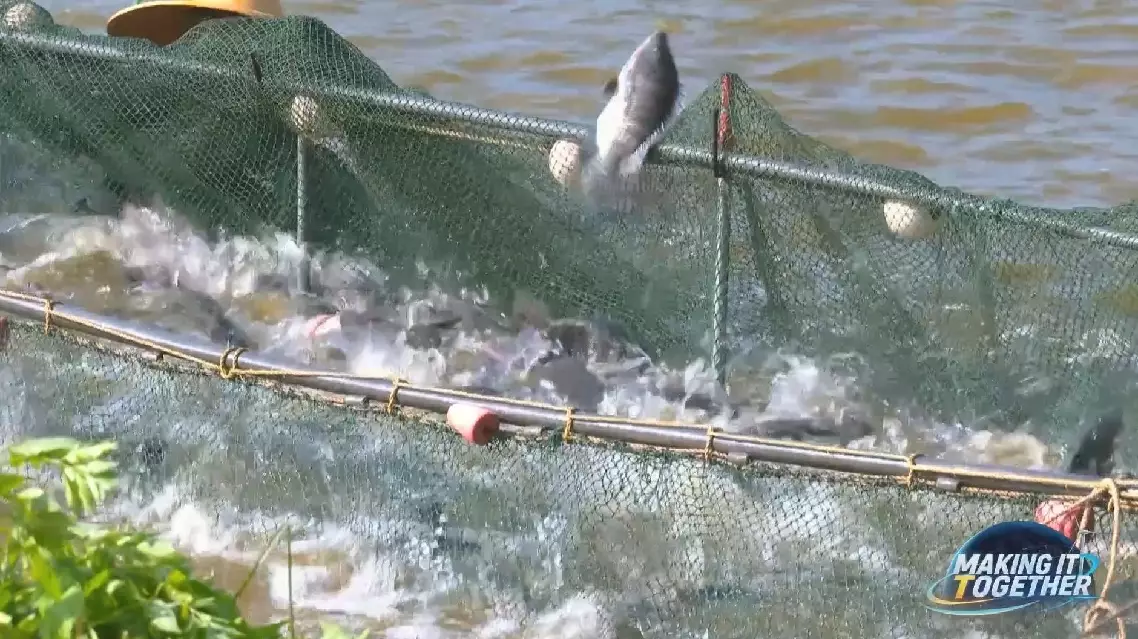
China’s tilapia ascends to dining tables of Asia-Pacific countries