High waves galloped forward as the Qiantang River tidal bores smashed dams in east China's Zhejiang Province on Thursday, presenting thrilling and gorgeous scenes that stunned countless onlookers.
Prime viewing season falls on the 18th day of the eighth month on the Chinese lunar calendar, which is Thursday this year, allowing crowds of holidaymakers to gather alongside the river.
In Huangwan Town, Haining City, the tides were seen approaching and reaching the Tashan Dam, the earliest dam built on the Qiantang River, with a history of over 200 years.
The Tashan Dam is a T-shaped embankment that spans over 600 meters. As the first long T-shaped dam on the Qiantang River, it is where the tidal bores begin to show their most impressive display.
Many T-shaped barriers are dotted on the banks of the river to reduce the massive force of the bores and protect nearby villages and farmlands.
The bores are a natural phenomenon caused by the gravitational pull from the Moon. For centuries, this natural wonder has amazed crowds, standing as a vivid testament to nature's untamable power.
Haining's Yanguan Town is famous for its line-shaped tides. On Thursday, a distant murmur built into a deafening roar as a bore swept through the 39-meter-tall Zhan'ao Pagoda on the Qiantang River bank.
The T-shaped Laoyancang Dam, located 12 kilometers west of Guanxi Town in Haining, is another popular site to witness this majestic scene.
The dam, measuring nine meters in height and 650 meters in length, offers crowds of visitors a view of back-flow bore tides and soaring tides.
The Qiantang River is known for the world's largest tidal bores, featuring four common types of the phenomenon: criss-cross, one-line, back-flow, and fish-scale bores.

Aerial footage captures spectacular tidal bores on Qiantang River
The Japanese society should do soul-searching regarding its history of aggression and adhere to the pacifist constitution, said Shiradori Hiroshi, a professor of the Hosei University, in an interview with China Central Television (CCTV) in Tokyo on April 30.
He said the government's recent move to discuss revising the three security documents deserve particular attention as the country's foreign and security policies have already witnessed major changes.
"People outside of the country hold that Japan's post-war image as a 'peace state' is now facing a major shift. Against the backdrop of tremendous changes in its foreign and security policies, the revision of the three security documents deserves particular attention. There lacks public debate in terms of the procedure, with policy changes decided unilaterally at Cabinet meetings. It is necessary to fully explain to the public as to whether such a practice is proper," said Hiroshi.
The Japanese government held its first expert panel meeting to discuss revisions to the three security documents at the Prime Minister's Office on April 27, local media reported.
Japan's current National Security Strategy and two related documents, formulated in 2022, were designed to cover the next 10 years, but the government led by Prime Minister Sanae Takaichi has decided to move up the timetable to accelerate the revision process.
Increasing defense spending is one of the key topics of the meeting, according to Kyodo News.
Hiroshi said this year marks the 80th anniversary of the opening of the International Military Tribunal for the Far East, or Tokyo Trials, and the Japanese society must do soul-searching regarding its history of aggression in WWII, when it brought enormous catastrophes on Asian countries.
"Eighty years have passed since the opening of the Tokyo Trials. Japan inflicted enormous suffering on Asian countries during WWII, which should serve as an opportunity for the soul-searching. It is exact on the basis of countless sacrifices that Japan's post-war pacifism and its identity as a 'peace state' took shape. On this 80th anniversary, it is necessary for Japan to re-examine and do soul-searching regarding its history," said Hiroshi.
The Japanese government's effort to revise the pacifist constitution is widely opposed by the public.
On Sunday, around 50,000 people gathered at Tokyo Rinkai Disaster Prevention Park, chanting slogans and holding banners against the government's push for constitutional revision and military expansion, the largest turnout of its kind in recent years.
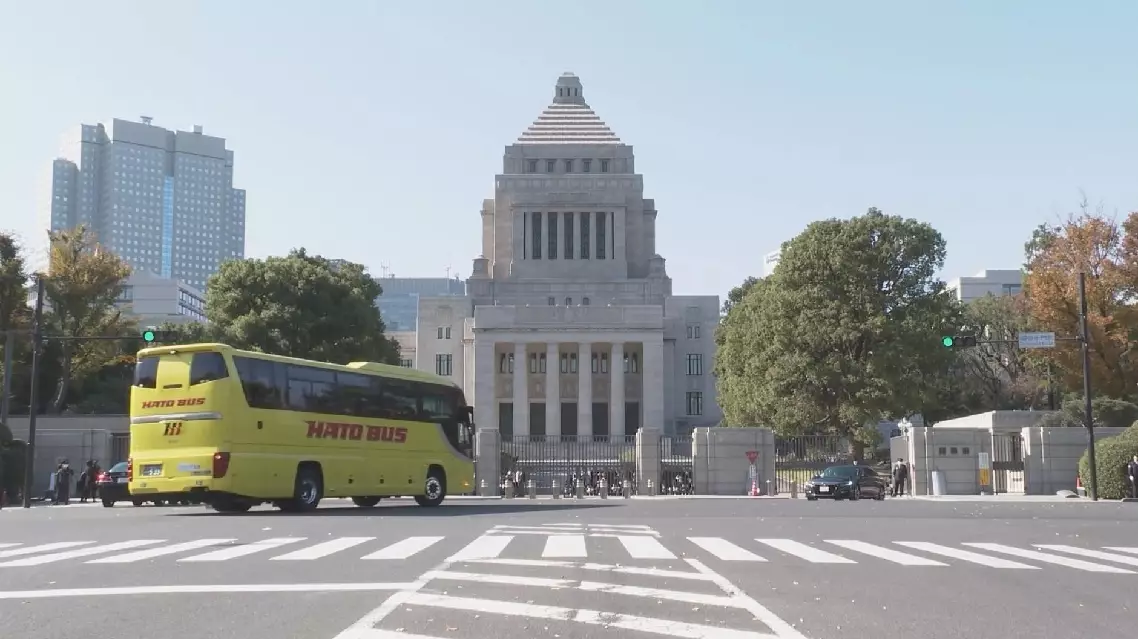
Japan should adhere to pacifist constitution: scholar