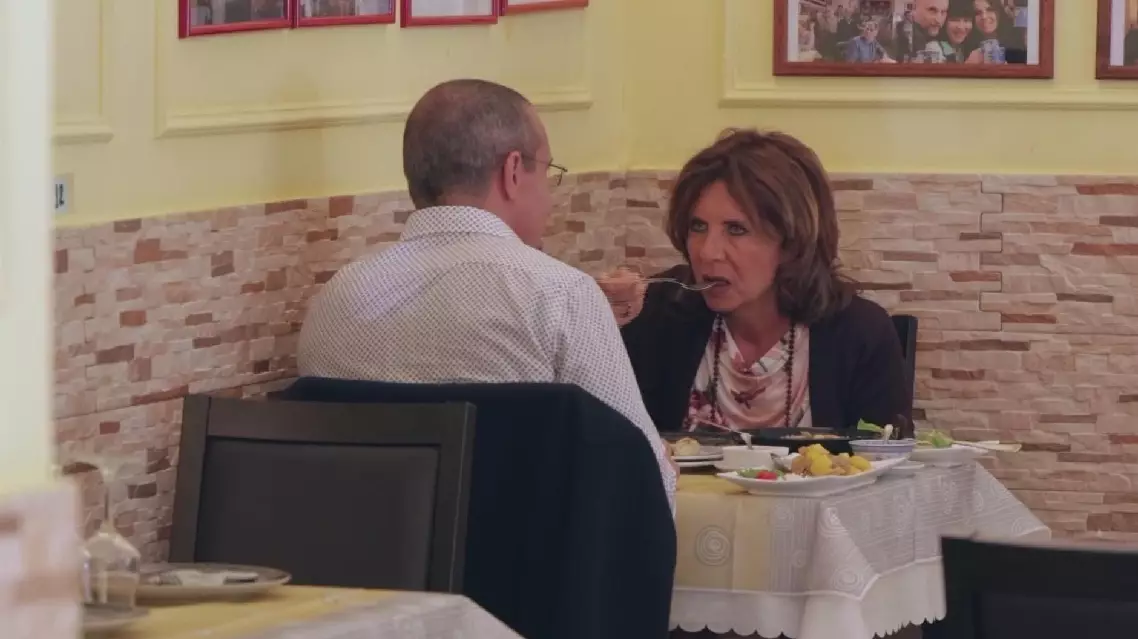
A restaurant in Rome's de facto Chinatown has established itself as the Italian capital's top destination for authentic Chinese food, attracting curious locals seeking to expand their cultural boundaries.
The dishes at Hang Zhou aim to introduce diners to the broad spectrum of Chinese cuisine. As a result, the restaurant pulls in even the most discerning of Italian palates.
"I was in China in 2004 and finally, thanks to my dear friend, I managed to find a restaurant here in Italy, where the food is as good as what I ate back then in Beijing, Shanghai, and other places," said a diner, Roberto Rossi.
"In Rome, the quality of Chinese restaurants isn't always great. In this place, the food is truly excellent, and I particularly like the combination of different sweet and sour flavors. In short, it's very different from Italian cuisine," another patron, Paula Mancini, said.
According to the restaurant's manager Daniele Ye, finding the dishes that best suit Italian customers has been a learning experience for everyone involved.
"Our menu was created together with our customers because we provide special menus for holidays, typical traditional dishes so that you can choose and taste it. And this created this link, this bridge between the typical Chinese flavors and the Italian palate," Ye said.
Chinese food became popular in Italy in the 1980s with the arrival of Chinese migrants, primarily from Zhejiang province. At the time, flavors were made more suitable for Western palates.
However, Italians' increasing openness to global cuisines brought with it a desire for more authentic experiences.
There are now more than 1,600 Chinese restaurants across Italy, many offering very authentic and spicy dishes.
Chef Gianni Catani has been working with Chinese cuisine for over 40 years, learning from some of China's top chefs. He is best known for his dumplings, having opened Italy's first Chinese ravioli restaurant 11 years ago and expanding across the country since then.
"I must say that they (Italian people) began to appreciate these flavors much more and especially important flavors, for example in our restaurant we make Pollo Kung Pao, a spicy chicken. We do eat a lot of chili; we make soup spaghetti, handmade spaghetti, so many things; Peking duck, another roast with very important flavors that until a few years ago were completely unknown, but now they're very popular," said Catani.
The growing popularity of Chinese food, not only in the capital but in other smaller cities and towns across Italy, reflects a broader respect and appreciation for rich cultural exchanges between these two food-loving civilizations.
Authentic dining experiences inspire love of Chinese cuisine in Rome