Chinese stocks closed higher on Thursday, with the benchmark Shanghai Composite Index up 1.32 percent to 3,933.97 points.
The Shenzhen Component Index closed 1.47 percent higher at 13,725.56 points.
The combined turnover of these two indices stood at 2.65 trillion yuan (about 372.7 billion U.S. dollars), up from 2.18 trillion yuan (306.1 billion U.S. dollars) on the previous trading day.
Shares related to nonferrous metals, nuclear power and rare-earth permanent magnets led the gains, while stocks related to cinema chains, tourism and education suffered major losses.
The ChiNext Index, tracking China's Nasdaq-style board of growth enterprises, gained 0.73 percent to close at 3,261.82 points on Thursday.
Market analyst Wang Yin highlighted the key drivers behind Thursday's strong market rebound in her recap, noting investor enthusiasm in strategic sectors and caution in consumer-related stocks.
"China stocks climbed in today's trading session, boosted by strong gains in semiconductor, gold, and AI-related shares as investors returned from the eight-day National Day holiday. The blue-chip CSI 300 index gained 1.47 percent. The Shanghai Composite Index added 1.32 percent, up above the 3,900-mark for the first time since August 2015, while the Shenzhen Component Index gained 1.47 percent. Shares of Chinese gold miners jumped, tracking a gain in bullion prices that hit a record high on Wednesday, while onshore nonferrous metal stocks rallied more than 8 percent," said the analyst.
"Investors have turned to gold as a safe haven amid an extended U.S. government shutdown that could complicate the Federal Reserve's policy decisions. The recent euphoria around gold has also boosted shares of other metals and mining companies, as Ganfeng Lithium and Jiangxi Copper both increased 10 percent. Also in focus today, the CSI Rare Earth index jumped 6.8 percent after China tightened its rare earth export controls on Thursday, expanding restrictions on processing technology and unauthorized overseas cooperation. On the flipside, despite a reported 11.5 percent year-on-year increase in holiday travel, consumer staple and liquor shares fell 0.15 percent and 1.1 percent each," she said.
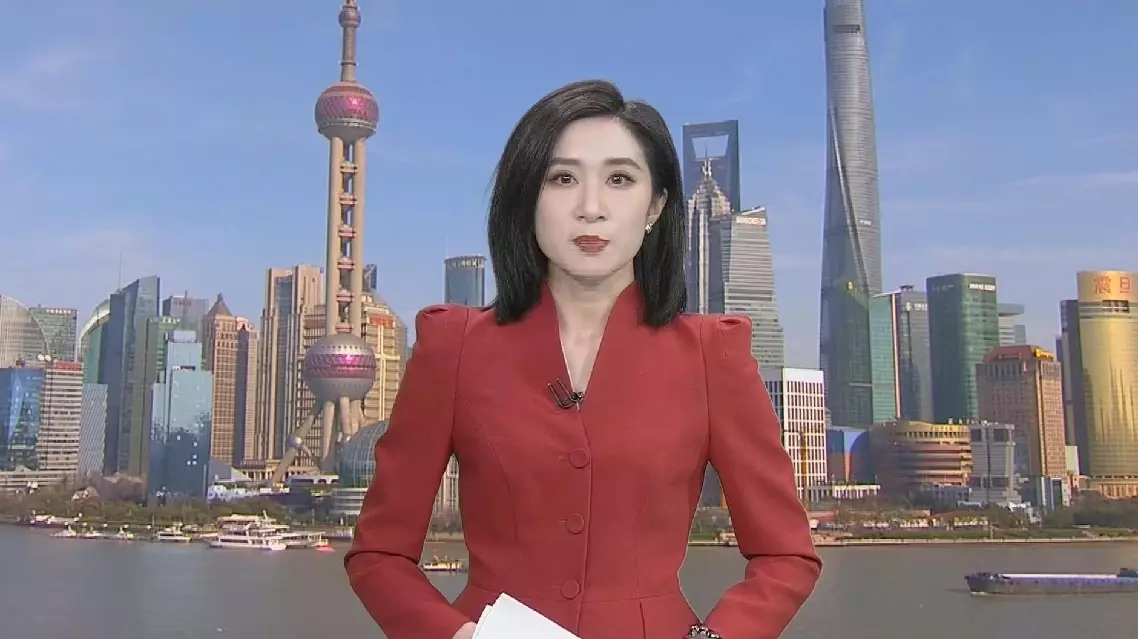
Analyst recaps Chinese stock market performance on Thursday
Geoeconomic confrontation is the leading short-term global threat in 2026, the World Economic Forum (WEF) warned in its Global Risks Report 2026 released on Wednesday ahead of its annual meeting in Davos, Switzerland.
The report ranks geoeconomic confrontation as the top risk for 2026, followed by interstate conflict, extreme weather, societal polarization, and misinformation and disinformation. It also identifies geoeconomic confrontation as the most severe risk over the next two years.
"I think if there is to be one key takeaway from the report, it's that we are entering an age of competition and this new competitive order is then shaping current global risks, but it is also shaping and to some extent hindering our ability to actually cope with them. That's really the key takeaway. If we take a look at, the number one risk both for 2026 and two years out, it's dual economic confrontation. But then if we look at the risks 10 years out. It's really the climate and environment related risks. All of these things require global cooperation and that's where we're seeing a big backsliding in this new age of competition," said Saadia Zahidi, managing director of the WEF.
Economic risks showed the largest increase in the two-year outlook, with concerns over economic downturns, inflation, rising debt and potential asset bubbles intensifying amid geoeconomic tensions, the report said.
Environmental risks remain the most severe overall, led by extreme weather, biodiversity loss and critical changes to Earth systems. The report noted that three-quarters of respondents expect a turbulent environmental outlook.
Risks related to adverse outcomes of artificial intelligence rose sharply, climbing from 30th in the two-year horizon to fifth in the 10-year outlook, reflecting concerns over impacts on labor markets, society and security.
The 21st edition of the report draws on views from more than 1,300 experts, policymakers and industry leaders.
The WEF's annual meeting will be held in Davos from Jan 19 to 23 and draw nearly 3,000 guests from more than 130 countries and regions to participate.
"So overall, we are starting to see this shift away from what have traditionally been the ways in which people have been able to cooperate. Now, that is not to say that any of this is a foregone conclusion. And I think that's a really important message around the risks report. None of this is set in stone. All of this is in the hands of leaders. Whether they choose to cooperate and invest in resilience or whether they do not. So that's really what we'll be focused on next week in Davos bringing leaders together under this overall theme of 'a spirit of dialogue' and trying to reestablish relationships, cooperation and trust. That's the fundamental," said Zahidi.
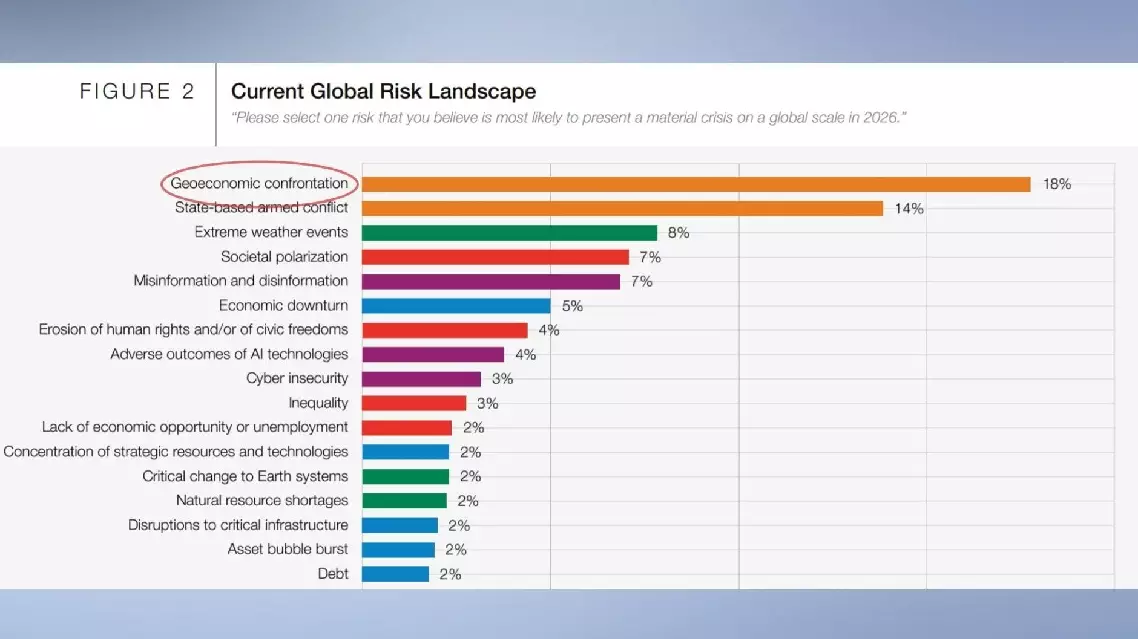
WEF warns of rising geoeconomic risks in 2026