- Leading Scientists from China, Japan and South Korea Convene to Drive Organoid Research and Commercialization
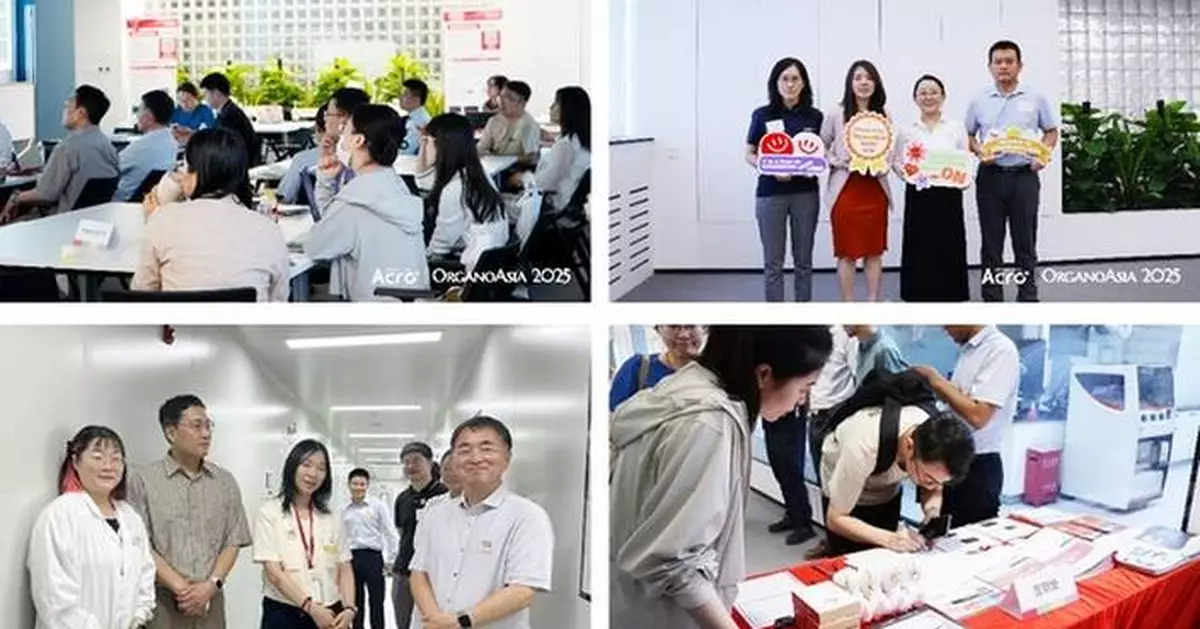
TOKYO, Oct. 10, 2025 /PRNewswire/ -- ACROBiosystems, together with Leica Biosystems, Molecular Devices, and Leica Microsystems, hosted the OrganoAsia 2025-The Frontier of Organoid Science in Beijing. The hybrid-format conference featured an in-person opening session alongside a live online stream, drawing more than 500 experts and researchers—primarily from China, Japan, and South Korea, with additional global attendees—to examine recent progress and future directions for organoid technology in precision medicine, drug discovery, and regenerative medicine.
Expert Perspectives: Broad-Based Progress in Research and Industrial Applications
The conference gathered leading specialists such as Rosanna Zhang, Vice President of ACROBiosystems; Li Liang, Associate Professor at the Southern University of Science and Technology (SUSTech); Professor Ki-Suk Kim of the Korean Institute of Toxicology; Associate Professor Na Jie from Tsinghua University; and Associate Professor Yoh-Ichi Tagawa from the Institute of Science Tokyo. They presented the latest research advances across areas including disease modeling, drug screening, and toxicology assessment.
Rosanna Zhang, Vice President of ACROBiosystems, discussed innovative uses of organoids in drug screening and toxicity testing. She noted that as global regulatory policies increasingly encourage alternatives to animal testing—guided by the 3R principles—organoid technology is transforming drug screening and safety evaluation methods by closely mimicking the human physiological microenvironment. ACROBiosystems has introduced a series of ready-to-use organoid products for the heart, brain, liver, intestine, lung, and other major organ types, along with disease modeling, and testing services. Zhang also shared that the company intends to broaden its range of organ models to aid high-throughput screening and mechanistic research for novel drug development. Through its integrated Organoid Toolbox, ACROBiosystems provides a complete solution to help researchers more effectively conduct efficacy screening, toxicity evaluation, and mechanism exploration.
Li Liang's team at the SUSTech School of Medicine established a biobank of patient-derived organoids that accurately recapitulates organ microenvironments. During the COVID-19 pandemic, the group used a respiratory organoid platform to identify tissue tropism differences among SARS-CoV-2 variants—for example, the Delta variant caused pneumonia, while Omicron BA.2 mainly infected the upper respiratory tract. Through high-throughput screening, the team also discovered a horse-derived polyclonal antibody that later demonstrated effectiveness in neutralizing multiple variants. In addition, the researchers combined organoids with microfluidic technology to create a dual-channel "organ-on-a-chip", which models gut–microbiome interactions by separating hypoxic and oxygen-rich channels, overcoming constraints of conventional co-culture systems. This work has been extended to studies of viral encephalitis mechanisms—such as brain injury caused by Dengue and Zika viruses—precision oncology drug screening using patient-derived tumor organoid (PDTO) models, and evaluation of inhaled vaccine delivery. The team is now scaling up efforts to automate the production of up to the scale of 10^5 organoids for transplantation, creating new opportunities for regenerative medicine.
Professor Ki-Suk Kim, Principal Researcher at the Korean Institute of Toxicology, and his colleagues focused on using stem cell–based 3D organoid models for toxicology assessment. As drug development moves toward non-animal testing worldwide, these 3D organoid systems help improve the precision and efficiency of drug safety evaluation. For cardiotoxicity testing, the team engineered heart organoids that mimic the structure and function of the human heart. By integrating multi-ion channel detection with microelectrode array (MEA) technology, they can better assess a drug's impact on cardiac electrophysiology. In neurodevelopmental toxicity studies, the group used iPSC-derived human brain organoids to model brain development, revealing how the antipsychotic drug haloperidol impairs neurodevelopment by inhibiting the Notch1 signaling pathway. They also identified compounds that reduce this toxicity. Professor Kim stressed that organoid technology is set to become a central component of drug safety evaluation in the new era of animal-free testing, enabling more efficient and targeted drug development.
Associate Professor Na Jie's team at Tsinghua University directed human pluripotent stem cells to differentiate into cardiomyocytes, endothelial cells, smooth muscle cells, and macrophages. Using 3D printing, they produced vascular organoids with greater maturity and improved capacity to repair ischemic tissue. Furthermore, the research team developed a co-culture system where macrophages were integrated with heart organoids, demonstrating significant improvements in cardiomyocyte maturation and contractility. This platform established a physiologically relevant model for screening cardiotoxicity risks of emerging therapeutics, such as antibody-based drugs. In parallel, they generated Vascularized and Immune cell-infiltrated Cerebral Organoids (VICO). When transplanted to ischemic stroke models, VICO promoted cerebral perfusion recovery and functional neurological outcomes. These advances offer new pathways for modeling Cardio-cerebrovascular diseases, advancing regenerative medicine, and supporting precision drug assessment.
Associate Professor Yoh-Ichi Tagawa's group at the Institute of Science Tokyo centered its work on a microfluidic gut-on-a-chip co-culture system for modeling Inflammatory Bowel Disease (IBD). By co-culturing human intestinal epithelial cells with gut microbiota, the team recreated key aspects of the intestinal microenvironment, overcoming rapid bacterial overgrowth to achieve stable and reproducible in vitro co-culture. Using this platform, they developed an IBD induction model that revealed interactions between gut microbiota and immune cells, along with shifts in inflammatory factor expression, and confirmed the therapeutic effect of the TNF-α inhibitor TPCA-1. This gut-on-a-chip system can serve as an alternative to conventional animal testing for disease mechanism studies and drug screening, with strong potential for scaling. Professor Tagawa indicated that future efforts will aim to combine multiple organ chips into more complex human simulation systems, offering highly representative, high-throughput platforms for disease research and drug discovery.
Roundtable Discussion: Focus Turns to Standardization and Industrialization
At the roundtable forum, participants examined issues including quality control, batch-to-batch consistency, and the creation of standardization frameworks for organoid research. Experts agreed on the importance of increasing data sharing, harmonizing operational protocols, gaining regulatory acceptance for organoid models in drug development and registration, and assessing the scalability of integrated "human-on-a-chip" systems.
Looking ahead, attendees emphasized the need to move forward with organoid standardization, share data and methodologies, strengthen dialogue with regulators to facilitate the use of organoid data in drug development and approval processes, and investigate the "human-on-a-chip" concept by linking multiple organ models for consistent and reproducible testing. Experts also pointed out that generating highly mature organoids comparable to adult human tissues remains a key challenge, requiring a balanced approach between advancing technical standards and carefully selecting appropriate developmental stages.
Future Collaboration: ACROBiosystems Strengthens Asia-Pacific Ecosystem, Bridging Research and Industry
The successful OrganoAsia 2025 conference enabled ACROBiosystems to help drive international scientific cooperation, establishing a strong foundation for a collaborative network that spans organoid research, development and manufacturing. This effort supports the Asia-Pacific region's transition toward deeper integration of organoid science and industrial use. During the event, ACROBiosystems reached multiple collaboration agreements in the organoid field with participating institutions. The company will continue to work with global partners to broaden organoid technology's role in drug discovery, precision medicine and other advanced fields. ACROBiosystems also invites interested organizations to help grow OrganoAsia into a leading international platform for exchange and partnership.
ACROBiosystems Group
ACROBiosystems Group, founded in 2010 and listed in 2021, is a biotechnology company with a mission to support the global biopharmaceutical and healthcare industries by providing products and innovative business models. The company operates globally and maintains offices, R&D centers, and production facilities in more than 10 cities within the United States, Switzerland, the United Kingdom and Germany. ACROBiosystems Group has established long-term partnerships with the world's top pharmaceutical firms, including Pfizer, Novartis, and Johnson & Johnson, and leading academic institutions. The company comprises several subsidiaries such as ACROBiosystems, bioSeedin, Condense Capital, and ACRODiagnostics.
Through the continuous development of new technologies and products, ACROBiosystems Group creates value for the global pharmaceutical industry and actively empowers its partners. The company is dedicated to accelerating the drug development process, including targeted therapies, immunotherapies, and their clinical applications, and contributes to global health.
** The press release content is from PR Newswire. Bastille Post is not involved in its creation. **
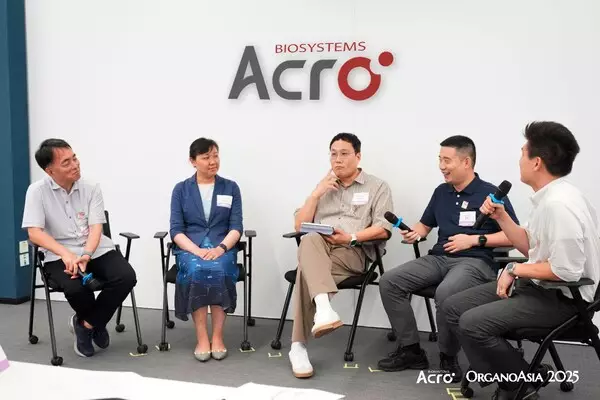
ACROBiosystems and Partners Conclude OrganoAsia 2025

ACROBiosystems and Partners Conclude OrganoAsia 2025
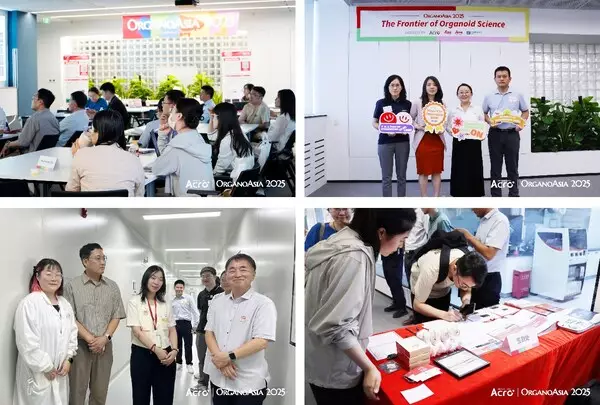
ACROBiosystems and Partners Conclude OrganoAsia 2025