Northwest China's Xinjiang Uygur Autonomous Region is harnessing its stunning natural landscapes and rich cultural heritage to accelerate tourism development.
During the 14th Five-Year Plan period (2021–2025), Xinjiang's tourist arrivals surged from 191 million in 2021 to over 300 million in 2024, while total tourism revenue climbed from 141.569 billion yuan (about 19.86 billion U.S. dollars) to more than 350 billion yuan (about 49.10 billion U.S. dollars). These figures underscore the robust vitality of the region's cultural and tourism sector.
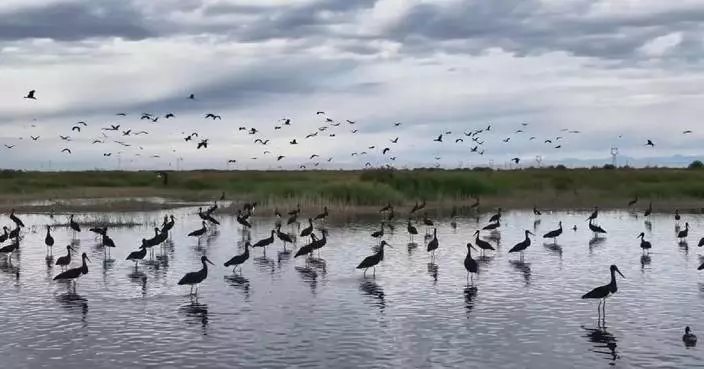
In Bohu County of the Bayingolin Mongolian Autonomous Prefecture in Xinjiang, the Bosten Lake, China's largest inland freshwater lake, capitalizes its breathtaking natural scenery to develop the tourism industry. Visitors can now enjoy a range of water-based activities, including boat tours, birdwatching, and water sports such as kayaking and yacht racing.
"The natural scenery is breathtaking, offering a vast visual sight. I am very happy, really enjoying myself," said Hou Qianqian, a visitor from east China's Shandong Province.
"So far this year, we have received over 5 million tourist visits, up 27 percent year on year. Our tourism data show that our tourists not only come from surrounding areas, but also from all parts of China," said Aliremi Yilamu, deputy director of Bohu County Culture and Tourism Bureau.
Beyond its stunning natural landscapes, Xinjiang also boasts a rich cultural heritage, with its ancient towns drawing visitors from far and wide.
In Moyu County of Hotan Prefecture, an old town on the ancient Silk Road has revitalized after renovation.
Over the past five years, the local authorities renovated the residential areas and infrastructure of the Moyu ancient town, and the refreshed old town opened to the public in May.
Abulikemu Dana, a local resident, opened a painting studio in the Moyu ancient town. He has created over 7,000 works depicting great changes in his hometown.
"He has not undergone formal training and he learned to paint out of personal interest. The main subject in his painting is the poplar tree, as it symbolizes the optimism of the Hotan people in resisting sandstorms and building up their lives," said Muhaibaiti Maihemuti, daughter-in-law of Abulikemu Dana.
"During the renovation process, we follow the principle of restoring while preserving the original state, maintaining its authentic local characteristics," said Dilina Simayili, a staff member of the Moyu Culture and Tourism Bureau.
Today, Xinjiang boasts 18 national-level 5A-rated tourist sites, ranking the third nationwide, which have all become must-visit destinations for visitors from home and abroad.

Northwest China's Xinjiang leverages natural, cultural resources to develop tourism industry
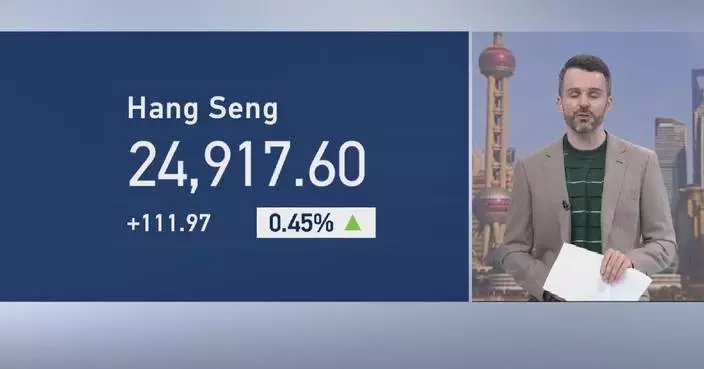
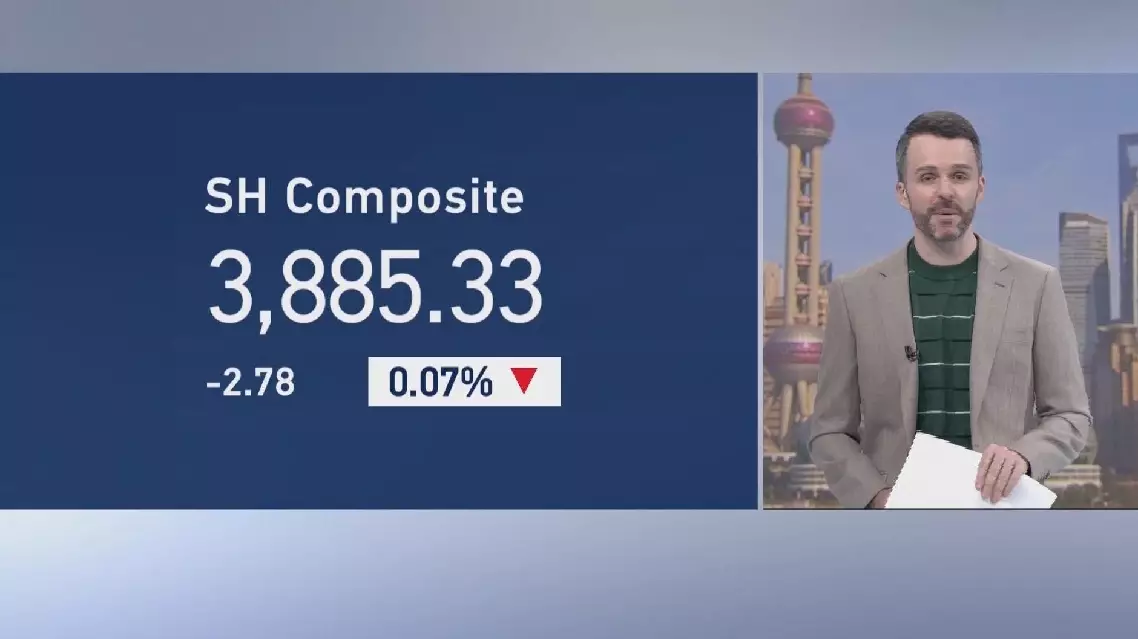
China's benchmark Shanghai Composite Index closed almost flat on Monday amid a wide sell-off of artificial intelligence-related stocks triggered by calls from top executives of major U.S. AI developers to slow the pace of AI development, according to Timothy Pope, an analyst for China Global Television Network (CGTN).
The Shanghai Composite Index dropped 0.07 percent to 3,885.33 points on Monday, while the Shenzhen Component Index closed 0.64 percent lower at 13,384.57 points.
The ChiNext Index, tracking China's Nasdaq-style board of growth enterprises, lost 1.10 percent to close at 3,285.58 points Monday. The STAR Composite Index, which reflects the performance of stocks on China's sci-tech innovation board, closed 0.35 percent lower at 1,811.23 points.
Pope noted that despite the overall resilience of major indexes, AI hardware stocks were among the biggest losers on the day.
"The Chinese mainland markets proved pretty resilient today actually as global AI stocks wobbled. We saw oil prices jump and interest-rate hike bets rising as well. The Shanghai Composite Index ended the session pretty much flat, while the Shenzhen Component [Index] lost a little more than half of 1 percent. AI stocks around the world sank today after the Anthropic CEO Dario Amodei published an essay calling for a slowdown in the development of frontier AI models. That was also backed up by OpenAI boss Sam Altman and some other industry leaders as well. But critically for Chinese companies, Amodei also called for tighter restrictions on exports of advanced AI chips and semiconductor equipment to China. We saw AI shares on the A-share have been caught in a bit of a rotation cycle already lately, with investors switching in and out pretty aggressively from these AI hardware stocks. So that added some extra momentum to today's move out of that sector. They were falling and were one of the weaker sectors today," said Pope.
The analyst said stocks of listed big state-own banks saw an injection of capitals from investors amid AI sell-off.
"Investors took some shelter in financial stocks. The big state-owned banks were once again helping to support the Shanghai index and investors were also waiting for the latest bank-lending data, although that wasn't released before the close of the markets today. There was also a small rebalance in the STAR 50 today. A handful of new companies joined the high-tech index, but that didn't fundamentally change things for the pressured tech sector," he said.
Pope highlighted that Chinese investors will witness a slew of data release in the rest of the week, helping them to have a more comprehensive grasp of the status of the country's domestic demand.
"For the week ahead in China, it's going to be very data-heavy. Tomorrow we have a big data dump including fixed-asset investment, property data, retail sales and industrial production and that's really going to give the market some clues about the state of domestic demand after those very strong trade figures that we saw last week," he said.
Chinese stocks resilient as calls for AI slowdown trigger sell-off: analyst