Tens of thousands of Palestinians in Gaza were starting to walk north to return to their homes Friday, after the Israeli military said the ceasefire agreement with Hamas came into effect at noon local time and that its soldiers were withdrawing to the agreed-upon deployment lines. Palestinians had reported heavy shelling Friday morning in northern Gaza.
Israeli Prime Minister Benjamin Netanyahu’s office said early Friday that his Cabinet approved U.S. President Donald Trump’s plan for a ceasefire, the release of all remaining hostages held by Hamas and of many Palestinian prisoners held by Israel. Those releases are expected to begin Sunday or Monday.
Click to Gallery

A displaced Palestinian woman carries her baby as she walks with others along the coastal road near Wadi Gaza in the central Gaza Strip, heading toward Gaza City, Friday, Oct. 10, 2025, after Israel and Hamas agreed to a pause in their war and the release of the remaining hostages. (AP Photo/Abdel Kareem Hana)
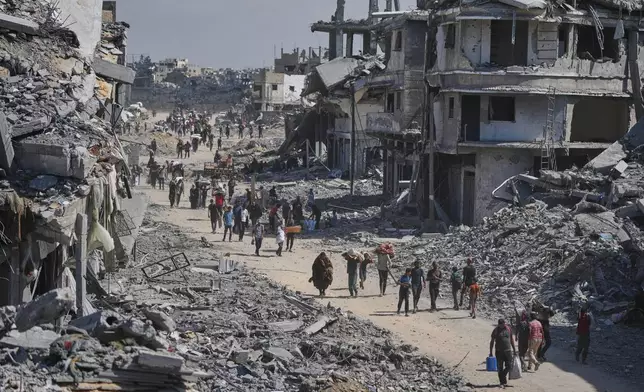
Displaced Palestinians walk with their belongings past destroyed buildings as they return to their homes in Khan Younis, southern Gaza Strip, Friday, Oct. 10, 2025, after Israel and Hamas agreed to a pause in their war and the release of the remaining hostages. (AP Photo/Jehad Alshrafi)
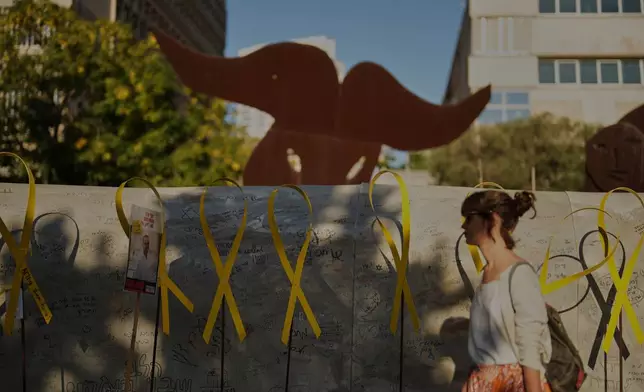
A person walks past an installation simulating a tunnel in Gaza in an act of solidarity with hostages believed to be held underground by Hamas during the Jewish holiday of Sukkot, at a plaza known as hostages square, in Tel Aviv, Israel, Friday, Oct. 10, 2025. (AP Photo/Francisco Seco)
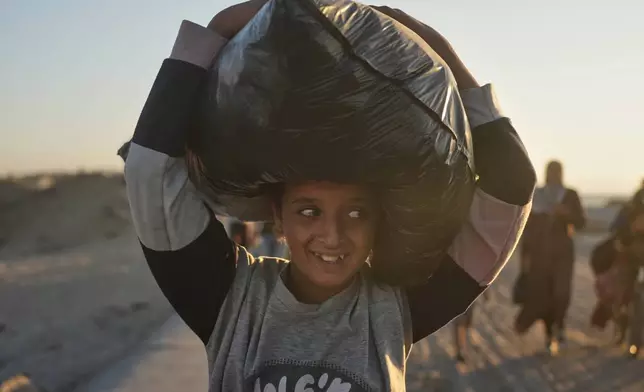
A displaced Palestinian girl carries a bag on her head as she walks along the coastal road near Wadi Gaza in the central Gaza Strip, heading toward Gaza City, Friday, Oct. 10, 2025, after Israel and Hamas agreed to a pause in their war and the release of the remaining hostages. (AP Photo/Abdel Kareem Hana)
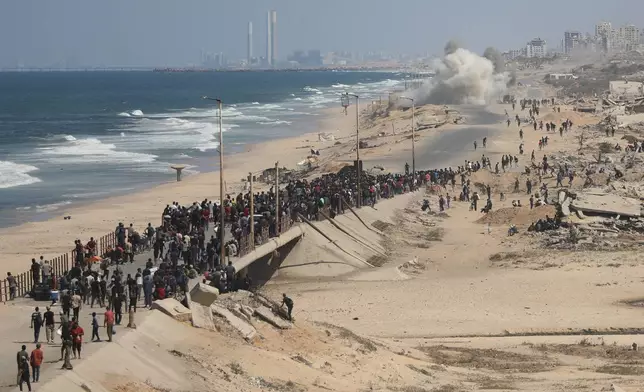
Displaced Palestinians walk along the coastal road near Wadi Gaza in the central Gaza Strip, moving toward northern Gaza, Friday, Oct. 10, 2025, after Israel and Hamas have agreed to a pause in their war and the release of the remaining hostages. (AP Photo/Yousef Al Zanoun)
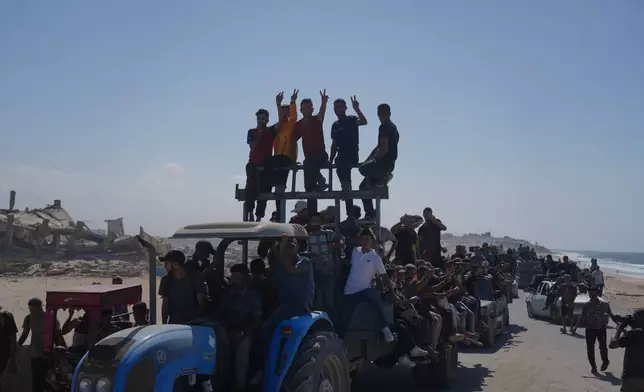
Displaced Palestinians ride on tractors and vehicles loaded with people and belongings along the coastal road near Wadi Gaza in the central Gaza Strip, moving toward Gaza City, Friday, Oct. 10, 2025, after Israel and Hamas agreed to a pause in their war and the release of the remaining hostages. (AP Photo/Abdel Kareem Hana)
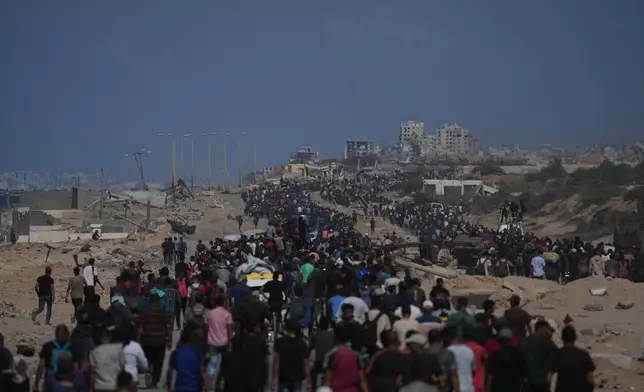
Displaced Palestinians walk with their belongings along the coastal road near Wadi Gaza in the central Gaza Strip, moving toward Gaza City, Friday, Oct. 10, 2025, after Israel and Hamas have agreed to a pause in their war and the release of the remaining hostages. (AP Photo/Abdel Kareem Hana)
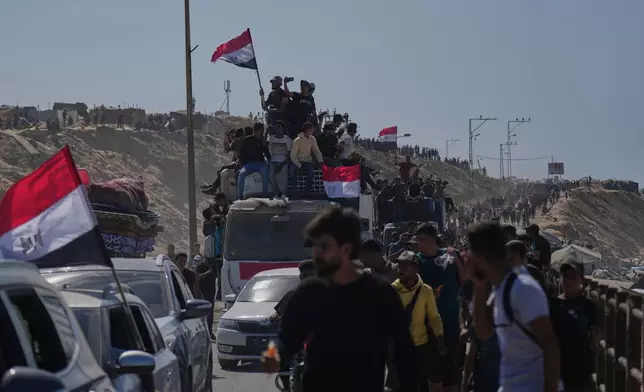
Displaced Palestinians ride on vehicles and wave Egyptian flags as they move along the coastal road near Wadi Gaza in the central Gaza Strip, heading toward Gaza City, Friday, Oct. 10, 2025, after Israel and Hamas agreed to a pause in their war and the release of the remaining hostages. (AP Photo/Abdel Kareem Hana)
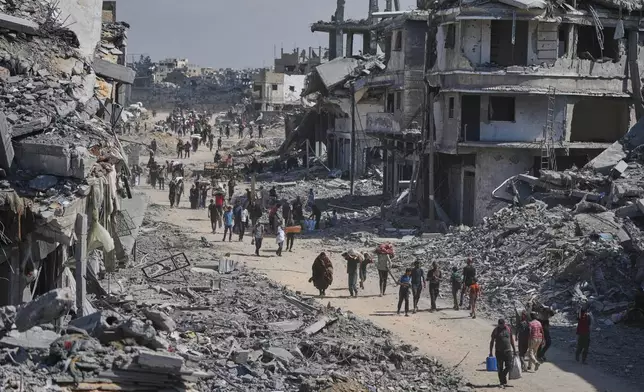
Displaced Palestinians walk with their belongings past destroyed buildings as they return to their homes in Khan Younis, southern Gaza Strip, Friday, Oct. 10, 2025, after Israel and Hamas agreed to a pause in their war and the release of the remaining hostages. (AP Photo/Jehad Alshrafi)
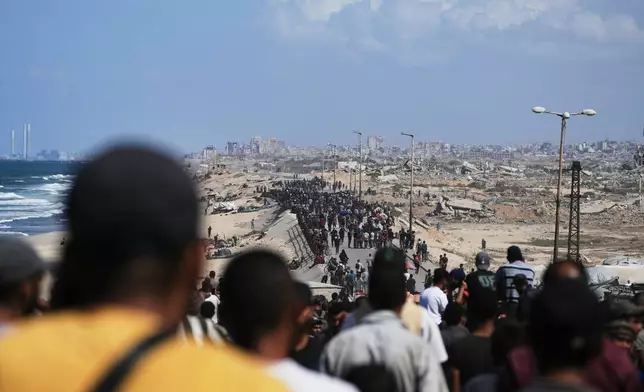
Displaced Palestinians walk along the coastal road near Wadi Gaza in the central Gaza Strip, moving toward northern Gaza, Friday, Oct. 10, 2025, after Israel and Hamas have agreed to a pause in their war and the release of the remaining hostages. (AP Photo/Abdel Kareem Hana)
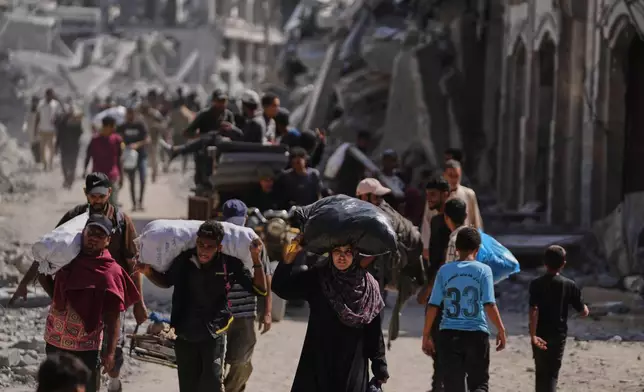
Displaced Palestinians walk with their belongings past destroyed buildings as they return to their homes in Khan Younis, southern Gaza Strip, Friday, Oct. 10, 2025, after Israel and Hamas agreed to a pause in their war and the release of the remaining hostages. (AP Photo/Jehad Alshrafi)

Einav Zangauker, center, mother of Matan Zangauker, who is being held hostage by Hamas, reacts as she and others celebrate following the announcement that Israel and Hamas have agreed to the first phase of a peace plan to pause the fighting, at a plaza known as Hostages Square in Tel Aviv, Israel, Thursday, Oct. 9, 2025. (AP Photo/Ohad Zwigenberg)

People gather to celebrate following the announcement that Israel and Hamas have agreed to the first phase of a peace plan to pause the fighting, at a plaza known as Hostages Square in Tel Aviv, Israel, Thursday, Oct. 9, 2025. (AP Photo/Emilio Morenatti)
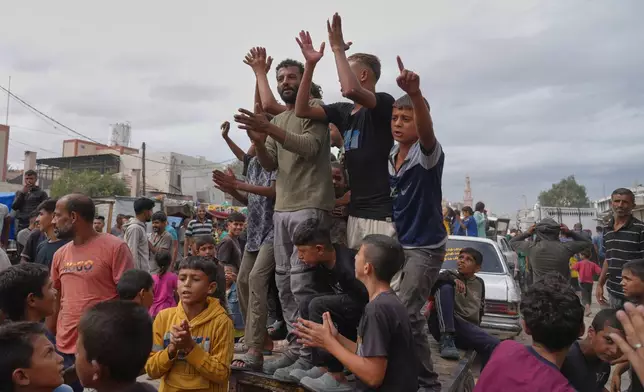
Palestinians celebrate following the announcement that Israel and Hamas have agreed to the first phase of a peace plan to pause the fighting, in Khan Younis, southern Gaza Strip, Thursday, Oct. 9, 2025. Celebrations remain limited, as relief is mixed with mourning and concern for what comes next. (AP Photo/Jehad Alshrafi)
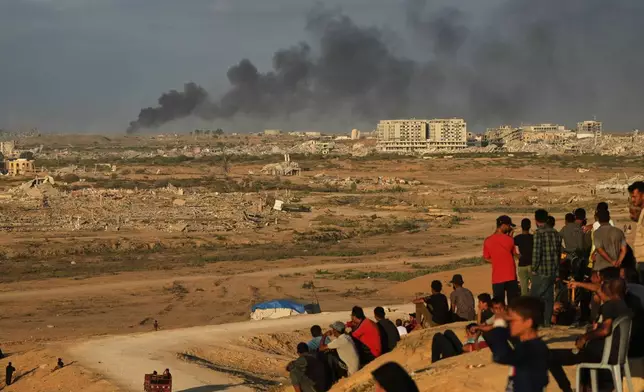
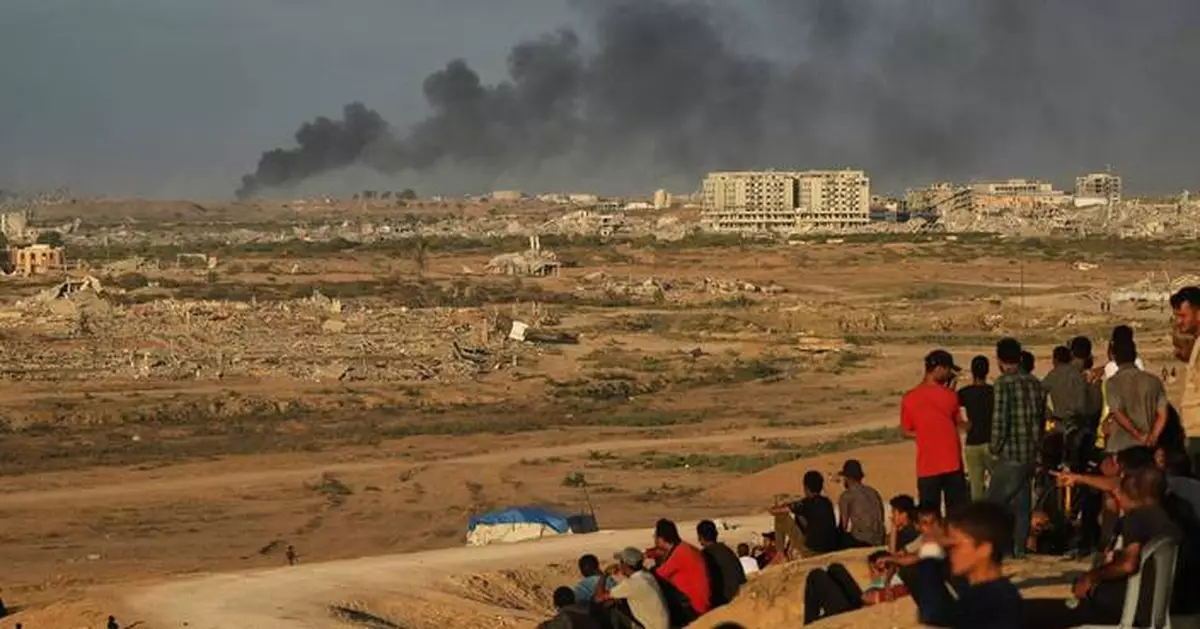
Displaced Palestinians watch smoke rise after Israeli military strikes as they gather on the coastal road near Wadi Gaza, in the central Gaza Strip, Thursday, Oct. 9, 2025. (AP Photo/Abdel Kareem Hana)
Although the broader ceasefire plan leaves many questions unanswered, including whether and how Hamas will disarm and who will govern Gaza, the pause in fighting marks a key step toward ending the devastating two-year war and will allow more food, medicine and other aid into Gaza.
Here's the latest:
A senior Hamas official said Friday that the group was in contact with mediators about several Palestinian leaders who Israel has refused to free under the U.S.-brokered deal, including Marwan Barghouti and Ahmad Saadat.
“The movement (Hamas) is insisting on their release and negotiations are still ongoing,” Mousa Abu Marzouk told the Qatar-based Al-Jazeera TV network.
He said Israel turned down several other proposed names. When asked if those included Abdullah Barghouti, Hassan Salama, Ibrahim Hamed and Abbas al-Sayyed, he replied, “Yes. These are the most prominent names that the occupation always rejects.”
Marwan Barghouti, 66, is widely popular and considered a potentially unifying Palestinian political figure. He’s serving five life sentences in an Israeli jail.
As the U.N. prepares for resumption of aid to Gaza this weekend, officials said Friday that they need Israeli officials to open additional border crossings, provide safe movement for aid workers and civilians who are returning to parts of the strip that had just recently been under heavy firing.
Stephane Dujarric, the U.N. spokesperson, told reporters that humanitarian partners have already begun to deploy an ambulance as well as fuel, medical items and other critical items through the Kerem Shalom crossing, where they also offloaded incoming supplies to replenish stocks. He added that the ceasefire announcement has “generated a new hope for relief at last.”
U.N. officials and Israeli authorities have been engaging in a series of discussions and negotiations in Jerusalem over the last 24 hours about the volume of aid humanitarians can bring in and through which entry points.
The International Criminal Court is seeking the arrest of Netanyahu and his former defense minister for allegedly using starvation as a method of war.
A U.N. official says Israel has given the green light for United Nations authorities to begin delivering aid into Gaza starting Sunday.
The official was granted anonymity to discuss details not yet made public.
The aid will include the 170,000 metric tons that have already been positioned in the pipeline in neighboring countries like Jordan and Egypt as humanitarian officials awaited permission from Israeli forces to restart their work.
In recent months, the U.N. and its humanitarian partners have only been able to deliver 20% of the aid needed to address the dire situation in the Gaza Strip, according to U.N. humanitarian chief Tom Fletcher.
Following the announcement Wednesday of a ceasefire deal, he said Thursday that all entry points to Gaza must be opened to deliver aid at “a much, much greater scale.”
—By Farnoush Amiri
In a joint statement Friday, the leaders of France, Germany and the U.K. paid tribute to President Donald Trump’s leadership on the ceasefire plan, the planned release of hostages and the resumption of humanitarian aid to Gaza.
They also praised the diplomatic efforts of the mediators, Egypt, Qatar and Turkey.
“It is now of utmost importance that all parties implement their obligations in full and without delay,” the statement said. The countries added that the U.N. Security Council should give its full backing to the plan and support its implementation.
Russian President Vladimir Putin praised U.S. President Donald Trump for helping broker a ceasefire deal for Gaza and said that Russia stands ready to help implement it.
Putin said that if the agreement is successfully implemented, it would mark a major achievement and a “historic event.”
He noted that Russia has close ties with the Palestinian authority and could help carry out the deal if asked.
“Bearing in mind the level of trust that exists between Russia and our Arab friends, and especially Palestinian friends, of course, I believe our participation could be in demand,” Putin told reporters on a trip to Tajikistan.
Putin noted that he decided to postpone a Russia-Arab summit in Moscow that had been scheduled for Oct. 15 in order “not to interfere with the process that has been initiated by President Trump.”
Israeli Prime Minister Benjamin Netanyahu, who has nominated President Donald Trump for the Nobel Peace Prize, has tweeted that Trump “deserves it.”
“The Nobel Committee talks about peace. President @realDonaldTrump makes it happen. The facts speak for themselves. President #Trump deserves it,” he wrote on X on Friday.
Trump was passed over for the prestigious award on Friday despite jockeying from his fellow Republicans, various world leaders and — most vocally — himself.
Venezuelan opposition leader María Corina Machado was awarded the prize.
A relative of one of the Israeli hostages believed to have died in captivity says the family hopes his body will be returned for burial as part of the Gaza ceasefire deal, even as the pain and disappointment of the past two years temper their optimism.
Stephen Brisley’s brother, Yossi, is believed to have died in an airstrike in January 2024. His sister, Lianne Sharabi, and her two teenage daughters were killed when Hamas militants attacked Israel on Oct. 7, 2023.
“It’s a measured sense of hope in all hostage families,’’ Brisley told The Associated Press from his home in South Wales.
“It’s a guarded optimism because it’s the kind of optimism that’s born out of heartbreaking experience. We hold our hope lightly because we’ve had our hopes dashed before,” he said. “It still feels like a long way between the announcement of the deal and actually getting Yossi’s body back to bury him.’’
Steve Witkoff, Trump’s top negotiator on the Gaza conflict, said the U.S. military confirmed that Israeli soldiers have pulled back as part of the ceasefire agreement on Friday.
“The 72 hour period to release the hostages has begun,” Witkoff wrote on social media at 7 a.m. ET.
Speaking at a rally in northern Turkey, Turkish President Recep Tayyip Erdogan said a return to conflict would “come at a very high cost.”
“We are well aware of Israel’s poor track record when it comes to keeping its promises. They have broken their commitments using flimsy excuses and, unfortunately, betrayed the agreements they signed,” Erdogan told the crowd. “Returning to an environment of genocide would come at a very high cost.”
Turkey has frequently accused Israel of committing genocide in Gaza, an accusation Israel denies.
Erdogan stressed the importance of swiftly getting humanitarian aid to Gaza, adding that Turkish ships were docked at a port in Egypt, waiting to deliver aid.
In an interview with the AP, the International Committee of the Red Cross says the expected hostage and prisoner release will be more challenging than previous ones given the scale and speed of the operation.
Christian Cardon, chief spokesman for the ICRC, said Friday that while the group is expected to play a role as hostages are released from Gaza and Palestinian prisoners from Israel, it has not been given details in terms of when, how or where the releases would occur.
“Our colleagues are preparing themselves for all possible scenarios,” said Cardon.
He said that the terms of the deal, which call for the hostages to be released from Gaza within 72 hours, was an “extremely” tight time frame.
The ICRC was involved in prisoner and hostage releases in the two previous ceasefires during the war.
Palestinians who previously left Gaza will be able to return for the first time, according to an Israeli security official who spoke on condition of anonymity because they were not authorized to speak to the media.
Palestinians from Gaza who left the besieged Gaza Strip during the war or before the war started will be able to return to Gaza after undergoing security checks from Israel and Egypt. The official did not provide details on when Palestinians hoping to return to Gaza can begin to do so.
The measure is part of humanitarian policies that will be implemented as part of the ceasefire, the official said. Israel will revert to the same humanitarian measures that were in place during the previous ceasefire in January 2025, which include the entry of 600 trucks per day of humanitarian aid carrying food, medical supplies, shelter, cooking gas and fuel for essential services.
Italy’s Defence Minister Guido Crosetto said Friday that Italian police will resume patrolling the Rafah border crossing between Gaza and Egypt next week, under the ceasefire plan agreed between Israel and Hamas.
“In compliance with the Trump agreement, the Rafah Crossing Point will be opened in two directions alternately, outbound to Egypt and inbound to Gaza, on Oct. 14, 2025,” Crosetto said in a statement.
The Italian minister added that Israel is working to restore the crossing’s infrastructure as quickly as possible.
Crosetto also said about 600 trucks carrying humanitarian aid will flow into Gaza from other crossings every day.
Prime Minister Benjamin Netanyahu has said Israel is about to achieve one of its central goals in the two-year war — the return of the hostages.
“Hamas agreed to the deal only when it felt that the sword was on its neck — and it is still on its neck,” Netanyahu said on Friday. “Hamas agreed to the deal after Trump’s plan, which I agreed to with the President in Washington.”
“I promised the families of the hostages, and I also promised you, citizens of Israel, that we will return everyone, without exception. We promised and we are fulfilling it,” he said.
Under the ceasefire plan agreed with Hamas, all 48 hostages still in captivity are expected to be released. Israel believes around 20 of them are alive.
Netanyahu added that Israel would continue with its demilitarization of Hamas after the return of the hostages.
Under the ceasefire deal, Israeli troops are withdrawing to new positions in Gaza — a process already underway — and all 48 hostages still in captivity are expected to be released. Israel believes around 20 of them are alive.
In exchange, Israel will release around 2,000 Palestinian prisoners. A list of those prisoners published Friday by Israel did not include high-profile prisoner Marwan Barghouti, a popular Palestinian leader who has spend more than two decades imprisoned for deadly attacks.
Large crowds of people who had gathered in Wadi Gaza in central Gaza in the morning started walking north after the military’s announcement that a ceasefire had taken effect at noon local time.
Earlier, Palestinians reported heavy shelling in parts of Gaza throughout Friday morning.
“We want to go back,” said Fayez AlMajdoub, who was displaced from northern Gaza. "I want to go and make sure my home is still there. That’s what I want to know.”
The spokesman, Avichay Adraee, said that Palestinians can now return to northern Gaza by two roads, though he warned against approaching areas in northern Gaza including Beit Hanoun, Beit Lahiya, Al-Shujaiyya, and areas where troops are still present.
Elsewhere in southern Gaza, Adraee warned Palestinians against approaching the Rafah crossing the philadelphi corridor and all areas where troops are present in Khan Younis.
He spoke Friday as the Israeli military said the ceasefire with Hamas has taken effect.
Earlier Friday morning, Gaza residents reported intensified shelling after Israel’s Cabinet approved the ceasefire plan.
In central Gaza’s Nuseirat refugee camp, Mahmoud Sharkawy, one of the many people sheltering there after being displaced from Gaza City, said artillery shelling intensified in the early hours.
“The shelling has significantly increased today,” said Sharkawy, adding that low flying military aircraft had been flying over central Gaza.
In northern Gaza, two Gaza City residents told The Associated Press that bombing went on in the early hours, mostly artillery shelling.
The managing director of Shifa hospital, Rami Mhanna, said the shelling in southern and northern Gaza City had not stopped following the Israeli Cabinet’s approval of the ceasefire plan.
The troops will help support and monitor the ceasefire deal in Gaza as part of a team that includes partner nations, nongovernmental organizations and private-sector players, U.S. officials said Thursday.
The officials, who spoke on condition of anonymity to discuss details that were not authorized for release, said U.S. Central Command is going to establish a “civil-military coordination center” in Israel that will help facilitate the flow of humanitarian aid as well as logistical and security assistance into the territory.
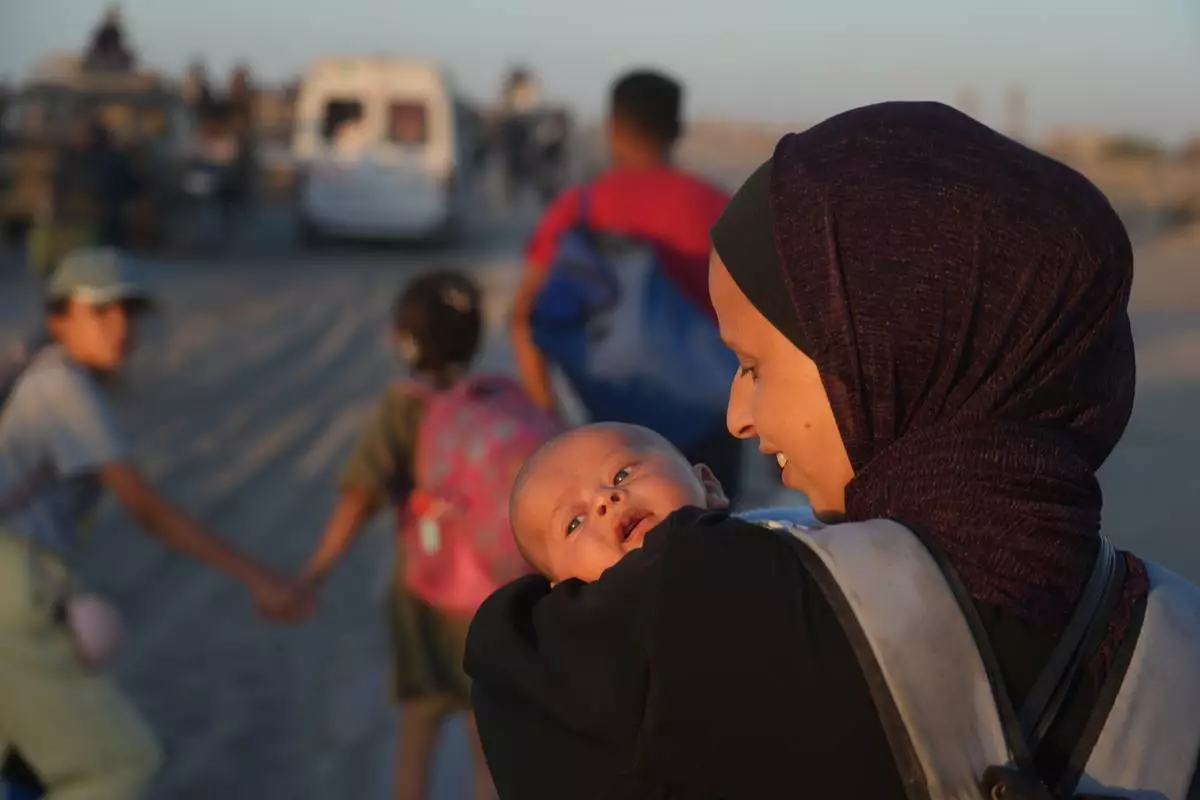
A displaced Palestinian woman carries her baby as she walks with others along the coastal road near Wadi Gaza in the central Gaza Strip, heading toward Gaza City, Friday, Oct. 10, 2025, after Israel and Hamas agreed to a pause in their war and the release of the remaining hostages. (AP Photo/Abdel Kareem Hana)

Displaced Palestinians walk with their belongings past destroyed buildings as they return to their homes in Khan Younis, southern Gaza Strip, Friday, Oct. 10, 2025, after Israel and Hamas agreed to a pause in their war and the release of the remaining hostages. (AP Photo/Jehad Alshrafi)
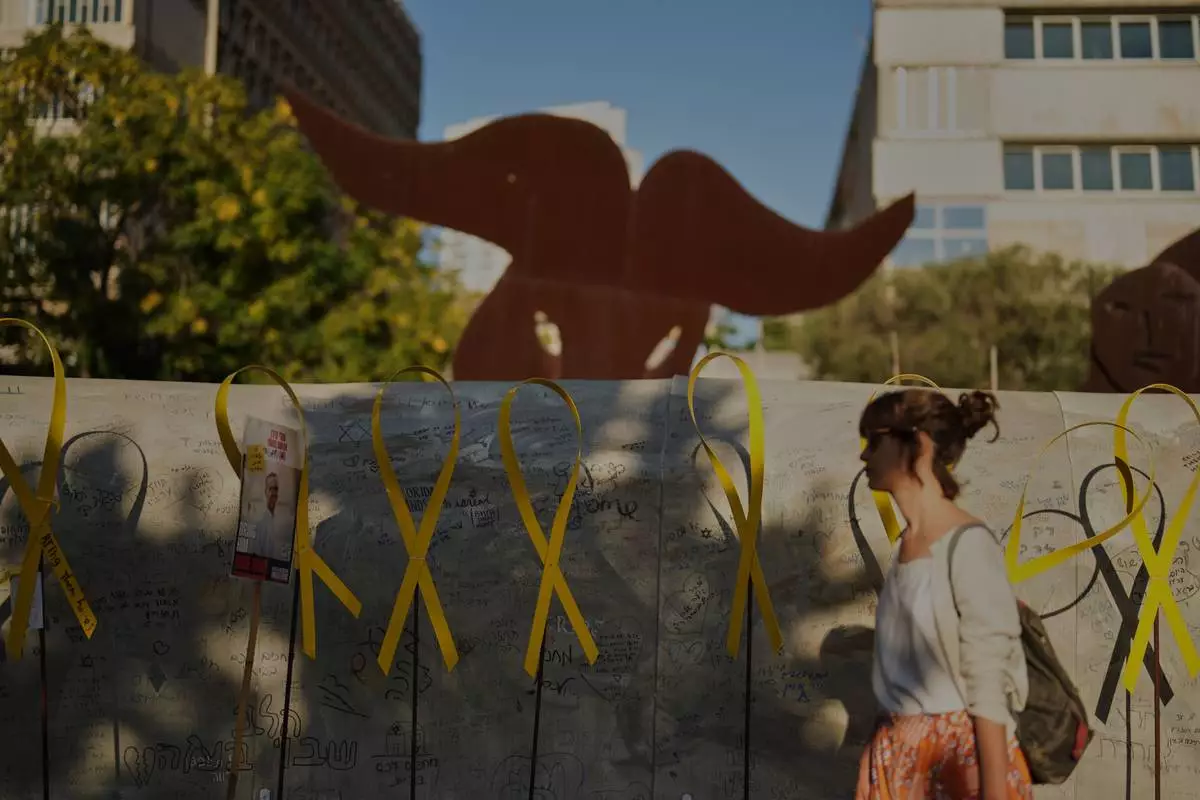
A person walks past an installation simulating a tunnel in Gaza in an act of solidarity with hostages believed to be held underground by Hamas during the Jewish holiday of Sukkot, at a plaza known as hostages square, in Tel Aviv, Israel, Friday, Oct. 10, 2025. (AP Photo/Francisco Seco)

A displaced Palestinian girl carries a bag on her head as she walks along the coastal road near Wadi Gaza in the central Gaza Strip, heading toward Gaza City, Friday, Oct. 10, 2025, after Israel and Hamas agreed to a pause in their war and the release of the remaining hostages. (AP Photo/Abdel Kareem Hana)
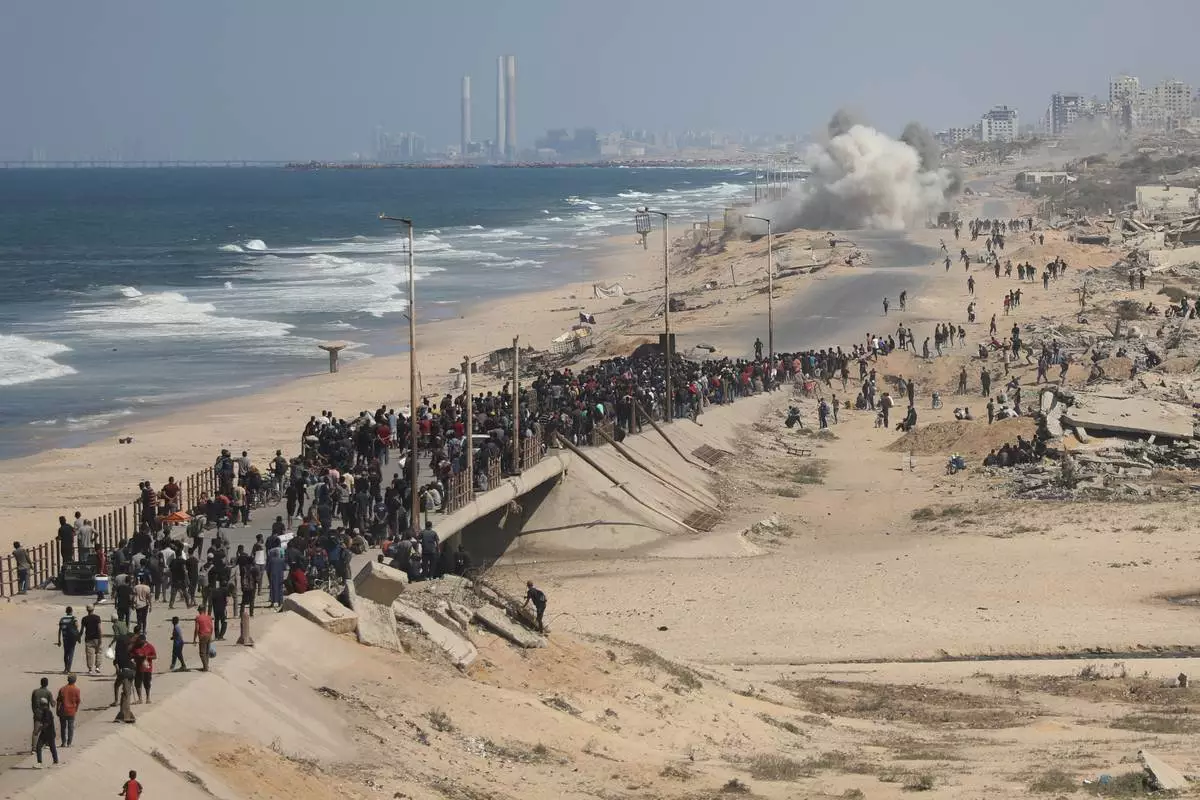
Displaced Palestinians walk along the coastal road near Wadi Gaza in the central Gaza Strip, moving toward northern Gaza, Friday, Oct. 10, 2025, after Israel and Hamas have agreed to a pause in their war and the release of the remaining hostages. (AP Photo/Yousef Al Zanoun)
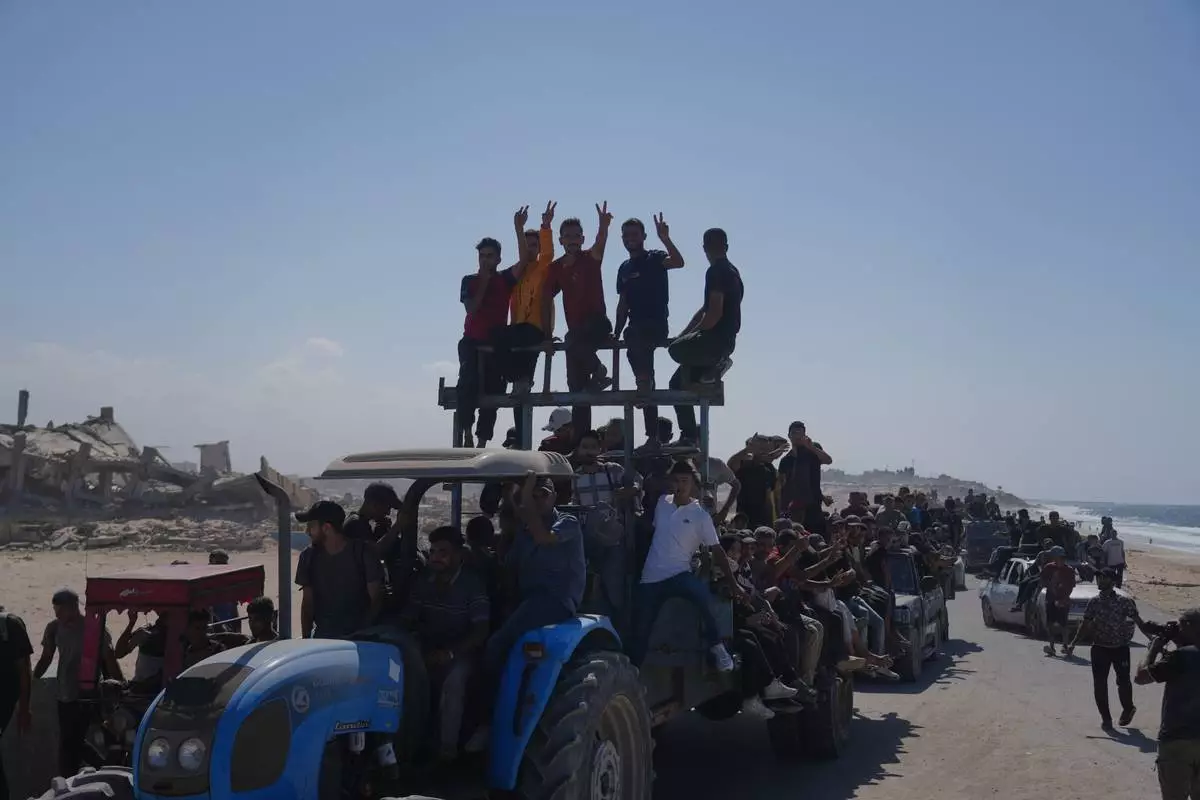
Displaced Palestinians ride on tractors and vehicles loaded with people and belongings along the coastal road near Wadi Gaza in the central Gaza Strip, moving toward Gaza City, Friday, Oct. 10, 2025, after Israel and Hamas agreed to a pause in their war and the release of the remaining hostages. (AP Photo/Abdel Kareem Hana)
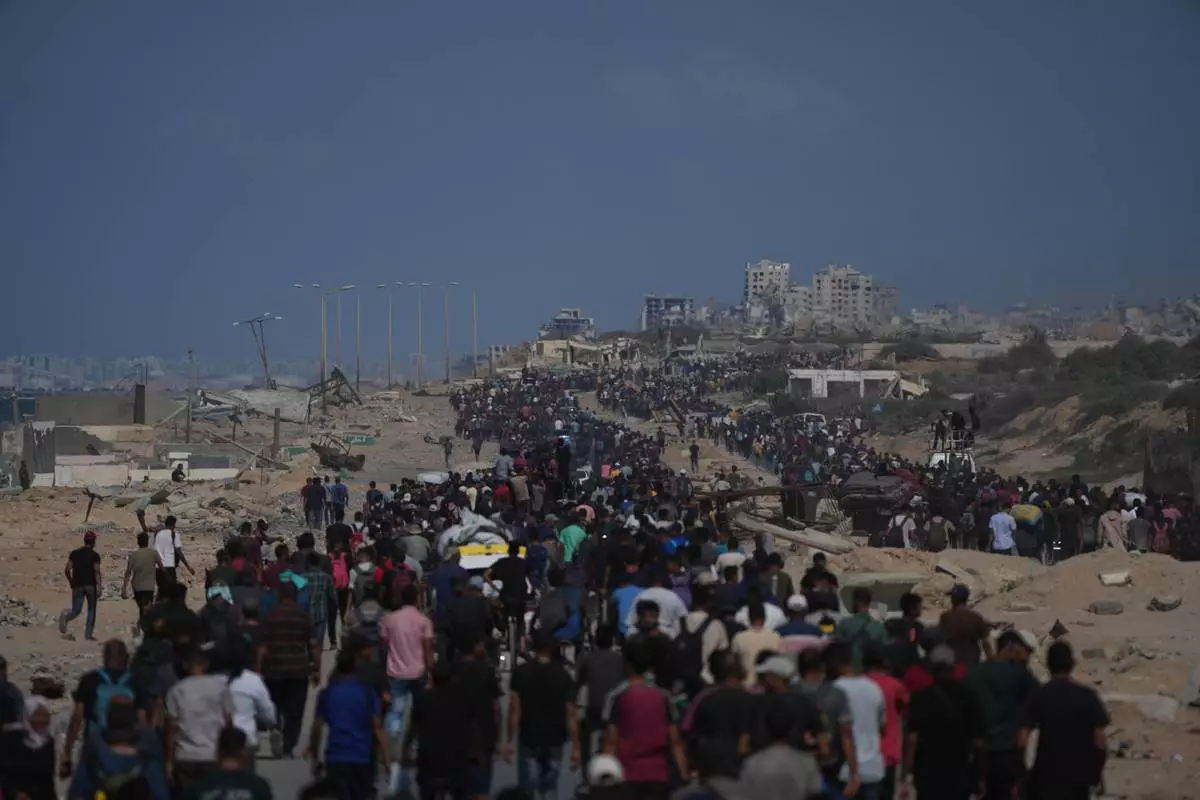
Displaced Palestinians walk with their belongings along the coastal road near Wadi Gaza in the central Gaza Strip, moving toward Gaza City, Friday, Oct. 10, 2025, after Israel and Hamas have agreed to a pause in their war and the release of the remaining hostages. (AP Photo/Abdel Kareem Hana)
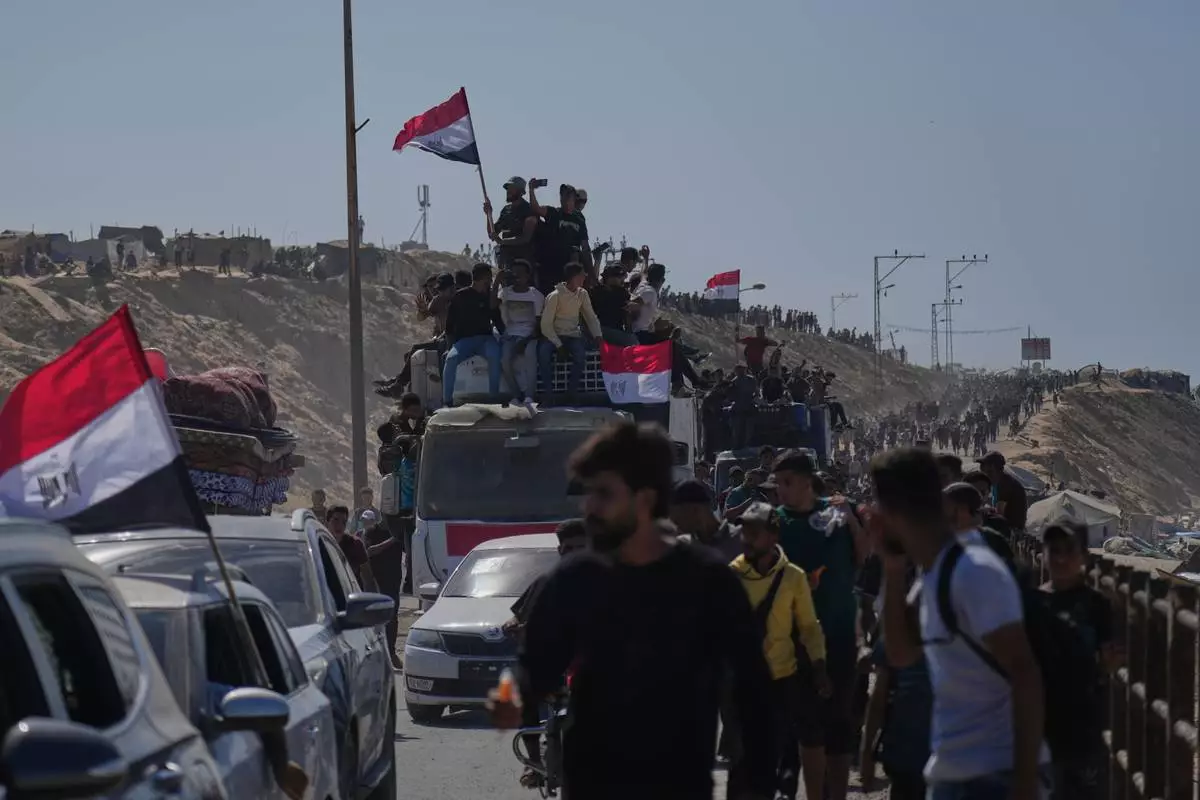
Displaced Palestinians ride on vehicles and wave Egyptian flags as they move along the coastal road near Wadi Gaza in the central Gaza Strip, heading toward Gaza City, Friday, Oct. 10, 2025, after Israel and Hamas agreed to a pause in their war and the release of the remaining hostages. (AP Photo/Abdel Kareem Hana)
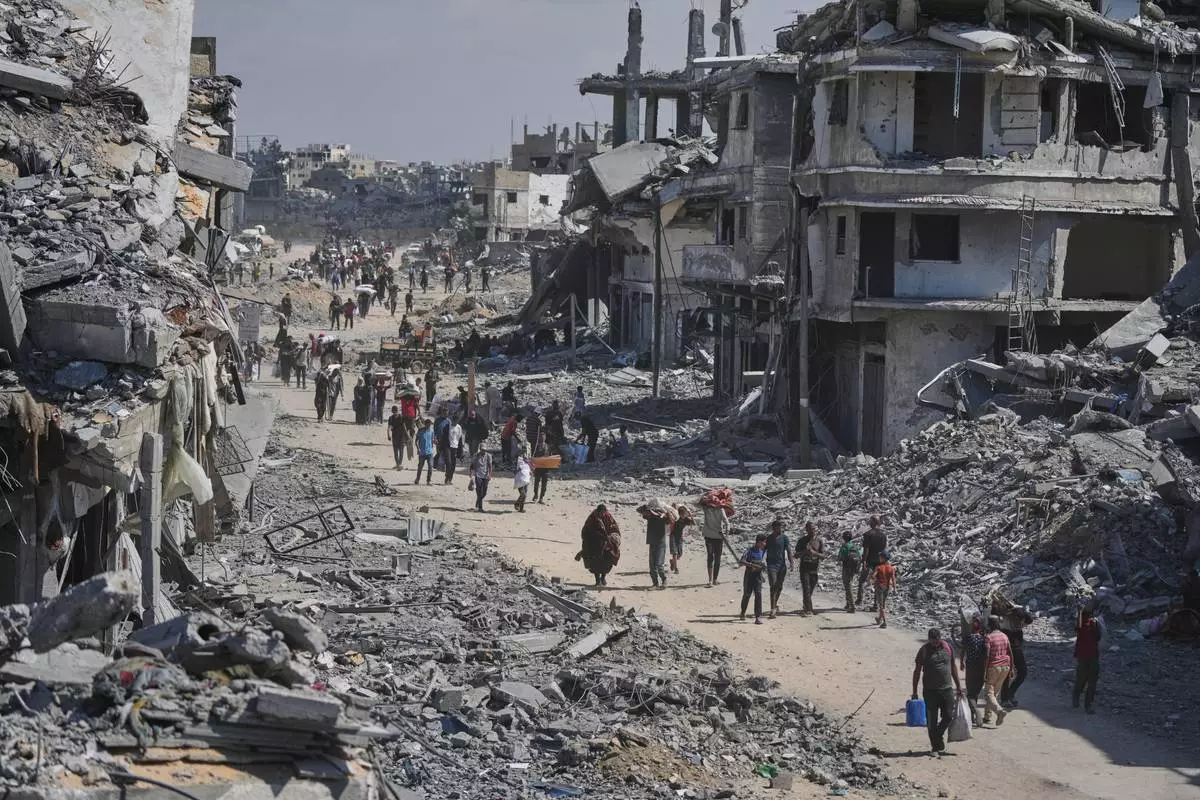
Displaced Palestinians walk with their belongings past destroyed buildings as they return to their homes in Khan Younis, southern Gaza Strip, Friday, Oct. 10, 2025, after Israel and Hamas agreed to a pause in their war and the release of the remaining hostages. (AP Photo/Jehad Alshrafi)
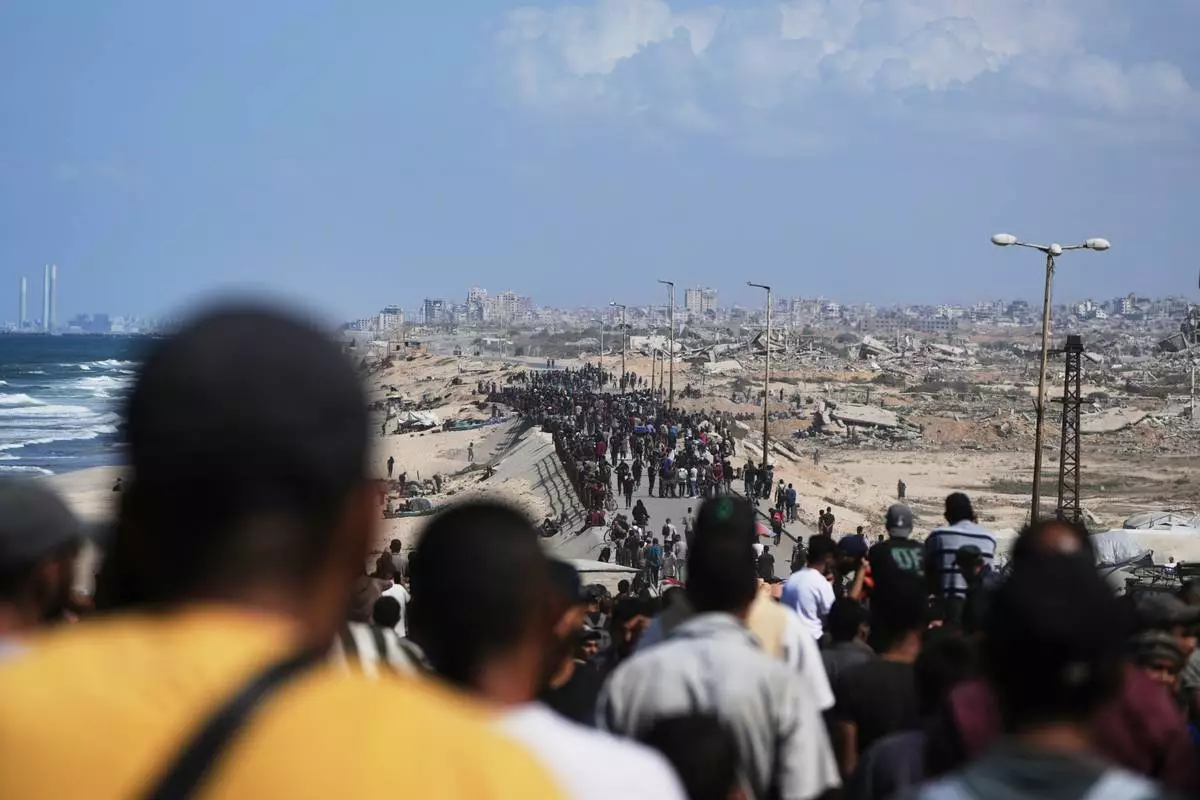
Displaced Palestinians walk along the coastal road near Wadi Gaza in the central Gaza Strip, moving toward northern Gaza, Friday, Oct. 10, 2025, after Israel and Hamas have agreed to a pause in their war and the release of the remaining hostages. (AP Photo/Abdel Kareem Hana)
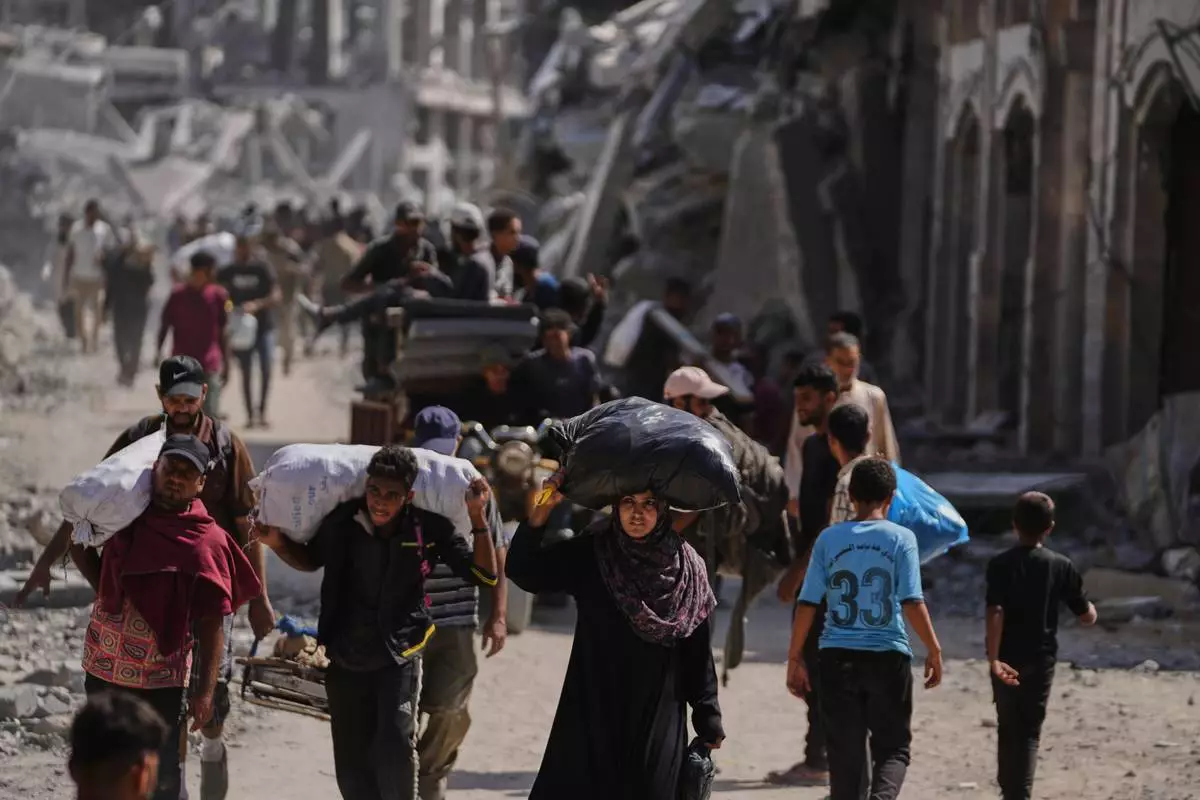
Displaced Palestinians walk with their belongings past destroyed buildings as they return to their homes in Khan Younis, southern Gaza Strip, Friday, Oct. 10, 2025, after Israel and Hamas agreed to a pause in their war and the release of the remaining hostages. (AP Photo/Jehad Alshrafi)

Einav Zangauker, center, mother of Matan Zangauker, who is being held hostage by Hamas, reacts as she and others celebrate following the announcement that Israel and Hamas have agreed to the first phase of a peace plan to pause the fighting, at a plaza known as Hostages Square in Tel Aviv, Israel, Thursday, Oct. 9, 2025. (AP Photo/Ohad Zwigenberg)
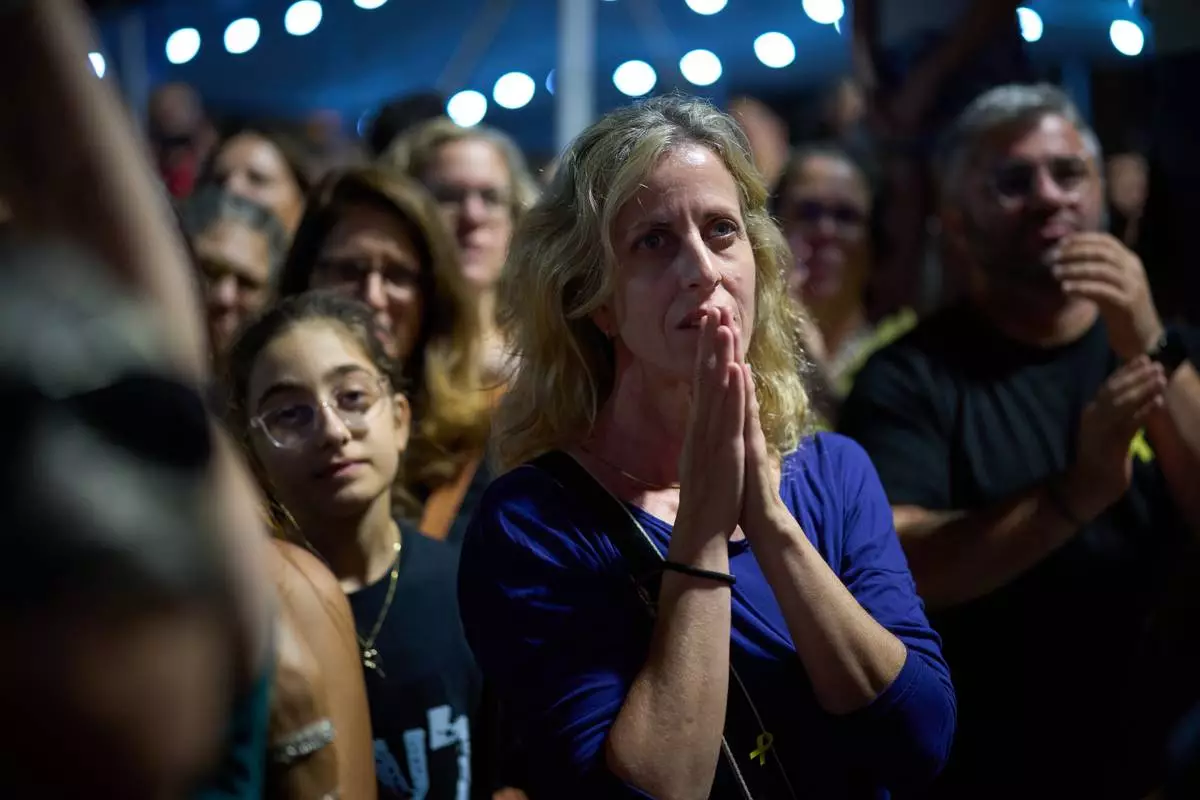
People gather to celebrate following the announcement that Israel and Hamas have agreed to the first phase of a peace plan to pause the fighting, at a plaza known as Hostages Square in Tel Aviv, Israel, Thursday, Oct. 9, 2025. (AP Photo/Emilio Morenatti)
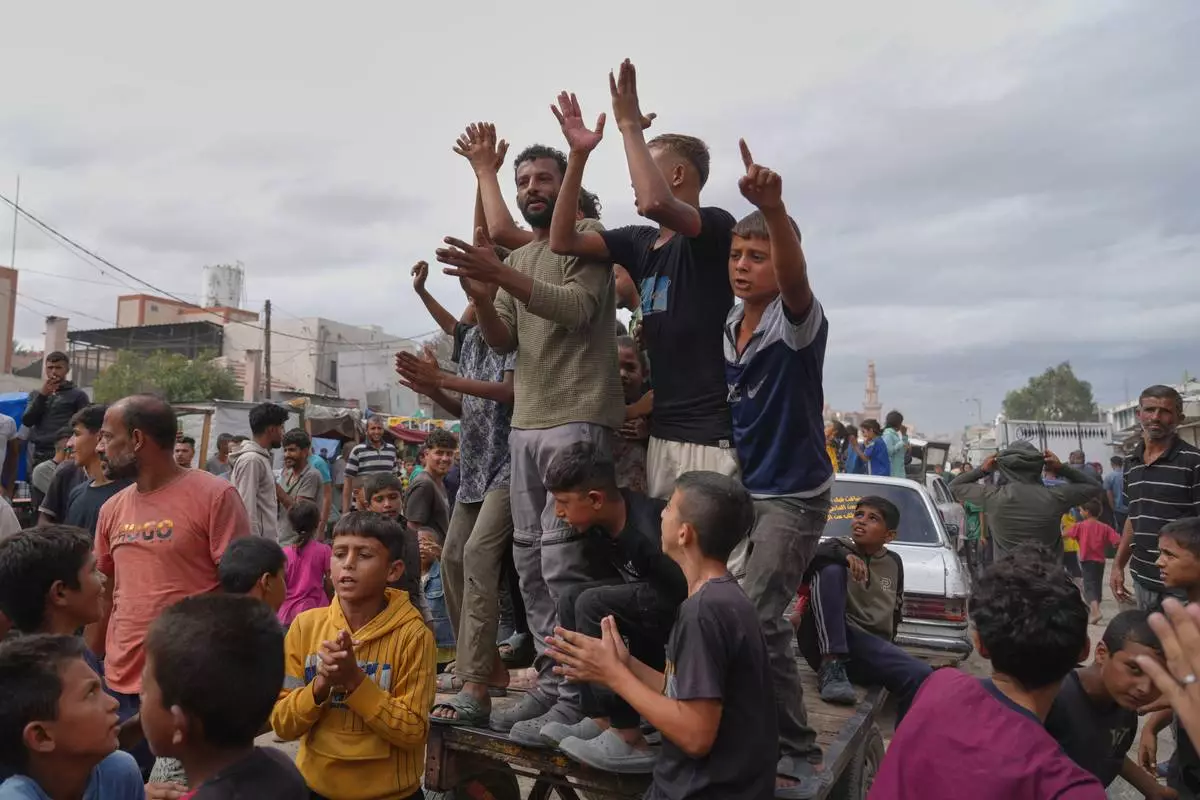
Palestinians celebrate following the announcement that Israel and Hamas have agreed to the first phase of a peace plan to pause the fighting, in Khan Younis, southern Gaza Strip, Thursday, Oct. 9, 2025. Celebrations remain limited, as relief is mixed with mourning and concern for what comes next. (AP Photo/Jehad Alshrafi)
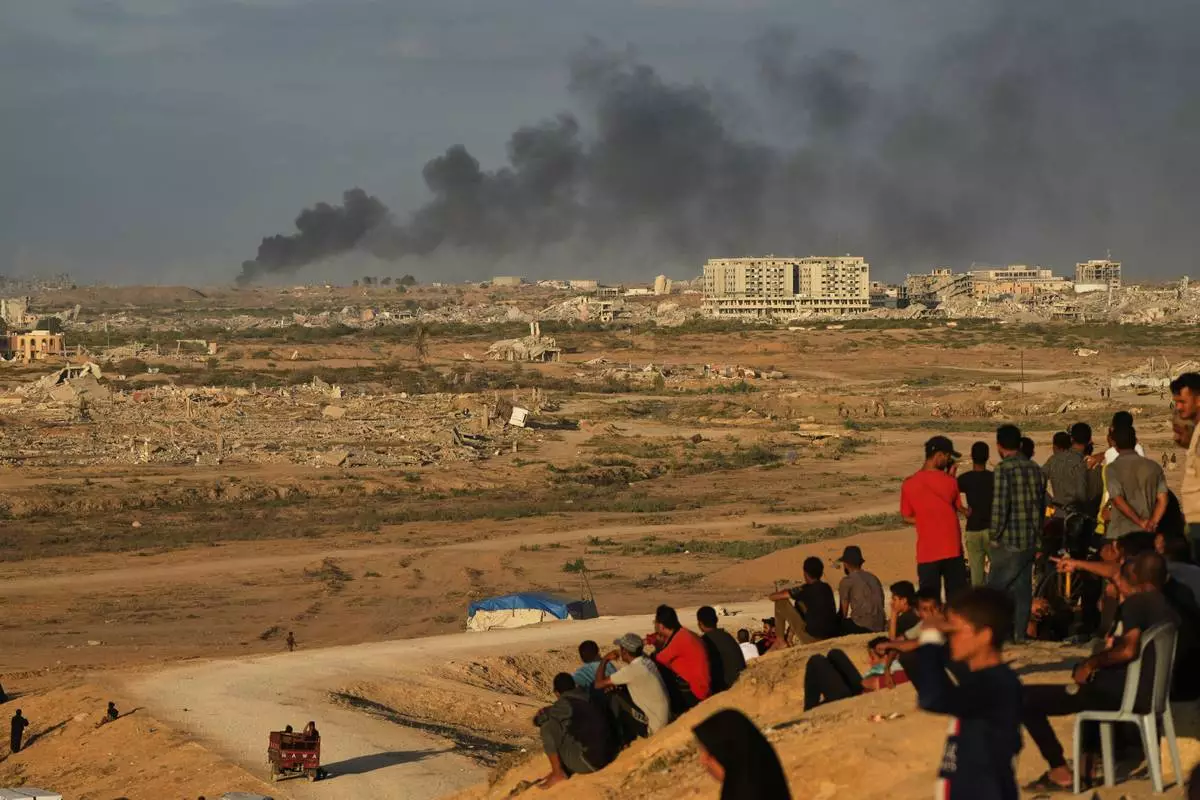
Displaced Palestinians watch smoke rise after Israeli military strikes as they gather on the coastal road near Wadi Gaza, in the central Gaza Strip, Thursday, Oct. 9, 2025. (AP Photo/Abdel Kareem Hana)