WASHINGTON (AP) — The White House budget office said Friday that mass firings of federal workers have started, an attempt by President Donald Trump's administration to exert more pressure on Democratic lawmakers as the government shutdown dragged into a 10th day.
Russ Vought, the director of the Office of Management and Budget, said on the social media site X that the “RIFs have begun,” referring to reduction-in-force plans aimed at reducing the size of the federal government.
In a court filing, the budget office said well over 4,000 employees would be fired, though it noted that the funding situation was “fluid and rapidly evolving.”
The firings would hit the hardest at the departments of the Treasury, which would lose over 1,400 employees, and Health and Human Services, with a loss of over 1,100. The Education Department and Housing and Urban Development each would lose over 400 staffers. The departments of Commerce, Energy and Homeland Security and the Environmental Protection Agency were all set to fire hundreds of more employees. It was not clear which particular programs would be affected.
The aggressive move by Trump’s budget office goes far beyond what usually happens in a government shutdown and escalates an already politically toxic dynamic between the White House and Congress. Talks to end the shutdown are almost nonexistent.
Typically, federal workers are furloughed but restored to their jobs once the shutdown ends, traditionally with back pay. Some 750,000 employees are expected to be furloughed during the shutdown, officials have said.
In comments to reporters in the Oval Office on Friday night, Trump said many people would be losing their jobs, and that the firings would be focused on Democrat-oriented areas, though he didn’t explain exactly what that meant.
“It’ll be a lot, and we’ll announce the numbers over the next couple of days,” he said. “But it’ll be a lot of people.”
Trump said that, going forward, “We’re going to make a determination, do we want a lot? And I must tell you, a lot of them happen to be Democrat oriented.”
“These are people that the Democrats wanted, that, in many cases, were not appropriate,” he said of federal employees, eventually adding, “Many of them will be fired.”
Still, some leading Republicans were highly critical of the administration's actions.
“I strongly oppose OMB Director Russ Vought’s attempt to permanently lay off federal workers who have been furloughed due to a completely unnecessary government shutdown,” said Maine Sen. Susan Collins, the chair of the powerful Senate Appropriations Committee, who blamed the federal closure on Senate Minority Leader Chuck Schumer, D-N.Y.
Alaska Sen. Lisa Murkowski called the announcement “poorly timed” and “yet another example of this administration’s punitive actions toward the federal workforce.”
For his part, Schumer said the blame for the layoffs rested with Trump.
“Let’s be blunt: nobody’s forcing Trump and Vought to do this,” Schumer said. “They don’t have to do it; they want to. They’re callously choosing to hurt people — the workers who protect our country, inspect our food, respond when disasters strike. This is deliberate chaos.”
The White House had previewed its tactics shortly before the government shutdown began on Oct. 1, telling all federal agencies to submit their reduction-in-force plans to the budget office for its review.
It said reduction-in-force plans could apply to federal programs whose funding would lapse in a government shutdown, are otherwise not funded and are “not consistent with the President’s priorities.”
On Friday, the Education Department was among the agencies hit by new layoffs, a department spokesperson said. A labor union for the agency’s workers said the administration is laying off almost all employees below the director level at the Office of Elementary and Secondary Education, while fewer than 10 employees were being terminated at the agency’s Office of Communications and Outreach.
Notices of firings have also taken place at the Cybersecurity and Infrastructure Security Agency, which leads federal efforts to reduce risk to the nation’s cyber and physical infrastructure, according to DHS, where CISA is housed. The agency has been a frequent Trump target over its work to counter misinformation about the 2020 presidential election and the COVID-19 pandemic. DHS said the layoffs were “part of getting CISA back on mission.”
Federal health workers were also being fired, though an HHS spokesman did not say how many or which agencies were being hit hardest. A spokesperson for the EPA, which also has an unspecified number of layoffs, blamed the Democrats for the firings and said they can vote to reopen the government anytime.
An official for the American Federation of Government Employees, which represents federal workers and is suing the Trump administration over the firings, said in a legal filing Friday that the Treasury Department is set to issue layoff notices to 1,300 employees.
The AFGE asked a federal judge to halt the firings, calling the action an abuse of power designed to punish workers and pressure Congress.
“It is disgraceful that the Trump administration has used the government shutdown as an excuse to illegally fire thousands of workers who provide critical services to communities across the country,” AFGE President Everett Kelley said in a statement.
Democrats have tried to call the administration’s bluff, arguing the firings could be illegal, and had seemed bolstered by the fact that the White House had not immediately pursued the layoffs once the shutdown began.
But Trump signaled earlier this week that job cuts could be coming in “four or five days.”
“If this keeps going on, it’ll be substantial, and a lot of those jobs will never come back,” he said Tuesday.
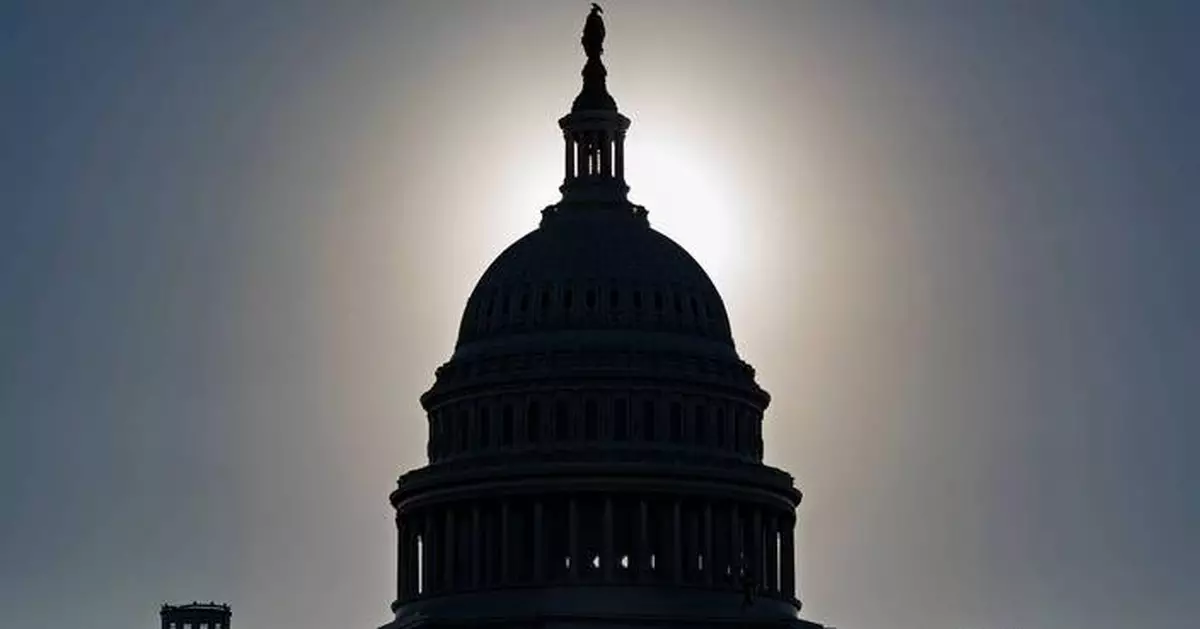
Meanwhile, the halls of the Capitol were quiet on Friday, the 10th day of the shutdown, with both the House and the Senate out of Washington and both sides digging in for a protracted shutdown fight. Senate Republicans have tried repeatedly to cajole Democratic holdouts to vote for a stopgap bill to reopen the government, but Democrats have refused as they hold out for a firm commitment to extend health care benefits.
Some Republicans on Capitol Hill have suggested that Vought's threats of mass layoffs have been unhelpful to bipartisan talks.
And the top Democrat on the Senate Appropriations Committee, Sen. Patty Murray of Washington, said in a statement that the “shutdown does not give Trump or Vought new, special powers” to lay off workers.
“This is nothing new, and no one should be intimidated by these crooks,” she added.
Still, there was no sign that the top Democratic and Republican Senate leaders were even talking about a way to solve the impasse. Instead, Senate Majority Leader John Thune continued to try to peel away centrist Democrats who may be willing to cross party lines.
“It’s time for them to get a backbone,” Thune, a South Dakota Republican, said Friday.
The Partnership for Public Service, a nonpartisan organization that tracks federal service, says more than 200,000 civil servants have left since the start of this administration in January due to earlier firings, retirements and deferred resignation offers.
“These unnecessary and misguided reductions in force will further hollow out our federal government, rob it of critical expertise and hobble its capacity to effectively serve the public,” said the organization’s president and CEO, Max Stier.
AP Education Writer Collin Binkley and AP writers Kevin Freking, Matthew Daly, Rebecca Santana, Mike Stobbe and Will Weissert contributed to this report.
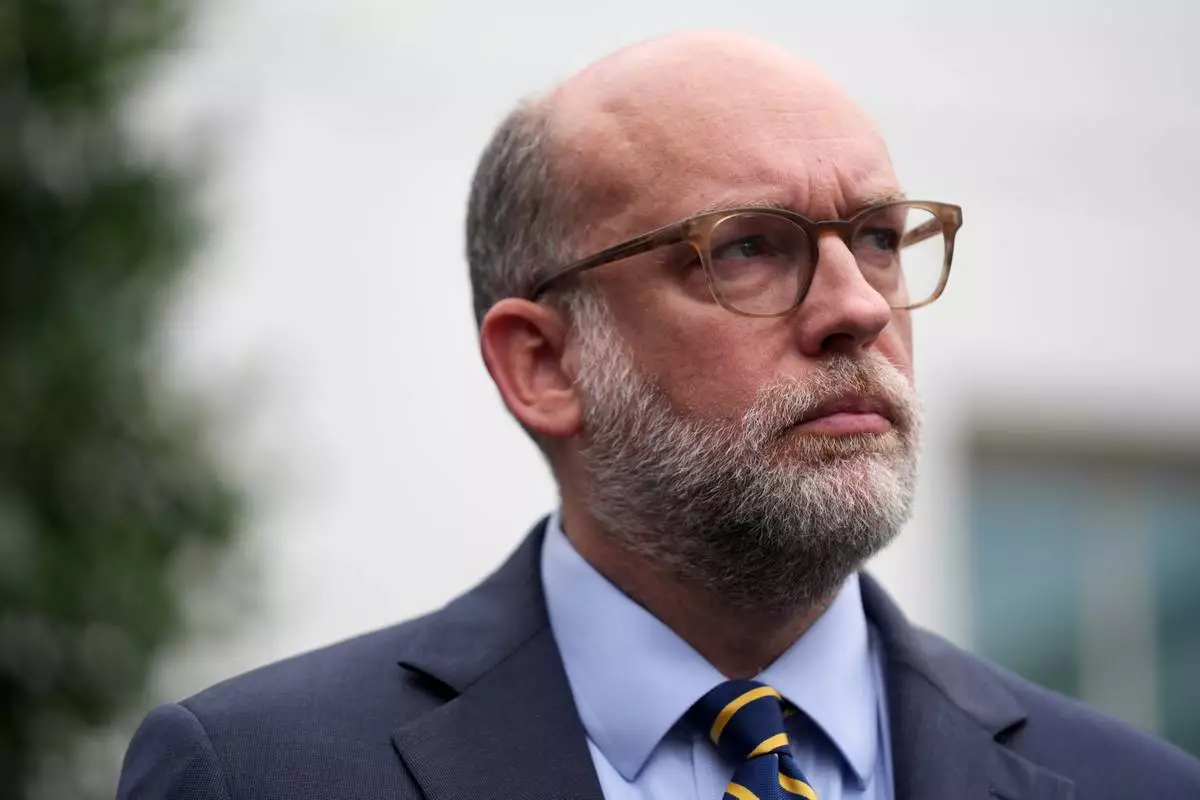
Russell Vought, Office of Management and Budget director, listens as he addresses members of the media outside the West Wing at the White House in Washington, Monday, Sept. 29, 2025, in Washington. (AP Photo/Evan Vucci)
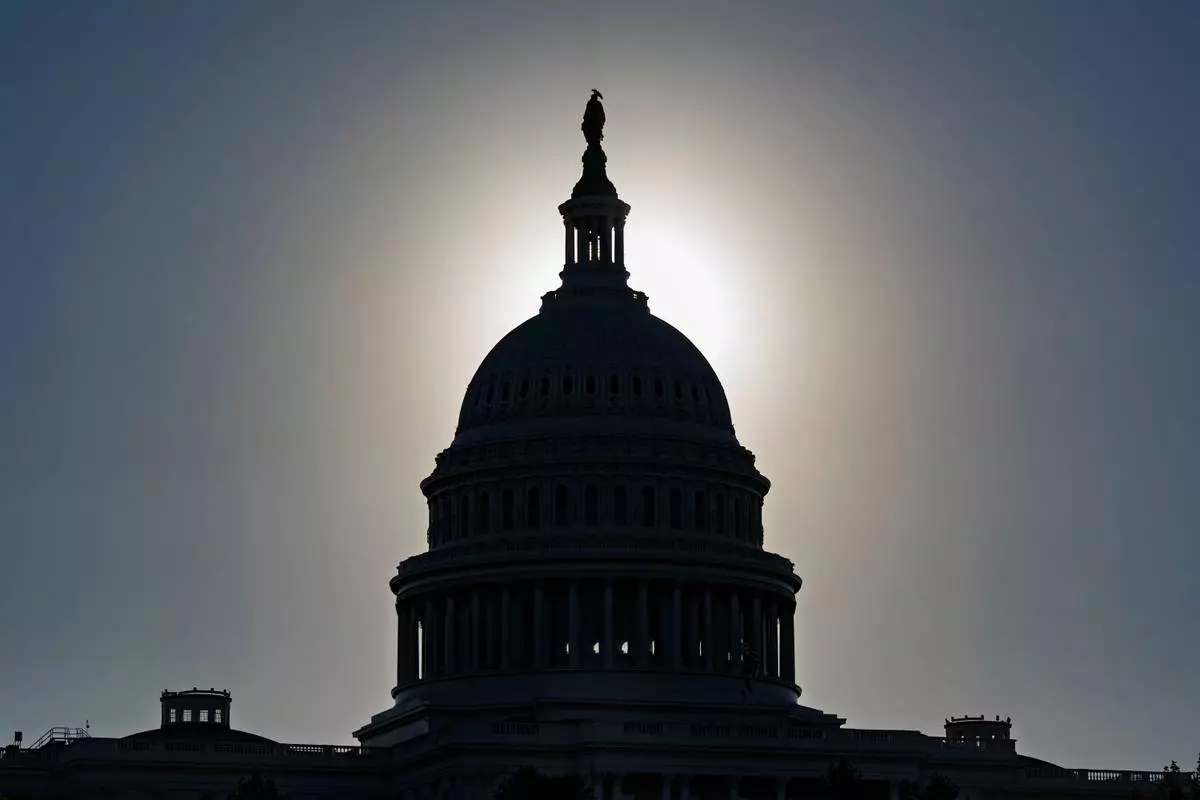
The U.S. Capitol is silhouetted by the stark glare of the morning sun as a government shutdown begins its tenth day, in Washington, Friday, Oct. 10, 2025. (AP Photo/J. Scott Applewhite)